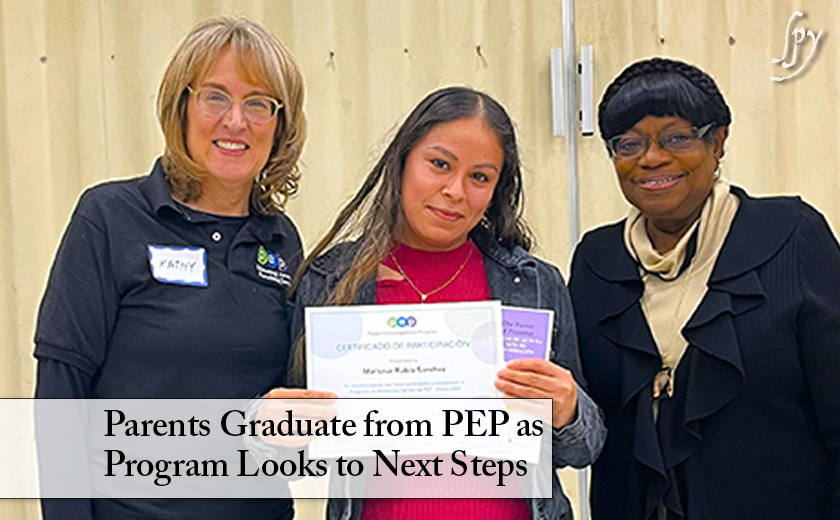

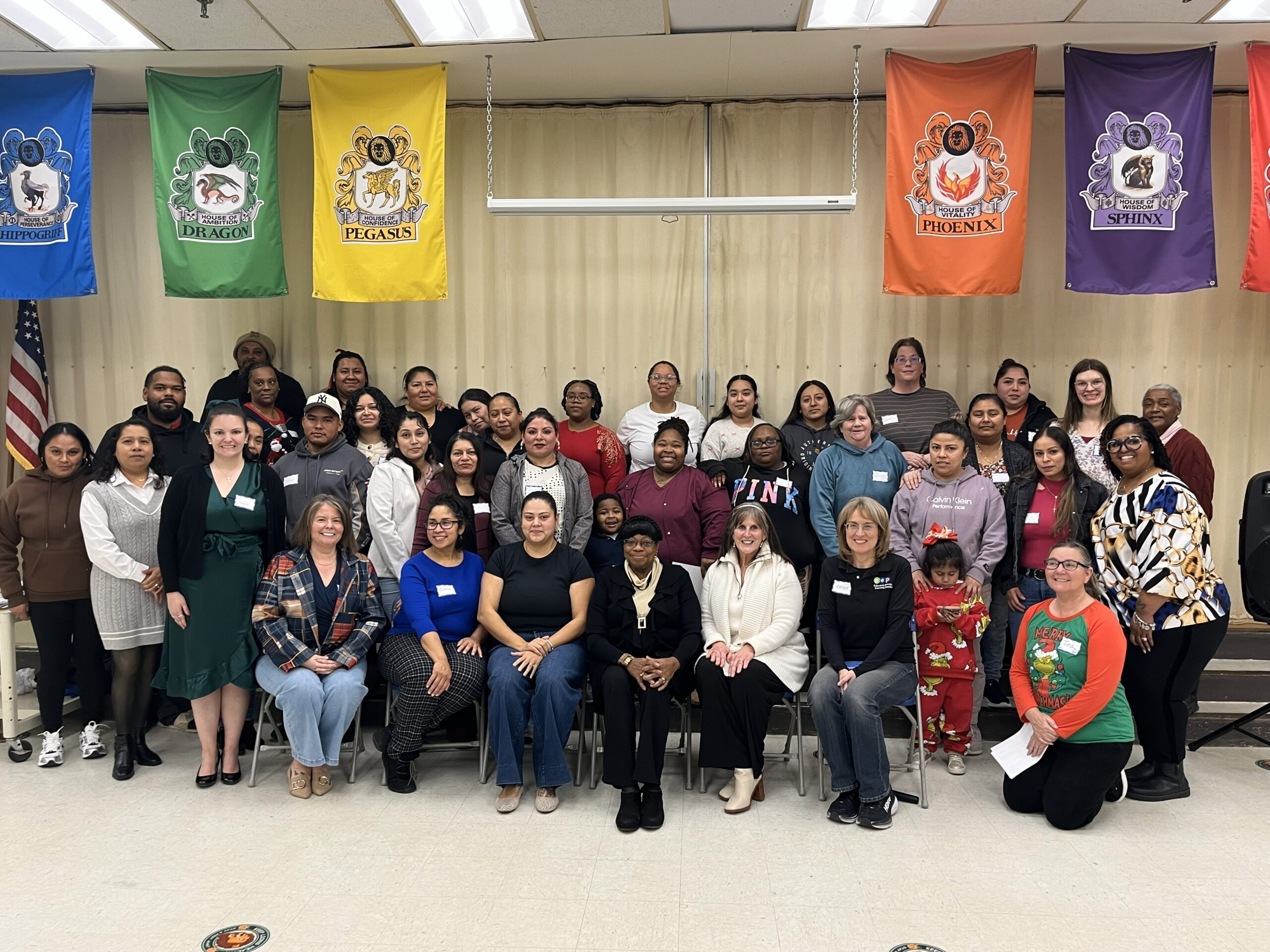
Parent Encouragement Program (PEP) participants, program staff, and local officials celebrated the graduation of the program’s fall cohort at Maple Elementary School.
Earlier this month, almost 40 Dorchester County parents and caregivers graduated from the Parent Encouragement Program, a milestone that reflects the rapid growth of a parenting support initiative designed to help families build healthier homes and strengthen the foundation for student success.
The graduation ceremony at Maple Elementary School closed a fall session that brought together English- and Spanish-speaking families, parents of preschoolers, grandparents, and couples seeking encouragement as they raise children.
The program focuses on strengthening relationships at home, improving communication, and giving families practical tools to guide children through everyday challenges, with an emphasis on community rather than judgment.
“Parenting is the toughest job on the planet,” PEP Executive Director Kathy Hedge often tells new families. “You train for almost every other job, and yet we don’t train for parenting.” The program’s goal, she said, is to make support feel normal and accessible.
For many graduates, the experience was less about learning one “right” way to parent and more about realizing they weren’t alone.
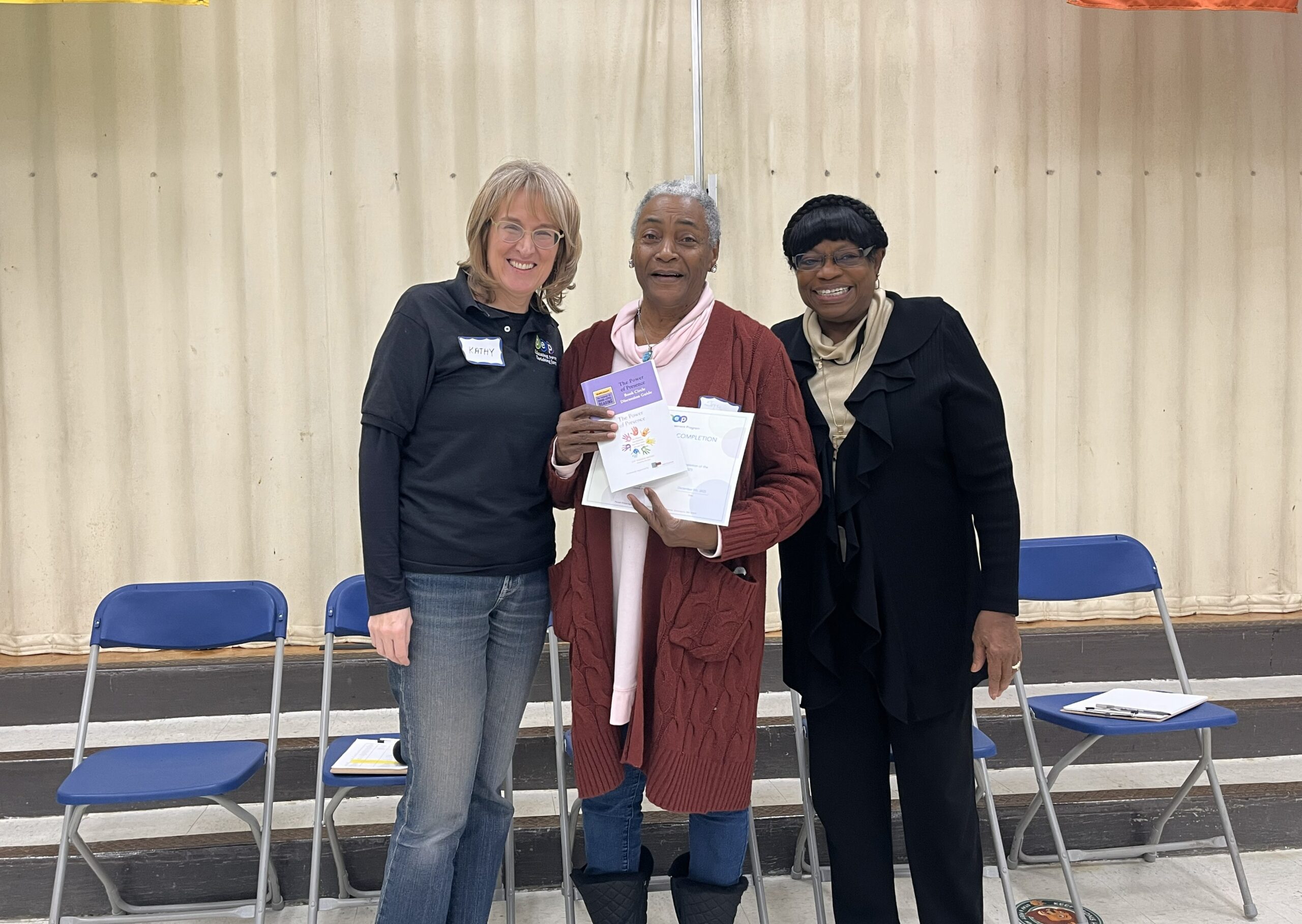
Graduate Joyce Opher, a great grandmother, said it’s never to late to acquire new parenting skills through PEP. She is flanked by PEP Executive Director Kathy Hedge (left) and Joy Moore, mother of Gov. Wes Moore (right).
Joyce Opher, 77, a grandmother and great-grandmother, said she joined after raising her own children and did not know what to expect. What stood out to her was the energy in the room and the eagerness of younger parents to learn.
“I thought maybe it would be helpful, or maybe I could get some help,” Opher said. “What struck me was how eager the younger parents were to learn.” The experience, she said, reinforced that parenting is a lifelong skill. “It’s never too late to learn,” she said. “Parenting is a huge, long-term responsibility that is thrust on young people with no preparation.”
That community-building has become central to the program’s momentum in Dorchester County, where PEP has expanded steadily since arriving on the Eastern Shore in late 2022.
Founded in 1982, the organization had historically served communities near its Montgomery County base before expanding eastward. In Dorchester, it has built strong attendance by offering sessions at local schools, recruiting trusted community voices to help spread the word, and making participation welcoming for families through features like childcare, shared meals, and structured discussion.
This fall marked another significant shift: PEP expanded its reach through a new partnership with Dorchester County Public Schools’ Judy Centers at Maple, Sandy Hill, and Hurlock elementary schools.
The collaboration followed PEP’s completion of an adapted Family Resiliency Program designed specifically for parents of preschool-aged children, allowing the organization to offer structured support earlier in a child’s life.
Hedge said reaching families when children are younger can have long-term benefits.
“It’s always great to be able to offer this program to parents when their children are younger,” she said. “They can start using PEP parenting approaches early, rather than developing habits that can be harder to change later.”
Dorchester County Superintendent of Schools Jymil Thompson said the graduation underscored the role parents play in student success and why programs like PEP matter to the school system.
“Parents are an essential part of the education process,” Thompson said. “The resilience component of this program is extremely valuable to our students’ success.”
Thompson said the value of the program is not only in what parents learn, but also in how they learn it – by connecting with others facing similar challenges.
“Parents are often mixed in with all kinds of families, and that’s not a bad thing,” he said. “But sometimes conversations become more meaningful when parents are with others facing similar circumstances.”
That idea is helping shape what PEP may do next.
Hedge said the graduation offered a glimpse into possible future directions for the program, including more targeted cohorts designed for parents who want to explore specific challenges more deeply.
“Where I see this headed is asking what other kinds of groups we might offer,” she said. “What if we had cohorts just for dads, or groups for parents of neurodivergent learners, including children with ADHD or autism?”
Focused cohorts, she said, could give parents a chance to talk openly about experiences they may not feel comfortable discussing in broader settings, while still maintaining the value of learning alongside families with different backgrounds.
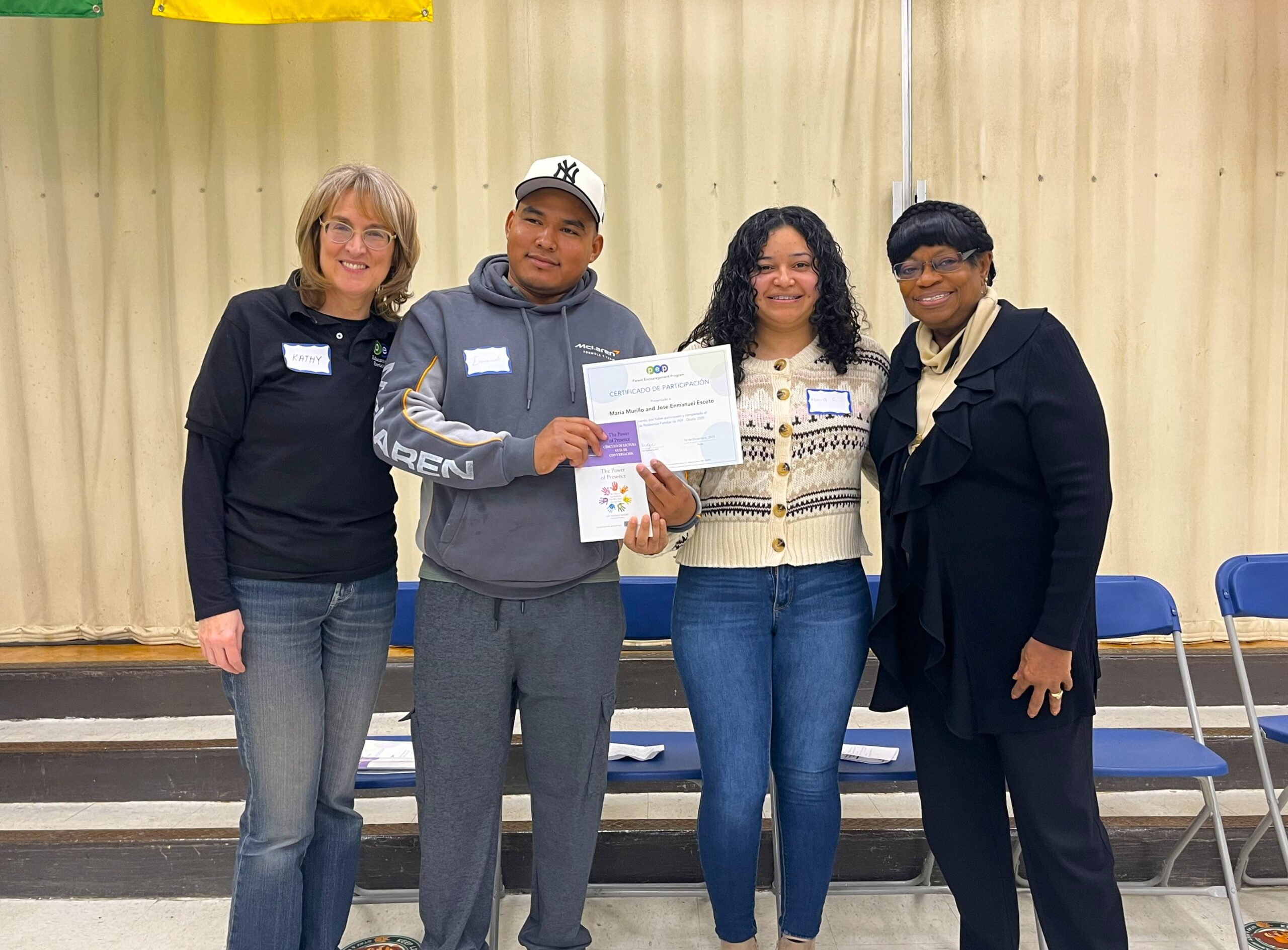
Parents Maria Murillo and José Emmanuel Esocote were among several couples who participated in the PEP training together.
Hedge said there is already interest in expanding the partnership with Judy Centers to offer a program specifically for fathers. “I would love to see that be the next iteration of cohorts we have here,” she said.
The ceremony also drew Joy Moore, a longtime supporter of PEP and the author of The Power of Presence, a book focused on parenting and education. Moore, who raised her three children, including Maryland Governor Wes Moore, as a young widow, said she continues to attend Dorchester County graduations because the program offers something many parents lack: a place to learn and share without judgment.
“Yes, it’s about parenting,” Moore said. “But it’s also about community building.”
PEP operates on a school-year schedule. The winter session will begin in January, with classes starting in early February, followed by a spring program.
For PEP leaders, the December graduation marked more than the completion of a course. It reflected expanding school partnerships, a broader reach into early childhood education, and a growing vision for how the program can support families across Dorchester County.
For the parents and caregivers who graduated, it marked something simpler and more personal: the decision to keep learning, keep showing up, and keep building the kind of home where children can thrive.