
MENU

Sections

  • About Us
    • Editors and Writers
    • Sponsorship Terms & Conditions
    • Code of Ethics
    • Sign Up for Cambridge Spy Daily Email Blast
  • The Arts and Design
  • Culture and Local Life
  • Food & Garden
  • Public Affairs
    • Commerce
    • Health
    • Ecosystem
    • Education
    • Senior Nation
  • Point of View
  • Chestertown Spy
  • Talbot Spy

More

  • Support the Spy
  • About Spy Community Media
  • Advertising with the Spy
  • Subscribe
December 8, 2025

Cambridge Spy

Nonpartisan and Education-based News for Cambridge

  • About Us
    • Editors and Writers
    • Sponsorship Terms & Conditions
    • Code of Ethics
    • Sign Up for Cambridge Spy Daily Email Blast
  • The Arts and Design
  • Culture and Local Life
  • Food & Garden
  • Public Affairs
    • Commerce
    • Health
    • Ecosystem
    • Education
    • Senior Nation
  • Point of View
  • Chestertown Spy
  • Talbot Spy
Ecosystem Eco Homepage Ecosystem Eco Portal Lead

Chesapeake Bay Foundation Hosting Oyster Pop-Up Shop In Easton November 24

November 14, 2020 by Chesapeake Bay Foundation
Leave a Comment

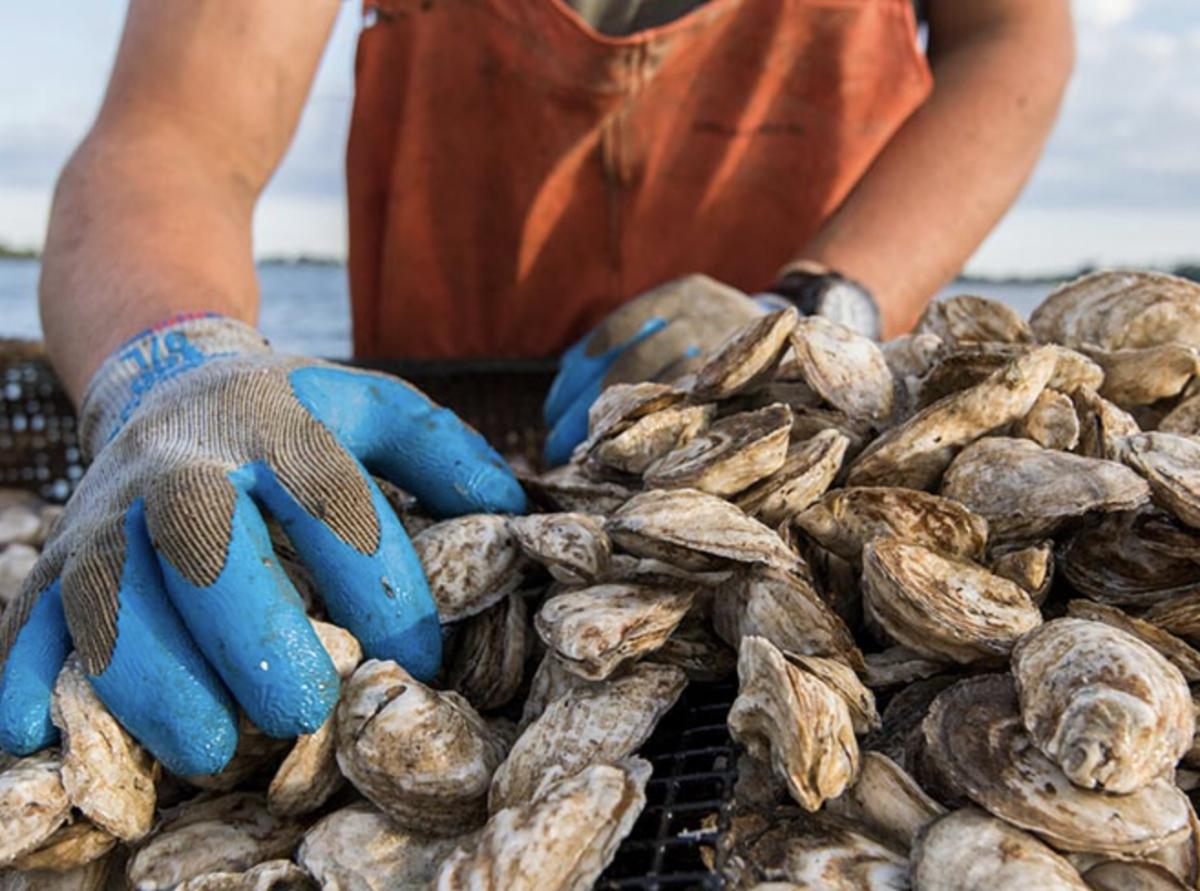
Get fresh local oysters directly from growers. The Chesapeake Bay Foundation is hosting four oyster pop-up shops at various locations in Maryland in October and November including Easton..The sales are designed to benefit Maryland oyster farmers, who are facing declining sales this year due to limited restaurant openings and ongoing restaurant closures due to COVID-19.

Oyster farmers depend on restaurants for the bulk of their sales. About 90 percent of the oysters they raise are sold directly to restaurants. As the pandemic continues, CBF is working to help oyster farmers sell their product directly to consumers.

Oyster farmers purchase larvae or spat on shell and raise them into market-sized oysters in the Bay. Oyster aquaculture operations are sustainable and help ensure consumer demand for oysters can be met without depleting the wild oyster population in the Chesapeake Bay.

Oysters in the Bay clarify the water and provide habitat for fish, blue crabs, and other marine life. Oyster populations in Maryland have been on a long-term decline since the late 1800s due to overfishing, pollution, and disease. Oyster aquaculture provides a way to reverse this decline while providing Marylanders with fresh, local oysters.

For instructions on how to handle and shuck oysters visit CBF’s website – www.cbf.org/join-us/more-things-you-can-do/oyster-pop-up-shops

Tuesday, Nov. 24 – Easton, Maryland

  • Pickup time and location: 4 to 6:30 p.m., Easton Point 24 Fuel, 930 Port St., Easton
  • Oyster farmer – Pirate’s Cove Oyster Co.
  • To order: Email [email protected] before Nov. 23 at noon
  • Quantities available and price:
    • 12 count – $12
    • 24 count – $20
    • 50 count – $35
    • 100 count – $60

The Spy Newspapers may periodically employ the assistance of artificial intelligence (AI) to enhance the clarity and accuracy of our content.

Filed Under: Eco Homepage, Eco Portal Lead

Zoning Change Denied for Eastern Shore Salmon Farm

November 13, 2020 by Bay Journal
Leave a Comment

A Norwegian company’s plans to bring land-based salmon farming to Maryland’s Eastern Shore hit a snag Thursday night when one of the sites it had chosen for raising the commercially valuable fish failed to gain needed local approval.

The Dorchester County Board of Appeals denied AquaCon Maryland LLC a special zoning exception that would have allowed it to build a massive indoor hatchery and fish grow-out facility on a defunct golf course bordering the Choptank River.

The board’s decision came at the end of a 3.5-hour meeting where neighboring residents and others suggested the industrial-scale aquaculture operation would be unsuitable in the still largely rural area just west of Cambridge. Some also voiced concerns that its wastewater discharges, though treated to a high level, might hurt the Choptank River’s water quality, undermining recent signs of improvement.

“Is there a better location?” Choptank Riverkeeper Matt Pluta asked at one point.

The 114-acre site, formerly home to the Cambridge Country Club, is one of four locations AquaCon has selected for its planned facilities on the Shore, each expected to produce up to 15,000 metric tons of salmon annually.

AquaCon had previously declared its plans to build a facility on the outskirts of Federalsburg, a small town in Caroline County on a tributary of the Nanticoke River. The other two sites are in Cambridge and Denton, also in Caroline County, company representatives told the board.

Ryan Showalter, an Easton lawyer representing AquaCon, said it is pursuing multiple sites at the same time with the intent to start construction next year on whichever one first receives regulatory approvals. AquaCon is one of several mostly European companies rushing to build land-based salmon farms in the United States that use new developments in recirculating aquaculture technology.

Showalter touted the economic benefits for largely rural Dorchester County, noting that the company plans to invest $300 million in each facility and that each would create 150 jobs, a number of them high-paying profession and technical positions.

“When constructed, this will be an industry-changing, world-leading facility,” he said.

Bob Rauch, the company’s Easton-based engineering consultant, stressed that each would be an “all-green” facility. Unlike most open-water salmon farming operations in Europe, these fish would be raised indoors in tanks, with nearly all of the water recirculated and filtered to remove waste. They would not be fed antibiotics or be at risk of escape into the wild, two issues with pen-reared fish.

Solar panels would be placed on the rooftop of the massive 27.5-acre buildings to help offset the facilities’ energy needs. The solid waste produced by raising 3 million fish a year would be converted to energy-generating biogas via anaerobic digestion.

Showalter acknowledged that the size of the building — the largest on the Shore — was daunting. But he said the company pledged to plant a thick buffer of trees around it that in about 12 years should have grown tall enough to hide it from view from the road or neighboring properties.

Several of those attending the meeting praised the company’s efforts to minimize environmental impacts, but they voiced concerns about the wastewater it would generate. The facility would use 70,000–80,000 gallons of groundwater daily and pump an equivalent amount of pretreated wastewater to Cambridge’s sewage treatment plant.

The proposed Dorchester facility would also have withdrawn up to 2.3 million gallons of water daily from the Choptank and discharged the same amount back into the river. That water would cycle through tanks where the salmon would be held just before being harvested so they can be purged of naturally occurring microbes that can give their flesh an unappetizing musty odor and taste.

Rauch said the Choptank water would be treated before being returned to the river, with the discharge meeting the state’s limits for nitrogen and phosphorus.

Tom Fisher, a professor at the Horn Point laboratory of the University of Maryland Center for Environmental Science, which is next door to the proposed country club site, expressed some concerns about the potential impact on the lower Choptank. The river is suffering from excess nutrients from agricultural runoff and wastewater, but Fisher said it has shown water quality improvements recently in the wake of an upgrade of the treatment plant in Cambridge.

While the added wastewater coming from the municipal plant and the aquaculture facility’s direct discharge to the river would be treated to reduce nutrient levels, Fisher said he was concerned that the Choptank’s recovery might be undermined by the amounts of nitrogen and phosphorus remaining in those additional discharges.

“Even if there’s a tiny concentration of something in that water, it’s going to contribute to the impairment,” warned Fred Pomeroy of Dorchester Citizens for Planned Growth.

Pomeroy suggested the company focus first on developing its site in Cambridge, which has industrial land in need of redevelopment. Showalter, the company lawyer, said the city site isn’t suitable at this time because it doesn’t have access to the Choptank for purge water. The company is working on a way to eliminate the musty odor in the fish without needing river water, but that’s not ready yet.

Alan Girard of the Chesapeake Bay Foundation questioned how the facility would manage the stormwater runoff coming off the 27.5-acre rooftop. Rauch said the company has at least at least three different approaches in mind, including possibly using the old golf course’s irrigation system to cycle the runoff back into the ground. That portion of the property borders the river, though, where land use is strictly controlled by the state’s Critical Area law, and company representatives said they were still working out how to meet those requirements.

County appeals board members voiced some doubts about the stormwater and the municipal treatment plant’s ability to handle the aquaculture facility’s wastewater, even though company representatives said it had ample capacity to do so.

In the end, though, the appeals board decision seemed influenced most heavily by nearby residents’ complaints about the impacts on their quality of life of such an operation.

“It’s quiet, it’s peaceful, and that’s the way we’d like to keep it,” said David Rineholt, who said he and his wife Kathleen had built a home next to the old country club 25 years ago.

The site is accessed by a narrow two-lane road, which company representatives acknowledged might need some upgrading to handle 30-35 trucks per week. Otherwise, they said, the traffic generated by the 150-person workforce would be roughly equivalent to what the country club had experienced.

“It will tax traffic,” said board member Charles Dayton, Jr., a sentiment echoed by the rest of the board.

He and a couple of other board members seemed to suggest they might reach a different conclusion if presented with additional information and studies to address concerns raised at the meeting.

Afterward, though, AquaCon representatives indicated they wouldn’t try to win the board over but instead focus on getting regulatory approvals to go forward in Federalsburg and Denton.

“We have other sites,” said Showalter. “We redirect.”

By Timothy B. Wheeler

The Spy Newspapers may periodically employ the assistance of artificial intelligence (AI) to enhance the clarity and accuracy of our content.

Filed Under: Eco Homepage Tagged With: AquaCon, cambridge country club, choptank river, environment, hatchery, salmon farm, sewage treatment plant, water quality, zoning

2021 Trapping Areas Open for Bids at Blackwater National Wildlife Refuge

November 11, 2020 by Spy Desk
Leave a Comment

The U.S. Fish and Wildlife Service has announced Blackwater National Wildlife Refuge will offer furbearer trapping rights on a sealed bid basis for the 2021 season.

Fifteen trapping units will be available.  An individual may bid on one or more units, but only two units will be awarded to any bidder.  The successful bidder must personally trap the unit; subleasing is prohibited. Bid invitations, maps, and other details are available by calling Matt Whitbeck, wildlife biologist, at 410-221-2034. Inspection of the units will be allowed from 9:00 a.m. to 3:00 p.m., December 1-3 and 7-10, 2020, with a scouting permit.

Bids must be received at the refuge office by 5:00 pm on December 16, 2020. Due to concerns related to Covid-19, there will not be a public bid opening this year. Refuge staff will open the bids and successful bidders will be notified by mail. The Refuge must receive full payment on or before December 30, 2020 for successful bidders to receive their permit.

Trapping for muskrat, nutria, raccoon, fox, skunk, and opossum will begin on January 1, 2021, and end on March 15, 2021, unless extensions have been made by both the state and the refuge.

Trapping on Blackwater NWR is a management activity designed to control the population levels of furbearers as well as provide an economic benefit to local trappers.  Uncontrolled muskrat and nutria populations can seriously damage marsh vegetation, which is vital to waterfowl, other migratory birds, and the health of the Chesapeake Bay.

Blackwater National Wildlife Refuge, located on the Eastern Shore of Maryland, protects over 29,000 acres of rich tidal marsh, mixed hardwoods and pine forest, managed freshwater wetlands and cropland for a diversity of wildlife.  To learn more, visit our website at www.fws.gov/refuge/blackwater or follow us on Facebook @BlackwaterNWR. 

The mission of the U.S. Fish and Wildlife Service is working with others to conserve, protect and enhance fish, wildlife, plants and their habitats for the continuing benefit of the American people. We are both a leader and trusted partner in fish and wildlife conservation, known for our scientific excellence, stewardship of lands and natural resources, dedicated professionals and commitment to public service. For more information on our work and the people who make it happen, visit www.fws.gov. 

The Spy Newspapers may periodically employ the assistance of artificial intelligence (AI) to enhance the clarity and accuracy of our content.

Filed Under: Eco Notes Tagged With: Blackwater National Wildlife Refuge, Ecosystem, local news

Oyster Farming in Maryland Might Get Harder

November 10, 2020 by Bay Journal
Leave a Comment

DNR to propose rule that could reduce areas for aquaculture leasing

The Hogan administration is moving to block Maryland oyster farmers from leasing spots in the Chesapeake Bay and its tributaries where there’s still a smattering of wild oysters — a step that aquaculture advocates warn will stifle the state’s small but growing industry.

The Department of Natural Resources has announced that it plans to propose a regulation that would enable it to deny a lease application wherever it finds even a very low density of wild oysters on the bottom or when “physical, biological and economic conditions” warrant reserving the area for the public fishery.

The move comes in response to complaints from watermen, who contend that their livelihoods are threatened by having any more potentially productive oystering areas leased to private shellfish cultivation.

“We’ve given up enough bottom already,” Queen Anne’s County waterman Troy Wilkins said at a recent virtual meeting of the DNR Oyster Advisory Commission.

Watermen have long chafed over the state’s move a decade ago to greatly expand its oyster sanctuaries, which put some reefs off-limits to wild harvest. They also have repeatedly protested aquaculture lease applications, citing potential conflicts with crabbing or wild oyster harvests.

DNR officials say they want to establish a process for creating or expanding Public Shellfish Fishery Areas, which are reserved exclusively for wild harvest.

“There are occasions — and they’re rare — when a lease application comes forward, and there are populations of oysters [there that] the fishery has been working on or could be working on,” said Chris Judy, director of the DNR shellfish program.

But oyster farmers contend that the DNR has already been withholding approval or forcing changes to some lease applications when watermen or others object. The rule will only make it easier, they say, for watermen to block them from leasing good spots for cultivating shellfish.

“This is basically a big land grab to the detriment of aquaculture,” said Tal Petty, owner of Hollywood Oyster Co. in St. Mary’s County, where he raises bivalves in cages in a creek off the Patuxent River.

There are already 180,000 acres of the Bay and its tributaries that since 2009 have been officially designated as Public Shellfish Fishery Areas. There are another 110,000 acres that are unclassified but still open to wild harvest.

In comparison, about 325 leases encompassing about 6,500 acres have been issued over the past decade, according to the DNR. A few are used for raising clams or scallops, but the vast majority is for farming oysters. There are about 100 applications pending with the DNR seeking to lease another 2,000 acres. Protests have been filed against awarding about 15 of those pending leases.

Petty, a board member of the East Coast Shellfish Growers Association, said the rule would severely limit the state’s aquaculture industry, which has grown since 2010 and produced about 60,000 bushels of oysters in 2019, according to DNR figures. The wild harvest during the 2018-2019 season was 145,000 bushels, though it nearly doubled in the most recent season ending in March.

“The tragedy is that Maryland is about to significantly reduce the leasable area for aquaculture, using nonscientific methods and measures,” Petty said.

Oyster density debate

DNR officials say they’re not expecting to create vast new areas off-limits to aquaculture but want to correct a regulatory imbalance. Under current rules, oyster farmers may petition to declassify a Public Shellfish Fishery Area so that it can be leased, but there is no comparable procedure for creating new or expanding one.

Judy said the DNR was considering denying a lease application if a survey it conducts finds as few as 5 wild oysters per square meter on the bottom. But watermen have insisted that the threshold for denying a lease be set even lower, to block a lease for a site if there is even one oyster per square meter on the bottom.

Some watermen who use power dredges or patent tongs to harvest oysters contend they can get their limit of 10 to 24 bushels per day, depending on the number of license holders on a boat, even if there are fewer than 5 oysters per square meter on the bottom.

“If you give me 2 or 3 oysters a meter, I’ll put a deck-load on my skipjack,” said Russell Dize, a skipjack captain from Tilghman. Skipjacks, which use sail or motor power to haul dredges, are allowed to harvest up to 100 bushels a day.

Watermen also complain that letting oyster farmers lease areas that already have some wild oysters effectively gives them a windfall, allowing them to make some quick money harvesting and selling those bivalves. But oyster farmers point out that they’re required by state regulations to plant and cultivate far more oysters in the leased area, which requires substantial investment up front in gear and supplies. It takes at least two to three years before they realize any income from raising those planted oysters large enough to harvest.

Two DNR advisory panels dominated by watermen and their supporters have voted to endorse the watermen’s position that leases should be denied if there is even one wild oyster per square meter on the bottom. An aquaculture advisory commission urged the department to set the lease denial threshold much higher, at 25 oysters per square meter.

“It appears to be a one-sided proposal to increase the oyster harvest at the expense of restoration and aquaculture efforts that are helping to bring Maryland’s oysters back,” said Allison Colden, a fisheries scientist with the Chesapeake Bay Foundation.

Though outvoted, several members of the DNR Oyster Advisory Commission argued that the DNR should hold off on the rule and include it as part of a broader effort by the commission to forge a consensus among watermen, oyster farmers and environmentalists over how the state’s oysters ought to be managed.

Tom Miller, director of the Chesapeake Biological Laboratory with the University of Maryland Center for Environmental Science, questioned the scientific basis for the rule. Miller, a fisheries scientist, said it’s the DNR’s purview to decide where to allow commercial harvest, but he said research shows that oyster populations need to be much denser than even 5 oysters per square meter to be likely to reproduce successfully and sustain themselves.

Ann Swanson, executive director of the Chesapeake Bay Commission, pointed out that experts working to restore the Bay’s severely diminished oyster habitat only consider a reef capable of sustaining itself when it has at least 50 oysters per square meter of varying ages and sizes covering at least 30% of its surface.

Long history of friction

The friction between watermen and oyster farmers in Maryland has a long history.

“Watermen have wanted all of the Bay bottom from the time the first lease law was passed in 1830,” said Don Webster, a Maryland Sea Grant aquaculture specialist and advocate for the industry.

Watermen, who once wielded considerable political clout, succeeded in getting laws passed that from the early 1900s until the early 2000s severely restricted leasing. All a waterman had to do to block a lease then was to swear that he had harvested oysters there sometime in the previous five years.

That changed in 2010, with the passage of a new law that made large areas available for leasing. The Bay’s oyster population had been decimated by then by diseases, overharvesting and habitat loss. A study by the U.S. Army Corps of Engineers estimated that there were only 36,000 acres of productive oyster habitat left in Maryland’s portion of the Bay.

State lawmakers decided it was time to encourage aquaculture to take harvest pressure off the struggling oyster population, and they also expanded Maryland’s network of oyster sanctuaries, which now cover about 250,000 acres. Watermen have since complained that the expansion took away many productive harvest areas. Though some may have once brimmed with oysters, a review of DNR data show that only about 10% of the state’s overall wild harvest came from those new sanctuaries in the year before they were set aside.

At the same time it moved to boost aquaculture and enlarge sanctuaries, the DNR also established Public Shellfish Fishery Areas that would be reserved for wild harvest. Those areas encompassed three-quarters of the remaining productive oyster habitat, according to a DNR report.

While harvests have rebounded some in the past decade, they remain well below their historic level, and watermen have pressed to get at least some of the sanctuaries reopened. The DNR in the Hogan administration attempted to do that but was blocked by the legislature amid an outcry from environmentalists.

Oyster farmers say the DNR has been conferring for a year or two with watermen and advocates for waterfront property owners to address their complaints about aquaculture. Meanwhile, they say they have had a harder time getting leases when watermen or property owners object.

JD Blackwell sorts through baby oysters at his aquaculture operation on the Potomac River is St. Mary’s County. Photo by Dave Harp

“DNR has decided to kill oyster aquaculture,” contended JD Blackwell, an oyster farmer who leases sites in St. Mary’s County. “The excitement that existed in 2011 and 2012 to give birth to a new industry is gone. Oyster aquaculture will wither and die from this point forward. Opportunity missed.”

Critics of the rule also say it’s self-defeating for watermen, because a growing number of them are getting into aquaculture to supplement or replace wild harvests.

One of those is Rachel Dean, a Calvert County waterwoman. She applied more than three years ago to lease 26 acres in the Patuxent River to raise oysters on the bottom. At least one waterman and a homeowner objected, she recalled. And when the DNR sampled the bottom there, it found “at least some” oysters on half of the proposed lease site, with an overall density of about 2 bivalves per square meter, according to a 2019 DNR memo.

The memo, signed by the DNR’s Chris Judy, proposed roughly halving the size of the lease to exclude what it called a “functional oyster bar.” Dean said the reduction would diminish the viability of the site for raising oysters, so they resisted it. The application remains on hold, and Dean said the department has not responded when she has asked whether it was formally denying the application.

Neither Judy nor Karl Roscher, head of the DNR’s aquaculture division, responded to requests for interviews or information.

“We’ve got to find a balance,” Dean said, between oyster farming and the wild fishery. “If this regulation goes through,” she added, “there will be no more bottom leases.”

By Timothy B. Wheeler

The Spy Newspapers may periodically employ the assistance of artificial intelligence (AI) to enhance the clarity and accuracy of our content.

Filed Under: Eco Homepage Tagged With: aquaculture, bottom, environment, lease, oysters

The Coming Medical and Agricultural Revolution—Genetic Editing

October 31, 2020 by Al Hammond
Leave a Comment

Some 6000 human diseases are caused by genetic errors—a mutation in a person’s genes that is inherited or caused by exposure to radiation or a toxic substance. Most of these are quite rare, but some affect large numbers of people. More than 100,000 people in the U.S. have inherited genes that cause sickle cell disease; 30,000 have genes that cause cystic fibrosis; there is no cure for either. Virtually all cancers involve genetic changes in individual cells, including some 275,000 new U.S. cases of breast cancer and 150,000 new colorectal cancers every year, for which surgery and chemotherapy are now the only treatments. 

Scientists Jennifer Doudna and Emmanuelle Charpentier won the 2020 Nobel Prize in Chemistry

This year’s Nobel Prize for Chemistry attracted attention in the press mainly because it was awarded to two women scientists, Emmanuelle Charpentier and Jennifer Doudna. Less covered was what the prize recognized—the discovery of a means of finding and editing genetic errors to correct them. Their technique, which goes under the awkward name of CRISPR-Cas9, is in effect a kind of genetic scissors. It can cut the DNA molecules of microorganisms, plants, animals, and people very precisely, remove a defective gene, and insert a corrected version. Some scientists have described the method as akin to “a software tool for hacking genes.” In the 8 years since its discovery, the technique has transformed the biological sciences, with potentially life-changing results.

Already clinical trials underway have shown promising results of not just treatments, but permanent cures for sickle cell disease, cystic fibrosis, and a rare form of inherited blindness. The treatments, which will initially be expensive, could be as simple as a few days stay in a hospital where some of a patient’s own cells—modified with the CRISPR-Cas9 system—are reintroduced to that patient: one treatment resulting in a permanent fix. Since most inherited genetic diseases have no cure at present, genetic editing promises to be transformative. But genetic editing can also fix point mutations, such as those involved in cancer. The result has been a tidal wave of investment into new biotech companies, funding clinical trials intended to cure many forms of cancer, including childhood leukemia, as well as inherited genetic diseases.

Genetic editing has also become the standard approach to plant breeding, enabling more rapid development of pest-resistance or heat tolerant varieties can could improve yields, reduce need for pesticides, or help agriculture adapt to climate change. Already plant scientists have modified the genes that enable rice to absorb cadmium and arsenic from the soil, thus producing a strand of rice free from these toxic metals. A similar approach to breeding livestock is expected to improve the health of livestock and thus aid meat and dairy production. 

More recent research has led to an additional method of editing genes—a technique known as base editing—that also fixes point mutations or alters specific genes without cutting a patient’s DNA. One potential use of this approach is to disable genes that contribute to ill health. For example, research has shown that by disabling two specific genes, a patient’s risk of coronary artery disease can be reduced by almost 90 percent and the risk of heart attacks by more than 30 percent. For many individuals, such treatments could potentially extend lifetimes substantially.

The precision of CRISPR and related techniques is turning out to have additional uses. Last month scientists published a new test for Covid-19 that uses CRISPR techniques and that can detect the virus in just 5 minutes, without the use of expensive laboratory equipment—potentially easing the testing bottlenecks that hamper attempts to control the pandemic. 

Over the next decade, as these novel therapies move out of clinical trials and into medical practice, they will enable what is called precision medicine. That is in part because the cost of scanning and mapping your genes—to establish your unique genetic identity and to detect unsuspected mutations—is now less than $800 per patient and is expected to cost as little as $100 within a few years. Already, some health insurance companies will pay for the scan. Such gene scans will allow potential genetic diseases to be diagnosed and treated early, in some cases even before symptoms appear. Knowledge of a patient’s unique genetic makeup will also eventually enable doctors to choose medicines for ordinary diseases that work best for that individual. 

The power of genetic editing has raised concerns about potential future misuse—to create “designer” babies with blue eyes or to breed a super race of soldiers for some dictator. But such changes would be much more difficult than correcting a faulty gene and would only be possible if the editing was done on the eggs and sperm cells that come together to create a new life—activity banned by both the international scientific community and governments. And such speculative risks seem small compared to the enormous potential to relieve human suffering—especially to anyone with a crippling inherited disease or newly diagnosed with cancer.   

Al Hammond was trained as a scientist (Stanford, Harvard) but became a distinguished science journalist, reporting for Science (a leading scientific journal) and many other technical and popular magazines and on a daily radio program for CBS. He subsequently founded and served as editor-in-chief for 4 national science-related publications as well as editor-in-chief for the United Nation’s bi-annual environmental report. More recently, he has written, edited, or contributed to many national assessments of scientific research for federal science agencies. Dr. Hammond makes his home in Chestertown on Maryland’s Eastern Shore.


The Spy Newspapers may periodically employ the assistance of artificial intelligence (AI) to enhance the clarity and accuracy of our content.

Filed Under: Archives, Mid-Shore Science (Hammond)

Hogan Signs Regional Compact to Promote Offshore Wind — But Md. Projects Move Slowly

October 30, 2020 by Maryland Matters
Leave a Comment

The headline news is that the governors of Maryland, North Carolina and Virginia signed a compact on Thursday to collaborate and advance offshore wind projects and to promote the Mid-Atlantic and Southeast as hubs for the industry.

In reality, it’s another twist in the tortured debate over bringing wind turbines to Maryland’s waters.

The announcement by Maryland Gov. Lawrence J. Hogan Jr. (R) of his pact with Virginia Gov. Ralph S. Northam (D) and North Carolina Gov. Roy Cooper (D) was pure Hogan, on-brand with his oft-repeated message of bipartisanship and collaboration.

“Maryland has been leading the charge when it comes to real, bipartisan, common sense solutions and we are proud to continue setting an example for the nation of bold environmental leadership,” Hogan said in his statement. “Joining this multi-state partnership to expand offshore wind development will further our strong record of supporting responsible energy projects that provide jobs, clean air benefits, and energy independence.”

Creation of the Southeast and Mid-Atlantic Regional Transformative Partnership for Offshore Wind Energy Resources (SMART-POWER) provides a framework for the three states to cooperatively promote, develop and expand offshore wind by removing regulatory burdens and providing economic incentives for the industry and related construction and supply operations.

It’s a nod to the potential of offshore wind energy at a time when states are scrambling for economic rejuvenation and job growth and are feeling intense pressure to address climate change.

“Harnessing the power of offshore wind is key to meeting the urgency of the climate crisis and achieving 100% clean energy by 2050,” Northam said.

The governors cited a U.S. Department of Energy study estimating that Atlantic Coast offshore wind projects could support up to 86,000 jobs, $57 billion in investments, and provide up to $25 billion in economic output by 2030. Virginia leaders in particular have aggressively promoted offshore wind in recent years, and the state’s largest power company, Dominion Energy, signaled this year that it plans to put more resources into developing its clean energy portfolio.

In a statement, the Sierra Club hailed the agreement.

“This partnership between Mid-Atlantic States is only the start of unlocking the region’s massive potential for clean affordable offshore wind energy,” said David Smedick, the Sierra Club’s Beyond Coal senior campaign representative. “The region must move quickly to attract investment in this burgeoning industry and help ensure we bring clean energy and family-sustaining, union jobs to Maryland.”

But Hogan’s own record and rhetoric on two long-proposed offshore wind projects off the coast of Ocean City have been decidedly mixed — and some environmental groups have grumbled for years that he and his administration could be doing more to promote offshore wind. A year ago, when the Maryland Department of Environment issued a detailed draft proposal about how the state would reduce greenhouse emissions, environmentalists and their allies in the General Assembly argued that offshore wind notably received short shrift — a contention that state Environment Secretary Ben Grumbles pushed back on.

Maryland has two offshore wind projects under review by the U.S. Interior Department’s Bureau of Ocean Energy Management. The Skipjack Wind Farm Project, to be built by Ørsted Offshore North American, is set to be located 19.5 miles off the coast of the northern part of Ocean City and adjoining Delaware beach towns.

Also under consideration is the MarWin Wind Farm project, which would be situated roughly 17 miles off the Ocean City coast, proposed by U.S. Wind.

Both projects were enabled by the Maryland Offshore Wind Energy Act of 2013, which was heavily promoted by then-Gov. Martin J. O’Malley (D) and passed by the Democratic supermajorities in the General Assembly after a years-long legislative fight. But after receiving approval from the Maryland Public Service Commission (PSC) in 2017, the wind projects have proceeded at a sluggish pace — and amid increasing vocal opposition from political and business leaders in Ocean City, Maryland’s No. 1 tourist town.

Ocean City hired Bruce C. Bereano — arguably the most enthusiastic Hogan supporter in the Annapolis lobbying corps — to try to derail the proposals or push them farther offshore, and hired Timothy F. Maloney, a former state lawmaker and close Hogan friend, for some legal work related to the wind turbines, even though Maloney had no prior experience arguing cases before the PSC.

In the past year, Ørsted has had to fend off a challenge in the PSC after the company announced that it would be using larger turbines than it had originally said it would — to meet changing standards in the industry. The PSC, whose commissioners all have been appointed by Hogan, could have simply noted the change but instead initiated a lengthy hearing process to gauge community opinion — a process endorsed by the Hogan-controlled Maryland Energy Administration.

In August, the PSC signed off on Ørsted’s bigger turbines, at the MEA’s recommendation. But the PSC proceeding may have delayed the project’s completion by almost a year.

Without knowing how long the federal regulatory process will take — and the outcome of the presidential election could make a difference — both Ørsted and U.S. Wind said they hope to turn the turbines on in 2023, which seems like an optimistic estimate.

Both Ørsted and U.S. Wind issued statements Thursday that applauded the three-state wind energy compact.

Brady Walker, Ørsted’s Mid-Atlantic manager, hailed the governors’ “forward-thinking approach,” and said the company is “excited to engage with their effort to grow this new American industry.”

Salvo Vitale, the U.S. Wind country manager, said the agreement will be good for both Maryland and the region.

“We believe this strategic multi-state partnership will be critical leverage right now as many regions compete to attract the larger economic development that comes with the full offshore wind manufacturing supply-chain,” he said. “Locally based supply chain options will bring cost savings to Maryland rate-payers as we expand offshore wind development. We stand ready to be a creative and dynamic partner, with global expertise, as we work together to meet Maryland’s renewable energy goals, while creating high-quality jobs and driving significant local investment in the Baltimore area and across Maryland.”

Notably, neither company said Thursday’s announcement would improve the prospects for their projects in Maryland’s waters.

By Josh Kurtz

The Spy Newspapers may periodically employ the assistance of artificial intelligence (AI) to enhance the clarity and accuracy of our content.

Filed Under: Eco Homepage Tagged With: Economy, energy, Maryland, ocean city, offshore, sustainable, wind

CBF Opposes Maryland Proposal to Limit Areas for Oyster Restoration

October 21, 2020 by Chesapeake Bay Foundation
Leave a Comment

The Chesapeake Bay Foundation (CBF) is opposing proposed changes to Maryland’s public shellfish fishery areas that would limit the ability to expand oyster farming and restoration activities in the future.

Maryland’s Department of Natural Resources (DNR) presented the proposed policy Oct. 12 at the Oyster Advisory Commission meeting. The proposal, if approved in regulation, would establish criteria to develop new public shellfish fishery areas—Bay bottom reserved exclusively for oyster harvesting —if the area has five or more oysters per square meter of bottom.

Once a public shellfish fishery area has been established, the bottom can no longer be used for activities such as oyster restoration or oyster farming, also known as aquaculture. However, Bay bottom with strong oyster populations are among the best areas to restore oyster reefs or raise oysters as part of an aquaculture operation. This proposal could prevent reef restoration and aquaculture in large portions of Maryland’s Bay by reserving them for commercial harvest. More than 179,000 acres of Bay bottom are already designated as public shellfish fishery areas. An additional 100,000 acres or more that fall outside of these areas are also open to oyster harvest. About 6,500 acres of Bay bottom are currently being leased for oyster farming.

Environmental advocates, scientists, watermen, and seafood sellers are working together to develop recommendations for a new fishery management plan for oysters as part of a consensus process established in Maryland law in January. DNR’s proposed regulations represent a major change in oyster management that undermine the spirit of that law and the process that’s already underway. This end-around the consensus-based process ties the hands of stakeholders working to develop a shared vision for oyster management.

The proposal must still go through a public comment period and legislative review before it can be established in regulation by DNR. CBF is urging DNR to consider tabling this proposal so that it may be properly considered by the Oyster Advisory Commission members whose legislative mandate is to cooperatively develop recommendations for oyster management that increase oyster abundance and ends overfishing.

The reality is Maryland needs more oysters. Oysters filter and clarify water. Their reefs provide habitat to blue crabs, fish, and other marine life. Despite these benefits, oyster populations in the state remain at historic lows. Expanding areas for the exclusive use of harvesters that require no replanting of oysters and excluding aquaculture operators, who are required to replant areas at sustainable levels, seems highly unlikely to achieve this outcome.

CBF Maryland Fisheries Scientist Allison Colden issued the following statement about the proposal:

“This proposal undermines the process put in place by the legislature to implement actions to increase the oyster population and end overfishing. It appears to be a one-sided proposal to increase the oyster harvest at the expense of restoration and aquaculture efforts that are helping to bring Maryland’s oysters back. Making more of Maryland’s Bay bottom off-limits to restoration and aquaculture makes no sense as oyster populations are wallowing at historic lows. The state must balance the interests of the fishery with the environmental and social benefits more oysters could provide, instead of reserving the remaining oysters in Maryland waters for harvest.”

The Spy Newspapers may periodically employ the assistance of artificial intelligence (AI) to enhance the clarity and accuracy of our content.

Filed Under: Eco Homepage, Eco Portal Lead

ShoreRivers Board Names Isabel Hardesty as new Executive Director

October 15, 2020 by Spy Desk
Leave a Comment

Building on a decades-long legacy, ShoreRivers has grown its grassroots foundation in local communities, reduced pollution in Eastern Shore waterways, and elevated the organization’s voice at state and regional levels in Chesapeake Bay policy and regulatory issues. ShoreRivers is now one of the preeminent voices for clean water in the Delmarva region, using this leverage and expertise to implement innovative agricultural practices, produce high quality environmental education programming in public schools, and enforce clean water laws for the benefit of every citizen.

With these successes as a springboard, it is with gratitude and a salutation that the Governing Board of ShoreRivers announces the retirement of Executive Director Jeffrey Horstman at the end of 2020. Since 2010, Horstman has served in several capacities, including as a board member, the Miles-Wye Riverkeeper, executive director of one of ShoreRivers’ legacy organizations, and ultimately as executive director of ShoreRivers. In that time, he has led the organization to become a regional powerhouse for professional, impactful environmental work.

With Horstman’s retirement at the end of the year, the board is proud to announce a unanimous vote to promote Deputy Director Isabel Hardesty to executive director in 2021. Under Hardesty’s pivotal leadership, ShoreRivers will continue to advocate tirelessly for clean water with an inclusive vision of the future.

Hardesty has been with the organization for almost ten years. Her experiences as policy director, Chester Riverkeeper, regional director, and deputy director provide a breadth of knowledge and deep understanding of the organization that will ensure a smooth leadership transition and uninterrupted progress toward the organization’s goals.

“We have all worked hard to develop an organization that is now the foremost expert for water quality on the Delmarva,” says Hardesty. “I am energized by the prospect of leading ShoreRivers as we continue to thrive and advance our mission to protect and restore our rivers.”

Hardesty previously worked for Ocean Conservancy in Washington, DC, before joining the Chester River Association in 2011. She has a Bachelor of Science degree from Bucknell University and a Masters in Environmental Management from Duke University.

“It is with full confidence and a positive outlook toward ShoreRivers’ future that I retire from the role that has brought me great joy and fulfillment,” says Horstman. “Isabel is a natural choice to lead ShoreRivers in this next phase as we continue working for healthy rivers.”

ShoreRivers focuses on the waterways of the Chester, Choptank, Sassafras, Miles, and Wye Rivers, Eastern Bay, and the Bayside Creeks. The main office is located in Easton with regional offices in Chestertown and Galena. A dedicated staff of educators, scientists, restoration specialists, and advocates focuses on policies and projects that improve the health of our rivers. ShoreRivers was created in 2017 when the Chester River Association, Midshore Riverkeeper Conservancy, and Sassafras River Association merged.

The Spy Newspapers may periodically employ the assistance of artificial intelligence (AI) to enhance the clarity and accuracy of our content.

Filed Under: 2 News Homepage, Eco Homepage, Eco Portal Lead

Rising Waters: Climate Change and the Chesapeake Bay

October 14, 2020 by Al Hammond
Leave a Comment

Climate change can seem a little abstract, or at least causing problems comfortably far away–forest fires in California and the Pacific Northwest, or hurricanes on the Gulf coast. But new research makes clear that there will also be profound local impacts. Recent flooding on Maryland’s eastern shore—in Salisbury, Chrisfield, Cambridge—and in Annapolis and Baltimore on the western shore is “likely just a foretaste of what is to come,” says scientist Ming Li of the University of Maryland’s Horn Point Laboratory. 

The earth’s atmosphere warms because of growing concentrations of gases—especially carbon dioxide and methane stemming from human use of fossil fuels—that trap reflected sunlight. Much of that excess warmth ends up in the surface layers of the oceans. And warm water expands—raising sea levels slightly each year. This process has been accelerating in recent decades, and in Chesapeake Bay the water level is rising at twice the global rate. So high tides are getting higher, and so is the risk of flooding. 

Warmer waters also mean that there is more evaporation into the atmosphere, and hence the likelihood of more (and more intense) rainfall, which can add to flooding as rivers overrun their banks. And since it is the moisture in the air that fuels the intensity of a thunderstorm or a hurricane, it’s not surprising that we are seeing more intense storms that unleash unprecedented amounts of rain—like the 60 inches that Hurricane Harvey dumped in the Houston area of Texas in 2017.  Intense storms also mean high winds, like the 150 mile-per-hour winds of Hurricane Laura that battered Louisiana earlier this year, and often violent storm surges like those from superstorm Sandy that wreaked havoc in northern New Jersey and New York City in 2012. The forecast is for an increasing number of such severe storms.

One instinctive response to such forecasts is to build up sea walls or levees to protect waterfront properties, but such hardened coastlines turn out to be very expensive—prohibitively so for the entire Bay. A second response is to create so-called “soft” coastlines—salt marshes or other low-lying areas that are allowed to flood and thus absorb much of the tidal or storm surge. A third response is to relocate threatened houses, roads, and other infrastructure away from the coastline—which is the policy increasingly being adopted for low-lying areas nationally by the Army Corps of Engineers and other federal and state agencies. 

What actually happens when higher tides or a severe storm surge hits the Chesapeake Bay is fairly complex, however, and depends to a significant extend on what coastal management actions are taken. Ming and his colleagues have developed numerical models—based on the well-understood physics of how water flows and detailed mapping of the physical shape of the Chesapeake basin—of both tidal and storm surges in the Bay, using them to explore what happens under a wide range of conditions and coastal management strategies. One clear result is that while seawalls and other forms of hardened coastlines may protect some properties from higher tides, they also create peak tides that are dramatically higher, especially in the mid- and upper Bay. In effect, the tidal surge would propagate further up the Bay—to Baltimore and beyond. Soft coastlines, on the other hand, absorb much of the tidal energy, so that there would be a minimal increase in peak tides and much less impact in the upper Bay. 

Most of the low-lying area appropriate for soft coastline management strategies lie on the eastern shore. So adopting that type of coastline management for the Bay would help prevent serious flooding in urban areas such as Annapolis and Baltimore, but at the expense of significant land-use changes and likely necessary relocation for some homes and facilities on the Eastern shore. Such a strategy would create serious equity issues, unless those impacted are fully compensated and perhaps incentivized. 

The models show that storm surges pose an even greater—if more intermittent—risk than higher tides, promising both more extensive flooding and greater property loss. They are based on the impact of Hurricane Isabel, just a category 2 storm when it hit Maryland in 2003, but whose storm surge nonetheless damaged or destroyed hundreds of buildings on the eastern shore and caused severe flooding in Baltimore and Annapolis. An equivalent storm hitting the Chesapeake Bay region in 2050 when the ocean is warmer and tides higher would be expected to cause far more damage on the eastern shore and to have a storm surge in Baltimore more than 10 feet high—and that’s with soft coastlines in place; with hard coastlines, the impact in the mid and upper Bay would be greater. Property losses are estimated to be 3-4 times higher than Isabel. Ming’s model does not estimate rainfall, which could add to the flooding throughout the region. 

Model-based projections about the future don’t come with guarantees, of course, but the message of this careful, detailed Horn Point Laboratory research is clear. Rising waters are inevitable; the incidence of severe storms is increasing; there will already be significant impacts in the next decade or two; and the time to prepare for them is now. Moreover, that a coordinated regional approach to coastline management—as opposed to individual actions to harden their shoreline for those that can afford it—will both reduce overall risks and share the burdens more fairly. 

Al Hammond was trained as a scientist (Stanford, Harvard) but became a distinguished science journalist, reporting for Science (a leading scientific journal) and many other technical and popular magazines and on a daily radio program for CBS. He subsequently founded and served as editor-in-chief for 4 national science-related publications as well as editor-in-chief for the United Nation’s bi-annual environmental report. More recently, he has written, edited, or contributed to many national assessments of scientific research for federal science agencies. Dr. Hammond makes his home in Chestertown on Maryland’s Eastern Shore.


The Spy Newspapers may periodically employ the assistance of artificial intelligence (AI) to enhance the clarity and accuracy of our content.

Filed Under: 1 Homepage Slider, Eco Portal Lead, Mid-Shore Science (Hammond), Spy Highlights

Election 2020: The Spy Bay Ecosystem Forum with Rob Etgen, Alan Girard, Isabel Hardesty and Tom Horton

October 12, 2020 by Dave Wheelan
Leave a Comment

While COVID-19 continues to dominate the news cycle and the public’s attention, there remains a number of other important issues that should be considered as voters go to the polls on November 3.  And nothing can be more important to those living in the Chesapeake Bay region than its ecosystem health.

That is why the Spy pulled together some outstanding conservation leaders who work on the Chesapeake Ecosystem to talk candidly about what is a stake for the next four years. Our all star panel includes Rob Etgen, president of the Eastern Shore Land Conservancy, Alan Girard, the Eastern Shore Director of the Chesapeake Bay Foundation, Isabel Hardesty, deputy  director of  ShoreRivers, and award-winning environmental journalist Tom Horton.

This video is approximately thirty-five minutes in length. For more information about Eastern Shore Land Conservancy please go here, for the Chesapeake Bay Foundation go here, for ShoreRivers go here and Tom Horton’s Bay Journal Films go here.


The Spy Newspapers may periodically employ the assistance of artificial intelligence (AI) to enhance the clarity and accuracy of our content.

Filed Under: 1 Homepage Slider, Eco Portal Lead, Spy Chats, Spy Highlights

  • « Previous Page
  • 1
  • …
  • 50
  • 51
  • 52
  • 53
  • Next Page »

Copyright © 2025

Affiliated News

  • The Chestertown Spy
  • The Talbot Spy

Sections

  • Arts
  • Cambridge
  • Commerce
  • Ecosystem
  • Education
  • Food & Garden
  • Health
  • Local Life
  • News
  • Point of View
  • Senior Nation

Spy Community Media

  • Subscribe for Free
  • Contact Us
  • COVID-19: Resources and Data

© 2025 Spy Community Media. | Log in