

MENU

Sections

  • About Us
    • Editors and Writers
    • Sponsorship Terms & Conditions
    • Code of Ethics
    • Sign Up for Cambridge Spy Daily Email Blast
  • The Arts and Design
  • Culture and Local Life
  • Food & Garden
  • Public Affairs
    • Commerce
    • Health
    • Ecosystem
    • Education
    • Senior Nation
  • Point of View
  • Chestertown Spy
  • Talbot Spy

More

  • Support the Spy
  • About Spy Community Media
  • Advertising with the Spy
  • Subscribe
December 30, 2025

Cambridge Spy

Nonpartisan and Education-based News for Cambridge

  • About Us
    • Editors and Writers
    • Sponsorship Terms & Conditions
    • Code of Ethics
    • Sign Up for Cambridge Spy Daily Email Blast
  • The Arts and Design
  • Culture and Local Life
  • Food & Garden
  • Public Affairs
    • Commerce
    • Health
    • Ecosystem
    • Education
    • Senior Nation
  • Point of View
  • Chestertown Spy
  • Talbot Spy
1 Homepage Slider Cambridge Education

Parents Graduate from PEP as Program Looks to Next Steps

December 29, 2025 by Zack Taylor
Leave a Comment

Parent Encouragement Program (PEP) participants, program staff, and local officials celebrated the graduation of the program’s fall cohort at Maple Elementary School.

Earlier this month, almost 40 Dorchester County parents and caregivers graduated from the Parent Encouragement Program, a milestone that reflects the rapid growth of a parenting support initiative designed to help families build healthier homes and strengthen the foundation for student success.

The graduation ceremony at Maple Elementary School closed a fall session that brought together English- and Spanish-speaking families, parents of preschoolers, grandparents, and couples seeking encouragement as they raise children. 

The program focuses on strengthening relationships at home, improving communication, and giving families practical tools to guide children through everyday challenges, with an emphasis on community rather than judgment.

“Parenting is the toughest job on the planet,” PEP Executive Director Kathy Hedge often tells new families. “You train for almost every other job, and yet we don’t train for parenting.” The program’s goal, she said, is to make support feel normal and accessible.

For many graduates, the experience was less about learning one “right” way to parent and more about realizing they weren’t alone.

Graduate Joyce Opher, a great grandmother, said it’s never to late to acquire new parenting skills through PEP.  She is flanked by PEP Executive Director Kathy Hedge (left) and Joy Moore, mother of Gov. Wes Moore (right). 

Joyce Opher, 77, a grandmother and great-grandmother, said she joined after raising her own children and did not know what to expect. What stood out to her was the energy in the room and the eagerness of younger parents to learn.

“I thought maybe it would be helpful, or maybe I could get some help,” Opher said. “What struck me was how eager the younger parents were to learn.” The experience, she said, reinforced that parenting is a lifelong skill. “It’s never too late to learn,” she said. “Parenting is a huge, long-term responsibility that is thrust on young people with no preparation.”

That community-building has become central to the program’s momentum in Dorchester County, where PEP has expanded steadily since arriving on the Eastern Shore in late 2022. 

Founded in 1982, the organization had historically served communities near its Montgomery County base before expanding eastward. In Dorchester, it has built strong attendance by offering sessions at local schools, recruiting trusted community voices to help spread the word, and making participation welcoming for families through features like childcare, shared meals, and structured discussion.

This fall marked another significant shift: PEP expanded its reach through a new partnership with Dorchester County Public Schools’ Judy Centers at Maple, Sandy Hill, and Hurlock elementary schools. 

The collaboration followed PEP’s completion of an adapted Family Resiliency Program designed specifically for parents of preschool-aged children, allowing the organization to offer structured support earlier in a child’s life.

Hedge said reaching families when children are younger can have long-term benefits.

“It’s always great to be able to offer this program to parents when their children are younger,” she said. “They can start using PEP parenting approaches early, rather than developing habits that can be harder to change later.”

Dorchester County Superintendent of Schools Jymil Thompson said the graduation underscored the role parents play in student success and why programs like PEP matter to the school system.

“Parents are an essential part of the education process,” Thompson said. “The resilience component of this program is extremely valuable to our students’ success.”

Thompson said the value of the program is not only in what parents learn, but also in how they learn it – by connecting with others facing similar challenges.

“Parents are often mixed in with all kinds of families, and that’s not a bad thing,” he said. “But sometimes conversations become more meaningful when parents are with others facing similar circumstances.”

That idea is helping shape what PEP may do next.

Hedge said the graduation offered a glimpse into possible future directions for the program, including more targeted cohorts designed for parents who want to explore specific challenges more deeply.

“Where I see this headed is asking what other kinds of groups we might offer,” she said. “What if we had cohorts just for dads, or groups for parents of neurodivergent learners, including children with ADHD or autism?”

Focused cohorts, she said, could give parents a chance to talk openly about experiences they may not feel comfortable discussing in broader settings, while still maintaining the value of learning alongside families with different backgrounds.
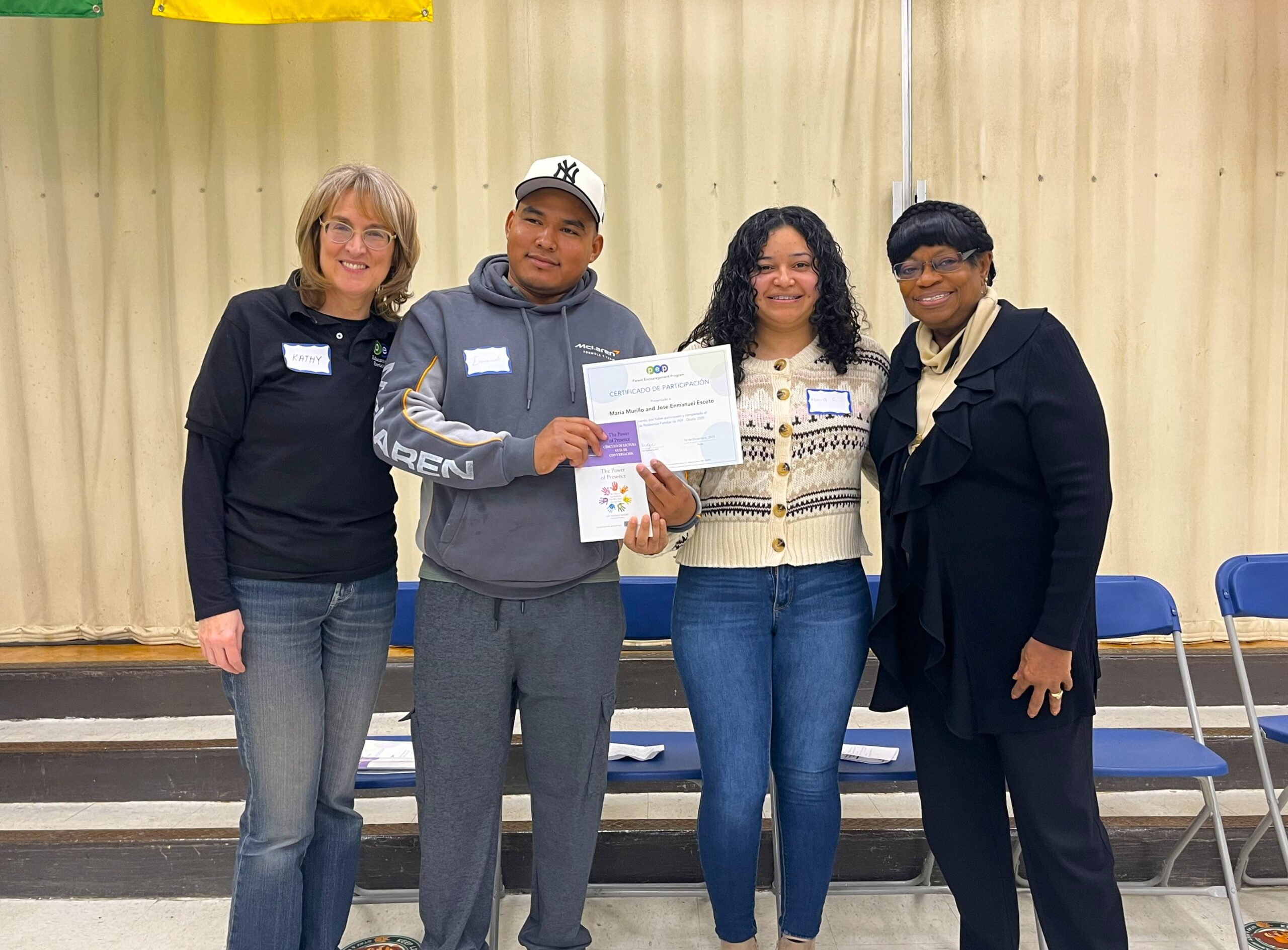
Parents Maria Murillo and José Emmanuel Esocote were among several couples who participated in the PEP training together.

Hedge said there is already interest in expanding the partnership with Judy Centers to offer a program specifically for fathers. “I would love to see that be the next iteration of cohorts we have here,” she said.

The ceremony also drew Joy Moore, a longtime supporter of PEP and the author of The Power of Presence, a book focused on parenting and education. Moore, who raised her three children, including Maryland Governor Wes Moore, as a young widow, said she continues to attend Dorchester County graduations because the program offers something many parents lack: a place to learn and share without judgment.

“Yes, it’s about parenting,” Moore said. “But it’s also about community building.”

PEP operates on a school-year schedule. The winter session will begin in January, with classes starting in early February, followed by a spring program.

For PEP leaders, the December graduation marked more than the completion of a course. It reflected expanding school partnerships, a broader reach into early childhood education, and a growing vision for how the program can support families across Dorchester County.

For the parents and caregivers who graduated, it marked something simpler and more personal: the decision to keep learning, keep showing up, and keep building the kind of home where children can thrive.


 

The Spy Newspapers may periodically employ the assistance of artificial intelligence (AI) to enhance the clarity and accuracy of our content.

Filed Under: 1 Homepage Slider, Cambridge, Education

CWDI Clarifies Reporting on Broker Selection and Hotel Brand Details

December 27, 2025 by Zack Taylor
Leave a Comment

The Cambridge Waterfront Development Incorporated (CWDI) has clarified details in a Spy report that identified a commercial broker for Cambridge Harbor and stated that the board had reached an agreement with a specific hotel brand.

At its Dec. 18 meeting, CWDI Board President Angie Hengst announced that a broker had been selected, but said CWDI has not publicly identified the broker because a contract has not yet been finalized or executed. 

Hengst confirmed the broker information reported in the story is accurate, but said CWDI had not intended for the broker’s identity to be disclosed before completion of a contract.

The story also identified a specific hotel brand as having been selected for the project. Hengst said that contrary to an earlier report from Radio Chesapeake, no hotel brand has been selected and that “CWDI is not currently in negotiations with any hotel brand.”

In addition, the story repeated a report that suggested CWDI would conduct hotel negotiations without legal counsel. Hengst added that CWDI will not conduct talks without the participation of its legal counsel, even if board members are leading discussions.


The Spy Newspapers may periodically employ the assistance of artificial intelligence (AI) to enhance the clarity and accuracy of our content.

Filed Under: 9 Brevities

Trash Contract Extended, Rates Set to Rise

December 27, 2025 by Zack Taylor
Leave a Comment

At its last meeting, Cambridge City Commissioners approved an amendment extending the city’s solid waste agreement with Chesapeake Waste Industries, LLC, and adopted a related rate increase that will take effect Jan. 1, 2026.

City Manager Glenn Steckman told the Commissioners that Chesapeake’s charge to the city is increasing from $17.99 per customer to $19.09, and the city’s monthly bill to residents will rise from roughly $18.25 to $19.35 when the city’s existing 26-cent administrative fee is included. The new monthly charge for an additional garbage can will be $1.75, and the 26-cent administrative fee will remain in place.

Commissioner Shay Lewis-Sisco asked why the city chose to exercise the extension option rather than seek bids earlier. Steckman said the city had a three-year agreement with one-year renewal options, and he believed there was not enough time to issue a full bid for a more extended contract. He also noted that the last time the city bid out the service, it received only one bidder, and county dumping fees have risen.

Lewis-Sisco said she has received complaints from constituents about interactions with Chesapeake Waste and argued the city should be more strategic about contracting so residents are not paying more without improved service. She also objected to the immediacy of the rate hike, suggesting a later start date, such as March 2026, to give residents, especially those on fixed incomes, time to adjust household budgets.

Steckman acknowledged service concerns and said the city has not always been following contract practices, including expectations about how complaints were routed and shared back with the city. 

He added that the city also discovered a long-running discrepancy in billing for second trash cans that, over time, amounted to lost revenue. He said the administration intends to bid out a longer, five-year contract with higher expectations, but emphasized that bringing the service in-house would cost more. “Right now, Chesapeake can do it cheaper than we can,” he said.

The council approved the contract amendment. The rate resolution also passed, with Lewis-Sisco casting the lone no vote.

The Spy Newspapers may periodically employ the assistance of artificial intelligence (AI) to enhance the clarity and accuracy of our content.

Filed Under: 3 Top Story, Cambridge

Mayor Presents Citations Honoring Community Groups

December 26, 2025 by Zack Taylor
Leave a Comment

Mayor Lajan Cephas-Bey and Commissioners present Groove City Black Culture and Heritage Group with a plaque honoring its work elevating Cambridge’s cultural identity.

At last week’s special meeting of the Cambridge City Commissioners,  Mayor Lajan Cephas-Bey presented citations and keys to the city to Cambridge – Dorchester County Christmas Parade Inc., Groove City Black Heritage and Culture Group Inc., and Alpha Genesis Community Development Corporation. 

The mayor read each citation and invited representatives forward for photos with the commissioners.

In presenting the key to the city to the Christmas Parade organization, Cephas-Bey pointed to the group’s role in drawing visitors and supporting local economic activity. She also reflected on the event’s personal meaning for residents and families, describing it as a tradition people look forward to each year.

She highlighted Groove City Black Heritage and Culture Group’s role in elevating Cambridge’s cultural identity, noting the city’s association with the nickname Groove City and telling the group their work is seen and appreciated.

Cephas-Bey’s remarks to Alpha Genesis focused on the organization’s community development efforts and the way its projects showcase Cambridge’s history to visitors. She also pointed to future opportunities for public art tied to street improvements and praised the organization’s emphasis on community-driven planning.


The Spy Newspapers may periodically employ the assistance of artificial intelligence (AI) to enhance the clarity and accuracy of our content.

Filed Under: Cambridge, 3 Top Story

Dorchester Drops out of Challenge to $340 million Conowingo Settlement

December 24, 2025 by Zack Taylor
Leave a Comment

Several Eastern Shore counties have withdrawn from an appeal of Maryland’s recertification for the Conowingo Dam, a challenge that the state feared could jeopardize a $340 million settlement with Constellation, the dam’s owner.

But the county that hosts the dam, Cecil, is moving forward with the complaint, which argues that counties on the Shore were improperly excluded from the recertification process. The appeal also bemoans the fact that the agreement itself does not guarantee that harmful sediment in the dam’s overflowing reservoir will be drained out.

The deal resolved years of legal wrangling between the dam owner and the state, plus waterkeeper groups that intervened in the litigation. In exchange for recertification — which is needed for Constellation to get a 50-year license from the Federal Energy Regulatory Commission to keep operating the hydropower plant at the dam — Maryland is set to receive $340 million from Constellation for environmental projects at the site. If all goes according to plan for the state, the federal license will incorporate Maryland’s conditions.

Several counties on the Shore had joined the appeal of the certification filed by an attorney for the Clean Chesapeake Coalition. But Maryland Department of the Environment officials lobbied counties to rescind their complaint, arguing that it could muddy the waters as the dam tries to get its new FERC license.

Officials also worried that an anticipated policy change from the Trump administration, undermining states’ recertification authority, could make matters worse.

After those conversations, Dorchester and Kent counties opted to abandon the administrative appeal, which MDE will ultimately rule on. Queen Anne’s has also withdrawn, according to the state and the Coalition, but that county did not respond to a request for comment.

“They [MDE] explained to us more about how a delay in this agreement going through could hamper some of the actions they want to do to clean up the bay,” said Dorchester County Council President Lenny Pfeffer. “We’d rather see some cleanup than no cleanup.”

Cecil County, though, is holding pat, said county spokesperson Robert Royster.

In a statement earlier this month, Royster expressed concern that county leaders didn’t play a role in the settlement, and said that the county’s water intakes south of the dam, including in Perryville, Port Deposit, and Havre de Grace, “continue to experience significant impacts from sediment and debris trapped behind the Conowingo Dam.”

Dorchester County officials also learned after filing the administrative appeal that “it wouldn’t be possible to change the negotiations between Constellation and the state,” because they occurred as part of the litigation, Pfeffer said.

“MDE has told us that they will be giving us a seat at the table going forward,” Pfeffer said.

Adam Ortiz, deputy secretary at the Department of the Environment, said the state has “committed to the parties that dropped the challenge that they can have an advisory role in the implementation of the projects.”

“We’ve had good conversations in recent weeks, and when good people talk, good things happen. So, we’re really glad that these counties have stepped back,” Ortiz said.

After nearly a decade of back-and-forth, state officials are eager to “get out of the courts and get to work,” Ortiz said.

Pfeffer said that his county council does not plan to renege on a $5,000 commitment to the attorney who filed the complaint, Charles “Chip” MacLeod. The money came from the county’s contingency funds, Pfeffer said.

Kent County also planned to send the same sum, said Ronald Fithian, president of the board of commissioners. But it’s unclear whether the funds were dispatched before the county reversed course, Fithian said.

Fithian said that the state promised to convene a meeting in January to discuss the Conowingo settlement with the counties — if they dropped the appeal.

“We just figured it might be better to work with them and go to this meeting,” Fithian said, “and see if we could recommend some ways that would make the bay a healthier place.”

By Christine Condon

The Spy Newspapers may periodically employ the assistance of artificial intelligence (AI) to enhance the clarity and accuracy of our content.

Filed Under: Cambridge, 5 News Notes

Commissioners Move to Preserve Historic Race Street Block

December 23, 2025 by Zack Taylor
1 Comment

After extended debate, the Cambridge City Commissioners used a late agenda addition at their Dec. 22, 2025, special meeting to weigh in on a sensitive question about the redevelopment of the downtown: how much of Race Street’s historic fabric can be removed and still be considered preservation?

The discussion was prompted by the possibility of partially demolishing the Hearn and Skinner buildings along the 500 block of Race Street as part of a redevelopment effort by Green Street Housing. Ward 5 Commissioner Brian Roche introduced a resolution intended as a statement of principle and a show of support for the city’s Historic Preservation Commission, the volunteer body that will ultimately decide demolition and design approvals.

“This resolution addresses the proposed partial demolition of historic buildings on the 500 block of Race Street,” Roche said, stressing that it was not meant “to oppose redevelopment or any particular applicant,” but to reinforce historic district standards and ensure demolition is treated “as a last resort.”

In considering the measure, commissioners found themselves in a difficult position: wanting to speak early without appearing to pressure a process designed to operate independently of the council.

Roche said a recent presentation to the Historic Preservation Commission proposed “further demolition” than had been previously discussed, involving both the Hearn and Skinner buildings. He reminded colleagues that the structures had already received significant state investment for stabilization. Public money, he said, had been spent to preserve the buildings, not clear the site.

Ward 1 Commissioner Brett Summers, a real estate developer working on his own Race Street project, argued that adaptive reuse is both feasible and consistent with successful historic tax credit projects. He said his redevelopment retained “the existing walls on all four sides,” both to strengthen a Maryland Historical Trust tax credit application and because “it’s kind of like recycling a building.”

Summers said he was “disappointed” that Green Street had concluded the existing building envelope would not work for its plans. He also questioned claims that demolition is structurally necessary, suggesting engineering conclusions often reflect the outcome a client seeks. 

While he said he supports Green Street as a developer. He wants the buildings activated, Summers argued redevelopment should work within existing envelopes and said denial of demolition could “force everyone back to the table,” including Green Street, state housing officials, and the city.

Ward 2 Commissioner Shay Lewis-Sisco shifted the conversation toward process. While supporting preservation in principle, she said she lacked sufficient context to vote comfortably. 

“I clearly am missing some of the context to the resolution,” she said, citing the absence of a staff recommendation and formal Historic Preservation Commission action on demolition. Her concern, she said, was not opposition to preservation but acting without a clear record.

City Manager Glenn Steckman acknowledged procedural problems regarding the measure, noting the resolution reached the agenda without the usual legal review. He also made “crystal clear” where the administration stood. “The staff would like to see this building preserved,” Steckman said, adding that the city had discussed hiring an outside expert so the Historic Preservation Commission would have information beyond the applicant’s submissions.

Planning and Zoning Director Brian Herrmann explained that Green Street requested an informal review, allowed under the Historic Preservation Commission’s guidelines, a pre-application step intended to gather feedback before filing. “There has been no application to date,” Herrmann said.

He added that the Maryland Historical Trust had indicated it would be “reluctantly supportive” of demolition while still preferring conservation. In response, Herrmann said, the Historic Preservation Commission acknowledged practical constraints but asked Green Street to “sharpen their pencil” and return with alternatives that would preserve more of the street wall and avoid a patchwork outcome.

Herrmann said adaptive reuse projects often hinge on balancing preservation standards with construction economics and financing needs. He noted that limited density can drive up per-unit costs and said the commissioners discussed whether increased density could enable greater conservation.

As the conversation turned to structural claims, Herrmann suggested commissioning an independent structural assessment paid for by the city. While the Historic Preservation Commission includes architects and engineers, he said an outside review could help avoid a decision based solely on competing reports prepared for the applicant.

Roche returned to what he described as the core concern: timing. He said he had been involved in the Hearn Building project since early stabilization efforts and argued its original purpose was preservation, not clearance, reframed as redevelopment.

“It is not an urban renewal project,” Roche said. “It is a preservation project.” He added that waiting for a formal decision before expressing support could leave the council’s views irrelevant. “We can’t wait until [HPC] makes their decision to express our support of them,” he said.

Council President Sputty Cephas urged caution. While acknowledging the desire to be proactive, he stressed the importance of trusting appointed boards and staff. “At some point, we really have to trust the people that we put in place to make the decisions,” he said, warning against undermining confidence in the process.

As the debate unfolded, it became clear that the disagreement was not simply preservation versus development, but also about governance. Commissioners wrestled with how much guidance becomes pressure, whether early statements empower or bias a commission, and whether restraint or urgency best serves the city. Lewis-Sisco framed that tension directly, saying she wanted the Historic Preservation Commission “to feel empowered” and not deliver a recommendation influenced by council opinion.

Ultimately, the council chose a middle course. It moved forward, but revised its approach.

Ward 3 Commissioner Frank Stout moved to amend the resolution to preserve its intent while correcting procedural issues identified during discussion. Lewis-Sisco pressed for changes to remove language suggesting an application had been submitted and to avoid singling out a specific applicant, instead articulating a district-wide principle.

One change was both personal and procedural. During the amendment discussion, the mayor asked to have her title removed from a section of the resolution, saying she did not have enough information to object formally. That request was incorporated into the revised language.

Stout then moved to send the resolution to City Attorney Patrick Thomas for proper formatting and incorporation of the council’s feedback. The amendment passed with Lewis-Sisco opposed. A subsequent vote adopted the amended resolution, again with Lewis-Sisco voting no.

What the council approved was not the original draft introduced late in the week, but a revised statement shaped by the meeting’s own uncertainties and designed to avoid claims the record could not support.

The episode highlighted a broader challenge for Cambridge as it seeks to revive long-troubled downtown properties. Projects like the Hearn Building present both housing opportunities and tests of whether preservation standards hold when costs rise and timelines tighten. Even among commissioners inclined toward preservation, differences emerged over how elected officials should engage before the Historic Preservation Commission has a complete application, staff analysis, and formal vote.

 For a council aware of how quickly redevelopment proposals can harden into fait accompli, the Race Street debate highlighted a familiar challenge in downtown projects: ensuring clarity and proper sequencing as preservation questions move from early discussion to formal review.


The Spy Newspapers may periodically employ the assistance of artificial intelligence (AI) to enhance the clarity and accuracy of our content.

Filed Under: 3 Top Story, Cambridge

CWDI Selects Broker, Takes Stock as Year Closes

December 22, 2025 by Zack Taylor
Leave a Comment

At its December 18, 2025, meeting, the Cambridge Waterfront Development Inc. (CWDI) board announced that it has selected a commercial real estate broker to market properties at Cambridge Harbor. 

CWDI Board President Angie Hengst said the broker’s identity will be revealed once the contract is finalized, adding the presence of a broker marks a significant step toward attracting private developers for the infrastructure and public amenities envisioned for the project. 

The board also used the year’s final meeting to review finances, discuss a proposed operating budget, and note renewed federal interest in the project.

Financial Review and Approvals

Board members approved updated financial statements for audit, showing the project remains primarily grant-funded with total grant income just under $2.4 million. Key funding includes a nearly $1.8 million federal Economic Development Administration grant, a state appropriation as local match, and about $297,000 from the state Rural Economic Development Fund for infrastructure design.

Earlier property sale proceeds offset a reported loss of roughly $75,000. CWDI is holding about $109,000 in retainage payable (10 percent withheld from contractor invoices until closeout), with half already released.

The board ratified approximately $98,000 in prior executive committee-approved expenditures and noted pending approvals for $6,200 in recurring costs. A $150,000 invoice from the earthmoving contractor (from October) awaits engineer certification before payment.

Operating Budget and Future Funding

A draft 2026 operating budget projecting $485,000 in income was presented, including anticipated property sale proceeds and planned requests for $75,000 each from the City of Cambridge and Dorchester County in 2027.

Expenses cover contract services, administration, audits, legal/professional fees, insurance (high cost, including liability, directors/officers, and property), maintenance (expected to increase post-promenade opening for landscaping and stormwater management), utilities, and marketing/public relations.

No vote was taken; the budget will be revisited at the January annual meeting.

Federal Interest

The board approved sharing project information with Lacey Summers, Mid-Atlantic director for the U.S. Department of Housing and Urban Development, who requested a site visit and discussions with local officials about potential infrastructure funding via the federal Opportunity Zone program, which offers tax incentives to boost investor engagement.

Attendees included board members Hengst, Michael Frenz (VP, remote), Frank Narr, Tim Crosby, Gaver Nichols (remote), Bernard Brathwaite (remote), Tracy Ward (CAO), Glenn Steckman (City Manager), and Jerry Jones (County Manager).

The Spy Newspapers may periodically employ the assistance of artificial intelligence (AI) to enhance the clarity and accuracy of our content.

Filed Under: 3 Top Story

Horn Point Confirms Deep NOAA Cuts

December 19, 2025 by Zack Taylor
Leave a Comment

A nearly 50 percent reduction in federal funding for oyster restoration threatens to sharply reduce oyster production in the Chesapeake Bay, jeopardizing one of the region’s most successful environmental recovery efforts, according to the director of the Horn Point Laboratory.

The Trump administration has cut National Oceanic and Atmospheric Administration funding for oyster hatchery operations at the University of Maryland Center for Environmental Science’s Horn Point facility by about 47 percent for the coming year, said Mike Sieracki, the laboratory’s director.

Horn Point’s Mike Sieracki: ‘This is not something we can paper over.’

The funding supports the labor-intensive production of hundreds of millions of oyster larvae and juvenile oysters at the Lab’s celebrated hatchery each year, which are used to restore reefs throughout the Bay.

“With a cut of this size, we would be in danger of reducing our production by more than 50 percent,” Sieracki said. “Most of the NOAA money goes directly to paying the people who do the work.”

The reduction stems from NOAA’s Chesapeake Bay Office, part of the agency’s National Ocean Service, which finances oyster restoration through the Maryland Department of Natural Resources.

Horn Point’s hatchery — the largest in Maryland — is a central supplier for state-led restoration projects. The funding flows from NOAA through the Maryland Department of Natural Resources and the Oyster Recovery Partnership, which coordinates oyster restoration across the state.

The cut comes during the final year of a four-year grant, with no assurance that funding will continue beyond this year, Sieracki said.

Oyster restoration is widely regarded as the Chesapeake Bay’s most significant environmental success of the past decade. Restored reefs filter water, improve clarity, provide habitat for fish and crabs, and help stabilize shorelines.

That success led oyster restoration to be carried forward as a cornerstone of the Chesapeake Bay Program’s newly announced long-term restoration plan, which commits five states to restoring roughly 1,000 acres of oyster habitat over the next decade or more.

“There was never any controversy about the oyster part of the plan because it’s been such a success,” Sieracki said.

Horn Point employs eight full-time hatchery workers and typically brings on eight interns during the summer. Staffing levels are already lean, he said, and further reductions could lead to layoffs and loss of specialized expertise.

“This is not something we can paper over,” Sieracki said. “You can’t squeeze water from a rock.”

Beyond reducing the number of oysters produced, the funding shortfall could also affect quality, he said. Hatchery work requires experience to ensure oysters are healthy and resilient once planted on Bay reefs.

Under its federal agreement, Horn Point is allowed to provide oyster larvae to private growers, though restoration has always taken priority. Commercial sales account for about 25 percent to 30 percent of operations. Shifting further toward industry support would place the lab in competition with private hatcheries, a move Sieracki said is not ideal for long-term restoration.

“It’s not good for the Bay to rely on just one hatchery,” he said. “The restoration side is what’s going to take the big hit.”

State officials are exploring alternative funding sources, but Sieracki said it is unlikely they can make up the difference on short notice, particularly given Maryland’s budget constraints.

The potential consequences extend beyond the laboratory, he said, affecting water quality, fisheries, waterfront communities, and the Bay’s broader ecosystem.

“This is the public’s money, and the public needs to know,” Sieracki said.

The Spy Newspapers may periodically employ the assistance of artificial intelligence (AI) to enhance the clarity and accuracy of our content.

Filed Under: 3 Top Story, Cambridge, Ecosystem, Uncategorized

Cambridge Bets on Homeownership to Lift Neighborhoods

December 18, 2025 by Zack Taylor
Leave a Comment

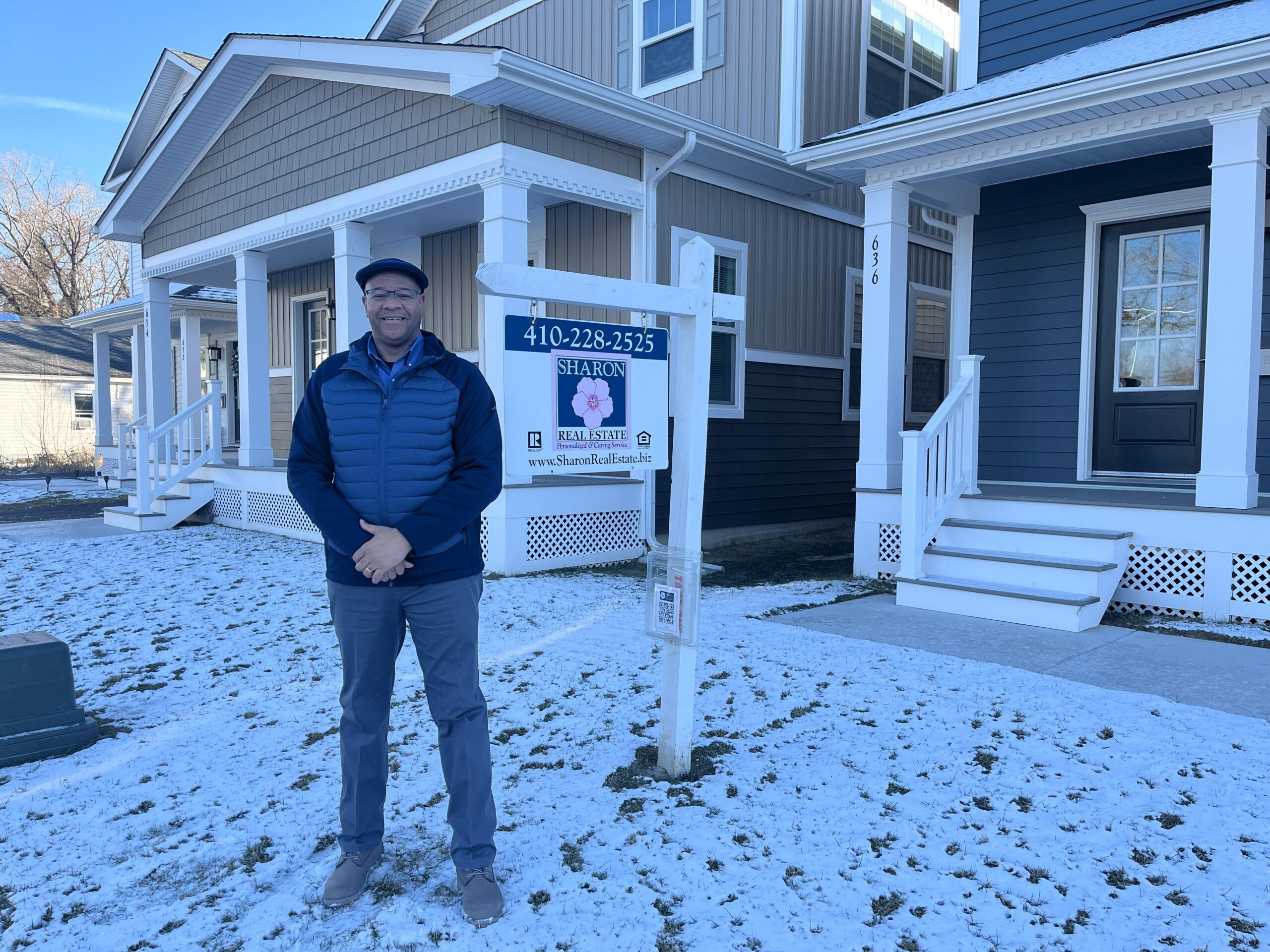
Cambridge Housing Program Manager Eddie Crosby in front of the new homes built under its Pinewood Glen pilot project through the city’s Healthy Homes initiative.                                                                            
The City of Cambridge is trying to make homeownership attainable for local families while stabilizing older neighborhoods that have struggled with vacancy and disinvestment. Using state-backed financing, new construction, and targeted repairs, the city hopes to turn empty or distressed properties into long-term stability for residents who want to stay and invest in their community.

The strategy ties together state-supported financing tools, homebuyer education, and the city’s Healthy Homes framework, which focuses on improving safety and quality of life while strengthening neighborhood pride and long-term investment..

This week, Housing Program Manager Eddie Crosby showed The Spy four new homes known as Pinewood Glen, constructed by the city this year to launch the effort, and answered questions about how the program works and what comes next.

Q: What does Cambridge mean when it says it is trying to help people afford homes and strengthen neighborhoods?

A: For us, it starts with the idea that homeownership is more than a transaction. It creates stability, and stability creates pride. When people own a home, they are more likely to stay, invest in upkeep, and put down roots. That is what changes a block.

In the historic Pine Street triangle, which borders High and Washington Streets, we saw a concentration of distressed properties and vacant sites. We knew we needed a solution that did not just build something new, but also helped real people qualify and move in.

Q: How are you making that happen?

A: That is why the city pursued the state’s Homeownership Works initiative, which helps bridge the gap between the cost of building a home and what a buyer can reasonably afford.

The assistance takes the form of a “soft” second mortgage, meaning the loan does not require monthly payments. It is forgiven over time as long as the homeowner meets program requirements, such as living in the home and staying current on the primary mortgage. After about five years, the second mortgage falls away entirely.

The structure allows buyers to move into a brand-new home with built-in equity, creating a pathway to long-term stability and generational wealth that might otherwise be out of reach. In short, it lowers the purchase price without adding another monthly bill.

Q: Walk me through Pinewood Glen. What is it, and who is it meant for?

A: Pinewood Glen is a four-home development we built as new construction in the Pine Street District. Some people assume these are rehabs, but they are new homes.

The city was able to purchase land from a homeowner who was ready to sell and no longer wanted to maintain the property, which gave us the chance to do something intentional with the site.

The homes are priced from $225,000 to $235,000, depending on size and layout. The largest is about 1,900 square feet. They are aimed at buyers who qualify under program guidelines up to 120 percent of the area median income, and lenders still apply typical underwriting standards.

We are not trying to bring in higher-income households to push people out. Our aim is revitalization that includes Cambridge residents and helps stabilize a historic neighborhood.

We intentionally marketed first to city residents. The first buyer is a Cambridge resident, born and raised here, who is a first-time homebuyer and wanted to own a home in the city she loves. For us, that matters. That is what it looks like when the benefits of investment land with the people who already call this place home.
(The Spy requested to interview this homeowner, who declined to maintain privacy.)

Q: How do residents move from “interested” to “approved,” and why does the city require classes?

A: We want buyers to succeed, and success starts with preparation. There is an eight-hour homebuyer education requirement offered through Salisbury Neighborhood Housing Services, which comes to Cambridge on Saturdays to host the training.

Completing that fast-tracks buyers into pre-qualification. That is where lenders review finances and debt-to-income ratios, and where buyers choose a lender and work with the sales agents.

This is not meant to be a hurdle, but a ramp. When people understand the responsibilities of ownership and how mortgages work, they are better equipped to keep the home, build equity, and avoid problems that can come when buyers are rushed into a deal.

Q: Why does it sometimes feel like the city is moving slowly, even when there is demand?

A: Some of it is process. Because the City Commissioners own the properties under the program, each one must be declared surplus by ordinance before it can be sold.

That ordinance must go through two readings, and the commissioners only meet every other week. Each sale must be handled as its own action, since each property will have a different buyer.

It can feel cumbersome, but we are careful because this is a pilot. We would rather be safe than sorry as we work out the kinks.

Q: Four houses are a start, but many neighborhoods still have vacant properties. How can this be scaled?

A: You are right. The work needs to be bigger than just four homes, and it will be.

When people drive through a neighborhood and see vacant properties, it is easy to assume the properties are abandoned. But vacancy does not always mean abandonment. Some properties are city-owned through tax sale processes or because owners have decided they cannot maintain them.

We are being strategic about which structures can be rehabbed for resale, which should be bid out to investors under specific requirements, and which are too distressed and may need to become green space until new construction makes sense.

Q: What comes next, and how does this connect to the Healthy Homes initiative?

A: Pinewood Glen is a start, not the finish. The next phase includes more homes planned at Chesapeake Court and Schoolhouse Lane, which will target affordability more directly.

In our Healthy Homes synopsis, we describe plans for 10 single-family homes intended for sale at 80 percent of the area median income in that subdivision. We also listened to community feedback about size and accessibility. Future designs will include smaller homes and one-level options that can work for seniors as well as young families.

Healthy Homes is the umbrella for this work. It is focused on creating safe, healthy living environments. That includes new construction, but it also includes protecting existing housing stock so neighborhoods do not decline around the edges.

For example, the city’s Homeowner Helper program assists seniors age 50 and older with critical repairs, including structural, mechanical, and facade issues. Repair assistance ranges from $1,000 to $15,000, with no-interest loans repaid at sale or through a 36-month installment plan. The city is also building capacity for lead hazard identification and remediation in targeted areas.

On top of that, there are tools to help buyers manage upfront costs. Energy assistance grants support energy-efficient, affordable new construction for low- to moderate-income families and can be used toward down payment assistance or closing costs of up to $10,000.

That is the difference between watching a new home go up and getting the keys. At the end of the day, this is about momentum. If a pilot works, it builds confidence for more development, more partners, and more investment that does not leave local families behind. Our goal is a Cambridge where people can afford to buy, take pride in where they live, and help lift the neighborhood with them.

The Spy Newspapers may periodically employ the assistance of artificial intelligence (AI) to enhance the clarity and accuracy of our content.

Filed Under: 3 Top Story, Cambridge, News

Kids’ Christmas Wishes Open New YMCA Family Center

December 15, 2025 by Zack Taylor
Leave a Comment

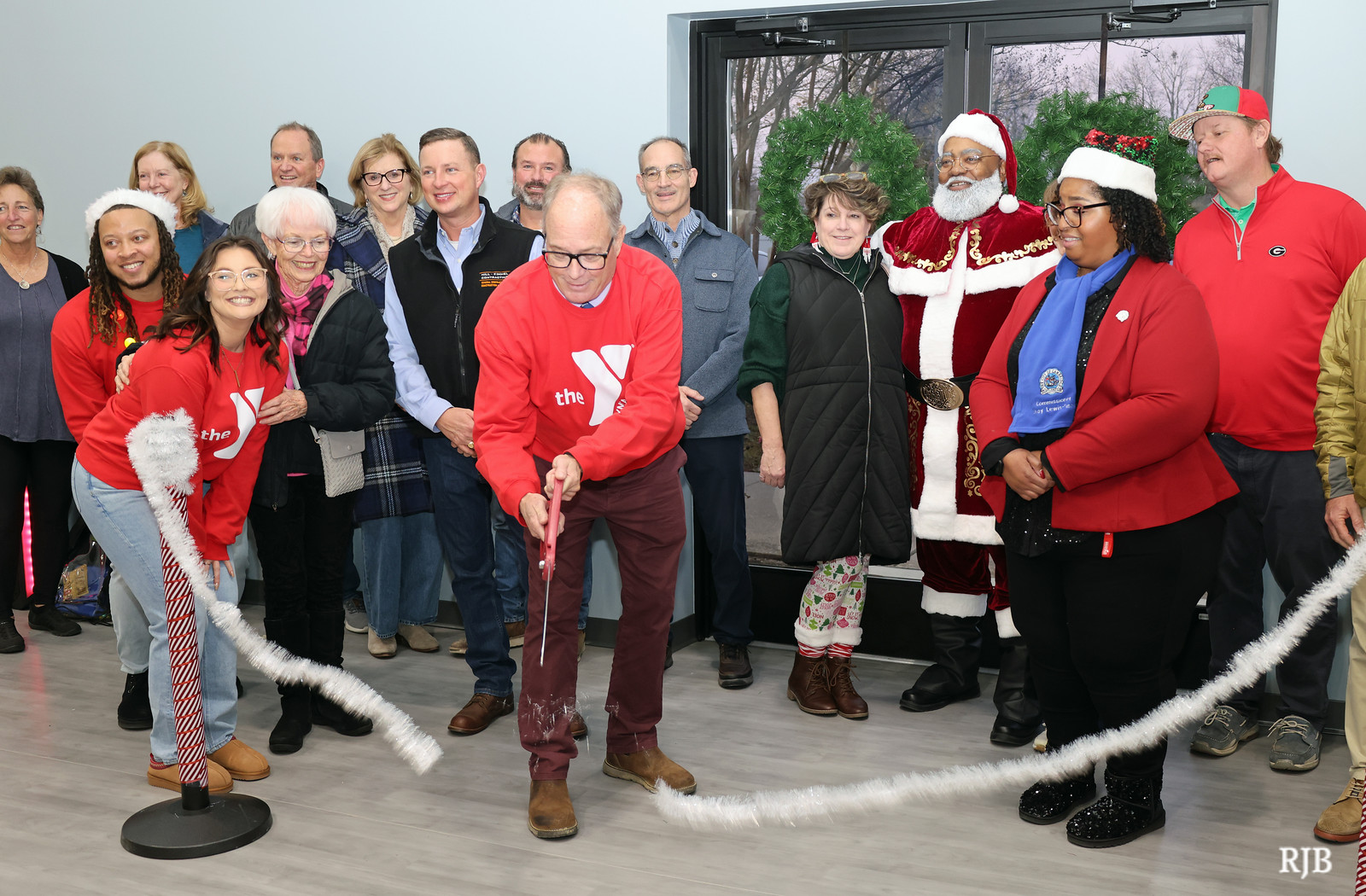
Flanked by YMCA staff and local officials, past Dorchester County Family YMCA board member and Senior Vice President of Real Estate Development and Facility Management Chris Hauge cuts the ribbon to inaugurate the new Family Engagement Center.

With a ribbon-cutting ceremony on Friday afternoon, the Pauline F. and W. David Robbins Family YMCA officially opened a newly renovated space for Cambridge families, before the focus shifted to holiday cheer as children lined up to tell Santa what they hoped to find under the tree.

The opening of the Bob Brannock Family Engagement Center at the Robbins Y was followed by an evening of holiday activities that drew dozens of families from all over Dorchester into the building. Photos with Santa, cookies and cocoa, crafts, and book displays filled the new multi-purpose space as parents and children lingered into the evening.

Santa, portrayed by Jeffrey Hill, listened patiently as youngsters shared their Christmas lists. Nathan Jackson, 6, of Hurlock, said he was hoping for a computer to play video games and an electric dirt bike. Nairobi Murray, 5, asked for a nail kit and a bracelet, while her brother Brandon, 6, had video games at the top of his list.

Friends Amira Greene and Alani Johnson, both 7, arrived with ambitious requests. Alani asked for skincare products, a vanity set, and an electric motorbike. Amira, a Lilo & Stitch enthusiast, requested plane tickets to Maui for her family – including their dog – along with a cosmetics kit and an electric motorbike to roll through town with Alania. Isla Weglarz, 6, of Woolford, who attended with her mother, Lauren, and asked Santa for a Gabby’s Dollhouse toy and a puzzle.

Cambridge friends Amira Greene and Alani Johnson, both 7, had big requests for Santa: plane tickets, motorbikes, and cosmetic kits.

As children waited for their turn with Santa, families circulated through the bright, newly finished space. The Family Engagement Center was created by combining and renovating two former racquetball courts and adjacent storage areas, transforming several rooms into a single, open space for programming and community gatherings. The project took nearly a year to complete and cost approximately $500,000.

Robbins YMCA Executive Director Jennifer Lehn told The Spy that the new center will allow the Y to expand programs previously limited by space and temperature concerns, including senior fitness classes and Rock Steady Boxing, a non-contact fitness program designed for people living with Parkinson’s disease.

“We’re really looking forward to filling the space with programs,” Lehn said, noting the center will also support large senior classes that were previously affected by extreme heat or cold in the gym.

The room will be used for important children’s programming, including birth-to-five activities and early literacy efforts connected to the Dorchester County Campaign for Grade-Level Reading, as well as educational programs and meetings with community partners.

Nathan Jackson, 6, of Hurlock, after negotiating a new computer to play video games and an electric dirt bike with Santa.

The investment comes as YMCA leaders continue to weigh the long-term needs of the Cambridge facility, which is housed in a nearly 100-year-old former high school building that faces ongoing structural challenges.

Robbie Gill, CEO of the YMCA of the Chesapeake, said the improvements were necessary but do not diminish the organization’s belief that Dorchester County ultimately needs a new YMCA.

“The project is a substantial investment,” Gill said. “As the backbone organization for the Campaign for Grade-Level Reading, [the YMCA] is committed to working with our partners and the community to expand programs and services for young children.”

Gill said the YMCA remains focused on ensuring students are reading on grade level by third grade, even as conversations about a future relocation continue.

“We still deeply believe a new Y is needed in Dorchester County,” he said. “But not at the expense of those that need our support, programs, and services today and tomorrow.”

A proposal to relocate the facility to the Cambridge waterfront previously drew public opposition, which discouraged donor interest, Gill said.   Meanwhile, the organization is encouraged by the progress being made at the existing site and sees the new center as critical to meet immediate community needs while longer-term solutions remain under consideration.

Isla Weglarz, 6, of Woolford, asked Santa for a Gabby’s Dollhouse toy and a puzzle for Christmas.

The new center is named in honor of Charles Robert “Bob” Brannock, a longtime YMCA supporter who volunteered thousands of hours at the YMCA of Dorchester County, repairing equipment and improving the facility.  

A lifelong advocate for physical fitness, Brannock attended the Y daily and remained active as a sailor, cyclist, and rower until declining health from Parkinson’s forced him to give it up. The introduction of Rock Steady Boxing, therapeutic for Parkinson’s, is a further tribute to Brannock. 

As families celebrated the season, YMCA leaders said the new Brannock Family Engagement Center honors its namesake while helping the organization make the most of its aging home as plans for the future continue.

Here is a video preview of the new  Rock Steady Boxing program that will start shortly in the new center.

And the new Enhanced Fitness program.

The Spy Newspapers may periodically employ the assistance of artificial intelligence (AI) to enhance the clarity and accuracy of our content.

Filed Under: Education, 2 News Homepage

  • 1
  • 2
  • 3
  • …
  • 8
  • Next Page »

Copyright © 2025

Affiliated News

  • The Chestertown Spy
  • The Talbot Spy

Sections

  • Arts
  • Cambridge
  • Commerce
  • Ecosystem
  • Education
  • Food & Garden
  • Health
  • Local Life
  • News
  • Point of View
  • Senior Nation

Spy Community Media

  • Subscribe for Free
  • Contact Us
  • COVID-19: Resources and Data

© 2025 Spy Community Media. | Log in