
MENU

Sections

  • About Us
    • Editors and Writers
    • Sponsorship Terms & Conditions
    • Code of Ethics
    • Sign Up for Cambridge Spy Daily Email Blast
  • The Arts and Design
  • Culture and Local Life
  • Food & Garden
  • Public Affairs
    • Commerce
    • Health
    • Ecosystem
    • Education
    • Senior Nation
  • Point of View
  • Chestertown Spy
  • Talbot Spy

More

  • Support the Spy
  • About Spy Community Media
  • Advertising with the Spy
  • Subscribe
December 6, 2025

Cambridge Spy

Nonpartisan and Education-based News for Cambridge

  • About Us
    • Editors and Writers
    • Sponsorship Terms & Conditions
    • Code of Ethics
    • Sign Up for Cambridge Spy Daily Email Blast
  • The Arts and Design
  • Culture and Local Life
  • Food & Garden
  • Public Affairs
    • Commerce
    • Health
    • Ecosystem
    • Education
    • Senior Nation
  • Point of View
  • Chestertown Spy
  • Talbot Spy
2 News Homepage

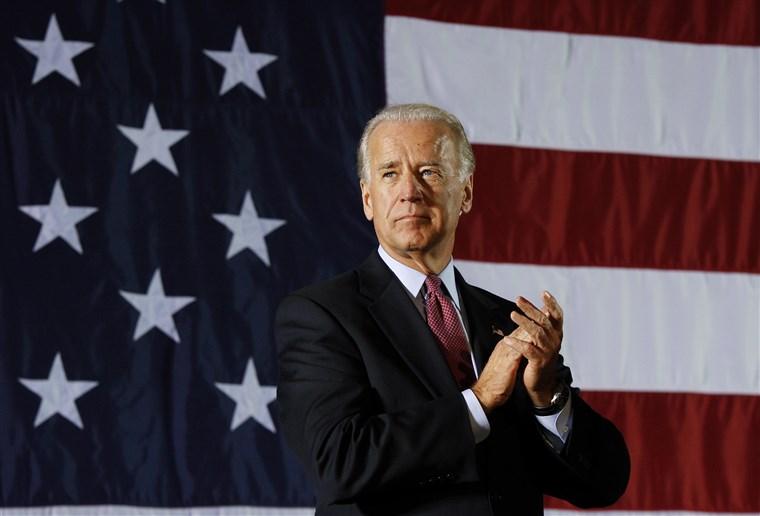
Biden Wins Talbot County in Final Unofficial Count; First Dem Victory Here Since 1964

November 14, 2020 by John Griep
Leave a Comment

Joe Biden has eked out a narrow victory in Talbot County, according to the final unofficial results, becoming the first Democratic presidential candidate to win here since 1964, when Lyndon Johnson took the county during his landslide over Republican Barry Goldwater.

Election officials conducted the final canvassing on Friday, when mail-in ballots could be received until 10 a.m.

Biden has 11,062 votes (49%) to 10,946 (48.5%) for President Donald Trump, the Republican incumbent, as of the final unofficial count.

The shift in results over time mirrors similar trends seen nationwide — Trump supporters voted in person (whether on Election Day or during early voting); the majority of Biden voters opted to vote by mail. Nearly 77% of Talbot’s votes for Trump were in person; about 57% of Biden’s votes were by mail.

In Talbot County, early voting was the most popular choice with more than 10,000 voters casting ballots in the days before Election Day. More than 8,500 county residents cast mail-in ballots, an option urged by the Biden campaign due to the ongoing COVID-19 pandemic. Nearly 2,900 voters went to the polls on Election Day.

Biden outperformed Hillary Clinton by about 7 percentage points. Clinton got 42.1% of Talbot’s vote in 2016; Trump had 52.2%.

In 2012 and 2008, Barack Obama had similar margins of defeat in the county as Clinton. He lost Talbot by more than 12 percentage points against Mitt Romney in 2012; by about 10 percentage points against John McCain in 2008.

Republican George W. Bush won Talbot by nearly 20 percentage points against Democrats John Kerry in 2004 and Al Gore in 2000.

The Spy Newspapers may periodically employ the assistance of artificial intelligence (AI) to enhance the clarity and accuracy of our content.

Filed Under: 2 News Homepage Tagged With: Biden, democrats, early voting, election, election day, mail-in, republicans, Talbot County, Trump

What Will We Know and When Will We Know it on Tuesday (Or Later)?

November 3, 2020 by Capital News Service
Leave a Comment

With record voter turnout, including a high volume of mail-in ballots, and mail delays expected, it is unclear whether we will know who the next president is on election night, experts say.

“I’ve been expecting the unexpected,” said Michael Hanmer, research director at the Center for American Politics and Citizenship, a nonpartisan research center at the University of Maryland, College Park. “I think that’s the best way to work through this because there’s so many different possibilities.”

However, Hanmer told Capital News Service it’s “pretty safe to say” that Democratic nominee Joe Biden is headed for a significant popular vote margin over President Donald Trump. But, similar to 2016, determining the next occupant of the Oval Office is going to come down to the Electoral College – and it’s possible this year that may not be settled until some days after Tuesday.

As of Friday morning, nearly 83.5 million early votes were already cast, of which nearly 54 million, or 64.6%, were mailed, according to the University of Florida’s United States Elections Project.

But in many states, including four of eight battleground states — Georgia, Michigan, Wisconsin and Pennsylvania — ballots are not allowed to be counted until Election Day.

Twenty-one states, plus the District of Columbia, accept ballots up to 17 days after Election Day. Of these, two are battleground states: Pennsylvania and North Carolina.

New York and Alaska, which accept mail-in ballots 7 and 10 days after Election Day, respectively, have said that they will not report “any mail votes on election night,” according to the New York Times.

In the battleground state of Michigan, Secretary of State Jocelyn Benson has estimated her count may be completed by Nov. 6, three days after Election Day. Pennsylvania, another battleground, may get the bulk of its votes tallied within a couple of days, according to Secretary of State Kathy Boockvar.

But the nation might not have to wait too long because “we’ll have a lot of information about a couple of really key states (on election night),” particularly Florida and Arizona, where mail-in ballots must be received by Election Day, Hanmer said.

“That might allow us to project forward what’s going to happen in a definitive way,” he said.

“I think really the only state that (Hilary) Clinton won (in 2016) that (Donald) Trump has a shot at is Nevada and it’s a relatively small number of electoral votes, so I don’t think Trump can win without Florida,” Hanmer he said.

While a Biden win in Florida would suggest that he’s going to win in both popular and electoral votes, turning Arizona blue would not make results as clear, according to Hanmer. If Biden gets Arizona, it can foreshadow a national victory by a huge margin or a close race determined by few electoral votes for either candidate, he said.

However, FiveThirtyEight’s presidential forecast predicts that if Biden wins Florida or Arizona, he has a 99% and 98% chance, respectively, for an Electoral College win.

Hanmer, who also is a government and politics professor at Maryland and an expert for MIT’s Election Data & Science Lab, expects that “we should know a good bit” about Georgia, which has an Election Day deadline for mail-in ballots, and North Carolina, as well.

While North Carolina accepts ballots after Election Day, the state has seen a high volume of early voting. FiveThirtyEight’s founder Nate Silver reported that “it’s expected that as much as 80% of the vote there can be announced shortly after polls close.”

If those go to Biden, Hanmer predicts that the country won’t “have to worry as much about what the count is going to be in some of the states that are processing late because I think that will largely solidify things in terms of us having a clear winner.”

If Biden wins Georgia, his chances for an electoral win is 99%, while grabbing North Carolina, pushes the probability over 99%, according to FiveThirtyEight’s presidential forecast.

In the case that Georgia and North Carolina do not go to Biden, Hanmer said “we might just have to wait until all the counting is done.” Then the results can “really hinge” on Pennsylvania, where “we’re just not going to have solid information on what the result is…for a while because they can’t count or process their ballots until very late,” he said.

Trump has repeatedly called for final results to be called on election night, in part due to his distrust in mail-in voting – even though he did it himself this year.

“Big problems and discrepancies with Mail In Ballots all over the USA. Must have final total on November 3rd,” he tweeted Monday night.

That kind of rhetoric is inappropriate, warned the National Council on Election Integrity, a bipartisan group of former elected officials.

“Our Constitution and our state election laws require us to count every vote, including legally cast absentee votes,” the council said in a statement Wednesday. “Because of an unprecedented number of absentee ballots this year, counting every vote is not likely to be concluded on election night. In some states, thorough vote counting can last weeks, even in the best of times.”

Almost half of returned mail ballots in 19 states that report party registration data, including Arizona, Florida, Pennsylvania and North Carolina, were from registered Democrats, according to the Elections Project. On the other hand, 60% of Trump supporters told the Pew Research Center in late summer that they would rather vote in person on Election Day.

On election night, this could mean that in states that report mail-in ballots first, initial results may favor Biden. In places that report in-person, day-of votes first, such as most parts of Virginia, Trump may seem to have the lead.

While this pattern in which ballots received post-election favor Democrats is well-established, Walter Shapiro, in an analysis for the Brennan Center for Justice, warns that the pandemic may disrupt this trend “since different demographic groups may be voting by mail.”

In key states, the Republican Party wants to prevent this “blue shift” while Democrats are relying on it. However, research reported by MIT News shows that historically, even “some of the biggest post-Election Day shifts” — the largest being 6.9% in 1968 towards George Wallace in Georgia — have not tipped the outcome of the election.

Yet both parties have fought over mail-in ballot deadlines in the Supreme Court, and such legal back-and-forth, which may continue after Election Day, could further delay results in critical states.

Last week, the Supreme Court denied the Pennsylvania Republican Party’s request to reject ballots if received after Election Day. In a 4-4 decision, the court ruled that the battleground state can accept ballots if received within three days after Election Day. After the party asked the court to reconsider the decision, the justices let their earlier ruling stand.

Also on Wednesday, the Supreme Court backed a lower-court ruling and similarly allowed North Carolina to accept mail-in ballots up to nine days after Election Day, extending the deadline to Nov. 12.

However, an attempt by Wisconsin Democrats to also extend the mail-in ballot deadline by three days to Nov. 6 was first accepted by a federal district court, but then blocked by an appeals court. The Supreme Court voted 5 to 3 on Monday to uphold the appeals court.

Another blow to Democrats came on Thursday when a federal appeals court struck down Minnesota’s plan to accept mail-in ballots up to seven days after election. The key state will now only be able to accept ballots received by 8 p.m. on Election Day.

While states can continue contesting mail-in ballot deadlines and bring them to the Supreme Court — which Hanmer told CNS wouldn’t be surprising — “the court sent a pretty strong signal that changing things now, given how deep we are into the process, is unlikely,” he said.

He predicts that legal challenges after the election are “more likely,” and so are anger, disbelief and protests from supporters on both sides.

“It seems very odd to say that about a presidential election in the United States, but there’s a lot of signals that suggests that large portions are not going to accept well the outcome either way,” Hanmer said.

“What people do about that, I think, is a big unknown,” he said. “But it’s something we have to prepare for.”

The National Council on Election Integrity counseled patience and trust: “Every ballot cast in accordance with applicable laws must be counted — that’s the American way. All Americans, including the presidential candidates themselves, have a patriotic duty to be patient as election officials count the votes. Both candidates have a responsibility to remind the country that November 3 is the last day for votes to be cast — not the last day for votes to be counted.”

By Kaanita Iyer

The Spy Newspapers may periodically employ the assistance of artificial intelligence (AI) to enhance the clarity and accuracy of our content.

Filed Under: Maryland News Tagged With: ballots, election, mail-in, results, turnout

More Than Half of Md.’s Voters Have Already Cast Ballots

November 2, 2020 by Maryland Matters
Leave a Comment

Just over 2 million ballots had been cast in Maryland by Sunday morning, according to data from the State Board of Elections, meaning roughly half of the state’s 4.1 million electorate has voted so far.

A total of 780,635 Marylanders had voted early after polls closed on Saturday night, according to state data. Combined with the 1,234,806 mail-in ballots returned to local boards of elections so far, 2.015 million ballots have been cast in the state so far.

And by 4 p.m. Sunday, state election officials reported that an additional 55,839 early votes had come in. That would mean that more than half of Maryland’s 4.1 million eligible active voters have cast their ballots so far, without even including provisional ballots.

In 2016, there were 876,843 early votes cast in the state. With more than 830,000 early votes cast by 4 p.m. on Sunday, and with an entire day of early voting left until Election Day, it’s possible that 2020’s early voting count will eclipse early voting in the 2016 presidential election.

Although Marylanders have turned out in record-breaking numbers to vote early, Saturday saw a significant drop in the amount of ballots cast at early voting centers. Not including provisional ballots, 70,707 Marylanders turned out to vote early on Saturday. By comparison, more than 152,000 turned out on the first day of early voting – not including provisional ballots.

With provisional ballots included, more than 161,000 turned out to the polls on the first day of early voting. That broke a single-day early voting turnout record in the state, according to election officials.

Montgomery County Election Officials put out calls for more voters on social media Sunday, reporting that there were “zero lines and zero wait” at the Praisner Community Recreation Center in Burtonsville.

Today is the final day of early voting in Maryland. The state’s 81 early voting centers will be open from 7 a.m. to 8 p.m.

There will be more than 300 in-person voting centers open throughout Maryland on Tuesday, Election Day. The centers will be open from 7 a.m. to 8 p.m. Voters can report to any voting center in the county where they live.

By Bennett Leckrone

The Spy Newspapers may periodically employ the assistance of artificial intelligence (AI) to enhance the clarity and accuracy of our content.

Filed Under: Maryland News Tagged With: ballots, early votes, election, election day, mail-in, Maryland, voting centers

Copyright © 2025

Affiliated News

  • The Chestertown Spy
  • The Talbot Spy

Sections

  • Arts
  • Cambridge
  • Commerce
  • Ecosystem
  • Education
  • Food & Garden
  • Health
  • Local Life
  • News
  • Point of View
  • Senior Nation

Spy Community Media

  • Subscribe for Free
  • Contact Us
  • COVID-19: Resources and Data

© 2025 Spy Community Media. | Log in