
MENU

Sections

  • About Us
    • Editors and Writers
    • Sponsorship Terms & Conditions
    • Code of Ethics
    • Sign Up for Cambridge Spy Daily Email Blast
  • The Arts and Design
  • Culture and Local Life
  • Food & Garden
  • Public Affairs
    • Commerce
    • Health
    • Ecosystem
    • Education
    • Senior Nation
  • Point of View
  • Chestertown Spy
  • Talbot Spy

More

  • Support the Spy
  • About Spy Community Media
  • Advertising with the Spy
  • Subscribe
December 6, 2025

Cambridge Spy

Nonpartisan and Education-based News for Cambridge

  • About Us
    • Editors and Writers
    • Sponsorship Terms & Conditions
    • Code of Ethics
    • Sign Up for Cambridge Spy Daily Email Blast
  • The Arts and Design
  • Culture and Local Life
  • Food & Garden
  • Public Affairs
    • Commerce
    • Health
    • Ecosystem
    • Education
    • Senior Nation
  • Point of View
  • Chestertown Spy
  • Talbot Spy
00 Post to Chestertown Spy News Maryland News

Low-income Marylanders, Local Officials Left to Navigate ‘Roller Coaster’ of SNAP Disruption

November 8, 2025 by Maryland Matters
Leave a Comment

The Trump administration told states Friday that it would be releasing funds to support federal food assistance during the government shutdown — just hours before winning a Supreme Court stay of lower court orders, apparently putting the payments on hold again.

It is just the latest example of the on-again, off-again policy changes that have left benefit recipients guessing on their status, and states, counties and local food aid organizations riding the policy “roller coaster” that has federal support for food assistance here one moment, gone the next.

It has also made it “difficult to know what to communicate” to recipients of the Supplemental Nutrition Assistance Program, or SNAP, for the state and county officials who administer the program.

“I think the roller coaster is really with the federal government,” said Heather Bois Bruskin, director of the Office of Food Systems Resilience in Montgomery County. “First it was that the November benefits won’t be coming. Then with the court action, they were directed to release the funds that are set aside for SNAP benefits in situations just like this.

“At this moment, it is very uncertain when and how and in what amount the federal government will be contributing to SNAP benefits for November.”

Meanwhile, state and some county officials are moving funds around in an effort to mitigate the damage, regardless of how things shake out at the federal level.

Anne Arundel, Montgomery, Baltimore counties and the city of Baltimore have allocated additional dollars to support local meal assistance networks and help provide meals for families who may be struggling to put food on the table.

For example, Bruskin said that Montgomery County plans to move an additional $3.5 million next week for the local food network, adding on to county dollars already earmarked to help food banks and pantries.

Gov. Wes Moore (D) last week declared a state of emergency that allowed him to allocate $10 million for food pantries around the state. He followed that on Tuesday with the announcement that the state would budget $62 million under the same emergency order directly to SNAP recipients in the state for their November benefits.

Maryland officials said Friday that the $62 million earmarked in that executive order will still go out, paying for about half of the monthly SNAP benefits for the more than 680,000 Marylanders in the program. Those funds will be loaded into electronic benefit transfer accounts on Monday night and will be available Tuesday for those whose benefits have already lapsed.

“Maryland families shouldn’t have to suffer because the federal government chose to pause vital benefits,” Maryland Human Services Secretary Rafael López in a written statement. “We will move urgently to get Marylanders the SNAP benefits their families depend on to put food on the table.”

Since Nov. 4, an average of 30,000 Marylanders a day have seen benefits lapse as funds that would have refreshed their accounts were tied up in court and in policy fights. That means that approximately 120,000 Marylanders this week have been waiting for their electronic benefit cards to be refilled.

“It’s tragic for those families,” Del. Emily Shetty (D-Montgomery) said. “We’ve heard anecdotally of families who have gone to the grocery store and found out subsequently that they didn’t have money on their cards.”

Shetty, who chairs the House Appropriations subcommittee that oversees social services, said she grew up in poverty. She said that the days of uncertainty about the availability of federal SNAP funds is “problematic” for families that need the extra help.

“This is a life I am very familiar with,” she said. “Poverty is something that is often forced upon families, and this is why I feel so passionate that poor people cannot be pawns in these broader political games.”

SNAP mishaps

On Friday, the U.S. Department of Agriculture told states that it was working toward releasing total funding for SNAP benefits in November. That was a reversal from the outlook from just days before, when it was uncertain if funds would come down at all following recent court challenges and social media statements from President Donald Trump (R) threatening to withhold payments to punish Democrats.

Even the Friday USDA letter that told states the agency was working to fill November SNAP benefits coincided with the Trump Administration’s effort to challenge its court-ordered requirement to fund SNAP.

The last twist in the saga came late Friday, when Supreme Court Justice Ketanji Brown Jackson granted the government’s request to temporarily block lower courts that had ordered the USDA to immediately fund 100% of SNAP benefits for the month. It was unclear what effect that would have on the government’s promise earlier in the day to start delivering the funds to states.

“It’s not something that is helpful to the communities that we serve to continue this back and forth, and to continue panicking the entire community that relies on hunger relief and hunger benefits,” Shetty said. “We were receiving an increase in constituent calls, not just from individuals who benefit from those programs. But also from our retailers and local food banks and shelters that were really concerned about the impact on the folks they were serving.

“This continued back and forth is par for the course for the administration, but it actually has a real effect on the people who are living in poverty,” Shetty said. “And we cannot continue using poor people as pawns in this political game at the national level. It’s just immoral.”

By Danielle J. Brown

The Spy Newspapers may periodically employ the assistance of artificial intelligence (AI) to enhance the clarity and accuracy of our content.

Filed Under: 00 Post to Chestertown Spy, Maryland News

Trump Administration Must Restart Snap Benefits by Wednesday, Judge Rules

November 4, 2025 by Maryland Matters
Leave a Comment

WASHINGTON — A federal judge on Saturday issued a written order saying there is “no question” that U.S. Department of Agriculture contingency funds must be used to provide food assistance for 42 million Americans during the government shutdown.

Rhode Island U.S. District Court Chief Judge John J. McConnell Jr. had said during a Friday hearing he was granting a temporary restraining order sought by cities and nonprofit groups. McConnell ordered that the government distribute payments of Supplemental Nutrition Assistance Program, or SNAP, benefits.

Because Congress is locked in a stalemate over a stopgap spending bill and did not appropriate money for the fiscal year that began Oct. 1, Trump administration officials had said the program could not provide SNAP benefits beyond Saturday.

In response to McConnell, President Donald Trump in a social media post later Friday said administration lawyers believed the funds could not legally be paid and that he needed clarification about how to distribute SNAP benefits.

“I do not want Americans to go hungry just because the Radical Democrats refuse to do the right thing and REOPEN THE GOVERNMENT,” Trump said.  “If we are given the appropriate legal direction by the Court, it will BE MY HONOR to provide the funding …”

Government lawyers also filed a brief in the Rhode Island case asking McConnell to clarify how his order could legally be carried out, noting it was delivered orally and there was no written transcript.

In his Saturday order, McConnell, who was appointed by former President Barack Obama, quoted Trump and said, “So, here’s the ORDER and here’s the legal direction from the Court.”

In a footnote, the McConnell order also said: “The Court greatly appreciates the President’s quick and definitive response to this Court’s Order and his desire to provide the necessary SNAP funding.”

McConnell said it was likely that the plaintiffs would succeed in their case. He noted that Congress appropriated funds for SNAP in an annual spending bill, and lawmakers directed that $3 billion should be put in reserve through Sept. 30, 2026. Another $3 billion in a later bill was put aside until Sept. 30, 2027.

“There is no question that the congressionally approved contingency funds must be used now because of the shutdown; in fact, the President during his first term issued guidance indicating that these contingency funds are available if SNAP funds lapse due to a government shutdown,” McConnell said.

Two options in written order

Because the $6 billion is not enough to cover the estimated $9 billion cost of November benefits, government lawyers have said it would be difficult to determine reduced benefits, McConnell said.

He said USDA then should “within its discretion, find the additional funds necessary” to fund the full $9 billion, suggesting use of $23 billion in a fund for state child nutrition programs.

If the government chooses to make full SNAP payments for November, it must do so by the end of the day Monday, he said. If instead the government makes a partial payment of SNAP funds, then it must pay out all the $6 billion in contingency funds by Wednesday, he said.

He asked the government to update him by noon Monday how it was complying with the order.

In a separate case, a federal judge in Boston also ruled Friday that the USDA plan to pause SNAP was illegal — but gave the Trump administration until Monday to respond to her finding before she decides on a motion to force the benefits be paid despite the ongoing government shutdown.

No matter what happens on Monday, experts and a key member of Congress have said that some SNAP recipients still may see delays in their benefits because changes in administration from the federal government to states to vendors take time. In states, SNAP benefits are loaded onto cards on varying dates, but the Saturday cutoff would have been effective for November benefits.


by Jane Norman, Maryland Matters
November 3, 2025

Maryland Matters is part of States Newsroom, a nonprofit news network supported by grants and a coalition of donors as a 501c(3) public charity. Maryland Matters maintains editorial independence. Contact Editor Steve Crane for questions: [email protected].

The Spy Newspapers may periodically employ the assistance of artificial intelligence (AI) to enhance the clarity and accuracy of our content.

Filed Under: 00 Post to Chestertown Spy, News

Moore Responds to SNAP Benefits Pause with Emergency $10 Million for Food Banks

November 1, 2025 by Maryland Matters
1 Comment

Promised funds are a fraction of the $123.2 million in food assistance benefits that could be lost in November

Gov. Wes Moore (D) declared a state of emergency Thursday to send $10 million to food banks, responding to the Trump administration’s “human-made” crisis when it said funds for the Supplemental Nutrition Assistance Program will run out in November.

“I understand the weight of what it means to put this state under a state of emergency – when the state of emergency is not a natural disaster, when it is a human-made one,” Moore said Thursday at the Anne Arundel County Food Bank. “What’s really unfortunate — is that these are actions that the state of Maryland is taking because the actions that the federal government is taking are actively hurting our people.”

More than 680,000 low-income Marylanders are set to lose their November benefits from the federally funded Supplemental Nutrition Assistance Program (SNAP).

Moore signed an executive order Thursday declaring the state of emergency and directing $10 million in state funds toward meal assistance programs to alleviate the expected surge when SNAP benefits are denied.

Moore said the state must “move quickly to make sure we’re getting the most support to those most in need” and that the $10 million in additional state funds will go out to “hundreds of institutions with experience of distributing food at the regional level.

Gov. Wes Moore signs an executive order declaring a state of emergency in Maryland. (Photo Bryan P. Sears/Maryland Matters

“We are also providing support to local nonprofits, faith-based organizations, food kitchens, farmers markets, school pantries and also mobile food units,” he said.

While some lawmakers appreciate the help for meal assistance programs across the state, many note that the $10 million won’t even cover 10% of the $123.2 million state SNAP recipients receive in a typical month.

The $10 million comes from an account funded by capital gains taxes called the Fiscal Responsibility fund. The highly volatile revenue source is difficult to project year to year, but senior administration officials say the fiscal 2025 closeout for those funds was “better than expected” and that about $200 million is sitting in the account.

State fiscal experts treat the revenue like found money, placing it in a separate account to be used for one-time expenses — specifically K-12 and higher education capital projects. Moore’s declaration of a state of emergency allows him to repurpose the money.

Senior administration officials said that they will have more details about how the money will be distributed in the next few days. Meanwhile, more than 371,522 Maryland households are set to lose SNAP benefits for the month of November.

After funding benefits when the government was shut down in October, the Trump administration reversed course last week and announced that it is unable to continue funding SNAP next month, even though critics note there is $6 billion in a U.S. Department of Agriculture account specifically for that purpose. But the White House said it is not allowed to touch that money during a government shutdown/

Unless Congress agrees on a budget, SNAP funding would be halted, the administration said — and it may not reimburse states that decide to fill the gap in the meantime.

The federal funds are set to run out on Saturday, though everyone’s benefit renewal date is different and in Maryland, the first date for which recipients will not have their SNAP benefits renewed for November is Tuesday, Nov. 4. On Tuesday, and every day thereafter, more and more people will find that their EBT cards did not get refilled for the month

Monthly schedule for SNAP benefit renewals. Courtesy of the Maryland Department of Human Services.

More than two dozen states, including Maryland, this week sued the Trump administration in hopes of forcing the government to pay for SNAP amid the shutdown.  In the meantime, a handful of governors in other states have signaled they will use state funds to cover SNAP regardless.

Many state lawmakers called on Moore Wednesday to tap the state’s Rainy Day fund to directly backfill missing SNAP benefits, which could have used up upwards of $123.2 million from the state’s designated emergency dollars just for November. Using money from the Fiscal Responsibility fund leaves the state’s Rainy Day funds untouched for now.

Moore’s approach to mend the SNAP benefit cut-off is getting mixed reviews from lawmakers.

Senate Minority Leader Stephen S. Hershey (R-Upper Shore) thinks Moore should fund SNAP benefits directly, saying that the governor has “once again passed on the opportunity to lead.”

“Other governors found a way to do this the right way — directly and transparently,” Hershey said in a statement Thursday. “Governor Moore chose the harder, less effective path, handing responsibility off to nonprofits despite his administration’s poor track record of accountability in that space. Marylanders deserved better than confusion and headlines.”

Comptroller Brooke Lierman also supported state action to extend SNAP benefits, in November touting the economic benefits of letting people purchase their groceries within their communities through SNAP funds.

Del. Emily Shetty (D-Montgomery), who chairs the Appropriations subcommittee that oversees social services, said that $10 million toward food banks is a “good start.”

“$10 million is not a small amount of money,” Shetty said. “It will enable food banks to purchase additional food for distribution efforts. The lines for food banks are already around the blocks.”

However, if the legal challenge to force the Trump administration to release funds for SNAP does not go in Maryland’s favor, Shetty said the next step “has to be an extension of SNAP benefits” by the state.

“Let’s not forget that the total amount of SNAP benefits that are no longer going to be on cards is about $130 million,” Shetty said. “So this is less than 10% of the money that people would otherwise be receiving to purchase food for their families.

Canned Food to be used in meal assistance programs. (Photo by Danielle J. Brown/Maryland Matters)

“We can look at it week by week as needed, but as we get further into the holidays and families go deeper into their savings,” she said, “this becomes a more urgent, pressing matter.”

But Moore says that he has “no belief that the federal government is going to reimburse anybody for anything,” and with more than three years left in the Trump administration, be believes it is safer for Maryland’s fiscal outlook to be cautious about dipping into the Rainy Day fund.

“Not only are we going to make sure that we’re protecting and taking care of our people, but also that we’re going to ensure that there is a real measure of fiscal discipline when it comes to how Maryland is going to manage its finances,” he said.

Meanwhile, food banks report increased activity and need in the last few weeks.

Maryland Food Bank CEO Meg Kimmel told reporters Wednesday, prior to Moore’s executive order, that “the need in Maryland has been high for some time” and will likely increase as SNAP benefits come to an end.

“Nationwide, SNAP provides nine meals for every one meal provided by the charitable food system,” Kimmel said Wednesday. “We’re already beginning to see the influx of federal furloughed workers on top of historically high levels of food insecurity that came out of the (COVID-19) pandemic, and those levels never went down.

“The SNAP stoppage will have an immediate impact on even more Marylanders, and we can already see this happening,” she said. “We’ve never been in a situation where a lot of our SNAP benefits have been off the table. So of course, we’re very concerned.”


by Danielle J. Brown, Maryland Matters
October 31, 2025

Maryland Matters is part of States Newsroom, a nonprofit news network supported by grants and a coalition of donors as a 501c(3) public charity. Maryland Matters maintains editorial independence. Contact Editor Steve Crane for questions: [email protected].

The Spy Newspapers may periodically employ the assistance of artificial intelligence (AI) to enhance the clarity and accuracy of our content.

Filed Under: 00 Post to Chestertown Spy, News

Moore pushes for Congressional Redistricting, sets up Confrontation with Senate

October 31, 2025 by Maryland Matters
Leave a Comment

Gov. Wes Moore (D), right, called on the legislature to redraw Maryland’s eight congressional districts and said he is considering a special session to do so. Senate President Bill Ferguson said he and the Senate are opposed to such an effort. (File photo by Bryan P. Sears/Maryland Matters)

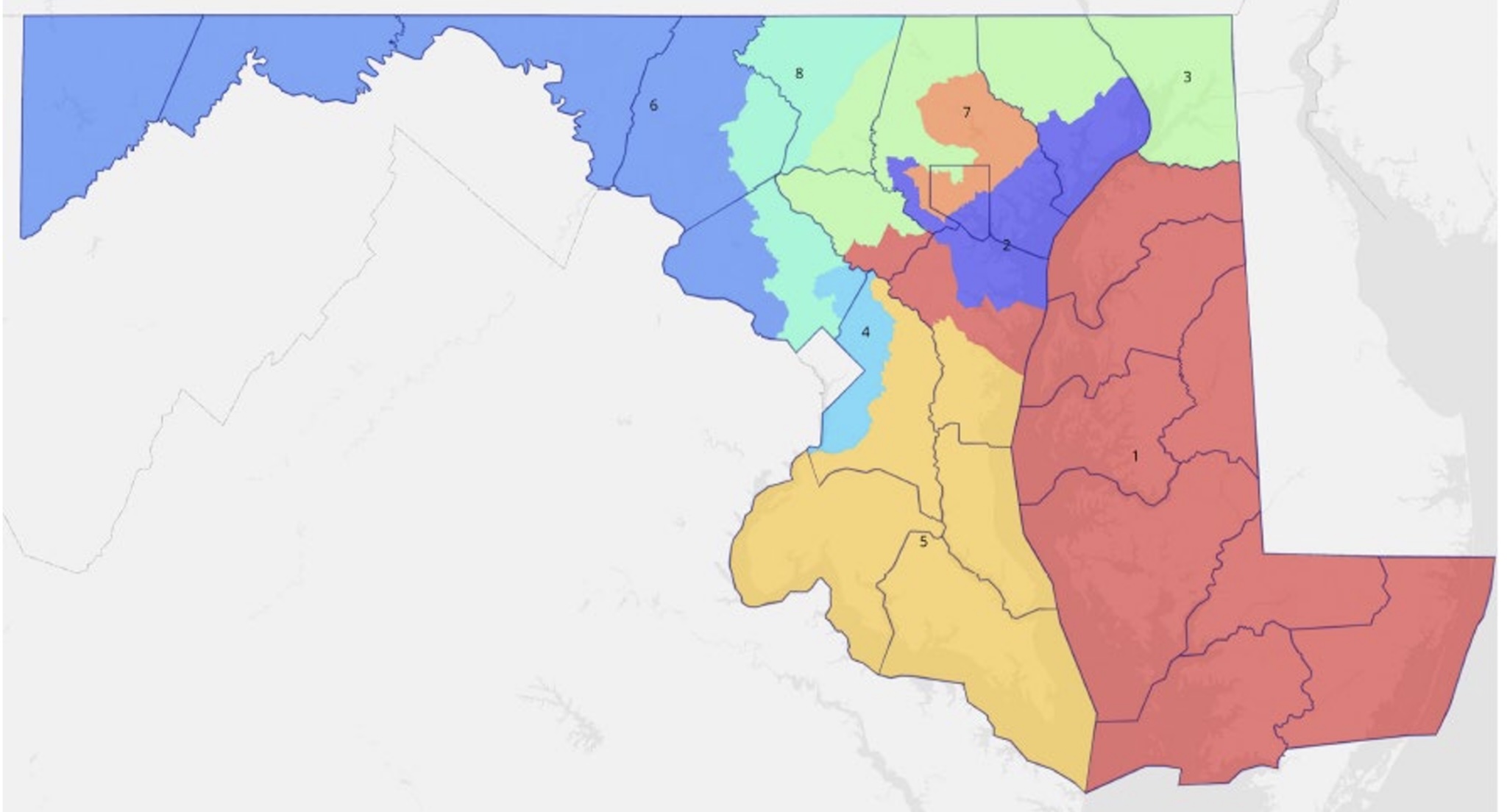
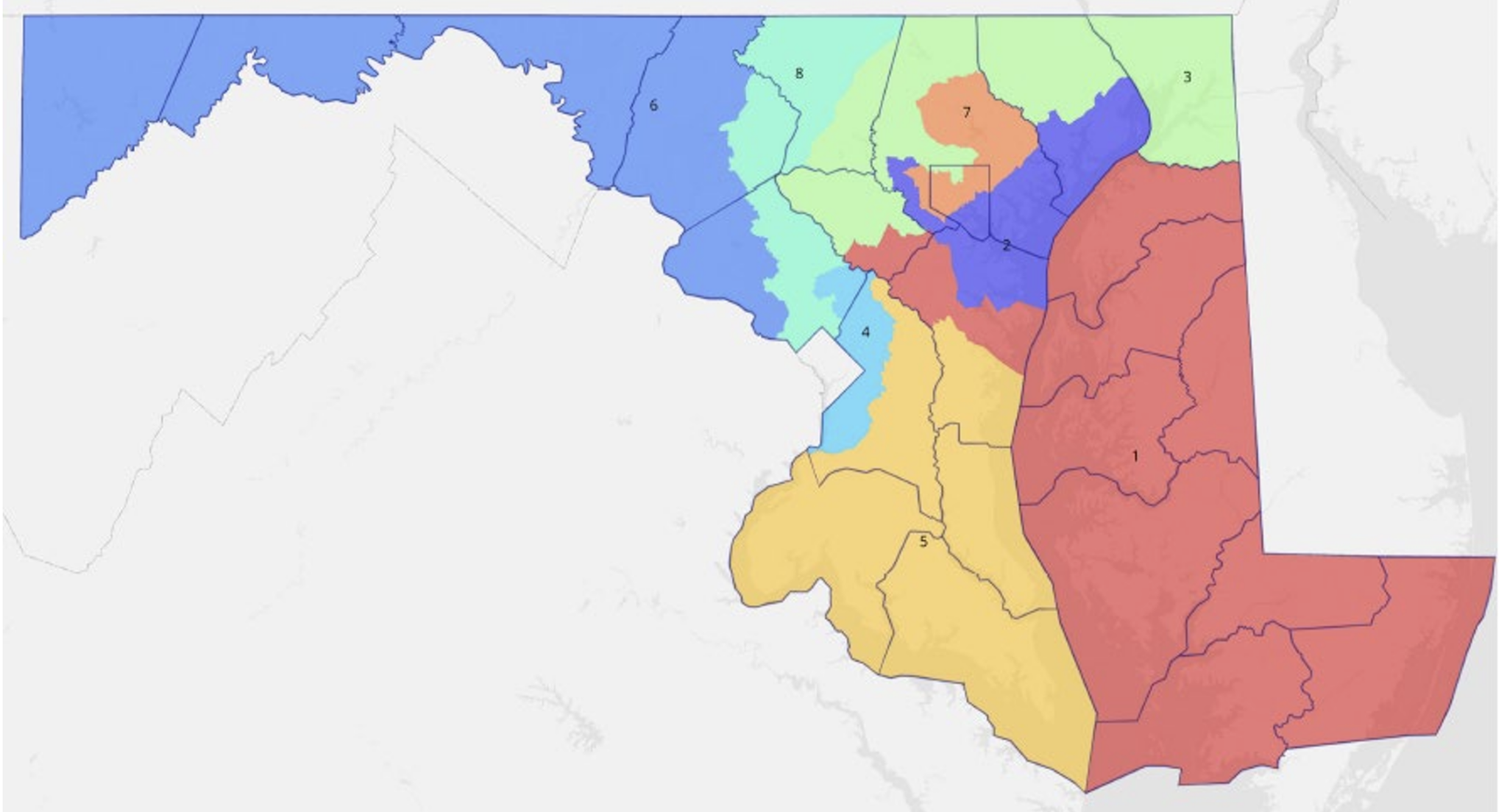
Gov. Wes Moore (D) hinted that he may move ahead with plans to redraw the state’s eight congressional districts, and to call a possible special session, despite opposition from a key lawmaker.

Senate President Bill Ferguson (D-Baltimore City), in a letter to Senate Democrats Tuesday, said he opposed mid-cycle redistricting, which he called “too risky” for Democrats who could end up losing a seat in their efforts to redraw congressional districts to gain one.

Ferguson said that redistricting in the middle of a decade “twists rules for potential short-term advantage while undermining trust in institutions and ultimately, democracy, but that is not the reason we should not pursue it.”

“Simply put, it is too risky and jeopardizes Maryland’s ability to fight against the radical Trump Administration. At a time where every seat in Congress matters, the potential for ceding yet another one to Republicans here in Maryland is simply too great,” he wrote.

But Moore signaled the potential for a fight with Ferguson over the issue.

“The General Assembly is a large body, so while I have read the Senate President’s letter, I also know that one person cannot stop a process,” Moore told reporters Wednesday.

Senate President Bill Ferguson (D-Baltimore City). (File photo Bryan P. Sears/Maryland Matters)
“My commitment stays firm that we are going to make sure that we have fair maps inside the state of Maryland, and we are not going to bend the knee to Donald Trump,” Moore said, adding that “a special session is not off the table, regardless of what anyone else says.”

‘I understand that pressure’
States typically redraw their congressional district lines every 10 years, after the decennial census reports on population shifts. But some Republican-led states, at the urging of President Donald Trump (R), began redistricting this year in an effort to make the map more friendly to GOP candidates in the 2026 elections.

Texas, where Republicans hold 25 of 38 House seats, approved a new map in August that could net five more GOP seats next fall. Soon after, Missouri and North Carolina moved to pass new maps that favor Republicans.

Democratic states are responding, led by California, which could pass a map that would add five Democratic seats, and other states are under pressure to follow suit. In his three-page confidential letter to the 34 members of the Senate’s Democratic caucus, Ferguson acknowledged the political pressure many Democrats are feeling to challenge Trump on this, the budget and other issues.

“This push means that you are feeling the need to fight back, not just intrinsically, but from neighbors, family, other electeds, and constituents,” Ferguson writes. “I understand that pressure, as I am experiencing it alongside you.”

But Ferguson implies that GOP effort to game congressional districts in their states is a form of cheating Maryland should shun.

“In state after state, leaders are considering redrawing congressional maps in the middle of the decade to disenfranchise minority party voters; not because the census changed — not because population shifted — but because the political winds did,” he wrote. “The result of all this has been an all-out attack on the Democratic Party and the core of democracy.”

Maryland Democrats have largely had their way with redistricting over the last quarter-century.

Nearly 25 years ago, Democrats and Republicans shared an even split of the state’s eight congressional districts. But under Gov. Parris Glendening (D) in 2002, lawmakers approved a map that gave Democrats a 6-2 advantage. In the 2012 redistricting, rural, Republican Western Maryland was combined with portions of largely Democratic Montgomery County to give Democrats a 7-1 edge.

But a map three years ago that could have given Democrats all eight House seats was struck down by a state judge who called the plan “extreme partisan gerrymandering.” Senior Judge Lynne A. Battaglia’s ruling linked partisan map-making to potential violations of Maryland’s Declaration of Rights.

The maps were redrawn to create the 7-1 map in use today — a map Ferguson noted has never been reviewed by the courts but could become collateral damage in a legal challenge of a mid-decade redistricting effort.

“We do not know how a court would assess a revised midcycle map and whether the court would use party affiliation as a measure,” Ferguson wrote in his letter. “We do, however, have a certainty under the current map; that evaporates the moment we start down a path of redistricting mid-cycle with an unclear legal landscape and an even more unclear legal timeline.”

Ferguson’s letter notes that Republican-controlled states that can still redistrict control 55 congressional seats. States with Democratic supermajorities control 35 Republican congressional seats. The result could be a net loss of 20 Democratic controlled seats, he said.

Ferguson claimed Maryland is holding other Republican states from redrawing their maps. He said “several Republican states are resisting the pressure to redistrict and are mostly able to do so because Maryland and other Democratic states are not redistricting either. In short — if Maryland redistricts, Republican-led states that were not planning to do so, will. That means that Maryland’s potential gain of one seat is immediately eliminated, and, in fact, worsens the national outlook.”

Moore’s legislative math problem

If he calls for a special session, Moore would still need to get 24 votes to pass a redistricting bill in the 47-member Senate.

All of those will have to come from the 34-member Democratic Caucus, a supermajority in the Senate. And he would need at least 29 votes to ensure the ability to end any filibuster in the Senate.

For Ferguson, the math is easier.

The Democratic Senate president starts with 13 Republican senators who are likely to oppose any redistricting effort. He will also likely bring with him the chairs and vice chairs of the standing committees and other members of leadership as well as other loyalists.

Without the votes in the Senate, a redistricting effort goes no further than the House.

Moore is not the only one who is not giving up on Maryland redistricting. U.S. House Minority Leader Hakeem Jeffries (D-N.Y.) told reporters Wednesday that Moore “has been very clear that Maryland is prepared to respond … to the Trump Republican effort to rig the midterm elections.”

U.S. House Minority Leader Hakeem Jeffries (D-N.Y.) (File photo by William J. Ford/Maryland Matters)
“It’s my expectation, based on my conversations with Gov. Moore, my conversations with leadership in the Maryland General Assembly and certainly my conversations with the Maryland delegation, that the state of Maryland knows what the stakes are, understands the assignment — and as we are seeing in multiple other states beginning with California, will respond aggressively and appropriately in short order,” Jeffries said.

Moore last week hinted at the possibility of a special session focused on redrawing Maryland’s eight congressional districts. In an ironic turn, he told reporters the effort to revisit the state’s congressional maps before the 2030 Census was about fair and competitive districts.

“I know that if you look at the maps all across the country, less than 10% of all maps are even competitive,” Moore said.

“There’s gerrymandering that is taking place right now inside of our maps all around the country and I hate the gerrymandering process, but we’d be lying to ourselves if we didn’t act like the maps that we have right now are not gerrymandered,” Moore said.

That goes for Maryland’s congressional districts, he said.

“I think if you look at the process of how these maps are laid out, you cannot look at the win margins, you cannot look at how it’s established right now and say that Maryland’s maps are not worth reexamination,” Moore said. “They are worth reexamination if you look at just the average win portion that we have for the members of our delegation.”

Speaker Jones leaves door open to redistricting

Moore can call a special session, but what happens next could be difficult.

Neither chamber is obligated to pass nor even take up a specific bill. There is some question about whether the Senate could simply adjourn its proceedings after taking up overrides of any vetoes issued this year by Moore.

The governor has some allies in the push.

House Speaker Adrienne Jones (D-Baltimore County) said she is open to a discussion about redrawing congressional districts, though her statement does not speak to the possibility of a special session.

House Speaker Adrienne Jones (D-Baltimore County) said the House of Delegates is open to a midcycle redistricting proposal. (File photo by Bryan P. Sears/Maryland Matters)
“Mid-cycle redistricting should concern anyone who cares about the health of our democratic institutions and the future of fair elections,” Jones said in a statement. “Closing the door now on the mid-cycle redistricting debate denies our constituents the opportunity to voice their opinion on an issue that goes far beyond their district lines. As I’ve stated before, my door remains open to my colleagues in the Senate and to the Governor to jointly pursue efforts to protect our democracy.”

Del. David Moon (D-Montgomery), the House majority leader, announced in August he would sponsor redistricting legislation. And Del. Jheanelle K. Wilkins (D-Montgomery) said this week that mid-decade redistricting in Maryland is an imperative.

“We can’t miss this moment to ensure accountability and fair representation,” Wilkins said. “Our democracy is at stake in a real way, and we have an obligation to make sure district lines truly reflect our communities. At a time when voting rights, diversity and basic freedoms are under assault, Maryland must step up to ensure we have the strongest and most representative government possible.”

Wilkins, vice chair of the House Ways and Means Committee, is also chair of the Legislative Black Caucus, but said she was speaking only for herself.

The effort has some support in the Senate.

Sen. Clarence Lam (D-Howard and Anne Arundel) has said he would sponsor redistricting legislation in his chamber, but he declined to comment on redistricting when asked Wednesday afternoon.

Moore, speaking to reporters Wednesday, insisted “Maryland needs to go through a process of establishing, do we have fair maps, especially if Donald Trump is trying to rig a system to try to win an election by asking only Republican states to do that.”

“I will work with Senate President Ferguson,” Moore added. “I also work with all of the other senators and all the other members of the House, because it is a large body, and one person does not decide whether or not Maryland goes through this process.”

By Bryan P. Sears.
Maryland Matters reporter Nicole Pilsbury contributed to this story.

The Spy Newspapers may periodically employ the assistance of artificial intelligence (AI) to enhance the clarity and accuracy of our content.

Filed Under: 00 Post to Chestertown Spy, Maryland News

Honoring Talbot County’s Uncle Nace Hopkins: The Day Freedom Came in Trappe

October 29, 2025 by The Spy
Leave a Comment

Nathaniel “Uncle Nace” Hopkins was born enslaved on the Eastern Shore, served with the U.S. Colored Troops, and came home to help build churches, schools, roads—and Maryland’s first Emancipation Day celebration in 1867. This tradition still lives on in Trappe from that moment on. In this Spy interview, volunteer leaders Dale Kevin Brown and Paul Callahan talk about why his story matters now and how the community is keeping it alive.

They preview this year’s events: Saturday, November 1, in Trappe—10:00 a.m. service at Scotts United Methodist Church, a library dedication at Nathaniel “Uncle Nace” Hopkins Park, food and activities, a 1:00 p.m. parade, and the 2:00 p.m. living-history performance, Uncle Nace: The Day Freedom Came. A second performance follows Monday, November 3, 5:30 p.m., at the Oxford Community Center (free; RSVP at oxfordcc.org).

This video is approximately four minutes in length. For more information about The Day Freedom Came events please go here.

Saturday November 1st

10:00 am – Service at Scotts United Methodist (UM) Church – 3748 Main Street, Trappe
11:30 am – Library Dedication at Nathaniel “Uncle Nace” Hopkins Park
12:00 pm – Food, Vendors and Activities at Scotts UM Church Grounds
1:00 pm – Parade – Main Street, Trappe
2:00 pm – Theatrical Performance: “Uncle Nace: The Day Freedom Came”- Scotts UM Church

Monday November 3rd

5:30 pm – Theatrical Performance: “Uncle Nace: The Day Freedom Came” – The Oxford
Community Center, Oxford – Free but Please RSVP at www.oxfordcc.org

The Spy Newspapers may periodically employ the assistance of artificial intelligence (AI) to enhance the clarity and accuracy of our content.

Filed Under: 00 Post to Chestertown Spy, Maryland News

Judge Appears Skeptical of Claim that Unaffiliated Voters Can Sue Maryland Over Closed Primaries

October 21, 2025 by Maryland Matters
Leave a Comment

Signs direct voters to a polling place at Sacred Heart Church in La Plata in this photo from the 2022 elections. (File photo by Angela Breck/Maryland Matters)

 An Anne Arundel County Circuit Court judge issued a partial ruling Monday in favor of a group of unaffiliated Maryland voters who are challenging the state’s closed primary election system.

A fuller victory might be harder to come by, though.

Judge Pamela K. Alban determined the voters had standing to file their case, but she has yet to decide whether she’ll dismiss the case on other grounds raised by the defendants — or allow it to proceed. She said she will issue a written ruling in the coming days.

Alban indicated she was skeptical of the voters’ arguments in their lawsuit that their claims were not resolved by prior case law, but said she planned to continue considering the “nuance” of the law.

“I want to think about it a bit more,” Alban said. “I imagine no matter what I do, this may not be the end.”

Attorneys for the plaintiffs, a group of five Maryland voters who are not affiliated with a political party, were quick to say after Monday’s hearing that they would appeal a dismissal by Alban. But former Maryland Lt. Gov. Boyd Rutherford, one of the attorneys, said he is “hopeful” for a favorable result.

Across the country, primary election structures vary widely. Maryland has a “partially closed” system, because political parties can choose to allow unaffiliated voters to join, according to the National Conference of State Legislatures, which said Maryland is one of 18 states with either completely closed or partially closed primaries.

Then-Lt. Gov. Boyd K. Rutherford (R) at the State of the State address in Annapolis in 2020. (File photo by Danielle E. Gaines/Maryland Matters)

The group of voters in the Maryland suit are challenging the fact that the state government funds primary elections that are not open to all voters, since voters must generally affiliate with the Democratic or Republican party to cast their ballots in primaries — unless it’s a non-partisan race. Their suit names the State Board of Elections and various state officials as defendants.

Daniel Kobrin, an assistant attorney general representing the defendants, argued that the case was focused on an alleged “waste of taxpayer money,” and that the plaintiffs didn’t have the standing to sue based on their status as taxpayers.

Eric Gunderson, an attorney for the voters, said that the plaintiffs are not arguing that the state shouldn’t fund primaries. Rather, they are arguing that, if the state continues to sponsor those elections, they should be open to all. The political parties could opt to fund their own primary elections if they wished to continue restricting participation, Gunderson said.

Alban agreed with him, ruling that the case was an elections matter — not a taxpayer one — and that the five plaintiffs had standing to sue because they are all registered voters in the state.

But Kobrin also argued in his filings that previous cases have already decided the issue, and so the Maryland voters’ suit should be dismissed. In particular, he referenced a pair of rulings from the Maryland Supreme Court, from 1946 and 2004, respectively — Hennegan v. Geartner and Suessman v. Lamone.

“Candidly, I think that’s your strongest argument,” the judge told Kobrin, before opening up the floor for him to speak on the legal precedent.

Kobrin asserted that, per prior court rulings, the state’s “well established” reasons for sponsoring primary elections must be weighed against the burden faced by unaffiliated voters, who are fenced out of the process. The state’s needs outweigh the voters’ burden, he said.

If the state didn’t hold primaries, it would run the risk of general election ballots looking more like “NFL pre-season rosters, with hundreds of names,” Kobrin joked. Primaries, he said, “avoid the chaos of a general election with dozens of candidates for each race.”

Kobrin also argued that, although the Maryland Constitution provides the right to vote, it doesn’t necessarily confer upon all Marylanders the right to participate in party primaries.

“Of course there’s a right to vote,” Kobrin said. “What they don’t have is the right to participate in partisan races with a party they’re not affiliated with.”

Turning to Gunderson, the judge called the legal precedent his “biggest challenge.”

Gunderson argued that neither of the two main cases cited by Kobrin centered on the issue at the center of their claim: the state’s decision to put its resources toward primary elections.

“If the parties want to have closed primary systems, they should pay for them,” he said.

Because neither of the two state Supreme Court cases deal directly with that issue, Gunderson argued that they shouldn’t bar the plaintiffs from moving forward with their case, and arguing about the precedent in trial.

But Alban prodded back, adding that Gunderson’s “seemed like a really tight reading of those cases.”


by Christine Condon, Maryland Matters
October 20, 2025

Maryland Matters is part of States Newsroom, a nonprofit news network supported by grants and a coalition of donors as a 501c(3) public charity. Maryland Matters maintains editorial independence. Contact Editor Steve Crane for questions: [email protected].

The Spy Newspapers may periodically employ the assistance of artificial intelligence (AI) to enhance the clarity and accuracy of our content.

Filed Under: Maryland News

ICE Enforcement Impact on Talbot Mentors Families with Kentavius Jones

October 21, 2025 by Dave Wheelan
Leave a Comment

For Kentavius Jones, executive director of Talbot Mentors, the recent surge of immigration enforcement on the Mid-Shore by U.S. Immigration and Customs Enforcement (ICE) is less about politics than humanity. Week after week, he’s confronted with the fear and disruption these actions bring to the families his organization serves—students coming home to find a parent gone, mentors trying to comfort children left adrift. Known to many simply as KJ, he speaks with quiet urgency about the need for compassion in public policy and a justice system that recognizes people, not just cases.

In our Spy interview, Jones acknowledges that America’s immigration system needs reform. But he argues that tearing apart families who have worked, contributed, and built lives here betrays the nation’s values. The America he knows, he says, is one that offers grace—one that protects rather than punishes those who’ve pursued its promise.

This video is approximately six minutes in length.


The Spy Newspapers may periodically employ the assistance of artificial intelligence (AI) to enhance the clarity and accuracy of our content.

Filed Under: Maryland News

Maryland, 14 Other Democratic States Launch Public Health Alliance to Counter Trump, Rfk Jr.

October 17, 2025 by Maryland Matters
Leave a Comment

In a clear rebuke of recent federal health policy, 15 Democratic governors announced Wednesday that they have formed a public health alliance that breaks with guidance from the Trump administration and Health and Human Services Secretary Robert F. Kennedy Jr.

It’s the largest move by states to diverge from recent policy decisions under Kennedy that have alarmed medical and public health experts, from federal funding cuts for health services to changes to vaccine guidance.

In addition to Maryland Gov. Wes Moore (D), governors participating in the Governors Public Health Alliance are from California, Colorado, Connecticut, Delaware, Hawaii, Illinois, Massachusetts, New Jersey, New York, North Carolina, Oregon, Rhode Island and Washington, as well as the U.S. territory of Guam.

“This alliance is a commitment to transparency, preparedness, and coordination so that no state faces health threats alone,” Delaware Gov. Matt Meyer said in a statement. “By working together, governors can share data, resources, and lessons learned to strengthen our preparedness for the next public health challenge.”

In a statement on social media, Moore said that, “At a time when the federal government is telling the states, ‘you’re on your own,’ I’m proud to join other governors across the nation in the Governors Public Health Alliance.”

The new Governors Public Health Alliance is intended to strengthen collaboration among the states in emergency preparedness and communication, to help them share data and expertise, and to improve response times to health threats. Although the participating governors are all Democrats, they’re billing the coalition as nonpartisan.

The new alliance comes on the heels of previous regional coordination efforts, such as the West Coast Health Alliance between California, Oregon and Washington, and a similar effort among states in the Northeast.

In recent months, at least 17 states have sidestepped federal guidance and promoted broader access to the COVID-19 vaccine. Those moves came in the wake of new COVID-19 vaccine guidance from the federal Centers for Disease Control and Prevention and the Food and Drug Administration, both under the leadership of Kennedy, a well-known vaccine skeptic.

“As extremists try to weaponize the CDC and spread misinformation, we’re stepping up to coordinate across states, protect communities and ensure decisions are driven by data, facts, and the health of the American people,” California Democratic Gov. Gavin Newsom said in a statement.

Meanwhile, major professional societies such as the American Academy of Family Physicians and the American College of Obstetricians and Gynecologists have released their own guidance that diverges from federal policy on a number of issues, from vaccines to autism.

The new Governors Public Health Alliance will be supported by the nonprofit Governors Action Alliance, or GovAct, an initiative overseen by a group of former governors that include both Republicans and Democrats.

— Stateline reporter Anna Claire Vollers can be reached at [email protected].

This story was originally produced by Stateline, which is part of States Newsroom, a nonprofit news network which includes Maryland Matters, and is supported by grants and a coalition of donors as a 501c(3) public charity.


by Anna Claire Vollers, Maryland Matters
October 15, 2025

Maryland Matters is part of States Newsroom, a nonprofit news network supported by grants and a coalition of donors as a 501c(3) public charity. Maryland Matters maintains editorial independence. Contact Editor Steve Crane for questions: [email protected].

The Spy Newspapers may periodically employ the assistance of artificial intelligence (AI) to enhance the clarity and accuracy of our content.

Filed Under: Maryland News

Undocumented Residents’ Access to State Health Insurance Marketplace Delayed From 2026 to 2028

October 17, 2025 by Maryland Matters
Leave a Comment

A plan to give undocumented immigrants access to Maryland’s state health insurance marketplace next year has been put off until 2028 by state officials, citing recent federal policies affecting immigrants as well as overall uncertainty in health care markets.

The delay was the one of the biggest changes outlined for state lawmakers Thursday by health care and health insurance officials discussing the impact of recent Trump administration policies on Maryland’s health care system.

The joint virtual meeting of the Senate Finance and the House Health and Government Operations committees went over policies that are expected to increase health insurance costs,  create barriers to access plans and reduce federal funding to Maryland, among other effects. The briefing also laid out the ways in which Maryland might respond to those changes.

Michele Eberle, executive director of the Maryland Health Benefit Exchange, said one of the changes she was the “most unhappy about” was a delay in the implementation of the Access to Care Act, in light of recent federal developments.

Currently, undocumented immigrants can purchase health care plans directly from insurers. But they are barred from using the Maryland Health Benefit Exchange to compare plans and find the most appropriate insurance for their households.

The 2024 Access to Care Act would have change that by opening the marketplace to undocumented residents, allowing them access to the marketplace,where they could comparison-shop health plans from different providers. It was to take effect next year if the state could get a waiver from the federal government, which is got while President Joe Biden was still in office.

The law would not have given undocumented residents access to the federal subsidies to make health care affordable for many customers. But, for those who could afford to buy individual plans without a subsidy, it would at least have given them a chance to use the online marketplace as a tool to weigh their options.

But with the Trump administration’s antagonistic approach toward undocumented immigrants, along with significant changes to health care funding, Eberle said the exchange decided to delay opening the marketplace to undocumented residents until 2028.

“We worked really hard under the last [Biden] administration to make sure that it was approved — and we were all set to go,” Eberle said. “We did not anticipate at that time that we would have the Marketplace Integrity Rule or HR 1 that would throw up a whole bunch of new requirements that we would have to put in place in short order.”

The rule and the bill — also known as the One Big Beautiful Bill — overhaul parts of the Affordable Care Act and other federal health regulations, and states like Maryland are having to focus their resources on complying with those changes.

The Marketplace Integrity Rule also revoked a Biden-era decision that classified immigrants covered by the Deferred Action for Childhood Arrivals program — for undocumented immigrants who were brought to this country as children — as “lawfully present” individuals. Being lawfully present would have given DACA recipients access to the federal subsidies that help make health care coverage affordable for many.

Without the classification, DACA recipients lose access to the subsidies, a change that is set to affect about 300 DACA recipients in Maryland currently benefiting from those subsidies.

But federal decisions targeting Maryland’s undocumented and immigrant populations were just part of what Insurance Commissioner Marie Grant called “gloomy but important” health care-related updates under the Trump administration.

Grant noted the significant rise expected next year in insurance premiums — due in part to the anticipated expiration of pandemic-era federal tax credits that bring down costs of individual plans purchased through the Affordable Care Act.

In September, the Maryland Insurance Administration approved an average premium increase of 13.4% across plans next year, less than what insurance companies initially asked for, but still a significant hit in monthly costs for many low- to middle-income families.

Health care advocates fear people will drop their coverage because they can no longer afford their plans if those credits expire. But carriers say the rate increases are needed to offset the number of people they expect will choose to go without health insurance — due to high costs.

The General Assembly approved funding this year that would partially replace the soon-to-expire federal tax credits for the coming year. But those state subsidies are only temporary fixes, analysts say, and even with that assistance plenty of people will still pay more each month for coverage than they did this year.

Congress could vote to extend those tax credits, which is at the heart to the current government shutdown debate. But Grant notes that time is running out to make that decision and have it effect 2026 health care plans.

“We’re expecting those enhanced tax credits to expire by the end of this year, unless Congress takes action to extend them,” she said. “The clock is ticking. It is … likely we’re getting to a point where, unless this extension happened in the next couple of days, it is likely too late to have carriers refile rates for 2026.”


by Danielle J. Brown, Maryland Matters
October 17, 2025

Maryland Matters is part of States Newsroom, a nonprofit news network supported by grants and a coalition of donors as a 501c(3) public charity. Maryland Matters maintains editorial independence. Contact Editor Steve Crane for questions: [email protected].

The Spy Newspapers may periodically employ the assistance of artificial intelligence (AI) to enhance the clarity and accuracy of our content.

Filed Under: Maryland News

Maryland Officials Work To Set Up Supports For Federal Workers During ‘Scary Time” 

October 1, 2025 by Maryland Matters
Leave a Comment

 From left, Rep. Sarah Elfreth (D-3rd), Sen. Angela Alsobrooks (D-Md.), NTEU President Doreen Greenwald, Rep. Steny Hoyer (D-5th) at podium, Rep. Johnny Olszewski (D-2nd), Rep. Eugene Vindman (D-Va.) and Rep. James Walkinshaw (D-Va.) at the Capitol on Monday. (Photo by William J. Ford/Maryland Matters)

State officials have been doing what they can to connect Maryland residents with food, housing, health care and financial resources ahead of a looming government  shutdown.

What they can’t do is make the White House and Congress come to an agreement that would head off the shutdown that is scheduled to hit at 12:01 a.m. Wednesday.

“There’s rumors that the Trump administration is going to use the shutdown as an excuse to lay off … people,” said Del. Jazz Lewis (D-Prince George’s). “It’s a scary time for them.”

After a meeting between President Donald Trump (R) and congressional leaders at the White House ended without an agreement Monday afternoon, Vice President JD Vance said bluntly, “We’re headed to a shutdown.”

Maryland has already lost the most federal jobs of any state, shedding more than 15,000 federal jobs since Trump took office in January, and the administration has directed agency heads to prepare for large-scale layoffs if a shutdown occurs.

Even without layoffs, a shutdown could threaten a large part of Maryland’s workforce — the state had an estimated 269,000 federal workers in 2023, according to a report from the Maryland Department of Labor.

“Marylanders should not have to bear the consequences of political games that put their paychecks, healthcare and security at risk,” David Turner, the communications director for Gov. Wes Moore (D), said in a statement. “At every step, the governor’s priority is making sure that Marylanders know their state will stand with them.”

He said the state has been working to connect Maryland residents with resources to help cope with a shutdown, including career transition support and increased administration of both unemployment insurance and interest-free loan programs for furloughed workers.

“The potential mass firing of more federal workers and furloughing tens of thousands of contractors in Maryland as the result of shutdown will only further jeopardize both our citizens’ livelihoods and Maryland’s economy,” the statement said.

Lewis said that besides the large number federal employees in Maryland’s workforce, the state is also home to federal contractors or researchers, meaning a government shutdown could have a “ripple effect” on the economy. Nearly 11% of Maryland’s gross domestic product came from the federal government in 2023, according to a report from the Maryland Department of Labor.

Legislation to provide emergency assistance to furloughed workers was passed during a long government shutdown in the first Trump administration, and that fund is still operational, according to Lewis. The fund was also expanded to provide support to federal workers who have been laid off.

“Maryland’s going to stand ready to try to help our citizens where and how we can,” he said.

The Maryland Labor Department has resources like the Federal Shutdown Loan Program for essential workers — those who have to work without pay during a shutdown, but get back pay after it ends —  and unemployment insurance for furloughed workers, according to a statement from Labor Secretary Portia Wu.

The state provides these resources along with support for laid off federal workers, such as other types of unemployment insurance and support in finding a new job, according to the statement. Many Maryland counties have also offered job fairs to help federal workers transition into a new role.

“A federal government shutdown creates immediate financial hardship for our dedicated public servants,” the statement said.

On Capitol Hill Monday, lawmakers came out to support companion bills by Sen. Angela Alsobrooks (D-Md.) and Rep. Sarah Elfreth (D-3rd) aimed at helping workers through any shutdown. The Help Federal Employees During Shutdons — or Help FEDS — Act would require that states allow essential federal workers, who have to work without pay during a shutdown, to apply for unemployment insurance.

Elfreth said she remains hopeful her Republican colleagues will listen to their “better angels” on helping federal workers.

“I think everybody is up here because we happen to be optimistic in nature. You couldn’t really be a politician in this Congress without being an optimist,” she said.

“Many federal employees live in all 435 congressional districts, and so our colleagues are going to have their own constituents working on Wednesday if we shut down without a paycheck,” Elfreth said. “It’s just about calling forth everybody’s better angels in this moment, at least on this issue.”

The lawmakers were joined by Doreen Greenwald, president of the National Treasury Employees Union, which she said represents nearly 160,000 federal employees and 38 federal agencies nationwide.

“My hope is that everyone works together to provide the necessary resources to fund the government, deliver services to the American people and avoid a wasteful and costly government shutdown,” she said. “I am grateful for the people standing behind me today that are willing to stand up and support federal employees.”

— Reporter William J. Ford contributed to this story from Washington, D.C.


by Nicole Pilsbury, Maryland Matters
September 30, 2025

Maryland Matters is part of States Newsroom, a nonprofit news network supported by grants and a coalition of donors as a 501c(3) public charity. Maryland Matters maintains editorial independence. Contact Editor Steve Crane for questions: [email protected].

The Spy Newspapers may periodically employ the assistance of artificial intelligence (AI) to enhance the clarity and accuracy of our content.

Filed Under: Maryland News

  • 1
  • 2
  • 3
  • …
  • 93
  • Next Page »

Copyright © 2025

Affiliated News

  • The Chestertown Spy
  • The Talbot Spy

Sections

  • Arts
  • Cambridge
  • Commerce
  • Ecosystem
  • Education
  • Food & Garden
  • Health
  • Local Life
  • News
  • Point of View
  • Senior Nation

Spy Community Media

  • Subscribe for Free
  • Contact Us
  • COVID-19: Resources and Data

© 2025 Spy Community Media. | Log in