MENU

Sections

  • About Us
    • Editors and Writers
    • Sponsorship Terms & Conditions
    • Code of Ethics
    • Sign Up for Cambridge Spy Daily Email Blast
  • The Arts and Design
  • Culture and Local Life
  • Food & Garden
  • Public Affairs
    • Commerce
    • Health
    • Ecosystem
    • Education
    • Senior Nation
  • Point of View
  • Chestertown Spy
  • Talbot Spy

More

  • Support the Spy
  • About Spy Community Media
  • Advertising with the Spy
  • Subscribe
December 6, 2025

Cambridge Spy

Nonpartisan and Education-based News for Cambridge

  • About Us
    • Editors and Writers
    • Sponsorship Terms & Conditions
    • Code of Ethics
    • Sign Up for Cambridge Spy Daily Email Blast
  • The Arts and Design
  • Culture and Local Life
  • Food & Garden
  • Public Affairs
    • Commerce
    • Health
    • Ecosystem
    • Education
    • Senior Nation
  • Point of View
  • Chestertown Spy
  • Talbot Spy
2 News Homepage Habitat Habitat Habitat Homepage Habitat Habitat Portal Lead

Dorchester County Superintendent Discusses Budget, School Closures, and Student Performance

June 30, 2025 by P. Ryan Anthony
Leave a Comment

In their latest collaborative interview, The Cambridge Spy’s P. Ryan Anthony and WHCP’s Jim Brady met with Dr. Jymil Thompson, Superintendent of Dorchester County Public Schools (DCPS), to discuss the challenges and future of the school district. The conversation ranged from budget struggles and school infrastructure to student achievement and staff retention.

School Facilities: Too Many Buildings, Not Enough Resources

One of the main topics was DCPS’s long-term vision for upgrading its elementary schools. Assistant Superintendent Michael Collins recently noted that the district hopes to build a new school within five years. But with 13 existing school buildings—more than some counties with significantly larger populations—and ongoing maintenance issues, the question arises: why build more when current schools are in disrepair?

Dr. Thompson responded plainly: DCPS would close an old school before opening a new one. He acknowledged the poor condition of some facilities and said the district is developing a “prototype school” to serve as a model moving forward. No formal decisions have been made yet regarding closures.

Student Achievement and Accountability

Recent data from Niche.com paints a troubling picture for academic performance in DCPS. Mace’s Lane Middle School reports only 2% of students proficient in math and 18% in reading. Choptank Elementary is similar, with 5% proficiency in math and 8% in reading. The district overall received a B- rating from Niche.

Dr. Thompson did not shy away from these numbers. Math is a problem area statewide, and it’s a priority for DCPS too, he said. The district plans to address these gaps through intensive professional development for teachers, coaching for instructional leaders, and a simplification of curriculum delivery. He also emphasized the need for greater mental health support and better structure in classrooms.

Budget Deficit: Cuts and Consequences

In April, DCPS was grappling with a $5.59 million deficit. Dr. Thompson confirmed that the district succeeded in passing a balanced budget by the Board of Education’s May meeting. But the solution came at a cost. They made difficult, unpopular decisions, such as eliminating positions.

This year, 24 instructional positions were changed—some staff were reassigned, others left, and several positions were cut altogether. Most of the eliminated roles were held by educators already on disciplinary or improvement plans.

State Superintendent Visit: A Moment of Encouragement

On May 2, Maryland Superintendent of Schools Dr. Carey M. Wright visited North Dorchester Middle School. Dr. Thompson said she was enthusiastic during her tour, particularly impressed by classroom engagement and the district’s efforts on curriculum and assessments.

Despite persistent low test scores, Dr. Thompson expressed pride in DCPS’s progress. We want to highlight the good things, too, he said.

Aiming for 15th in the State—Despite the Odds

One of Dr. Thompson’s bold goals has been to raise DCPS’s rank to the 15th-best school system in Maryland. Asked whether that goal remains realistic, he was resolute that the only thing that will prevent DCPS from getting there is their own actions—or inaction.

Immigration Concerns and Student Protection

Amid growing national concerns over immigration enforcement in schools, Dr. Thompson reassured the public that DCPS has had no incidents related to immigration raids. They’re following guidance from the Maryland State Department of Education, he said, adding that the district remains committed to keeping all students safe.

While challenges remain—academic performance, aging infrastructure, and financial pressure—Dr. Thompson maintains a clear vision for DCPS: a district moving forward through tough decisions, with a focus on improvement and equity. Whether or not that vision translates to measurable gains remains to be seen.

This video is approximately 13 minutes long.

The Spy Newspapers may periodically employ the assistance of artificial intelligence (AI) to enhance the clarity and accuracy of our content.

Filed Under: 2 News Homepage, Habitat, Habitat Homepage, Habitat Portal Lead

Latest Update with Cambridge Police Chief Justin Todd

June 25, 2025 by Spy & WHCP Community Radio
Leave a Comment

In a recent conversation with the Spy’s P. Ryan Anthony and WHCP’s Jim Brady, Cambridge Police Chief Justin Todd shared updates on officer pay, youth outreach programs, mental health resources, a recent murder arrest, and community engagement.

Pay Raises Help, But Competition Remains Fierce

Cambridge’s newly approved city budget includes modest bonuses for police officers. Chief Todd acknowledged the gesture as a welcome one, but he was clear about the challenge of keeping up with rising salaries across the region.

Mysterious Arrests Spark Concern

On June 4, CPD began fielding phone calls and social media inquiries about photos showing unidentified law enforcement detaining individuals within city limits. Todd confirmed that the officers in question were not affiliated with the Cambridge Police Department and said CPD had no prior knowledge of the operation. In fact, the first CPD heard about the arrests was when a report ended up on social media. They didn’t learn anything more about it but assumed it was ICE. Todd added that, while CPD is occasionally informed in advance about federal enforcement activity, that is not always the case. If local officers encounter such situations, their protocol is to ensure the safety and well-being of everyone involved.

15-Year-Old Arrested in Homicide Case

Chief Todd also confirmed that city officers recently arrested a 15-year-old male suspected of fatally shooting a man. Thanks to surveillance equipment and the work of CPD detectives, the department was able to identify the suspect and locate him hiding out in a vehicle.

Teen Court Shows Early Promise

Cambridge launched its Teen Court program in May, aimed at diverting first-time misdemeanor youth offenders from the traditional juvenile justice system. The program allowed teens to be judged and sanctioned by their peers. Todd, who attended the first session, came away impressed. The teens were harder on each other in sentencing than the juvenile justice system would have been. And it created a real sense of accountability. It also gave the police a way to connect with young people in a positive setting.

Senior Citizens Targeted by Scams

The CPD maintains a section on the city’s website warning residents about common scams targeting seniors. Todd emphasized that such scams—via phone, email, or text—are alarmingly frequent. There are a lot of scams pretending to be from the MVA or other agencies, trying to get personal information or money. People need to be very cautious.

Mental Health Services for Officers Continue to Grow

In April, CPD leadership visited the National Law Enforcement First Responder Wellness Center in Havre de Grace. Todd said the trip was inspiring and helpful in shaping the department’s wellness programming. Mental health support has come a long way since the chief started 25 years ago. Mental health assessments are now required every other year, and officers know services are available. Todd was particularly encouraged by how open attendees at the wellness center were in discussing their experiences with peers.

Community Engagement: From Flag Football to Local Support

This spring, the department wrapped up its community flag football program—a visible and successful outreach effort. It was amazing to see how many kids and parents showed up every weekend, Todd said, adding that the community needs more programs like that.

He also expressed deep gratitude for the public’s support, noting that local businesses and organizations regularly drop off food and thank officers personally. The department has made a real effort since 2022 to show the community they care.

As the department faces the dual challenges of staffing and public safety, Chief Todd’s message was clear: the CPD is committed to keeping the city safe while deepening its connection with the community it serves.

The video is approximately 16 minutes long.

The Spy Newspapers may periodically employ the assistance of artificial intelligence (AI) to enhance the clarity and accuracy of our content.

Filed Under: Cambridge, 2 News Homepage, Habitat, Habitat Homepage, Habitat Portal Lead

Reporter Notes: Another Case for the Cambridge Spy

June 6, 2025 by P. Ryan Anthony
Leave a Comment

In an age dominated by national headlines and global newsfeeds, The Cambridge Spy stands out as a vital resource for residents of Cambridge and the Mid-Shore. We have a deep commitment to the community and offer more than just news. We also deliver thoughtful, in-depth coverage that enriches civic life and celebrates local culture.

One of the Spy’s greatest strengths is its focus on issues that matter directly to the people of Cambridge. I could mention the many important stories the Spy’s talented contributors have produced, but I’ll just focus on some of the ones I’ve done.

To bring our readers local news updates, I’ve covered the Dorchester County Council and the Cambridge City Council; interviewed mayors, city commissioners, and city managers; and hosted video check-ins with the chief of police and the school superintendent.

I’ve provided insights into the economic life of our city through conversations with the Chamber of Commerce president and the owners of local businesses such as Four Eleven Kitchen and Free Spirit Threads. Additionally, I’ve kept the Spy’s readers informed of the latest on Cambridge Waterfront Development, Inc., and its Cambridge Harbor project.

Updates on Cannery Way, Cannery Park, and the Rail Trail project? Done those. How about plans for the Hearn Building, flood mitigation, or the land bank authority? Covered. The YMCA, Cambridge Association of Neighborhoods, and Moving Dorchester Forward? If you’re a regular reader, chances are you’re in the know about all that.

Equally important is the Spy’s dedication to the cultural life of the Eastern Shore. We do our best to amplify the voices of local artists, historians, and cultural institutions.

I have profiled the Richardson Maritime Museum, Baywater Animal Rescue, and the Pine Street Enrichment Program. My interviews with the executive director of the Dorchester Historical Society and representatives of the League of Women Voters highlighted venerable local stalwarts.

I’m very proud of my videos about sharpshooter Annie Oakley’s time in Cambridge, the Phillips Packing Company Strike of 1937, and the history of Handsell House. And speaking of history, the Spy has featured stories about the first Choptank River Bridge, pirates and smugglers, a silent movie star, the voting rights struggle, leading women and African Americans of Cambridge, and Christmas of long ago.

If I were to get into an overview of my weekly Cambridge Time Machine feature, this article would be twice as long. Suffice it to say that, through this coverage, we not only document but actively nurture the region’s creative identity.

In a media landscape where small-town stories are too often lost, The Cambridge Spy proves that local journalism still matters—and thrives—when done with purpose, intelligence, and heart. I hope you think so, too, and that you will help keep it going by supporting us financially.


P. Ryan Anthony
Senior Reporter
Cambridge Spy

Please make a donation here or by sending a personal check to the following:

The Cambridge Spy Fund
Mid-Shore Community Foundation
102 E. Dover Street
Easton, MD 21601


The Spy Newspapers may periodically employ the assistance of artificial intelligence (AI) to enhance the clarity and accuracy of our content.

Filed Under: 2 News Homepage, Habitat, Habitat Homepage, Habitat Portal Lead

Reporter’s Notebook: The Case for the Cambridge Spy by P. Ryan Anthony

June 2, 2025 by P. Ryan Anthony

Dear Cambridge Spy Readers,

For all its many challenges, Cambridge is an extraordinary city. It is rich in history, vibrant in culture, and full of people who care deeply about the community and the Eastern Shore in general.

Yet, we are in an era of shrinking local journalism. Recently, our county lost a venerable friend with the folding of the Dorchester Banner. This makes it more important than ever that we come together to preserve one of our most vital civic institutions: local news.

The Cambridge Spy exists for one reason—to serve this community. We cover stories that matter to you: city council decisions, local school developments, community leaders, arts and culture, history, and the issues shaping our shared future. Our mission is straightforward: to inform, engage, and give a voice to Cambridge. And that’s what I have been doing for the last two years.

But sadly, independent journalism isn’t free.

Unlike large, corporate media outlets, The Cambridge Spy operates without paywalls, subscriptions, or clickbait. We’re funded by community advertising, and every article and video we publish is made possible by those who understand that a strong, well-informed public is the foundation of a thriving town.

If you value thoughtful reporting, meaningful interviews, and honest storytelling that reflects the soul of Cambridge, consider supporting us.

Your financial contribution—no matter the size—helps us continue telling the stories that won’t be told anywhere else. It ensures that local voices remain heard, that power remains accountable, and that our community stays connected.

This is more than just journalism—it’s a public service. And it only works if we all take part.

P. Ryan Anthony
Senior Reporter
The Cambridge Spy

Please make a donation to keep The Cambridge Spy strong, independent, and focused on what matters most: you.  Here is the link to make a donation, or you can send a personal check to:

Cambridge Spy Fund 
Mid-Shore Community Foundation
102 East Dover Street 
Easton MD 21601 

The Spy Newspapers may periodically employ the assistance of artificial intelligence (AI) to enhance the clarity and accuracy of our content.

Filed Under: 2 News Homepage, Habitat, Habitat Homepage, Habitat Portal Lead

Dorchester County Council Passes Annual Budget Without Cutting Tax Rebate

May 28, 2025 by P. Ryan Anthony
1 Comment

After enduring considerable community blowback over removing the municipal tax differentials for Cambridge and Hurlock, the Dorchester County Council hunkered down with County Manager Jerry Jones and his staff to revamp the intended county budget.

Essentially, the tax differential allows the county to give credit to the residents of the larger communities for services they also pay the towns for through taxes for such things as policing and road maintenance, along with what the county provides. Property owners in Cambridge and Hurlock have received the rebate since 2007.

The County Commissioners had considered eliminating the differential. It was one of several tax increases suggested in order to address the budget to address a $6.2 million budget deficit. At two Tuesday night meetings, members of the community spoke out against the proposed move.

On May 20, the Council passed the fiscal year 2026 budget with the differentials still intact. As a compromise, the county will instead raise real property taxes for all property owners by 3 cents. This will bring the overall tax rate to $1.03 per $100 of assessed value. Cambridge residents will pay 95.67 cents per $100, and Hurlock residents will pay 94.79 cents. Three cents is about $1.02 million for the county, explained Council President Lenny Pfeffer.

Unfortunately, the adjustments made to the budget included deferring all nonprofit funding until a later time. Board members of the Cambridge Empowerment Center told WBOC’s Lauren Miller they are worried that they won’t be able to run their full nine-week summer program for children ages 5 to 12 without the $30,000 they usually get from the county. They consider the program even more important since there will be no summer school to keep kids busy.

The Council has also reduced the number of capital projects they’ll be doing this year.

Commissioner William Nichols told the community members present that this was the worst budget he had seen in his 30 years on the Council.

A reported disconnect between the state capital and rural Maryland came up several times at the May 20 meeting. Commissioner Rob Kramer said he doesn’t think Annapolis has any hope in the rural area, but he also has no hope in Annapolis. Maryland Delegate Tom Hutchinson, who attended the meeting, agreed with the pessimistic sentiments of the council members. Before opening the floor for comments, Pfeffer asked that community members be active next year in letting Annapolis know that “Dorchester County cannot continue to take the economic hits it has been.”

The council ultimately was able to balance the county budget. However, Pfeffer told the Spy that he doesn’t know if they can afford to keep the differentials in place forever.

“The majority of Eastern Shore Counties do not offer any differential to their municipalities,” he said. “I recognize that the municipalities offer extra services to their citizens because of the increased demand of higher density populations, but the County often assists the towns with some of their services. I feel the future of keeping the differentials lies in direct correlation with any future push downs from the State and Federal Governments.”

The budget plan will be submitted to the state by month’s end and take effect July 1.

The Spy Newspapers may periodically employ the assistance of artificial intelligence (AI) to enhance the clarity and accuracy of our content.

Filed Under: 2 News Homepage, Habitat, Habitat Homepage, Habitat Portal Lead

County Council Highlights: It’s All about the Budget

May 12, 2025 by P. Ryan Anthony
Leave a Comment

At the May 6 meeting of the Dorchester County Council, many people—public officials and citizens—approached the lectern to discuss the county’s budget and proposed tax changes.

Folks like Cambridge Mayor Lajan Cephas asked the council to reconsider a plan to remove a tax differential on county properties. Robert Aaron and Michelle Bourque offered warnings about possible housing cost hikes. Sharon Smith asked the council for more transparency, including about its budget, the published version of which is scant on details compared with other local governments.

Mary Ann Benson accused the council of potentially fraudulent activity, and Cambridge City Council president Sputty Cephas told the commissioners straight out that they looked like “they could care less” about what was being said. There was occasional tension in the air, such as when former Cambridge Mayor Cleveland Rippons harangued the council members, as well as frequent applause from the audience.

A common theme among the speakers was the hope that the county commissioners would reflect on what was said and consider their actions carefully.

The Spy Newspapers may periodically employ the assistance of artificial intelligence (AI) to enhance the clarity and accuracy of our content.

Filed Under: 2 News Homepage, Habitat, Habitat Homepage, Habitat Portal Lead

Four Eleven Kitchen’s Amanda Kidd on Succeeding in Food & Hospitality

April 28, 2025 by P. Ryan Anthony
Leave a Comment

When about a hundred people gathered on September 12, 2024, for the grand opening of Four Eleven Kitchen at the Packing House in Cambridge, founder Amanda Kidd said, “Food is one of the things that drops all barriers.” This is something she witnessed first-hand as a child in Washington, DC. As she told the Star Democrat‘s Maggie Trovato last August, the foods made by her neighbors allowed her glimpses into different cultures.

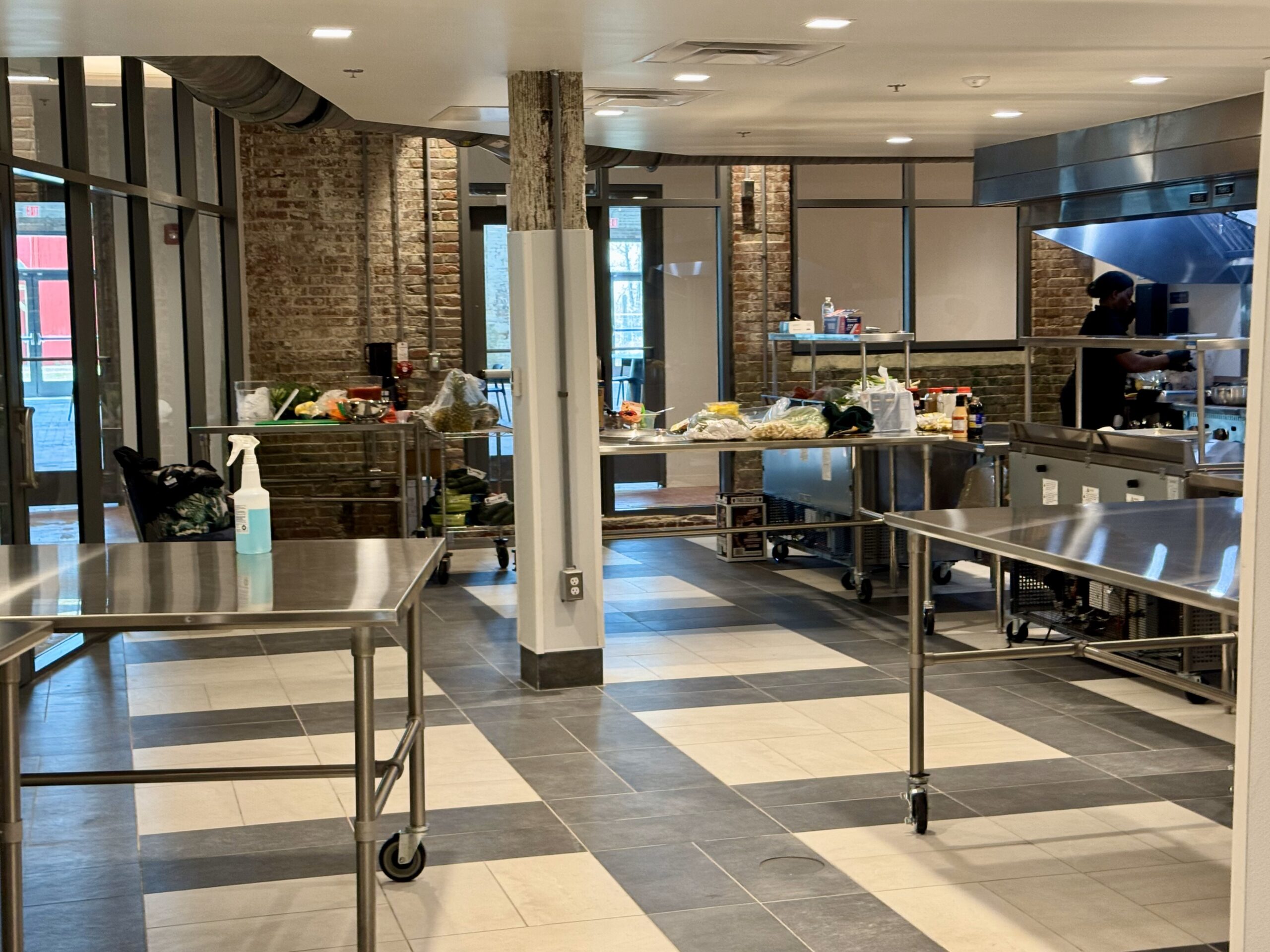
That inspired her to get into the food and hospitality industry. Eventually, she started Beat the Rush food delivery service, and now she has Four Eleven, a shared-use professional kitchen facility and educational engagement space where nascent food businesses (“foodpreneurs”) can develop menus, experiment with dishes, and nurture customers while learning hospitality skills as well as how to comply with food-service guidelines.

The Spy recently met Kidd at Four Eleven to discuss her background and success with the new business.

You’ve been in food and hospitality since you were a teenager. What did you do?

KIDD: I mean, everything from amusement park hospitality, worked at Kings Dominion. So, that’s like the top tier you can get as a teenager. But I mean, worked in, I call them three-star, like Tropical Smoothies, Moe’s, those type of establishments. And then later elevated to Best Western Inn where I worked in banqueting and worked as a hostess, grew my passion and desire for food and hospitality even further by working alongside the chefs there.

How old were you when you decided to get into that? When you knew that that’s what you wanted to do.

KIDD: It wasn’t a “knew that I wanted to do” thing. It was something I’ve always gravitated to. It’s like a safe place, so it wasn’t a dedicated career path, if that makes sense.

Just kind of happened. It was just an instinct.

KIDD: I mean, it was an area that I felt comfortable in.

Why is that?

KIDD: Because I always had a passion for food. So, growing up in the kitchen with my grandparents all the time, whether it was family dinner, holiday dinner, a gathering, we were always in the kitchen, always cooking. So, it was just a place of comfort for me.

Where did you go to school?

KIDD: So, I started at Liberty University and then took a pause, actually ended up going to massage school for a period of time, while working, figuring out what I wanted to do. But then I went back to school, to University of Phoenix online, and then I took some classes here at Chesapeake [College], as well.

Was that after you had a family of your own? Because that’s usually when you do it online, because it’s a necessity.

KIDD: Yeah, yeah, yeah.

And you’ve owned other businesses in this arena before. Like Beat the Rush.

KIDD: Yeah, so Beat the Rush is a more concierge hospitality side of things, more so than the actual food side.

Why’d you decide to do that?

KIDD: So, started out, had family needs that I saw other individuals experiencing the same thing, and whether it was limited transportation to get the foods and the essential things that they needed in their homes, which is probably a good percentage of Americans these days. But our community here and then also my personal family at the time–my mom was battling cancer. So, she had those same challenges as getting foods, fresh foods, things into the home. So, Beat the Rush was a concept that she and I talked about for a long time based off of what we saw her challenges, other challenges of those that were sharing the treatment rooms with her. You know, they talked about a lot of their challenges.

And so it was always a desire of ours to expand it to where it could help multiple communities, which is still in the works. So, even though we paused for a little bit to get Four Eleven off the ground, because a lot of what Beat the Rush embodied, which was supporting local producers of food, farmers, we found that there was a need. There was a need for the local caterers, local farmers, and being able to produce their foods. They kept getting turned away from the health department for certain items that they needed, that they desire to produce.

Can you explain that?

KIDD: Because they didn’t have commercial kitchen access. And so, Four Eleven Kitchen bridges that gap to provide the commercial kitchen access. So, now they can continue to grow their business and scale it the way that they decided to. But, with Beat the Rush, it was more than just based off of a need. It is a challenge for a lot of small businesses to do all the things in their business.

So, Beat the Rush embodied a department–we were logistics, concierge, hospitality. We embodied a department for that. Some business owners could not fathom creating, having their own departments, not starting out at the gate. So, a lot of people that we serve were startups just like us. So, we believe in community. We believe in collaboration. And so, collaboration allows us to leverage each other to grow.

So, how does Four Eleven Kitchen work?

KIDD: So, Four Eleven Kitchen, we are, I would say a food and hospitality incubator. So, we give the support to the foodpreneurs by providing them assistance with business development, community, and access to commercial kitchen. We also provide access to resources, subject matter experts, industry, connections that can help them to further grow their business; but, even where they are right now, help them to maintain until they get to that place of momentum and ready to really grow and scale. A lot of what people miss is community because, I don’t know if you have any insight of the food industry, but it can be pretty cutthroat and where there’s a lot of competitive behavior. That’s something that I believe has kind of crushed the industry, because it’s so much competitiveness versus collaboration.

And a lot of times, like, we have the two users today: Fusion Eats, they are soul and savory food, but Blue’s Flowers is bakery sweet decadent. So, one can complement the other. And you can have days where you can have pop-up events, where everyone’s able to receive support, and the community can do just like what they do when they go to Wawa. They go to Wawa, they get a burger and a brownie, you’re still getting from two separate vendors, and a lot of people don’t really see that connection. So, bringing that aspect and putting that before the community, showing them, like, there is collaboration there, this is how it works together. So, I believe Four Eleven Kitchen will be that bridge and that barrier-breaking at the same time, breaking the barriers of the mind that “Okay, I can patronize two separate food businesses,” but then bridging the gap to “this is how we do it.” And that’s through Four Eleven.

So, one of the things that we also do–and I mentioned the mind. So, we have an initiative called Feed the People. And so, Feed the People is an initiative that embodies education and also actual feeding of people. So, we’re feeding minds and feeding bellies. And so, we have programming that is actually launching this summer that we have cooking classes. And I don’t want to say “cooking classes” in the culinary and certification-type cooking classes, but more of a community engagement, community development-style of cooking classes where people in the community can come together. There can be, let’s just say cookie decorating, learn how to decorate cookies, learn how to–and something fun you can do with your family, your friends, your neighbors, co-workers. Organization groups can come in and do it together.

But then, the other aspect of it is teaching people how to feed themselves. So, giving them those soft skills, showing them that it’s not like you have to go get a degree to learn how to make good food, how to make healthy food, how to make good foods, comfort foods that you love in a healthy way. So, it’s really kind of like playing off of those type of opportunities. And then we have an initiative, a part of that initiative is our urban farm. And that urban farm is going to support the learning aspect–getting in, making the mistakes, learning the intricacies of gardening and farming from different facilitators such as University of Maryland Extension Master Gardeners, local farmers, food educators who we will partner with to provide access to that information.

Where will this urban farming take place?

KIDD: Lincoln Terrace and Douglas Street. Are you familiar with that, off of Washington Street? So, in that corridor there, they actually just started building some new homes back there with Habitat. And then the, I think it’s [Department of Housing and Community Development], are building some homes as well back there. So, it’s a kind of our concept of it piggybacked off of the Habitat being in that community because they were beautifying and making creative spaces there. And so, we actually started with Habitat donating the property to the city, and the city and us are coming into a partnership to be able to occupy that as an urban farm. So, it’s a community effort.

The educational part of it, or helping them with their business plan or whatever. Where does that take place? Like, do you sit down at a desk?

KIDD: Yeah. I mean, depending on their schedules, we would sit down face-to-face and be able to do it, but then we can do it virtually, as well. A lot of the foodpreneurs, they do hold other careers. So, it’s based off of their scheduling and whatever works for them.

How many active clients do you have at the moment?

KIDD: Active we have, I wanna say six, but it can fluctuate as far as, because we have non-member use. So, we have members and non-members. So, in memberships I would say six. But, as far as use, it fluctuates this month depending on rental needs.

Your rental prices, they were pretty reasonable. What I saw on your website, it seemed pretty reasonable.

KIDD: Yeah. We really are trying to keep that low startup for them, depending on where they’re at depends on what tiers they take on, and they’re able to fluctuate through those tiers as they adjust in their business and learn their business model.

You had a quotation from Maya Angelou on your Events page: “Nothing works unless you do.” What does that mean to you?

KIDD: So, we can have a thought and we can have a concept and an idea, but until we actually put our hands to it, until we do it, it doesn’t work. And even when doing it, sometimes we find that there are things that need to be adjusted. But when you stop because of the adjustments, then you stop all of the progress, all of the potential. So, it must continue. The work must continue. You must continue to do it. Even if there’s a challenge, even if there’s a hiccup, something that you didn’t foresee, it’s best to just navigate. You know what you can learn about it to kind of pivot or readjust and then continue on, but it won’t work unless you do.

What would your mom say about your success at this point?

KIDD: Man, so, I believe she would say, “I knew you could do it.” Yeah.

She had a lot of faith in you.

KIDD: Yes, yeah, I believe she could say, I mean, “You can do it.” And she, like, even up until her passing, she kept saying “Start the business, start the business.” I actually didn’t start any of my businesses until two years after she passed.

But she was in on planning Beat the Rush.

KIDD: She was. I mean, she was the prototype, it was because of her life and what she was experiencing. You know, Dad working two jobs at the time, probably three–didn’t know about the third one until, like, later on. Parents do what they have to do to keep the families afloat. And it was always a scheduling, like scheduling to get to the store to then prepare. We had sports and you had other family activities and life happening, and it’s like trying to get to the store. And we were at the very beginning of when Giant started Peapod. So, like, that’s when all that stuff was navigating.

And I was away at school and learned that Mom was sick. And it was like, “Mom, I can’t get you food.” Like, “I don’t know how to get you food.” And she was like, “You should start the business.” I was like, “What do you mean?” Like, that wasn’t a concept to me. Like, start a business. Like, we never talked about starting a business. And I didn’t actually get into business school until after she said start the business. And I was just like, I need to know what she’s talking about because this doesn’t make sense. But she was the prototype. She was the flame, the lighter fluid to the flame. She was all of that. And she’s what keeps me going. My kids also keep me going. My husband keeps me going, and those that have a need keep me going. So, if there’s a need, I’m going to keep going.

You officially opened here September 12th.

KIDD: But we’ve been an organization since 2022. … It’s been several years in the making just to get here. But even prior to that, this kitchen concept, Four Eleven, the name hadn’t been birthed yet, but the kitchen concept had been in our original business plan. So we knew that our foodpreneurs were going to need space to work out of if we were going to continue to have a thriving catering community.

There’s so many caterers, so many different food providers, food service providers, whether it’s meal prepping, whether it’s baked goods, whether it’s food products that we have in our community that we love so much. They need kitchen space, and a lot of it cannot be made in their homes. And the regulations, they have a limitation to what can be prepared in home and actually be sold for retail. So, we feel that that gap of when they hit that limitation and they’re able to then come here and prepare.

What does it feel like to blaze trails and solve problems?

KIDD: It’s, like, you pinch yourself–like, that’s me. Like, that’s what I’m doing. To me, it’s like I’m just waking up and doing what’s inside of me to do. But like, people like yourself that put the title of trailblazer or groundbreaking or things like that–it’s not something that I really think about. So, I mean, it’s definitely humbling to know that I have been given a vision and be able to innovate in a way that can help others along the way. So, it’s really an honor to be able to do it all.

For more information, visit the website.

Thanks to Debra R. Messick (Talbot Spy) and Tom McCall (Star Democrat) for supplementary material.


The Spy Newspapers may periodically employ the assistance of artificial intelligence (AI) to enhance the clarity and accuracy of our content.

Filed Under: 2 News Homepage, Habitat, Habitat Homepage, Habitat Portal Lead

A Spy/WHCP Check-in with Chief of Police Justin Todd

April 17, 2025 by Spy & WHCP Community Radio
Leave a Comment

The Spy’s P. Ryan Anthony and WHCP radio’s Jim Brady recently had their quarterly conversation with Cambridge Police Chief Justin Todd.

Topics included the new drone program CPD is putting into action. The aerial devices can be used for multiple purposes around the city, indoors and out, including tactics, communication, and rescue.

In cooperation with the health department’s Sue Radcliffe, CPD officers have been spending lunchtimes with kids at Choptank Elementary School, where students ask them about their equipment and how they became police officers. As part of community policing, the program is a great way to develop relationships with young citizens.

Though they don’t yet have their statistics for the first quarter of this year, some significant issues the department has been dealing with lately are thefts from vehicles, domestic calls, and disorderly conduct. Through proactive means, they hope to keep crime down as the summer approaches.

CPD recently celebrated the female members of the department and their contributions. Chief Todd promised to continue promoting the accomplishments of different segments of the community, especially diversity in the police ranks. Additionally, the chief emphasized the vital part that the civilian staff plays in the day-to-day operation of the department.

The citizen police academy is getting underway and will allow participants to see how the department functions on a daily basis and what training new officers must go through. And recently a number of officer prospects passed the physical agility test and will be proceeding through the process that will hopefully take them on to the police academy.

The video is approximately 11 minutes long.

The Spy Newspapers may periodically employ the assistance of artificial intelligence (AI) to enhance the clarity and accuracy of our content.

Filed Under: 2 News Homepage, Habitat, Habitat Homepage, Habitat Portal Lead

Checking in with Superintendent Thompson on $5.5 Million Deficit and More

April 11, 2025 by Spy & WHCP Community Radio
Leave a Comment

In a Zoom interview, the Spy’s P. Ryan Anthony talks with Dorchester County Public Schools superintendent Dr. Jymil Thompson to get an update on the district’s serious budget shortfall and its potential impacts.

With a $5.5 million deficit as of late March, the district is negotiating with its staff unions to address unmet funding promises, including a proposed $3.5 million in raises. If those raises are deferred, the gap narrows, but an estimated 12 to 24 staff positions may still be eliminated.

There is a discussion of how early retirements and attrition are being used to reduce costs, and what will be determined at the next budget meeting. The conversation also turns to the effect these cuts may have on staff morale and the school system’s long-term academic goals, particularly its aim to raise its statewide ranking from 23rd to 15th.

On a more uplifting note, you’ll hear how the Cambridge-South Dorchester Vikings’ state basketball championship has offered the community a much-needed morale boost. Finally, they discuss the recent adoption of Freedom on My Mind, an AP African American history textbook, and its significance in offering students broader, more inclusive educational perspectives.

The video is approximately 8 minutes long.

The Spy Newspapers may periodically employ the assistance of artificial intelligence (AI) to enhance the clarity and accuracy of our content.

Filed Under: 2 News Homepage, Habitat, Habitat Homepage, Habitat Portal Lead

YMCA Partners with the Campaign for Grade-Level Reading in Cambridge

April 7, 2025 by P. Ryan Anthony
1 Comment

The racquetball courts have been gutted, as has the band/choir room. This section of the Pauline F. and W. David Robbins Family YMCA in Cambridge will be transformed into a reading hub for young children, thanks to $300,000 in funding provided by novelist-philanthropist MacKenzie Scott. It’s necessary to renovate this area for the new use because there is nowhere else in the facility for it. And what’s a reading campaign without reading space?

The Robbins Y has recently partnered with the Dorchester County Campaign for Grade-Level Reading, which focuses on ensuring that children from low-income families succeed in school and graduate prepared for college, a career, and active citizenship. Reading proficiency by the end of third grade is a critical milestone in a child’s educational development, serving as a key predictor of future academic success and high school graduation.

Sadly, Dorchester County currently ranks 21st of 24 counties in third-grade reading proficiency in Maryland, and recent assessments have highlighted the need for focused intervention. Through this new partnership, the Robbins Y aims to address these challenges by implementing the elements of the CGLR: targeted kindergarten readiness strategies, decreasing chronic absenteeism, enhancing and expanding literacy programs, engaging families, mobilizing community resources to support young readers, and increasing access to out-of-school time activities. The goal is to increase the number of Dorchester County third graders reading at grade level from 21% to 50% in the next eight years.

As the “backbone agency” of the local campaign, the Y will coordinate efforts among various stakeholders, including the John and Janice Wyatt Foundation, Dorchester County Public Schools, the Chamber of Commerce, Moving Dorchester Forward, and other community organizations.

The Spy recently chatted with Robbie Gill, CEO of the YMCA of the Chesapeake, about their part in this endeavor and why it is so important.

Did you volunteer to coordinate or were you asked?

GILL: So, we had attended the screening of a movie, Sentenced, that was done by [basketball star] Steph Curry, and really were moved by that. And then listening to [Dorchester County Public Schools Superintendent] Dr. Jymil Thompson and [Talbot County Public Schools Superintendent] Dr. [Sharon] Pepukayi kind of speak to the challenges around grade level reading, we started to figure, think a bit about how could we get involved. And then when we heard the statistic was 21% of kids in Dorchester County can read on grade level by third grade, we thought, “All right, we need to get involved.”

And so, we had some conversations with the John and Janice Wyatt Foundation Executive Director Matt Peterson and took a tour of some work they’re doing in Winchester, Virginia. And then from there thought, “Man, we could be a really good partner and help move the needle here.” And so, I think it was really through that moment of watching that movie and thinking a little more about should the Y be involved and how could we make a difference, that we said, “Hey, we’re here to help if we can get involved.” So, it was kind of an organic moment for us.

You’ve been involved with the campaign in some way for years.

GILL: So, we were doing early learning programming in the Greenwood community and very involved with that and were a part of the coalition. Never really thinking much about playing this leadership role. But it was kind of through that transition where we saw, not only saw the movie, but they were looking for a leader to step in. And we thought, “Okay, maybe we should play a bigger role than what we’re playing and have the capacity to do that.”

What does it mean that you’re the “backbone agency?”

GILL: So, basically what that means is we’re the facilitators of meetings of the coalition and all the partners that are doing work to support this campaign for grade-level reading. And so that’s a variety of organizations from the library to the school system to His Hope Ministries and all these other different groups that are working with kids. The Judy Center, WIC. And so it’s the backbone agency. You’re pulling those groups together, you’re providing information, training support, data, analyzing where potential gaps may be and trying to fill those in, working with the collective.

So, as an example, we know one of the gaps in this community is from this birth-to-kindergarten. Like there are limited programs and services that are out there to serve kids at a level that were ready for kindergarten. That’s a gap for us. And so, as a backbone agency, we’re going to work hard not only as a YMCA to offer more programming to help kids be kindergarten-ready but also supporting other not-for-profits and other community organizations serving kids to make that a bigger focus. So, you’re really kind of coordinating the collective group of partners and collecting data.

Do you think the goal of 50% of third graders reading on grade level within eight years is realistic?

GILL: That’s a great question. So, if you break it down, yes, but it’s a heavy lift, right? If you would have, we would have figured it out already. Everybody would already be doing it. And it’s an issue for us across the state and across the entire country. But I think if you eat the elephant in small bits, you can do it. And so, we need to do more around this birth-to-kindergarten focus to where kids are ready for kindergarten. There needs to be heavier work on chronic absenteeism. If kids aren’t in school, like that can be tough, right? You can fall behind. And so, what can we do as an organization and as a campaign to help create incentive strategies to support schools to keep kids in class?

And then you’ve got to have a strong, robust enrichment after-school time. So, when kids are out of school that they’re in enrichment-based programs that are helping them continue to grow in the summer, that there’s opportunities for them to where they’re not dealing with summer learning-loss. Kids that aren’t engaged in programming in the summer, fall, back as much as six months. And so, you gotta have that piece, too.

And then, lastly, for kids who need really one-on-one help, that we’ve created a reading-mentor strategy to where, if I’m a child that needs additional help, I can be paired with a mentor who meets with me maybe here at the Y twice a week to help me with my reading. And I think, if you break those pieces out and you really start working at it, you can do it. There’s 360 kids, roughly, born in this county in a year. So, it’s not a massive number. You just have to make sure you’re connecting to those little ones when they’re infants and those families and then, as they get a little older, they get to twos and threes, that you’re like, “Okay, here are all these ways you can get your kids involved in programming that can help them be kindergarten-ready.”

And what does kindergarten-ready look like? You know, that’s “I can tie my shoes, I can eat at the table on my own, I’m potty trained, I have an attention span for 15 or 20 minutes, I can keep my hands to myself.” It’s kind of things that we don’t really think much about, but they’re key functional parts of being ready for kindergarten. If you have six or seven kids in a class of 15 or 16 that can’t do that, the teacher’s gonna spend most of their time navigating corrective behavior and not teaching. And so, yeah, I think if we just really work at it, absolutely, it’s totally doable. If we didn’t think we could move the needle, we wouldn’t have gotten involved at this level. So yeah, we believe we can do it.

So, you mentioned the reading tutoring that could happen here. What other activities would be happening here at the Y?

GILL: Well, so, I really believe that having especially little kids involved in programming at an early age can build a base around attention span and keeping your hands on yourself and all the things we just talked about. And so, we’ll be running more programming for smaller children. … So, I think, you know, it’s not just about reading books at that young age. It’s also about having kids in programs to where they’re learning some of those skills. Like, if I’m in a four-year-old swim lesson at the Y, not every kid is in the pool swimming at once. So, I have to learn to sit on the side and wait and I have to take direction, I have to trust my instructor and all those pieces with the mentoring piece too.

We feel like we have about 800 members at this YMCA that would be good candidates for mentor-reading mentors because they’re either semi-retired or retired and would have some time to do that. And so, our goal is to find about a hundred folks that could support that effort.

And then this space that we’re converting, which was the old band room and choir room here, that’ll be the reading hub. It provides an opportunity where, if you wanted to have Saturday morning book-reading events for young kids and their families to come in, and you can do that. And that’s like a, you know, it’s more interactive today than just someone holding a book. You can see that pretty regularly within the libraries. So, just accessibility and opportunity is kind of key.

And how do we make sure as a community, not only the Y is making a bigger focus on that, but everyone else is working with kids, whether it’s churches or other not-for-profits, that they’re focused on expanding that? And then most importantly, how do we communicate that in a way that parents know, “Here are all the opportunities I have to get my kids involved”?

What else do you want to tell me about the program?

GILL: Well, for us to be successful in this as a community, we’re going to have to have everyone involved. And I know that this collaborative effort has been going on since 2023, and it’s our goal to reinvigorate that and get people excited about it. It’s a huge need. I would argue it might be one of the greatest needs in this community, period. When you think about that many kids not being able to be on grade level by third grade, I mean, it is one of the most prominent indicators of success as an adult.

And so, my hope would be that as we continue to talk to folks about getting involved, that people would think about how they could play a role, whether it’s directly or indirectly through volunteering or financially supporting the program. I think the more people we get engaged and involved in this that care about it and see the need, I think the more successful we’ll be.

And just maybe last thing, [we’re] appreciative of the Wyatt Foundation, John and Janice, that they call this place home and that they see that as a need and willing to invest time and resources in this. I mean, that’s a big deal. That makes a big difference. It’s unrealistic to believe that we can, in today’s world, we can send our kids to school and expect that they’re going to have everything that they need. We’re putting too much on public education to believe that I can send a kid in there in kindergarten, and they’re going to be good all the way through 12th grade. We’ve got to do more as communities to make sure kids are ready and then, even once they get there, that we’re supporting them.

I wasn’t a super-sharp reader as a kid and needed a lot of extra help and fortunately grew up in a place where I was able to get that. And that was super helpful for me. I heard a saying from a mentor of mine a long time ago: “There are no throwaway kids.” So, we need to dedicate as much resources as we can to make an impact. And the more people we can get involved, the better.

Are you excited about leading this effort?

GILL: Yeah, man, I’m pumped. It’s going to be cool. I mean, kids are great. And reading is something that inspires your creative side. Like, when you read a book, it’s on your terms. You know, when you watch a TV show, it’s like they’re giving you the script. But when you read something, it’s in your scope. So, how you read it and perceive that story is how you do it. There’s a lot of freedom in that, and there’s a lot of creativity in that, and it’s very empowering.

Maybe the part of that movie [Sentenced] I struggled the most with is watching those adults struggle to just live day to day. Like the one girl that couldn’t work the cash register because she couldn’t read the menu. And then the other thing about that is you see how that lack of literacy passes down to future generations. Like, it’s pretty scary, right? So, being able to read is a big deal. It should be like walking or learning to swim. I think learning to swim should be the same way. Like, everyone should have that skill. Reading is the same way. It’s a gateway to future success.

The Spy Newspapers may periodically employ the assistance of artificial intelligence (AI) to enhance the clarity and accuracy of our content.

Filed Under: 2 News Homepage, Habitat, Habitat Homepage, Habitat Portal Lead

  • 1
  • 2
  • 3
  • Next Page »

Copyright © 2025

Affiliated News

  • The Chestertown Spy
  • The Talbot Spy

Sections

  • Arts
  • Cambridge
  • Commerce
  • Ecosystem
  • Education
  • Food & Garden
  • Health
  • Local Life
  • News
  • Point of View
  • Senior Nation

Spy Community Media

  • Subscribe for Free
  • Contact Us
  • COVID-19: Resources and Data

© 2025 Spy Community Media. | Log in