MENU

Sections

  • About Us
    • Editors and Writers
    • Sponsorship Terms & Conditions
    • Code of Ethics
    • Sign Up for Cambridge Spy Daily Email Blast
  • The Arts and Design
  • Culture and Local Life
  • Food & Garden
  • Public Affairs
    • Commerce
    • Health
    • Ecosystem
    • Education
    • Senior Nation
  • Point of View
  • Chestertown Spy
  • Talbot Spy

More

  • Support the Spy
  • About Spy Community Media
  • Advertising with the Spy
  • Subscribe
December 8, 2025

Cambridge Spy

Nonpartisan and Education-based News for Cambridge

  • About Us
    • Editors and Writers
    • Sponsorship Terms & Conditions
    • Code of Ethics
    • Sign Up for Cambridge Spy Daily Email Blast
  • The Arts and Design
  • Culture and Local Life
  • Food & Garden
  • Public Affairs
    • Commerce
    • Health
    • Ecosystem
    • Education
    • Senior Nation
  • Point of View
  • Chestertown Spy
  • Talbot Spy
Ecosystem Eco Notes

Pickering Creek Audubon Center January Public Programs

December 9, 2021 by Pickering Creek Audubon Center
Leave a Comment

WEBINAR: A Guide to Delmarva Weather

Thursday, January 20th, 2022

7:00 – 8:00 pm

Free

Ever wonder why it’s 40 ⁰F and rainy in Easton while its 25⁰F & snowing in Baltimore? Why does Delmarva have fog delays but Washington doesn’t? Join Pickering Creek naturalists to learn all about why our unique geography makes our weather so weird on the Delmarva peninsula. To register in advance, please visit https://pickeringcreek.org/programs/upcoming-programs/

Animal Tracks & Traces

Saturday, January 22nd, 2022

10:00 – 11:00 am

$5 per person

Can you tell the difference between a raccoon footprint and a beaver footprint? What about a deer bone or a fox bone? And whose scat is that? Bundle up and come join Pickering Creek naturalists to learn all about the signs that animals leave behind to help us identify who’s who even when we can’t see them. To register in advance, please visit https://pickeringcreek.org/programs/upcoming-programs/

The Spy Newspapers may periodically employ the assistance of artificial intelligence (AI) to enhance the clarity and accuracy of our content.

Filed Under: Eco Notes Tagged With: Ecosystem, local news, Pickering Creek Audobon Center

TNC Hires Two New Positions to Work with Communities and Farmers On the Shore

December 3, 2021 by Spy Desk
Leave a Comment

The Maryland and DC chapter of The Nature Conservancy announced today that it has recently hired two new positions that will work directly with local communities and farmers on Maryland’s Eastern Shore.   Environmental anthropologist Dr. Elizabeth Van Dolah will support the chapter’s coastal program, while applied social scientist Dr. Matthew Houser will support the chapter’s sustainable agriculture program in a joint position with the University of Maryland Center for Environmental Science.

“We’re thrilled that Liz and Matt have joined our Easton office and will be working directly with local communities on conservation strategies,” said Tim Purinton, Executive Director of The Nature Conservancy in Maryland and DC.  “They will make sure the voices and experience of local community members and farmers play a major role in developing conservation strategies that benefit both people and nature on Maryland’s Eastern Shore.”

In her new role, Liz Van Dolah will work closely with local community members to document and integrate community needs and goals into The Nature Conservancy’s conservation projects focused on marsh health, flooding, and coastal resilience.  Said Van Dolah, “When we think about conservation work, it’s easy to overlook important local perspectives and human connections to the lands and waters that we want to protect. Too often though, the people we end up overlooking are the ones who find themselves on the losing end of the coastal environmental challenges that we want to address on the Eastern Shore. As an anthropologist, I want to make sure that their voices are included in shaping how we do conservation so that we can effectively leverage nature and people in building a more resilient future.”

Van Dolah is originally from coastal South Carolina, and first began working with Eastern Shore communities while working on her MAA and PHD at the University of Maryland. Much of her research has been carried out as part of the Deal Island Peninsula Partnership, an initiative to improve adaptation support for rural coastal communities on the Lower Shore.

As the new Regenerative Agriculture Fellow, Matthew Houser will work with local farmers and agribusiness partners to document their views and the challenges they face in relation to climate change and sustaining a thriving agricultural community.   Said Houser, “The perspectives of farmers often aren’t heard these days, and my goal is to make sure they are. As a social scientist who focuses on farmers’ management decision-making, I want to ensure their voices and experiences play a major role in creating a more sustainable, profitable, and resilient agricultural system.”

Houser grew up on his family’s beef cattle farm in Central Pennsylvania and began his research with farmers while working on his MA and PhD at Michigan State University.  Most recently, he was a Faculty Fellow at Indiana University’s Environmental Resilience Institute.

The Nature Conservancy’s Regenerative Agriculture program works to support a thriving agricultural community where farms provide healthy food, clean water and resiliency to climate change, and support a healthy Chesapeake Bay for people and nature. The Resilient Coasts program seeks to help Maryland’s critical coastal habitats and historic communities adapt to the effects of climate change through collaboration with private and public partners, strategic land protection and management, and conservation science.

Liz Van Dolah can be contacted at [email protected] and Matthew Houser can be reached at [email protected].

The Spy Newspapers may periodically employ the assistance of artificial intelligence (AI) to enhance the clarity and accuracy of our content.

Filed Under: Eco Notes

ShoreRivers Completes Wetland Restoration Project at Chesapeake College

November 21, 2021 by Spy Desk
Leave a Comment

ShoreRivers recently completed construction of a large restoration project on the Wye Mills campus of Chesapeake College that will significantly reduce nutrient and sediment pollution entering the Wye River complex. Funded by the Maryland Department of Natural Resources, this project restores almost 29 acres of marginal cropland to ponds, wetlands, and forest. The project is slated to include over 13 acres of tree plantings by next spring. Queen Anne’s County funded the ecological design of the project.

The Chesapeake College Agriculture to Ecosystem project addresses 28.72 acres of an agricultural field with a badly incised ditch that drains excess nutrients and sediment into the Wye East River. The land was removed from row crop production and converted into two ponds, a series of wetland cells with habitat islands, planted infiltration berms, and approximately 13.5 acres of tree plantings. The campus of Chesapeake College is located at the headwaters of the Wye East River, which is impaired by nitrogen, phosphorus, sediment, and seasonal bacteria pollution.

Concept drawing shows southeast facing view from US Route 50 of the wetland project as it will look in 2022. (courtesy of Sustainable Science, LLC)

This site underwent a total conversion from an agricultural field to high quality wetland and forest habitat, all in view of heavily trafficked Route 50. Each year, the project will prevent approximately 56 tons of sediment, 885 pounds of nitrogen, and 89 pounds of phosphorus from entering the Wye River. The design incorporates a 2,200-footwalking path to allow students to use the project as an outdoor laboratory.

Kristin Junkin, director of operations &finance at ShoreRivers, said, “ShoreRivers has been working with Chesapeake College since 2016 to complete over 20 different restoration and stormwater projects on the campus. This latest wetland conversion follows a series of earlier projects including a stream restoration, bioswales, turf conversion to wildflower meadows, switchgrass buffers, and tree plantings. The nutrient and sediment reductions achieved by these projects are particularly important because Chesapeake College sits on an ecologically sensitive parcel of land at the headwaters of the Wye East River. We are grateful to the college for collaborating with us to accomplish this important work for clean rivers.”

“We’re proud of the sustainability efforts at Chesapeake and of our long partnership with ShoreRivers,” said Chesapeake College President Clifford P. Coppersmith. “This latest project preserves the natural beauty of Chesapeake’s campus while contributing to the environmental health of the surrounding area and providing hands-on learning opportunities for our students. We work with ShoreRivers to ensure that the resources and way of life on the Eastern Shore can be sustained for future generations.”

For more information about the Chesapeake College restoration projects, contact ShoreRivers Director of Operations & Finance Kristin Junkin at 443.385.0511 ext 204 or [email protected].

ShoreRivers protects and restores Eastern Shore waterways through science-based advocacy, restoration, and education.

shorerivers.org

The Spy Newspapers may periodically employ the assistance of artificial intelligence (AI) to enhance the clarity and accuracy of our content.

Filed Under: Eco Notes Tagged With: Ecosystem, local news, Shore Rivers

ShoreRivers Partners with Local Environmental Organizations for EcoFest

November 17, 2021 by Spy Desk
Leave a Comment

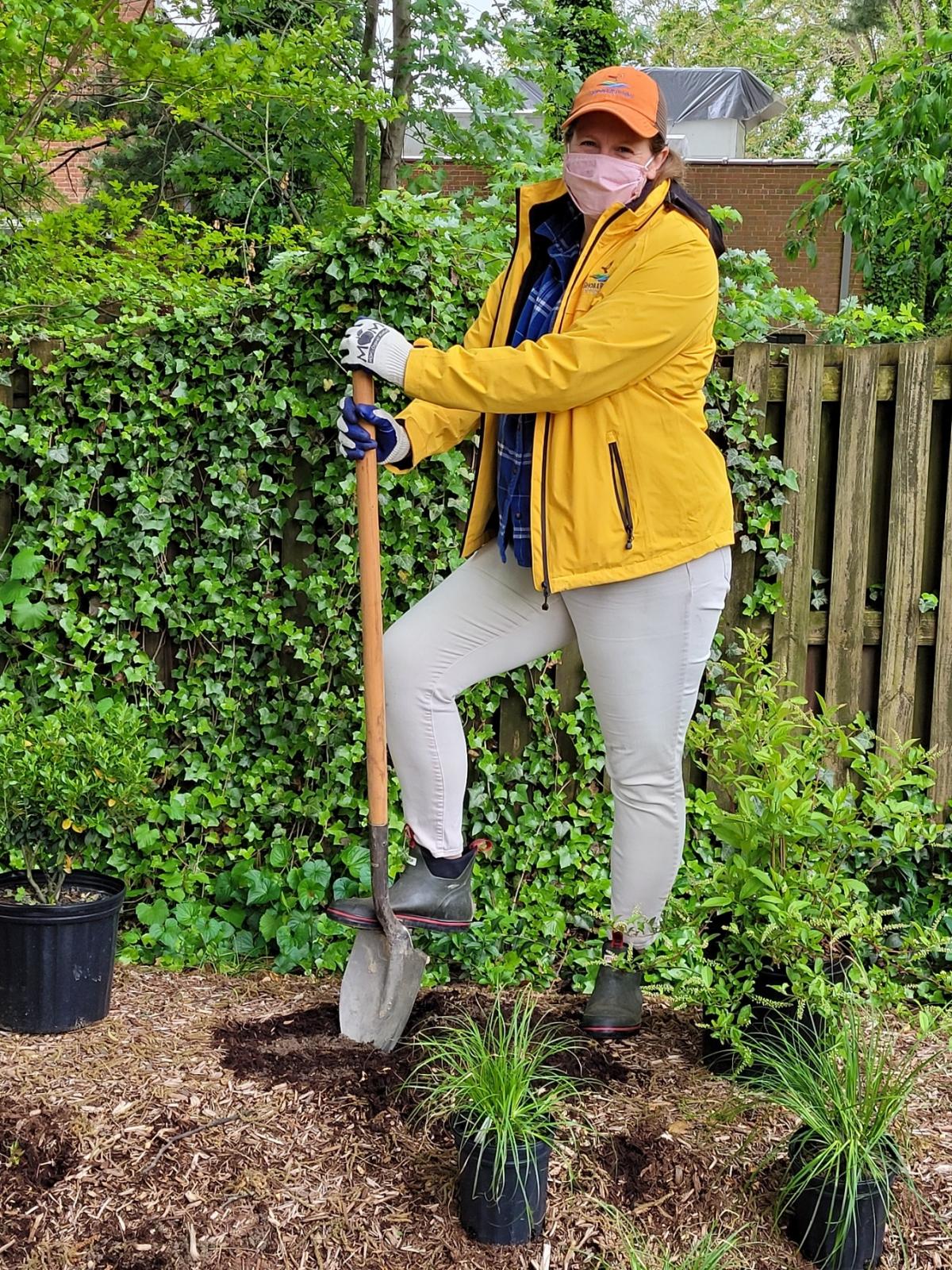
ShoreRivers Chester Riverkeeper Annie Richards plants native species at Saint Paul’s Parish in Centreville, the site of Sunday’s EcoFest event.

Join ShoreRivers, Interfaith Partners for the Chesapeake, and other local environmental organizations from across the Upper Eastern Shore for Queen Anne’s EcoFest at Saint Paul’s Parish in Centreville on Sunday, November 21 from 2:00 to 4:00 p.m. EcoFest will provide free fun for the whole family. Activities include a free native plant seed giveaway, critter bingo, dream catcher weaving, arts and crafts, storytelling, rain garden tours, birding information, and presentations from local environmental groups. Event is rain or shine, and attendees are asked to wear a mask for the indoor portion of the event.

EcoFest provides an opportunity to showcase and celebrate rain garden installations at Saint Paul’s Parish, learn about the cultures of indigenous tribes that call the Eastern Shore home, and find new opportunities to get involved in the environmental movement to improve our waterways on the Upper Eastern Shore. The event will recognize National Native American Heritage Month by opening with the Thanksgiving Address from Chief Dennis J. Coker, representing the Lenape Tribe of Delaware.

The rain garden at Saint Paul’s, funded by a Chesapeake Bay Trust grant, treats and filters stormwater from the church’s roof to reduce its impact on nearby waterways. ShoreRivers and Interfaith Partners of the Chesapeake are interested in working with other congregations on the Upper Shore to install similar green infrastructure projects to treat stormwater runoff and reduce pollution loads to local creeks and rivers. In addition to helping water quality, these projects create pollinator-friendly habitats using native plants to beautify congregations’ properties.

Contact Taylor Swanson at [email protected] to RSVP for the event and Suzanne Sullivan at [email protected] to learn more about ShoreRivers and Interfaith Partners for the Chesapeake’s partnerships with local congregations.

ShoreRivers protects and restores Eastern Shore waterways through science-based advocacy, restoration, and education.

shorerivers.org

The Spy Newspapers may periodically employ the assistance of artificial intelligence (AI) to enhance the clarity and accuracy of our content.

Filed Under: Eco Notes Tagged With: Ecosystem, local news, Shore Rivers

ShoreRivers Activates Tree Steward Volunteers and Community Greening Projects

November 14, 2021 by Spy Desk
Leave a Comment

ShoreRivers will activate volunteers to increase tree canopy and implement restoration projects in their communities through two recent federal funding awards. The Envision the Choptank partnership, including ShoreRivers, will work with three underrepresented communities in the watershed to create green stormwater infrastructure projects. These projects will reduce nutrient pollution and make backyards and community spaces livable and beautiful. And in partnership with the Alliance for the Chesapeake Bay, ShoreRivers will train Tree Stewards to plant hundreds of native trees in public spaces across our watersheds. These projects are funded by two collaborative National Fish and Wildlife Foundation grants that support clean water and strong communities on Maryland’s Eastern Shore.

Thanks to a National Fish and Wildlife Foundation grant, trained and certified Tree Stewards will work with ShoreRivers to establish and maintain urban tree canopies across the Eastern Shore.

Activating Restoration in Three Underrepresented Communities in the Choptank Watershed

Building on Envision the Choptank’s existing engagement with three underrepresented communities in the Choptank watershed, this grant will support implementation of restoration projects prioritized by each community through a community restoration fund. Projects will improve water quality, address resource concerns such as stormwater flooding, increase equitable distribution of resources from restoration efforts, and enhance private lands and shared spaces.

An innovative “ambassador fund” will pay residents for their work, support community leaders, and engage community members in training and volunteer opportunities. Planning, outreach, and implementation for these projects will continue through 2023.

To learn more about Envision the Choptank, contact Whitley Gray at [email protected] or 443.385.0511 ext. 202.

Urban Tree Plantings with Chesapeake Tree Stewards

ShoreRivers, in support of the Alliance for the Chesapeake Bay’s Tree Stewards program, will use National Fish and Wildlife Foundation funds to implement native tree planting projects identified by volunteers and initiated by their communities. Well-established tree canopies are essential in urban and suburban areas, where they slow stormwater, filter nutrient and sediment pollution, provide habitat for birds and insects, beautify towns, absorb carbon and air pollutants, and mitigate the extreme heat produced by large expanses of impervious surface.

For many communities on the Eastern Shore that are low-lying and vulnerable to extreme weather events, planting trees can be an impactful and cost-effective solution. Trees are a critical component to ShoreRivers’ strategy to achieve healthier rivers and communities.

With a goal of 300 new trees planted across urban and suburban neighborhoods by the end of 2022, certified Tree Stewards will work with ShoreRivers’ Riverkeepers to engage volunteers, strengthen partnerships with local organizations and committees, and motivate local government to adopt beneficial practices that establish and protect urban tree canopies across the Eastern Shore.

To become a ShoreRivers Tree Steward or identify an area in need of increased tree canopy, please contact Amy Narimatsu at [email protected] or 410.810.7556 ext. 253.

ShoreRivers protects and restores Eastern Shore waterways through science-based advocacy, restoration, and education.

shorerivers.org

The Spy Newspapers may periodically employ the assistance of artificial intelligence (AI) to enhance the clarity and accuracy of our content.

Filed Under: Eco Notes Tagged With: Ecosystem, local news, Shore Rivers

Gratitude and Grub at Pickering Creek Thanks Supporters

November 5, 2021 by Pickering Creek Audubon Center
Leave a Comment

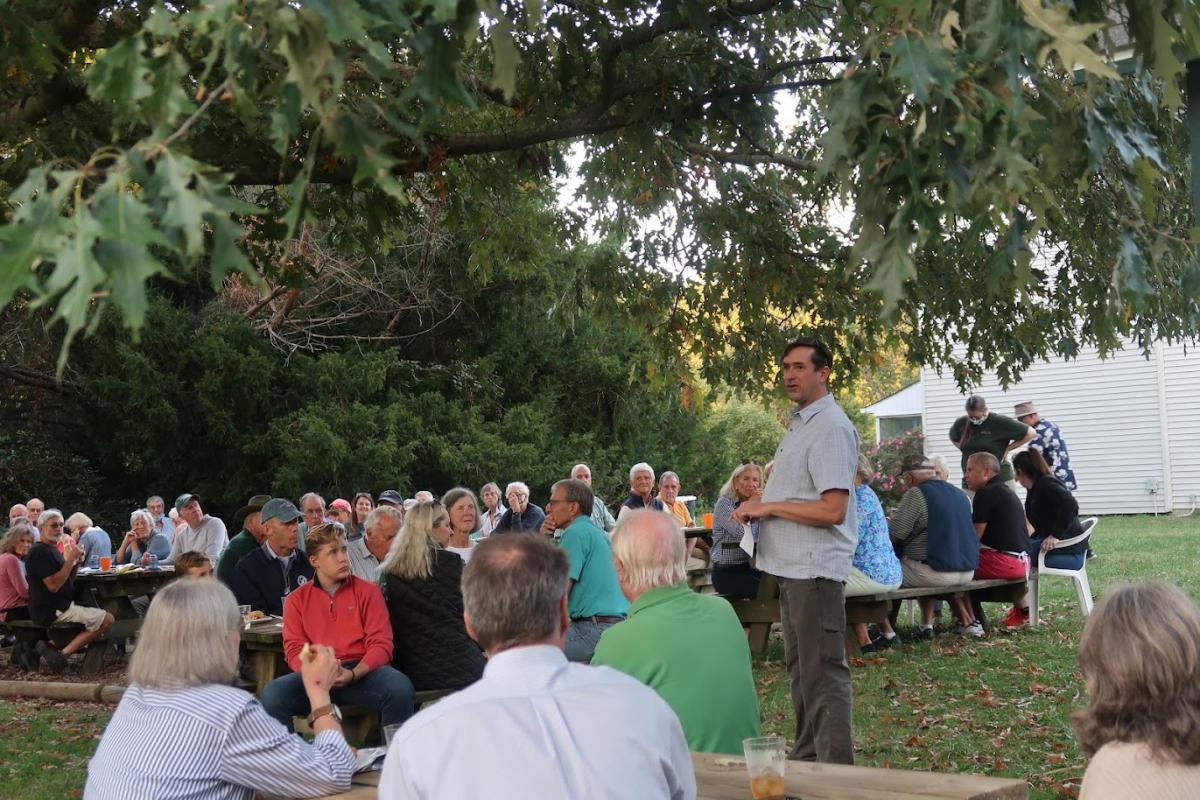
Pickering Creek Audubon Center recently hosted its third Gratitude and Grub to thank supporters for their partnership during the covid pandemic.  Over 80 supporters gathered beneath the Center’s Northern Red Oak beside the herb garden. Everyone enjoyed home cooked pork by Master Pig Roaster and former Pickering Board member, John Trax. Delicious pulled pork sides and homemade brownies and cookies for dessert rounded out the delicious fall picnic meal. The sounds of local musician Justin Ryan, combined with the honking of Canada geese flying overhead provided a great backdrop for supporters to reconnect with staff, neighbors and friends, old and new.

Center Director Mark Scallion spoke of the accomplishments of the year.

Over the course of the last eighteen months, countless supporters partnered with the Center to ensure students of all ages were able to interact with science and nature during covid, both via zoom and in person at the Center. As dinner concluded Director Mark Scallion shared the Center’s successes including how staff pivoted our work seamlessly as we moved all our school programming to a virtual format in April of 2020, offered weekly programs and speakers for the public via zoom throughout 2020 and 21 and made the Center’s trails safe and welcoming to our community.   Staff of the Center each shared the many accomplishments in connecting people to nature the Center has provided the community because of everyone’s hard work, generosity, and dedication.  As dusk approached folks lingered at picnic table sharing their own nature experiences and enjoying the chirps of the last crickets of summer.

The Spy Newspapers may periodically employ the assistance of artificial intelligence (AI) to enhance the clarity and accuracy of our content.

Filed Under: Eco Notes Tagged With: Ecosystem, local news, Pickering Creek Audobon Center

ShoreRivers Inspires Action with Wild & Scenic Film Festival

November 5, 2021 by Spy Desk
Leave a Comment

ShoreRivers will host its 12th Annual Wild & Scenic Film Festival on Friday, November 19, starting at 7 pm. Like last year, hundreds of passionate environmental advocates will gather online to enjoy a carefully curated slate of award-winning films that reflect a theme of “Resilient by Nature.” General admission tickets are FREE, but donations are welcome. For those who are unable to attend the live event, the films will be available to all registrants On Demand from November 20-30, so register now at shorerivers.org/events.

ShoreRivers joins over 250 organizations across the country to showcase a suite of captivating films that inform and inspire a deep connection to the environment. The diverse film lineup is rooted in both environmental activism and an enduring love of nature. Events like this capture these unique stories of conservation and hope and share them throughout communities across the world. Listen to them, remember them, and leave with a renewed hope and sense of wonder.

Register now for your free ticket to experience breathtaking scenes like this one from Through the Breaks during ShoreRivers’ Wild & Scenic Film Festival on November 19.

After an introduction by ShoreRivers Executive Director Isabel Hardesty, the evening will commence with Through the Breaks, directed by Tom Attwater. Audience members will experience a float down the Upper Missouri River in eastern Montana that reveals a spectacular, remote, and unspoiled prairie landscape. But why do the wild scenes of this place matter? For boatbuilder Jason Cajune, the river trip carries on a family tradition; he grew up on drift boats in Glacier National Park, operated by his parents. Now a boatbuilder by trade, Cajune says, “I’m really just sort of a caretaker of an idea that came before,” a succinct definition of conservation itself.

Other short films interspersed with staff commentary will round out the evening, which will then conclude with Wild Climate, directed by Meredith Meeks. On Maryland’s Eastern Shore, we know first-hand that rural communities are already experiencing the impacts of climate change. This film elevates personal stories that inspire change at every level.

This event is made possible by the leadership and generosity of event sponsors: EcoPrint, ThinkMakeBuild, Gillespie Precast, Wye Gardens, Cross Street Realtors, Talbot Preservation Alliance, Easton Utilities, Parker Counts, Chesapeake Utilities, and by the kindness of numerous individual and family sponsors.

Proceeds from the evening benefit the important advocacy, education, and restoration initiatives of ShoreRivers that result in real pollution reduction. Throughout the year, ShoreRivers’ Riverkeepers speak for the rivers at local, state, and regional levels to ensure representatives are informed with the latest science, trends, and recommendations. Outstanding education programs prepare 1,600 high school students in four counties and 1,200 elementary school students in two counties to become the next generation of environmental stewards. In addition, the organization has installed large- and small-scale restoration practices through thousand-acre farm projects as well as individual River-Friendly Yard upgrades.

Although this is a different experience from years past where we gathered at the Tidewater Inn and the Avalon Theatre in Easton, ShoreRivers hopes you will join this thrilling cinematic journey as the organization’s mission for clean water remains steadfast. This will be an evening full of laughter and excitement, leaving viewers with the desire to make a positive difference for our beautiful rivers.

For more information, contact Freya Farley at [email protected]. Visit shorerivers.org/events to register or become a sponsor.

ShoreRivers protects and restores Eastern Shore waterways through science-based advocacy, restoration, and education.

shorerivers.org

The Spy Newspapers may periodically employ the assistance of artificial intelligence (AI) to enhance the clarity and accuracy of our content.

Filed Under: Eco Notes Tagged With: Ecosystem, local news, Shore Rivers

Environmental Concern Plans for Wetland Wise Awards in Celebration of 50th Anniversary

October 28, 2021 by Spy Desk
Leave a Comment

In celebration of Environmental Concern’s 50th year working for wetlands, the local non-profit will announce the latest recipients of the Wetland Wise Awards. Environmental Concern will reveal the award winners on 2/2/2022, the day the international community celebrates World Wetlands Day (WWD). Nearly fifty-one years ago, representatives worldwide signed the ‘Convention on Wetlands’ treaty to promote international cooperation for the conservation and wise use of wetlands and to designate Wetlands of International Importance. Since the signing in 1971, the ‘Convention’ has grown to 172 countries and 2431 Wetlands of International Importance, covering 629 million acres of wetlands. 


One of EC’s restored shorelines on the Chesapeake Bay

On WWD 2022, Environmental Concern will present Wetland Wise Awards to those community members who, through their actions, demonstrated a commitment to improve water quality and enhance habitat in the Chesapeake Bay watershed – Environmental Concern’s mission since its founding in 1972. 

“Each recipient showed their concern for the health of the Chesapeake Bay by making an environmentally sound decision regarding their waterfront,” said Environmental Concern president Pittenger-Slear. 

The award recipients’ commitment to the health of the Chesapeake Bay waterways links directly to the 2022 World Wetlands Day theme – Wetlands Action for People & Nature.  

“This is the right day to bring attention to those who are doing what they can to preserve and enhance this area’s greatest natural resource and to recognize Environmental Concern’s 50th year working to restore wetlands,” comments Pittenger-Slear.                                                    

Environmental Concern also celebrates WWD with Blackwater National Wildlife Refuge on 2 February every year, presenting posters and educational materials to the Refuge for distribution to visitors. Blackwater National Wildlife Refuge, part of the larger Chesapeake Bay Estuarine Complex, is one of the forty-one Wetlands of International Importance in the U.S.

Environmental Concern, a non-profit corporation, is committed to improving water quality and creating, restoring and conserving wetlands, living shorelines and other natural habitats. For more information visit: www.wetland.org and www.ramsar.org.


             . 

The Spy Newspapers may periodically employ the assistance of artificial intelligence (AI) to enhance the clarity and accuracy of our content.

Filed Under: Eco Notes

CBF: New Report Raises Questions about MD Department of Environment’s Draft Wastewater Permit

October 27, 2021 by Chesapeake Bay Foundation
1 Comment

An engineering report being released today found several issues with Maryland Department of the Environment’s (MDE) issuance of a draft wastewater permit that would enable the proposed Lakeside at Trappe development to spray wastewater onto fields near Miles Creek and the Choptank River.

The report was written by the engineering and environmental consulting firm Antea Group. It was commissioned by the Chesapeake Bay Foundation (CBF) and ShoreRivers to review MDE’s preliminary approval of a wastewater permit for the development, which would add about 2,500 houses and apartments as well as a shopping center to the small Eastern Shore town of Trappe. The spray irrigation plan would allow the developer to spray an average of about 540,000 gallons per day of treated wastewater onto nearly 90 acres of fields near the project.

Antea determined that disposing of the new development’s treated wastewater by spraying it onto fields could create flooding and pollution problems that MDE overlooked by using outdated formulas and faulty assumptions. The firm’s experts did not agree with MDE’s finding that no pollution would leave the spray field.

In Maryland, spray irrigation of treated wastewater can only be permitted if MDE finds no nutrient pollution—such as nitrogen and phosphorus—can wash off the field or percolate into groundwater. To contain these harmful nutrients, which remain in treated wastewater at known levels, state law requires that they must be fully used by the vegetation with no losses to groundwater. Once in waterways, phosphorus and nitrogen fuel algal blooms that cause dead zones devoid of aquatic life. In this case, the pollutants could further exacerbate water quality problems in Miles Creek and the Choptank River. The Choptank is already impaired by too much pollution.

“Based on this report, it appears that Maryland Department of the Environment examined this permit with the goal of approving it, rather than evaluating it on its merits,” said Doug Myers, CBF’s Maryland Senior Scientist. “We do not agree with MDE’s finding that spraying hundreds of thousands of gallons of wastewater onto fields each day won’t cause more water pollution in the area. If anything, we urge MDE to evaluate this permit again with better information and more appropriate methodologies to determine how disposing wastewater in this way will affect water quality.”

Among the findings in the report:

  • MDE evaluated how the wastewater will move through “clean sand, and sand and gravel” soil, however the soil type on the spray fields is “silty sand” which has different groundwater conductivity rates. Had MDE used the hydraulic conductivity rate for silty sand, the flooding potential estimated at the site would be much greater.
  • Inaccurate groundwater conductivity analyses underestimate the potential for phosphorus and nitrogen pollution to pool on the surface and wash into nearby waterways.
  • MDE did not provide a basis for requiring the development to store wastewater for 75 days. The requirement was put in place so the development would have somewhere to store wastewater when applications onto fields are prohibited, such as on rainy, windy, or freezing days when plants and soil wouldn’t be able to absorb water and pollutants as well. However, MDE did not use a climatological analysis to estimate how many days per year these conditions would require storage.
  • MDE used a standard rate to determine vegetative uptake of pollutants by orchardgrass—the proposed vegetation expected to be used on the spray fields. This standard rate didn’t account for the fact that the plants are dormant during the winter. It also did not account for the substantial changes in uptake of nitrogen and phosphorus by orchardgrass and other vegetation during the growing season and other times of year.
  • MDE used an outdated and rudimentary calculation method known as the Blaney-Criddle Method to determine how much water would evaporate from the spray fields. This method has been criticized by scientists for being especially inaccurate under “extreme” climatic conditions. The Antea consultants recommended instead that MDE use the Penman-Monteith method that incorporates standard climatic data into the formula to determine how much water will evaporate from the fields. If less water evaporates from the fields than expected it could result in flooding or pollutants reaching nearby waterways.

These findings and others in the report raise significant questions about whether MDE can accurately say, as they have previously, that using spray irrigation to dispose of treated wastewater at this proposed development will not add pollutants to local waterways.

“To say that no pollution will result from this proposed sewage treatment system is like saying that in Maryland water doesn’t flow downhill and plants grow year-round. However, we’re smarter than that,” explains Matt Pluta, Choptank Riverkeeper for ShoreRivers, “And we know that you can only apply so much treated sewage to a field before runoff or pollution of groundwater starts to occur. And we know that plants have a growing season where at certain times of the year they aren’t using nutrients to grow. Thanks to the Antea Group we have a better sense of where this permit missed the mark on meeting the legal standards for protecting our rivers”

CBF and ShoreRivers remain concerned that MDE is using an agricultural method of wastewater disposal for a major suburban development project. In Maryland, most large developments connect to municipal wastewater plants that treat the wastewater and then release it directly back into a waterway only if the discharge does not exceed pollution limits. If an exceedance is anticipated, state agencies require that best practices such as tree plantings, stormwater controls, or enhanced farm management be used to offset any impacts to meet Chesapeake Bay restoration requirements.

Because MDE has found in reviewing this permit that no new pollutants will reach local waterways near the development due to the use of spray irrigation, best practices will not have to be put in place to reduce pollution that could be caused by these new homes and businesses.

The Spy Newspapers may periodically employ the assistance of artificial intelligence (AI) to enhance the clarity and accuracy of our content.

Filed Under: Eco Notes

Upper Shore Youth Environmental Action Summit Seeks Student Leaders and Sponsors

October 23, 2021 by Spy Desk
Leave a Comment

Mairin Corasaniti and Megan Buonpane, from ShoreRivers education staff, presented at the Lower Shore Youth Environmental Action Summit in 2019.

ShoreRivers and Washington College Center for Environment and Society (CES) will co-host the Upper Shore Youth Environmental Action Summit on Saturday, March 19, 2022, at the Gibson Center for the Arts on Washington College’s campus in Chestertown. The Upper Shore Youth Environmental Action Summit is a student-centric, conference-style experience celebrating environmental action led by local youth in middle and high school. Students interested in leadership, problem solving, and environmental activism are encouraged to apply now to become a Summit Student Leader.  This event is inspired by the annual LowerShore Youth Environmental Action Summit co-hosted by the Ward Museum and Wicomico Environmental Trust.

Summit highlights will include networking with professionals across environmental fields, access to volunteer and internship opportunities, and engaging sessions and resources to inspire youth to take environmental action into their own hands. Student registration to attend the summit will open this winter at uppershoresummit.weebly.com.

The Upper Shore Summit is seeking middle and high school students to serve as Student Leaders and play a direct role in planning the interactive, inspiring event. A few key roles available for student leaders include identifying summit themes, keynote, and session speakers, and designing press and social media campaigns. Student leaders will meet virtually throughout the winter with ShoreRivers and Washington College CES staff. This experience is an excellent addition to college resumes or job applications.

Student leaders must apply by October 31, 2021, by visiting uppershoresummit.weebly.com/students and clicking apply to become a student leader. Applications are open to middle and high school students in public, private, and home school in Talbot, Queen Anne’s, Caroline, Kent, and Cecil Counties.

The Upper Shore Youth Environmental Action Summit is also seeking event sponsors who want to support local youth in environmental action. Please contact ShoreRivers Director of Education Suzanne Sullivan at [email protected] to learn more about sponsorship. Students participating in the summit will be expected to follow COVID protocols and CDC guidelines as directed by Washington College.

ShoreRivers protects and restores Eastern Shore waterways through science-based advocacy, restoration, and education.

shorerivers.org

The Spy Newspapers may periodically employ the assistance of artificial intelligence (AI) to enhance the clarity and accuracy of our content.

Filed Under: Eco Notes Tagged With: Ecosystem, local news, Shore Rivers

  • « Previous Page
  • 1
  • …
  • 28
  • 29
  • 30
  • 31
  • 32
  • …
  • 37
  • Next Page »

Copyright © 2025

Affiliated News

  • The Chestertown Spy
  • The Talbot Spy

Sections

  • Arts
  • Cambridge
  • Commerce
  • Ecosystem
  • Education
  • Food & Garden
  • Health
  • Local Life
  • News
  • Point of View
  • Senior Nation

Spy Community Media

  • Subscribe for Free
  • Contact Us
  • COVID-19: Resources and Data

© 2025 Spy Community Media. | Log in