MENU

Sections

  • About Us
    • Editors and Writers
    • Sponsorship Terms & Conditions
    • Code of Ethics
    • Sign Up for Cambridge Spy Daily Email Blast
  • The Arts and Design
  • Culture and Local Life
  • Food & Garden
  • Public Affairs
    • Commerce
    • Health
    • Ecosystem
    • Education
    • Senior Nation
  • Point of View
  • Chestertown Spy
  • Talbot Spy

More

  • Support the Spy
  • About Spy Community Media
  • Advertising with the Spy
  • Subscribe
December 6, 2025

Cambridge Spy

Nonpartisan and Education-based News for Cambridge

  • About Us
    • Editors and Writers
    • Sponsorship Terms & Conditions
    • Code of Ethics
    • Sign Up for Cambridge Spy Daily Email Blast
  • The Arts and Design
  • Culture and Local Life
  • Food & Garden
  • Public Affairs
    • Commerce
    • Health
    • Ecosystem
    • Education
    • Senior Nation
  • Point of View
  • Chestertown Spy
  • Talbot Spy
2 News Homepage Cambridge News News Portal Highlights

Election Results: Atkiss Beats Malkus in Ward 1; Roche Wins in Ward 5

June 7, 2023 by P. Ryan Anthony
Leave a Comment

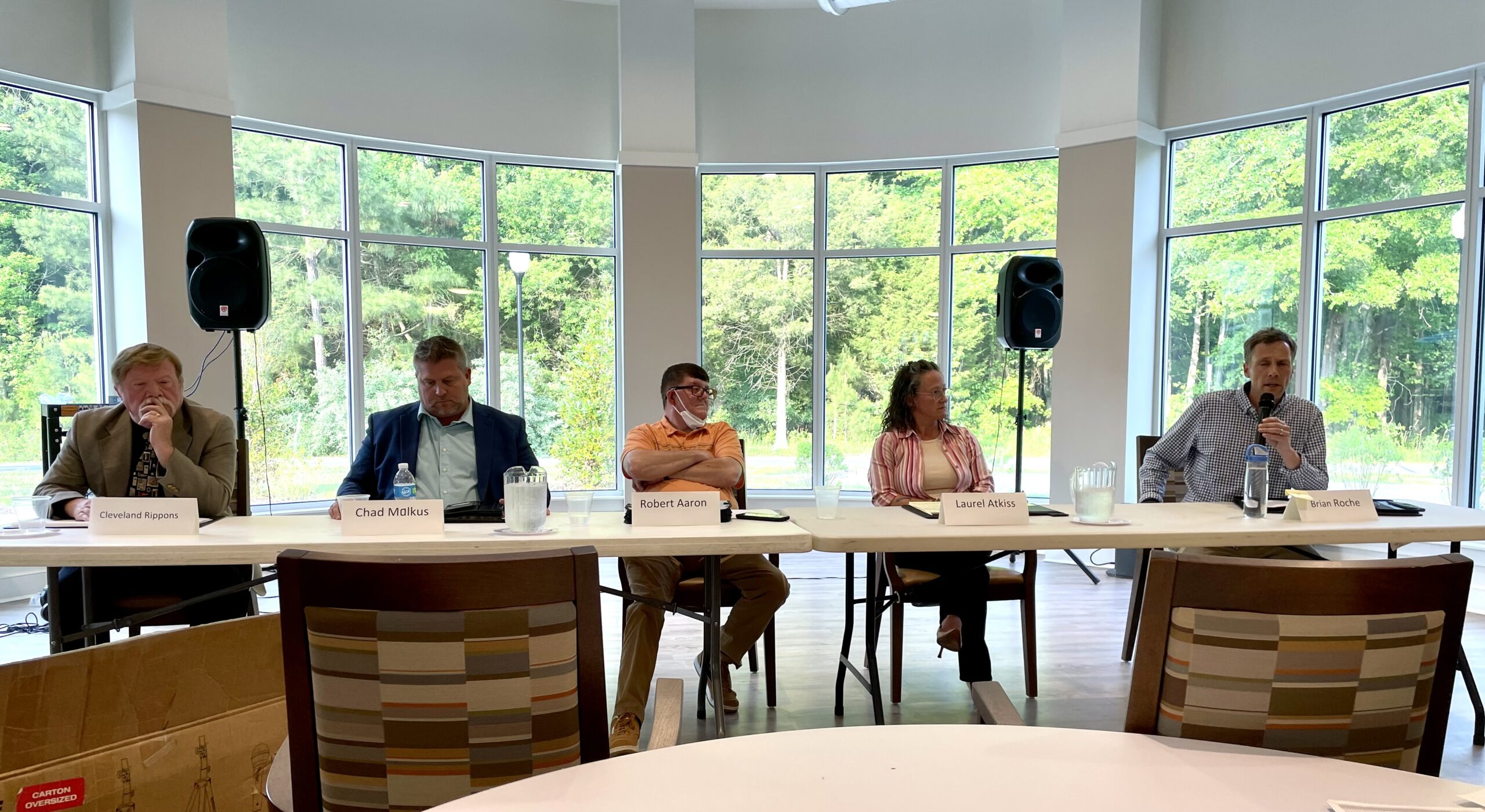
Final results are in from the City of Cambridge’s special election for the Council’s Ward 1 and Ward 5.

City Council Ward 1

Laurel E. Atkiss 207 53.35%
Chad Malkus 181 46.65%

City Council Ward 5

Brian R. Roche 96 61.94%
Cleveland L. Rippons 50 32.26%
Robert G. Aaron 9 5.81%
The Spy Newspapers may periodically employ the assistance of artificial intelligence (AI) to enhance the clarity and accuracy of our content.

Filed Under: 2 News Homepage, Cambridge, News Portal Highlights

A Spy Guide to the Cambridge Special Election Candidates

May 29, 2023 by P. Ryan Anthony
Leave a Comment


On June 6, the citizens of Cambridge will participate in a special election to choose new City Commissioners for Wards One and Five. This was necessitated by the fact that the current members, Brian Roche (Ward 1) and Chad Malkus (Ward 5), moved into each other’s ward. Both men are hoping to remain on the Council, but they face challengers for the seats. Roche will face Cleveland Rippons and Robert Aaron while Malkus competes with Laurel Atkiss. Below is information on each candidate.

Candidate (Ward 5): Robert Aaron

Background: From Madison. Grew up working class. Attended Easton High School.

Experience: Attends City Council meetings.

On Moving YMCA: Should stay where it is.

On Housing: Code enforcers not doing their job. Inconsistent enforcement. All property owners deserve a second chance.

On Hearn Building: Would be cheaper to tear it down and build something new.

On Sewer Breaches: City says there is much funding, but he hasn’t seen anything done.

On ARPA funds: Doesn’t know any of the funds’ receivers.

On Crime: Offer police officers more money and have them sign contract requiring certain number of years in the city.

Candidate (Ward 1): Laurel Atkiss

Background: Born in Cumberland and educated in Baltimore (earned a BFA). Has lived nearly half of her life on the Eastern Shore, 10 years in Cambridge, 3 years in Ward 1. Previously owned a flower shop.

Experience: Working knowledge of retail, tourism, and service industries as well as non-profit promotions. Involved in community service, fundraising, and event organization.

City Activities: Engaging community through programs with area’s youth and heritage, after-school children’s programs funded by the Dorchester Center for the Arts.

Wants to see: Enthusiasm for the thoughtful development of waterfront; revitalization of neighborhoods to be safer and healthier; more citizens present, involved, and informed on functions of the city; more engagement in reconnection of neighborhoods; youth following a positive path and holding pride in their hometown.

Wants to do: Bring open communication, community connections, and healthy progress to her ward.

On Moving YMCA: Waterfront facility would not benefit the communities that need it most; it should be centrally located for easy access to multiple neighborhoods. The waterfront is valuable property that should draw tax revenue, and a not-for-profit like the Y would not. The ARPA funds that the YMCA organization used on a study of a new facility could have been put to better use.

On Housing: There are seniors living in dilapidated houses who don’t know about available resources. Code enforcement should be equitable and consistent. Neighborhoods held to code are safer, healthier, cleaner, and more sustainable.

On Hearn Building: Don’t tear it down; it is part of Cambridge’s history and charm. Think outside the box, get creative. What has been done before hasn’t worked. Make it multi-use space with market-rate housing, workforce housing, and retail.

On Sewer Breaches: Because of climate change, flooding and overflow are going to get worse, so Cambridge must be educated on the issue and proactive.

On ARPA funds: Whatever remains should be used on something that will create more income for the city.

On Crime: A holistic approach is needed. Improve economic opportunity and housing. Give youth better opportunities.

Candidate (Ward 1): Chad Malkus

Background: Raised on family farm in Cambridge. Graduated from Cambridge-South Dorchester High School, where he was class president. BA in Secondary Education and English from Clemson University. Juris Doctor from University of Baltimore School of Law. Admitted to the Maryland Bar in 2002. Lived in Ward 1 various times, including in the West End and on Glasgow Street.

Experience: Practiced law for two decades, focusing on land use, corporate, real estate, and environmental as well as trusts and estates. Currently VP and Senior Fiduciary Advisor for national banking corporation. Teaches Trusts & Estates and Financial Planning at Purdue School of Business (Salisbury University). Served as president of Dorchester County Bar Association, acted as attorney for Dorchester County Planning and Zoning. Appointed last year to Chesapeake Bay Critical Areas Commission. Has been City Commissioner for Ward 5 for two years.

City Activities: Part of Cambridge business and professional community, serving on boards and charitable committees. Served on board of Cambridge Main Street, eventually became president. Founder and organizer of Sailwinds Park Kite Festival. Spearheaded effort for new fencing and improvements to Cambridge Cemetery and Cedar Street gateway.

Wants to do: Continue work towards realization of vision for vibrant waterfront district, thriving Main Street, safe community, cutting red tape impacting Cambridge businesses.

On Moving YMCA: Facility at Cambridge Harbor would be “site activator” and draw people. There have been problems with past rehabs of current building. Although waterfront facility would not provide tax revenue, could make up for that with new houses on the old property.

On Housing: New programs like land banking and lead abatement will help. New code enforcement officer in FY 2024. Court is giving too many chances to slumlords, who must be held accountable.

On Sewer Breaches: Will be a headache to replace sewer systems, but it is necessary and has been a top priority of the City Council.

On Crime: Council has revamped salary plans for police officers. Department has invested in new technology like Shot Spotter. Community-oriented policing is important.

Candidate (Ward 5): Cleveland Rippons

Background: Raised on Hooper’s Island. Served in Air Force. BS in Business Administration.

Experience: Financial planner. As Cambridge Mayor (2000-08), learned intricacies of running a city.

Wants to see: Proactive government.

On Moving YMCA: Citizens would lose much if Y moved out of current facility. Need to see Waterfront Committee’s comprehensive plan first. Y is zoned for institutional, waterfront property for commercial; should not second guess zoning board’s work.

On Housing: Some areas of city need far more resources then have been allocated. High percentage of rental properties, not enough code enforcers. Should have discussions with landlords to understand their situations.

On Hearn Building: Renovate and make it mixed use.

On Crime: Need to spend time with residents.

Candidate (Ward 5): Brian Roche

Background: Cambridge native, grew up on Willis Street. Graduated from Cambridge-South Dorchester High School, where he was class president. BA in Biology and Environmental Studies from Swarthmore College. Lived outside Philadelphia for ten years.

Experience: Career in Internet technology, mostly with Bay Country Communications, building broadband to rural and underserved areas. Vice Chair of Maryland Broadband Cooperative. Served on board of directors of Eastern Shore Land Conservancy. Appointed by Governor Hogan to Task Force for Rural Broadband. Managed rental property for nearly 20 years. City Commissioner for Ward 1 for last two years.

City Activities: Served as chair of Historic Preservation Commission. Recognized by Cambridge Main Street as volunteer of the year.

Wants to do: Work with local leadership to focus on urban revitalization initiatives that make Cambridge desirable place to live, work, play, and invest. Emphasize unique history, culture, niche economy.

On Moving YMCA: Sympathetic to both sides. If Y moves to new facility, will work to ensure there is no void at old location.

On Housing: Create inspection and tiered rental licensing program to encourage improved housing. Plan ordinances requiring given share of construction to be affordable by people with low-to-moderate incomes. Subject contractors and property owners to fines if process not followed, but make it cheaper and easier to do right thing.

On Neighborhoods: Create neighborhood investment districts. Provide curbside recycling.

On Hearn Building: It is structurally stable. Must invest in and renovate it into mix of housing for different incomes.

On Sewer Breaches: Need green infrastructure on Cedar and Water Streets to handle storm water naturally while protecting bikers and pedestrians.

On City Council: Term limits for Council members. Must do better job making public meetings available online.

On Traffic: Get rid of unnecessary stoplights. Add stop signs, break up long stretches of city streets so they are not race tracks. Create traffic circle at base of creek bridge. Support downtown street closures for more economic activity.

On Pedestrians: Build public pedestrian promenade that connects from Historic Pine Street through Cannery Way to Cambridge Creek. Path from Long Wharf to Great Marsh Park accessible via bike, walking, and wheelchair.

In person voting on June 6, 2023, will be held at St. Paul’s United Methodist Church at 205 Maryland Avenue between the hours of 7 a.m. and 7 p.m. This polling station will be the only in-person location for both wards.

The Spy Newspapers may periodically employ the assistance of artificial intelligence (AI) to enhance the clarity and accuracy of our content.

Filed Under: 2 News Homepage, Cambridge

The Young Historian’s Journey: Unveiling the Path with Dorchester History Society’s Zoe Phillips

May 22, 2023 by P. Ryan Anthony
Leave a Comment

Zoe Phillips

The new director of the Dorchester County Historical Society is twenty-one years old. Take a minute to let that sink in.

But, despite her age, Zoe Phillips is well suited to the job, even though she never expected to have it.

“I wasn’t even really thinking that way or anything,” she said while sitting in her office at the Heritage Museums and Gardens of Dorchester in Cambridge. “I kind of thought it would be fun to work here.”

A native of Cambridge, who lives two streets over from the museums (“I could walk here if I wanted to”), Zoe came by her love of history naturally.

“I was interested in history just being from this area,” she said, “because my family is kind of involved with Historical Society stuff, and my father and my uncle collect Native American artifacts. My uncle used to own an antique shop close to Church Creek near Blackwater. But they also got me interested in local history.”

She did like the subject while attending Cambridge-South Dorchester High School, but she didn’t really want to be a history teacher. So, her career options were limited. However, her aunt was a volunteer at the museums, giving tours to students, so Zoe decided to try it herself.

“I wanted to gain more experience, definitely wherever I could, because it’s not like there’s many other jobs related to history or even places to volunteer,” she said. “I started volunteering here just after I got out of high school [four years ago], doing some work in our library, like genealogy stuff, filing old newspaper articles, all different stuff. And then the problem came up that we didn’t have an updated website.”

So, she offered to help make a new site, to which she transitioned all the old information. At the same time, she was taking college classes online, choosing history as her field. She was able to put her new education to work when DCHS decided to create an internship for her at the museums, allowing her to work there on a regular basis, doing specific projects. She maintained the website, wrote the newsletter, and helped with small advertisements.

When Administrator Mitch Anderson fell sick, the society desperately needed help because the museums were starting to open up again after Covid and more events were being undertaken. Zoe was hired as a part-time employee while finishing her degree.

Anderson unexpectedly died on February 24. The position of director was advertised, and Zoe made the big decision to apply. She officially started the job on April 17.

She is taking the responsibility as the face of the society in stride. “I guess I’m trying to make sure that we’re doing what we’re supposed to. We’re keeping on top of everything. And, yeah, I want to give us a good representation.”

The job is never boring for Zoe. “Some days you end up giving tours all day. Some days I end up answering research requests. Some days I’m going through artifacts. Some days I’m prepping for events. Some days I’m doing all sorts of stuff. It really is every day is different.”

The most important event on her calendar currently is DCHS’s 70th Anniversary, which begins this month. This fact was a surprise to the whole staff, including Zoe.

“None of us had been paying attention to that,” she admitted. “And then somebody reminded us, ‘Hey, this is the year we were founded seventy years ago.’ And so we all just kind of had to again shift gears and start thinking about, ‘Okay, what do we want to do for our 70th Anniversary?’”

Following the big semi-annual yard sale they held early in May, the staff started a major cleanup to make sure all the exhibits were set up the way they wanted them. And they hope to work toward having an open house for a day or two in the fall during which all the buildings on the campus will be open.

Zoe wants to plan many events to bring locals to the museums. “I’d say like probably half of our visitors lately have all been people from out of town or people just visiting our people who didn’t know we were here. And I mean even a lot of local people don’t know we’re here. So, we’re trying to draw attention here a little bit by little bit as much as we can.”

To help with that, Zoe is making sure the society covers all its bases when it comes to advertising—in their guide, their website, and the newspaper. Plus, they’re making appearances on the websites run by the Chamber of Commerce and Dorchester County Tourism.

“The Visitor Center has been really good with working with us and trying to help us get back on our feet and make sure that we’re kind of going into every area we need to. I mean, we’ve fallen behind in a lot of things like grants, paperwork, accessioning [cataloging], and donated items for the museum. So, we’re trying to play catch-up on all of this stuff while we’re also trying to prepare for all of these other events. There’s definitely a lot going on.”

Does she feel any pressure while leading all these efforts?

“I’d say if there’s any pressure, it’s just going to be kind of making sure things get done on the scale that we want them.”

For more information about the Dorchester County Historical Society please go here.

The Spy Newspapers may periodically employ the assistance of artificial intelligence (AI) to enhance the clarity and accuracy of our content.

Filed Under: 1 Homepage Slider, Spy Highlights

The Trials and Tribulations of Cambridge’s Historic School

May 15, 2023 by P. Ryan Anthony
2 Comments

On February 13 of this year, the Planning Commission presented to the Cambridge City Council proposed Ordinance No. 1212, which would amend the Unified Development Code to delete certain language that prevented a developer from turning the Mill Street School building into rental apartments. According to the commission, these amendments were “necessary to protect and promote the public health, safety, and welfare.” This appeared benign enough on the page, but the proposition managed to create a minor uproar in the Historic District.

The Issue

“You’ve got a school sitting in a residential district that’s supposed to be single-family, detached houses,” said Rick Klepfer of Choptank Avenue recently. “That’s a problem.”

After the school closed for good in the late 1990s, the city decided it should be used for a different purpose, and the property was approved for multi-family development with the provisions in the city’s 2003 Zoning Ordinance using the Planned Unit Development criteria. Then several applications were submitted to the Planning Commission, one of which was heard by the City Council in September 2013. The proposal received a conditional approval, but the final plan was never completed.

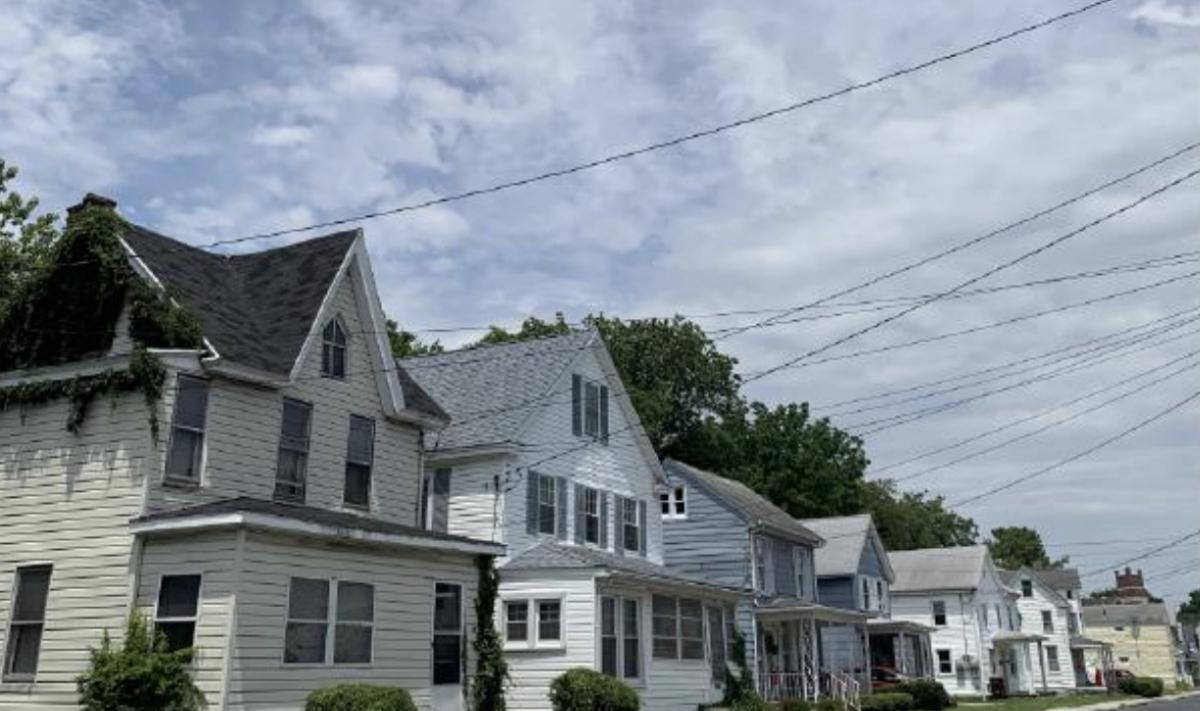
In December 2014, Cambridge adopted the Unified Development Code, and the area around Mill Street was designated a Neighborhood Conservation 3 Zone, which allowed single-family homes. But the school was still there, so the decision was made to create a special overlay district just for that property.

“I don’t think anyone was particularly in favor of the overlay zone putting in there,” explained Klepfer, “but it was approved anyway, and we said, ‘Okay, this is fine.’ There was a document put out by [City Planner] Pat Escher describing what the limitations of it were. What they developed was a way that you could convert the school to apartments, but at some point they had to become condominiums.”

History of the School Building

There were at least two more development submissions for the property between 2019 and 2021, but they did not reach a successful conclusion. During one of those later attempts, the city asked the Historic Preservation Commission for an architectural review to determine the significance of the schoolhouse. On May 28, 2019, HPC Chairperson George Vojtech began by reading a document relating the property’s history.

In 1902, Dorchester County’s public high school for boys burned down, and a new building was constructed by J. Benjamin Brown, a prolific local architect and former mayor. It was called Cambridge Academy and served as an elementary school that was attended by prominent individuals, including future Maryland governors. The building was sold in 1974 and became the private Golden Shore Christian Academy until the late 1990s.

After relating the history, Vojtech read into the record a June 17 letter from architectural historian Paul B. Touart, who had authored the property’s Maryland Historical Trust inventory form in 2010. In his letter, Touart stated that the school building was “a contributing resource to the historic nature of Mill Street and the larger district.” He defined a contributing site as one that “embodies the distinctive characteristics of a type, period, or method of construction or that represents the work of a master, or that possesses high artistic value.”

Thus, the HPC unanimously voted in favor of a determination that the school and property were historically significant. Then, a succession of neighborhood residents announced their agreement with the vote. But, as Klepfer put it recently, even a building on the National Historic Register can be demolished.

“I think basically most of the neighbors at this point would be happy if they tore the school down and put five or so decent houses there,” he admitted.

Enter Bret Davis

The head of Davis Strategic Development LLC in Salisbury presented his application for eight dwelling units in the school building and four duplexes behind it to the Planning Commission on August 2, 2022. HPC reviewed the renovation plan in October and reported favorably. A Planning and Zoning Staff Report was drafted on the following February 7, after which the Planning Commission listened to a number of remaining concerns, including a letter of outright opposition from the Cambridge Association of Neighborhoods.

CAN, led by President Chuck McFadden, asked the City Council to reject Ordinance 1212 for several reasons. Among them was the fact that Davis had purchased the schoolhouse property with full knowledge of the requirement to establish a condominium regime but was insisting on the right to create rental apartments that would remain that way forever. According to CAN, Cambridge was in need of purchasable condo units that were not part of a waterfront development because they would “provide for entry level ownership opportunities, as well as affordable units for elderly citizens that may want to downsize from larger homes in the community.”

The Decision

At the March 13 City Council meeting, where the second reading of the proposed ordinance was held, many locals stood up to oppose it. Speaking as a resident of the West End Historic District and a CAN board member, Klepfer said that Davis wanted the ordinance to favor him while he had made no efforts with the community. Pete Doyle of Choptank Avenue stated that the Planning Commission had broken the agreements between the developers, residents, and city, and that the residents felt like they were kept in the dark during the process. Cheryl Hannan of Mill Street said Davis had no ties to the community and hadn’t carried out any commitment to the citizens.

Ultimately, the Council voted unanimously against the ordinance. However, according to City Planner Pat Escher, Davis still intends to develop the school building.


The Spy Newspapers may periodically employ the assistance of artificial intelligence (AI) to enhance the clarity and accuracy of our content.

Filed Under: 1 Homepage Slider, Cambridge

Cambridge Harbor Progress Report: A Chat with CWDI’s Matt Leonard

May 1, 2023 by P. Ryan Anthony
1 Comment

“We believe, at Cambridge Waterfront Development, Inc, that Cambridge can offer something unique to people who want to visit the Eastern Shore of Maryland,” said CWDI Executive Director Matt Leonard. “So, that’s what we’re aiming for, is to be unique enough that people are attracted to come to Cambridge and special enough that people will live at Cambridge Harbor and play at Cambridge Harbor, work at Cambridge Harbor.”

Leonard was talking about a new district that will be built on 30-plus acres along the waterfront. Designed to include public spaces, amenities, and events, it will focus on promoting Cambridge and Dorchester County’s history, heritage, and culture while creating a destination for tourism. CWDI, a nonprofit corporation formed through an agreement of the city, county, and state, is developing Cambridge Harbor in partnership with the community and will operate the complex as a place to live, work, and visit.

As Leonard pointed out, Cambridge has often been passed or cut through by people going from west to east. But Cambridge Harbor will be strategically placed at the gateway into the city. “And so we also have this sort of unique responsibility for those people who are driving through, to maybe get them to turn right as they come across the Highway 50 bridge for the first time and to explore Cambridge Harbor and through Cambridge Harbor to the Packinghouse and Downtown Cambridge and Pine Street and the West End Historic District.”

The project is expected to cost in the neighborhood of $350 million, with $50 million being the public investment for infrastructure and parks, to include a hiking-and-biking trail and roofed performance venue. The rest will come from the vertical developers building the boutique hotel, residential structures, and retail locations. In April, CWDI received a $1 million grant from the state for design and development, and that followed $1 million awarded in December through the Rural Maryland Development Fund. All told, CWDI has raised $13.2 million in project funds in the last 16 months.

These grants will be used for the detailed design work needed to estimate accurately the construction cost and how much more money needs to be acquired. CWDI has some construction dollars already, and they will shortly be building a new road on the south border of the park. This road will be able to handle traffic, but it will just as often be closed to serve as a pedestrian plaza.

Leonard emphasized that the designers of the complex have been mindful that whatever is done will honor the architecture, maritime history, and heritage of Cambridge and Dorchester County. As renderings have been coming in from potential partners, the designers have provided input to make sure they fit Cambridge’s character.

Another element the developers have had to keep in mind is protection against sea-level rise. CWDI has received guidance from expert institutions stating that the minimum building pad along the waterfront should be seven feet above sea level. So, they are making their own minimum nine feet above.

“There are places right along the waterfront that are lower than that,” said Leonard, “but that’s not where we’re building anything, and we don’t want to disturb the waterfront because that can do as much damage as trying to build it up to protect from a flooding event.”

Since long before the project to build Cambridge Harbor was announced, local citizens had been resistant to commercial space and housing at Sailwinds Park, and those feelings have continued. Leonard understands those concerns, since certain developments in the past, particularly those along Cambridge Creek, essentially cut off the public’s access to the water there. As result, it seems obvious that people are worried Cambridge Harbor will be more of the same. But CWDI is promising that the waterfront will always be open to the community. The biking-and-hiking trail will stretch all around that area, and the planned six-acre park will belong to the public all the time.

“In order to make that active and interesting enough for people to want to spend time in those public spaces, and also to be able to afford to maintain and activate those to the public’s benefit, you have to have vertical development around it, like hotels, residential, and retail, to do that,” said Leonard. “Because those are the ones whose dollars are going to pay to make sure the public spaces can be developed and activated for the community’s benefit.”

Still, some local businesses believe that Cambridge Harbor will not benefit downtown. In response, Leonard explained that the Harbor complex will bring in visitors who might not normally want to come to Cambridge. After those people experience the hotel, restaurants, bars, and other amenities, CWDI will make it their responsibility to encourage them to explore the downtown boutiques and restaurants as well as Historic Pine Street, the Packinghouse, and more. Part of the focus for CWDI is connectivity to those other parts of Cambridge through signage, wayfinding, intracity marketing, and even transportation.

“We want to be able to connect Cambridge Harbor with Long Wharf, with the Hyatt, with downtown, maybe a water taxi or some system there,” said Leonard. “We’ve had people who’ve expressed interest in doing that, and we want to be a part of that if we can.”

Besides the possible water transport, there may be a trolley or shuttle system.

Leonard discussed all this with considerable enthusiasm, revealing his affection for the city. After his spouse, Nancy, retired in 2019, they went looking for their “forever home,” and they fell in love with Cambridge at first sight. It was ideally located, on the water and within driving distance of their adult children. Plus, the Leonards are big believers in small-town America. They moved into a fixer-upper on Somerset Avenue in November 2019.

“Every day since, it’s only been better and better,” gushed Leonard, who joined CWDI in January 2022.

To make all of their plans happen, CWDI needs to spread word of their existence and drum up excitement. So, they’ve built out a Cambridge Harbor logo, tagline, signage, business cards, and a line of merchandise. Along with that, there has been the creation of a smaller campaign for the business side. This is significant, because it’s not been done for previous attempts to build on the waterfront. In fact, this is the farthest along the development has ever gotten.

Leonard credited the passion of the CWDI board; some of the members have been involved in these plans for decades. He also praised state-level champions at the Department of Housing and Community Development and the office of former Governor Larry Hogan, who were willing to invest significantly. Something else that accelerated CWDI’s mission was the Dorchester Hospital’s realization that the evolving business aspects of rural healthcare made the old facility inefficient, leading them to build their new medical center beside Cambridge Marketplace. As a result, CWDI had the opportunity to buy 17 of the 35 acres in its vision.

When the old hospital building was demolished, there was some local mourning and even outrage, and Leonard was sympathetic to that. “I do understand the sentimental attachment to a hospital that, for 120 years, birthed most of the people in this community and was there when most of them passed away and healed them. I just want people to understand CWDI did not force the hospital out. We wanted to make sure that property didn’t fall into the hands of a private master developer just to put condos all the way up to the water.”

Within the next 180 days, CWDI will announce some of the partners creating the vertical development at Cambridge Harbor. However, they’re still inviting interested parties to contact them. Construction on the complex is expected to begin in the first quarter of next year. Leonard believes it is realistic to assume that it will be finished and ready to open in five to ten years, as long as they keep finding the necessary funding and quality partners. And CWDI will be sticking around after development is completed.

“Part of our mission statement talks not only about developing Cambridge Harbor in ways to benefit the community but also sustaining it,” said Leonard. “We’re in it for the long haul.”


The Spy Newspapers may periodically employ the assistance of artificial intelligence (AI) to enhance the clarity and accuracy of our content.

Filed Under: 2 News Homepage, Cambridge, News Portal Highlights

YMCA Chief Discusses Future of Cambridge Facility

April 24, 2023 by P. Ryan Anthony
2 Comments

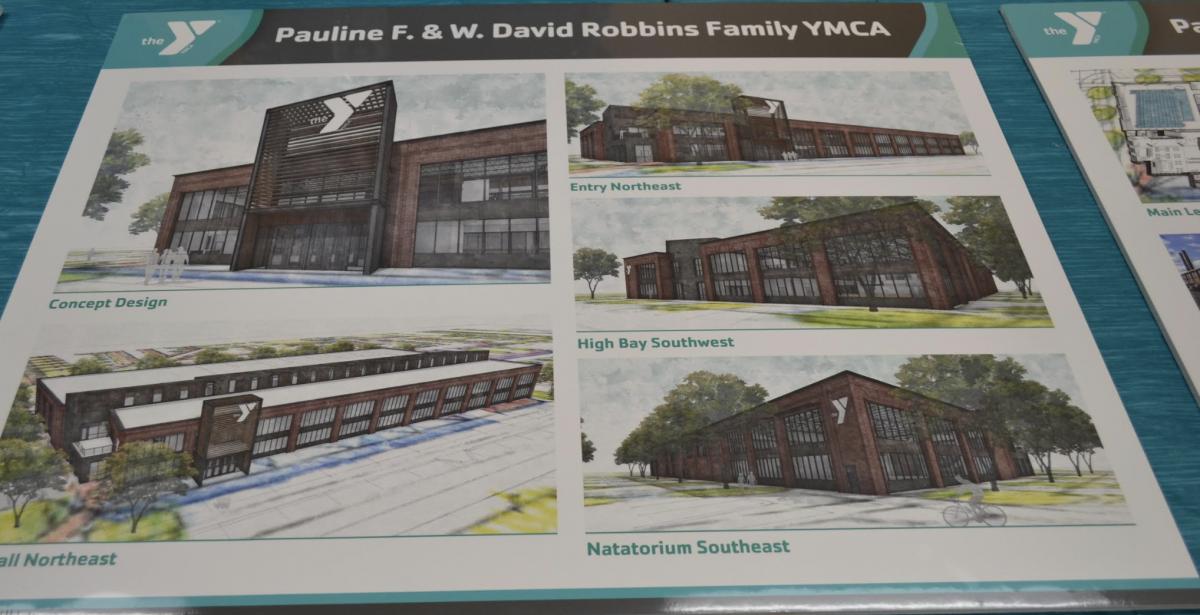
The April 20 meeting of the Cambridge Association of Neighborhoods took place at the Pauline F. and W. David Robbins Family YMCA, where the CEO of the YMCA of the Chesapeake talked about plans for the Cambridge facility. It became a sometimes contentious conversation between Robbie Gill and CAN members as Gill laid out ideas for a new Y building at a different location.

A native of Charlotte, Gill was sent to the Y as a kid so he wouldn’t “burn the house down,” and he spent much of his childhood at his local branch. After college, he got back into the Y and made it a career. About 18 years ago, he decided he wanted to be involved in a small community and moved his growing family to Talbot County.


He told the CAN members, who had filled up Studio A, that his organization had for years been looking at how they could make a bigger impact in Dorchester County. They also wished to explore what a renovation and expansion strategy would be in order to maximize space for wellness, chronic disease programs, and youth programming at the 3,100-member Cambridge facility, a building with 40,000 square feet of usable space that was given to the YMCA in 1998. This exploration was put on hold when the pandemic hit, and the organization got into food delivery programs, childcare for first responders, and online learning for school-age children.

Once the crisis had passed, the YMCA revisited their expansion plans for Dorchester and hired an outside marketing group to conduct a study that included a survey to people across the Eastern Shore. They discovered that the current Cambridge branch couldn’t accommodate the amenities and services desired by the community, including a walking track and a warm-water pool, even if the organization spent $6 million on renovations. So, they elected to examine sites where they could build a new facility.

After testing the current location, a site next to Cambridge-South Dorchester High School, and a spot at the waterfront where Cambridge Harbor will be developed, they decided the best place for a new 70,000 square-foot Y that could serve 8,000 members was around the beach area and welcome center (with the parking lot, the facility would take up 80,000 square feet). An audience member pointed out that Cambridge has only about 12,000 residents, but Gill said that the YMCA in Chestertown, a community of 5,000, has 6,100 members.

The prospective new building would cost an estimated $25 million. Gill mentioned that YMCA, a 501(c)3 not-for-profit entity, prefers not to take on debt, so they are currently in talks with possible supporters, which they will be doing for the next four months. While the dollar amount quoted is “terrifying,” Gill is confident they can get the money, since they’ve built two other similar facilities on the Eastern Shore.

A female attendee asked why the 25 million wouldn’t be enough to renovate the current Cambridge Y to meet the needs mentioned in their study, to which Gill responded that the building would have to be torn down, leaving the community without a YMCA for up to two years. Plus, he said, it would still serve fewer people than could be served at the waterfront.

Someone else objected to the idea of the not-for-profit YMCA moving to the area soon to be taken up by the tax-generating Cambridge Harbor, which will have a hotel, housing, restaurants, and more. Gill said he thinks the waterfront facility would bring residents to Cambridge Harbor and make it a “community hub.”

“All those people at the waterfront,” said one woman, “aren’t those people who already live here and would go there and not necessarily be going there to spend money?”

Gill answered, “Those are individuals who would be going to the YMCA for specific programs and services.”

“Right,” the woman agreed, “but you’re taking up a chunk of the land there, and the people who are going there are going there just to do Y stuff. They’re not coming from other places and spending money at the Y. People already living here are going to the Y, right?”

“And you see a problem with that?” asked Gill.

“I see it as not bringing in the amount of revenue that we hope this, the best property in Cambridge, will bring us.”

That member and others wanted Gill to convince them it made sense for the YMCA to take up space on Cambridge’s “Gold Coast,” which the residents hope will reduce the tax burden and provide money for the local schools. Cambridge Harbor, they said, has the potential to bring in tens of millions of dollars that the community will never see from the Y.

“This makes absolutely no financial sense,” said the woman.


In response, Gill told the increasingly heated crowd that the YMCA organization wants to create a place where everyone would feel welcome and connected. After talking with many community members, Gill and his team are convinced the Y can make a bigger impact in bringing people together in Dorchester County. And doing that would require a site Gill called “neutral or common ground.”

“The reality is, as wonderful as this facility has been, it’s still the old white high school,” he said. “There are African-American individuals who will not come here because of what it once was.”

“I think that’s really incorrect,” a man on the second row objected, “because this place is full of little black kids all the time. The only people I can think of who might have a bone to pick about this place are old people, really old people who were here back in the day.”

Shawna Gregory-Smith, director of the Cambridge YMCA for the last four years, stood up and said, “I’ve personally had families come to me and say they don’t feel comfortable with their children being here alone. And I’ve also had families come to me just to say that coming here is unattainable, like it’s not for them. And these are all black and brown folks. So, I can attest to that.”

Changing the subject, CAN president Chuck McFadden said that people are worried the current building would be left empty to rot if the Y moved elsewhere. Gill said that wouldn’t happen.

“I’m sorry,” someone said, “but the track record here in Cambridge is pretty bad for people making promises.”

In an attempt to cut the tension, the man on the second row offered an idea. “Instead of an all-or-nothing approach, just add a building that has six pickleball courts.”

“Our only reason to exist,” concluded an exhausted-looking Gill, “the only reason this Y exists, is to try to make a positive difference in the lives of those people we’re fortunate enough to serve. Now, we’d love to serve more people in this community, and we would love to be a part in healing this community.”


The Spy Newspapers may periodically employ the assistance of artificial intelligence (AI) to enhance the clarity and accuracy of our content.

Filed Under: 2 News Homepage, Cambridge, News Portal Highlights

The Attempt to Move a Dorchester County Voting Rights Monument

April 5, 2023 by P. Ryan Anthony
Leave a Comment

The large blue-granite monolith is easy to miss, as it stands within a chain link fence on the side of the road between Preston and Hurlock on MD 331. Ironically, a slab jutting out at the base reads “Lest We Forget.”

“I think we have forgotten,” said Cambridge resident Chuck McFadden mournfully.

The Historical Freedom Shrine, as it is officially known, is dedicated to ten Dorchester County men who brought about local and state voter reform in Maryland by challenging the injustices in the political process and leveling the playing field for minorities. It’s strange to see such a significant monument in such an obscure place, and there are some people who think it should be moved somewhere more prominent so everyone can see it and understand the reason for its existence.

Historical Freedom Shrine

Between the 1950s and 1970s, new federal laws were passed to outlaw various forms of discrimination against minorities, and among them were voting rules. But, into the 1980s, the five county commissioners of Dorchester County were elected using an “at large” system, in which the winners were the nominees who got the most votes from the entire county. This meant that all the council members always came from the most populated area—Cambridge—and were always white.

The same thing applied to the city council of Cambridge itself: because of the at-large election rules, it was very difficult to elect a Black commissioner, even from the largely Black Second Ward. And, since at least 1882, the boundaries of that ward encompassed all but one of the blocks where African Americans lived. According to the 1960 census, the Second Ward had over ten times as many people as the all-white Third Ward. The next year, the City redistricted to equalize the population of all the wards except the second. As a result, Black electoral participation was basically fixed to that voting area, thus depriving those residents of true representation.

“I went back and looked at the city and how they had the streets divided in wards,” said Greg Meekins, one of the men whose names are on the monument. “And streets specifically said ‘Whites Only.’ This was prior to the 80s, but because it was in place so long folks just assumed that you don’t move out.”

“It’s just inconceivable that anybody could come up with a system like that,” said McFadden, “where they pushed everybody into one ward and the wards were not equal.”

Concerned that the at-large system made it extremely difficult to elect anyone from the northern part of the county, some people got together in 1980 and raised litigation funds. The following year, an action committee called the North Dorchester Democratic Club was formed by a group of influential men, led by George C. Jones, who determined that the county commissioners could and should be elected by districts. The club approached Meekins, who at the time was president of the Cambridge branch of the NAACP, and they forged a partnership.

“We thought it was an opportunity to enlarge minority representation,” Meekins remembered. “So, that’s why we got involved.”

In November 1983, the club filed a complaint with the U.S. Department of Justice that the 1964 Voting Rights Act was being violated. After depositions by the members, the DOJ filed United States of America v Dorchester County Board of County Commissioners in U.S. District Court in Baltimore.

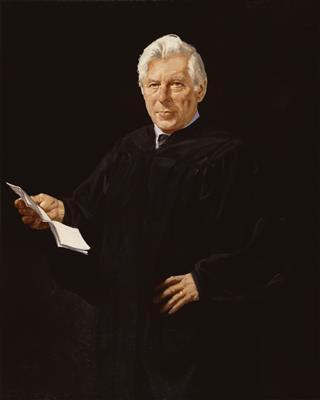
Norman P. Ramsey
United States District Judge 1980 – 1992

The following May, the Department was made aware of the county seat’s voting practices, and in December 1984 United States of America v the City of Cambridge declared that the City’s at-large system violated Section Two of the Voting Rights Act as well as the Fourteenth and Fifteenth Amendments to the U.S. Constitution. Alleging that Cambridge had adopted the at-large format in order to dilute the voting strength of its Black citizens, the government asked the district court for an injunction preventing the City from conducting future elections under that system. The court ordered the defendants to come up with a plan for meeting the requirements of federal law.

Cambridge finally agreed to a consent decree, and settlement negotiations started in June 1985. A DOJ attorney told the City that the government sought a racially fair election plan. The outcome was the establishment of a new format that was approved by the Court and the DOJ. It included the stipulations that commissioners must reside in the ward they represent, they must be elected by the voters of that ward, and the voting population of each ward must be approximately the same. Similar requirements were established for Dorchester County elections.

On July 8, 1985, Judge Norman J. Ramsey ordered the creation of five equal voting districts, abolished at-large voting, and signed the consent decree. In 1986, the Maryland legislature amended the state constitution. The results were the election of the first Black county commissioner in Dorchester history and the broadening of Black representation on the Cambridge City Council.

To immortalize the efforts of the North Dorchester Democratic Club, George Jones had a 20-ton monument created in 1987. The inscription includes the names of all ten men: Jones, Meekins, Charles F. Hurley Sr., Don W. Bradley, Oliver Harding, Richard Harding, William Reid, Edward Conway, William O. Corkran, and Leon Medford. The monument also offers information about the events that led to the end of at-large voting in Dorchester County. It is an impressive shrine deserving a place of honor.

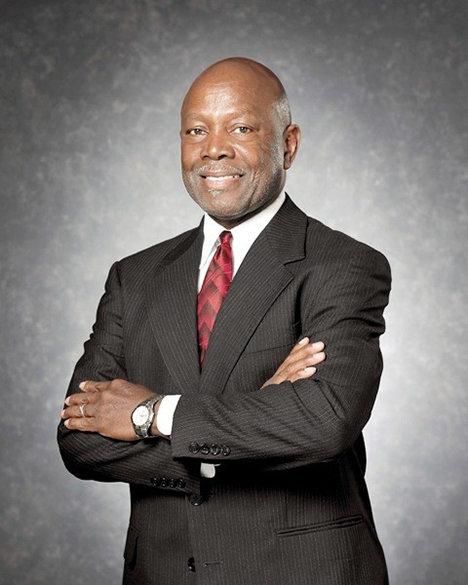
Dr. Carl S. Barham

However, because of a backlash of feelings about the voting rights cases, the local government could not “find” any public land—in Cambridge or the county—on which to put the monument. So, Jones had it installed on his own out-of-the-way property. It was erected on November 10, 1987.

After Jones died, the land was sold twice, and the current owner put up the fence around the shrine to keep people out. According to Meekins, curious visitors have “caused a little pain for [the owner] and his family.”

“I think it’s a shame that it’s sitting out there,” lamented McFadden. “There’s no parking, you have to just pull up to the side of the highway and walk around a drainage ditch to get to the fence that surrounds it.”

In an attempt to remedy this, Dr. Carl Barham started going to the state legislature annually to keep the monument in the public’s view. His goal has been to see about moving it to a more centralized location, such as Cambridge or Hurlock.  At one point, Meekins was interested in having it placed at North Dorchester High School, and he even approached the Board of Education about adding the lawsuits to the history curriculum so students would learn to be vigilant and keep their eye on what happens with voting rights in America. Generally, though, Meekins prefers to remain in the background. But he and Barham keep in touch.

McFadden knew none of this when he began researching the Cambridge City Charter “because of what’s going on with the City Council and people living outside of their wards.” He happened upon the voting rights case, which he had only vaguely heard of, even though he served with Meekins on the city’s ethics commission for several years.

“I thought it was back in the sixties, during the riots and all that kind of stuff,” said McFadden. “I didn’t realize it was ‘85, and I also didn’t realize it was ‘85 when they had this disproportionate ward system.”

Then, during Black History Month this year, Mayor Steve Rideout called Meekins and said, “I thought about that monument and would love to see it moved.”

Meekins was pleased that there was some interest in the project. But it had to wait until he investigated some of the technicalities surrounding the monument’s ownership. He didn’t know if Jones had included anything about it in the property’s deed before he died.

“As soon as we find out what the technicalities are,” explained McFadden, “I would like to approach both the county and the city to find funds to move it. It is a big object, not something you can put on the back of your pickup and move. This is big. But, if they could put it out there, they can put it anywhere they want.”

If funds are not available for moving the monument, McFadden will be happy to lead the effort to raise the money needed for the move, a new place to put it, and a rededication.

“So, I don’t know what it’s going to take,” he said. “It’s going to take some effort, but I’m retired.”

McFadden thinks it’s important to “make amends” for the neglect of the monument and its reason for being. “It’s just as important to me as the riots in the 60s, maybe up there with Harriet Tubman.”

“It’s a part of history,” said Meekins. “And, ironically, despite all the black eyes Cambridge and Dorchester County get, we’ve been a trendsetter in the state as far as activism in the community, more so than some other counties.”

The monument was important enough for Governor Larry Hogan to visit it a few months before he left office—the first Maryland governor to do so. He and Meekins took some photos together with it. Hogan recognized that the triumph of the North Dorchester Democratic Club needs to be remembered.

In November 2014, Dr. Barham said, “The works of ten bold, brave men should not be minimized or go in vain, because their passion and vigilance changed the political landscape of Dorchester County.”

The Spy Newspapers may periodically employ the assistance of artificial intelligence (AI) to enhance the clarity and accuracy of our content.

Filed Under: 1 Homepage Slider, Spy Highlights

Making Sense of the Mid-Shore 2022 Education Report Card

March 20, 2023 by P. Ryan Anthony
Leave a Comment

March 9 saw the release of the 2022 Maryland School Report Card, which is designed to help stakeholders measure student achievement in public schools throughout the state. In schools of the upper and mid-shore—Caroline, Dorchester, Kent, Queen Anne’s, and Talbot Counties—children’s Math and English Language Arts results were commendable for the most part. Nonetheless, some real challenges exist as well.

As communities around Maryland begin using the metric as an important data point, the Spy was eager to help our readers understand the history of the Maryland School Report Card and how to decipher yearly results.

Brief History

On December 10, 2015, President Obama signed the Every Student Succeeds Act, the federal K-12 education law that replaced No Child Left Behind. The ESSA laid out expectations of transparency for parents and communities and required every state to develop a concise and easily understandable “state report card” accessible online.

Each state submitted a consolidated plan detailing how the law would be implemented as well as how the state would hold schools accountable for student performance. In Maryland, parents, school personnel, superintendents, community leaders, advocacy groups, the Board of Education, and MSDE staff collaborated to create an accountability system that measured relevant, actionable aspects of school performance. The plan was submitted to the US Department of Education and approved in early 2018.

The first Maryland School Report Card was released later that year. The state was able to produce two years of report card school results (2018 and 2019) before the pandemic hit.

What’s in the Card

Each school has a report card that includes a star rating (one is lowest, five is highest), percentile rank, and total earned points percent. The data also includes student group separation of report card indicators, equity information, progress toward meeting targets to close achievement gaps, and improvement from the previous report card.

On average, a five-star school has a Math proficiency of 53.8% and an ELA proficiency of 71.8%. In a one-star school, Math proficiency is 1.1% while ELA proficiency is 6.3%.

Maryland Results Overall

Of the state’s 1,316 schools, 16% had five-star ratings, 32% had four-star ratings, 33% had three-star ratings, 16% had two-star ratings, and 3% had one-star ratings. This means that almost half of Maryland schools earned four or five stars.

Scores for the Mid-Shore

Among the twelve schools in Queen Anne’s County (7,440 students), 8% earned three stars while 58% earned four stars and 33% earned five stars. QAPS’s proficiency results were:

Elementary – 44.9% Math, 57.2% ELA
Middle –        23.8% Math, 59.1% ELA
High –           39.9% Math, 47.6% ELA

The eight schools in Talbot County (4,533 students) earned five stars (13%), four stars (50%), and three stars (38%). TCPS’s proficiency results were:

Elementary – 23% Math, 43% ELA
Middle –        13% Math, 39.9% ELA
High –           22.3% Math, 56.2% ELA

Caroline County’s nine public schools (5,551 students) earned either four stars (33%) or three stars (67%). CCPS’s proficiency results were:

Elementary – 24.6% Math, 44.1% ELA
Middle –        13.9% Math, 36.9% ELA
High –           21.7% Math, 46.7% ELA

The five schools in Kent County (1,786 students) earned either four stars (40%) or three stars (60%). KCPS’s proficiency results were:

Elementary – 20.5% Math, 35.4% ELA
Middle –          8.2% Math, 34.9% ELA
High –            21.4% Math, 48.4% ELA

In Dorchester County’s eleven schools (4,573 students), 27% earned four stars, 27% earned three stars, 36% earned two stars, and 9% earned one star. DCPS’s proficiency results were:

Elementary – 16.4% Math, 29.2% ELA
Middle –          9.4% Math, 27.8% ELA
High –            13.2% Math, 42.8% ELA

Graduation Rates

While Talbot County had the best graduation rate at 95%, it had fewer students enrolled than did Queen Anne’s, whose rate was 94.21%. The other rates were as follows: 92.65% for Kent, 85.21% for Caroline, and 81.57% for Dorchester.

Overall, Queen Anne’s County Public Schools displayed the highest performance of the counties analyzed, but second-place Talbot County saw improvement in English Language Arts scores since the last report card. Kent County also showed improvement in ELA, as did Dorchester County, the only one of the five to earn one or two stars (45%). However, DCPS significantly trailed everyone else, whose scores in both ELA and Math were in line with the state average.

The Spy Newspapers may periodically employ the assistance of artificial intelligence (AI) to enhance the clarity and accuracy of our content.

Filed Under: 1 Homepage Slider, Ed Homepage, Ed Portal Lead

YMCA’s Jennifer Lehn and Educating Y Kids

February 27, 2023 by P. Ryan Anthony
Leave a Comment

Saying that Jennifer Lehn is a very busy person would be an understatement. Besides supervising the YMCA’s custodial staff, she organizes the programming, handles the children’s tutoring sessions, manages before- and aftercare, and oversees summer camp. It’s a lot of responsibility for this woman who originally moved from Ontario, Canada, to work at the Hyatt Regency.

The change came when she started taking her child to the Stay & Play at the Pauline F. & W. David Robbins Family YMCA in Cambridge. Then she got a job there, which allowed her the freedom to pursue both of her passions.

“I can focus on my children and having the time for my family, plus focusing on my professional career, as well,” said Lehn, who worked over the last seven years to being the program director.

Part of her duties is leading the Tuesday/Thursday early learning program where infants up to five years old can play and learn with their parents. After they age out of that, the children are eligible for the before- and aftercare services the Y in Cambridge provides for Maple, Choptank, and Sandy Hill Elementary Schools. Lehn also oversees before-care at Warwick and aftercare at Vienna.

Additionally, she offers reading and reading comprehension lessons for kids through Grade 3. The program is based in part on the national Campaign for Grade-Level Reading, the goal of which is to get children reading on grade level by third grade. Lehn has been with the local campaign group for the past three and a half years, ever since they gave a grant to the Y’s early learning program.

In her tutoring classes, which began last December, Lehn still sees the struggles children have been experiencing since Covid. The loss of several years’ worth of learning has left big gaps in their education, and this manifests in their issues with easy words or kindergarten-level material. But, since the schools want the kids to move forward, Lehn is trying to get them where they need to be.

“You never want to see a child struggle because he can’t read,” she said. “You don’t want to see someone struggle because they don’t know a math problem. Because, once you see those struggles, and they can’t catch up, you may see behavior problems come along with that.”

There is, however, more to learning than just math and reading, and more parts of the brain to engage.

“I grew up on a farm,” said Lehn, “and I really think it’s important for children to learn you don’t always have to buy your food.”

So, a couple of years ago, she implemented a gardening program. She and the kids plant seeds in a garden in back of the YMCA building, and they take care of the plants during the spring and into summer. This year, the Y got a garden grant that they’re using to build vertical walls for herbs and other things. The group performs activities based around seeds and plant life, and they learn how fruits and vegetables are grown.

“Then they get to eat the rewards of it, basically,” said Lehn.

The summer camp, which is for age 5 to 14, runs for all ten weeks of the summertime. Lehn had started out with a year of Camp Abilities, where she worked with a little girl named Sierra, before being promoted to camp director. For this post-pandemic season, she is making the schedule and inventing the activities for a bigger group.

“We are lucky to add more numbers this year,” she said. “We have been keeping it fairly low due to Covid. So, we’re going to be at about 65 to 70 kids this year.”

Throughout the summer, Lehn will conduct a daily learning-loss activity involving reading or math, and then she or someone else will read to the children.

Beyond her in-house responsibilities, Lehn also is passionate about reconnecting the Y with the community. “I feel like that’s where it belongs. That’s why we’re here: to help children, adults, anybody who needs somewhere to go.”

And she wants the public to know that the YMCA will make sure the programs are affordable for interested kids.

The Spy Newspapers may periodically employ the assistance of artificial intelligence (AI) to enhance the clarity and accuracy of our content.

Filed Under: 1 Homepage Slider, Cambridge

Cambridge Pine Street Project Update: A Chat with Town Manager Tom Carroll

February 21, 2023 by P. Ryan Anthony
Leave a Comment

At an October 2022 meeting with residents of Pine Street in Cambridge about possible development in the area, someone said to City Manager Tom Carroll, “We’ve been talking about this for fifty years. When are we gonna do stuff?”

“That resonated with me,” Carroll reflected, “because, as I look at Pine Street, there are some beautiful structures and beautiful homes, but there’s still a lot of blight and there’s still a lot of need. We’ve got a long way to go, in partnership with the community and the residents of the neighborhood and the property owners.”

It wasn’t always this way. When Cambridge prospered as a factory town in the first half of the 20th century, Pine Street—one of the oldest continuously occupied African American neighborhoods in Maryland—prospered, as well. During the 1930s, busy black-owned businesses lined the streets, and the music scene at several local nightclubs was the most vibrant on the Eastern Shore.

But too many people relied on Phillips Packing for their livelihood, and the company’s downfall in the fifties caused African American unemployment to skyrocket. This led to civil unrest, and a fire in the summer of 1967 wiped out much of Pine Street. Things were never the same after that.

Still, Carroll thinks a lot of what’s currently happening in the area is positive. Habitat for Humanity is building eleven homes on Wells Street, and renovations near completion on Cornish Park at 701 Douglas Street. Recently, ground was broken for the Pine Street Community Market, which is scheduled to open in August.

Perhaps most significantly, the city will be applying on March 14 for a $4 million federal grant from the Department of Housing and Urban Development. If this is successful, Cambridge will spend the next two years investing a considerable amount of money in the Pine Street Historic Neighborhood District, possibly as much as twenty to thirty thousand dollars on each home that participates in the program. The investment would go to such things as lead abatement, plumbing repair, heating, weatherization, and hygiene. Owner-occupied homes as well as rentals would be eligible.

Another aspect of this project would involve job creation. Lead abatement is a trade that requires certification, and the city government would hire and train people from the Pine Street area for the job. They would then have a career with a living wage, since a lot of homes on the Eastern Shore need lead abatement. Additionally, the city would bring on several local individuals for community outreach and grant management.

“We’re building capacity and employing people directly from the neighborhood to make the neighborhood better,” explained Carroll. “So, we’re very optimistic about this grant, and that’s kind of my lead focus right now.”

He will learn this summer if Cambridge is to get the grant. In the meantime, the city is partnering with the state to pay for the acquisition of the old Club Dujour & Eatery on Chesapeake Court, which is right across the street from where they want to build ten to twelve single-family homes through a project called HOW (Home Ownership Works). The club is seen as an impediment to the housing endeavor.

“You wouldn’t want to buy a single-family home right next to a club that has hundreds of people going there on a summer Friday or Saturday night,” said Carroll. “So, it’s a project where we feel like buying the bar, eliminating that from the neighborhood, is an improvement to the neighborhood because it strengthens the single-family homes there.”

While housing is the major focus now, there is also the prospect of bringing new minority-owned businesses to Pine Street. Carroll is optimistic, but he says, “The challenge is that there’s not a turnkey-ready piece of property where somebody could just move in and open a coffee shop or a bar or a barbershop. Some of the property that would be suitable for commercial would need a significant investment today.”

Toward that end, Cambridge is involved in a “land bank,” which is where the city acquires specific property and holds on to it until such time that it can partner with neighborhood businesses that would revitalize the area.

“Pine Street is in need of significant investment and work, let’s agree on that,” said Carroll. “But that’s the rewarding work. The opportunity for the city and the neighborhood to come together and do something in partnership that’s restorative, that’s healing, that creates economic opportunity for the people who live there, who deserve it, that’s what I’m excited about.”

The Spy Newspapers may periodically employ the assistance of artificial intelligence (AI) to enhance the clarity and accuracy of our content.

Filed Under: 2 News Homepage, Cambridge, News Portal Highlights

  • « Previous Page
  • 1
  • …
  • 13
  • 14
  • 15
  • 16
  • Next Page »

Copyright © 2025

Affiliated News

  • The Chestertown Spy
  • The Talbot Spy

Sections

  • Arts
  • Cambridge
  • Commerce
  • Ecosystem
  • Education
  • Food & Garden
  • Health
  • Local Life
  • News
  • Point of View
  • Senior Nation

Spy Community Media

  • Subscribe for Free
  • Contact Us
  • COVID-19: Resources and Data

© 2025 Spy Community Media. | Log in