
MENU

Sections

  • About Us
    • Editors and Writers
    • Sponsorship Terms & Conditions
    • Code of Ethics
    • Sign Up for Cambridge Spy Daily Email Blast
  • The Arts and Design
  • Culture and Local Life
  • Food & Garden
  • Public Affairs
    • Commerce
    • Health
    • Ecosystem
    • Education
    • Senior Nation
  • Point of View
  • Chestertown Spy
  • Talbot Spy

More

  • Support the Spy
  • About Spy Community Media
  • Advertising with the Spy
  • Subscribe
January 22, 2026

Cambridge Spy

Nonpartisan and Education-based News for Cambridge

  • About Us
    • Editors and Writers
    • Sponsorship Terms & Conditions
    • Code of Ethics
    • Sign Up for Cambridge Spy Daily Email Blast
  • The Arts and Design
  • Culture and Local Life
  • Food & Garden
  • Public Affairs
    • Commerce
    • Health
    • Ecosystem
    • Education
    • Senior Nation
  • Point of View
  • Chestertown Spy
  • Talbot Spy
3 Top Story Point of View Jamie

The Vanishing Point by Jamie Kirkpatrick

November 17, 2020 by Jamie Kirkpatrick
Leave a Comment

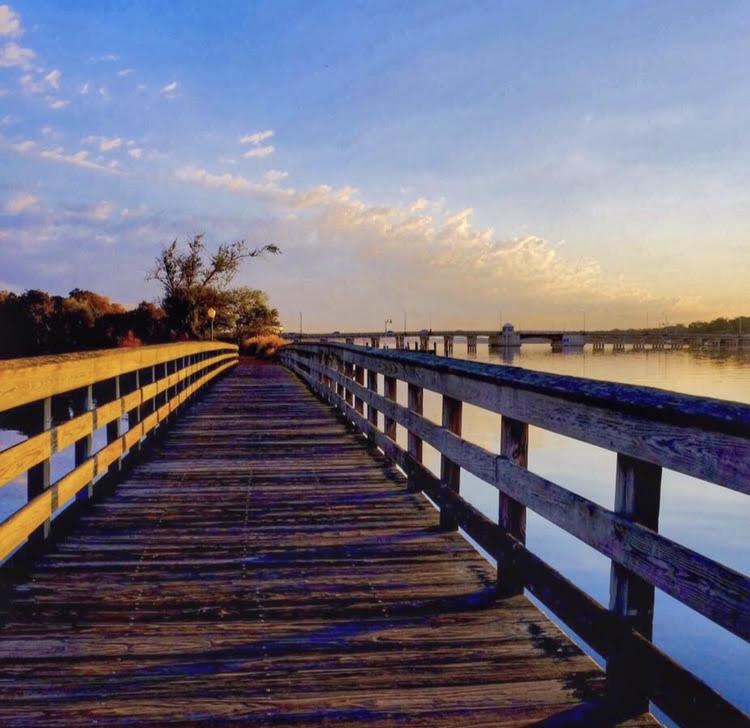
A visual artist would tell you that on a two-dimensional surface, the vanishing point is where receding parallel lines viewed in perspective appear to converge. Moreover, that same artist would also know that diagonal lines extending outward from the vanishing point serve to create an artificial horizon, enabling that artist to create realistic angles. But I’m no artist. To me, a vanishing point is where someone or something simply disappears. 

Like time. I’m always stunned about how time vanishes. I think I have time to spare, but then—Poof!—it has vanished into thin air and I’m late. Or like money. Money also has a way of vanishing, especially around the end of the month or when the porch needs a new roof. Here today; vanished tomorrow. 

What else vanishes? As I often do when I’m musing about something, I asked the wee wife if she thought youth vanishes. She looked at me, as she often does when I’m in the musing mode, as though I were crazy. “Of course, it doesn’t,” she scoffed, “you’re still young at heart, aren’t you?” A kind thought, perhaps, but nevertheless, my knees crack whenever I stand and it’s getting to be quite a chore to put my socks on. I don’t bend like I used to. Trust me: flexibility vanishes.

When it comes to vanishing, I’ve come to the conclusion that it’s perfectly acceptable—even desirable—for some things to take flight. Like the current occupant of the White House, for example. I wish he’d hurry up and vanish along with the others of his ilk. Bye-bye. Don’t let the door hit you on the way out. See ya. 

“Stop writing about politics,” she says. “People are tired of reading about politics. Stick to lighter fare, the things you know, simple stuff.” Simple stuff? I just looked at her.

She’s right, of course, but then I got to thinking about that nasty little virus that not only refuses to vanish, but now looms even larger than it did back in the spring. I wish someone could make that vanish—a drug company, Dr. Fauci, my magician friend, anyone? Please just make Covid-19 vanish!

So what else reaches and then passes over the vanishing point? One of Bryson DeChambeau’s tee shots usually vanishes beyond the horizon…except at this year’s Masters tournament when one got lost in the mud. In years past, Thanksgiving dinner would vanish in a flash, but this year, who knows if we’ll even have one. Down in the Amazon rain forest, too many wondrous species have vanished—more’s the pity!—while up in space, a black hole has a way of making everything disappear; even light vanishes in the super gravity of a black hole. Think about that! Simple stuff: HA!

“Does love ever vanish?” I asked myself. (No way was I going to pose that question to you-know-who!)  “No,” I heard myself answer. “When all else is said and done and vanished, love remains.”

I’m not sure who was the first master to render the vanishing point on canvas. As impressive as cave art is, it’s still flat. But creating three dimensions out of two? Surely that was worthy of a Renaissance. Perspective takes time; I know this because I have more of it today than I had yesterday, let alone fifty or sixty years ago. I also know this: as the parallel lines of my life continue to converge, I’ll wonder all the more about what lies beyond my own vanishing point. Don’t worry; I’ll figure out a way to let you know. 

I’ll be right back.

Jamie Kirkpatrick is a writer and photographer who lives in Chestertown. His work has appeared in the Washington Post, the Baltimore Sun, the Philadelphia Inquirer, the Pittsburgh Post-Gazette, the Washington College Alumni Magazine, and American Cowboy Magazine. Two collections of his essays (“Musing Right Along” and “I’ll Be Right Back”) are available on Amazon. Jamie’s website is www.musingjamie.com
 

The Spy Newspapers may periodically employ the assistance of artificial intelligence (AI) to enhance the clarity and accuracy of our content.

Filed Under: 3 Top Story, Jamie

Book Review: For Not Finding You by Robert Day

November 14, 2020 by Jamie Kirkpatrick
Leave a Comment

I’ve come to the conclusion that there must be two versions of Robert Day; no, three. The first, and the one many Eastern Shore readers know best, is his Professor of English Emeritus at Washington College persona. Under that rubric, Professor Day helped to put Washington College’s creative writing program front and center among small liberal arts colleges across the nation. That he succeeded is a testament to both his teaching skills and the flowing power of his own writing, as well as his ability to inspire his students, many of whom still speak of him in tones reverential years after his retirement.

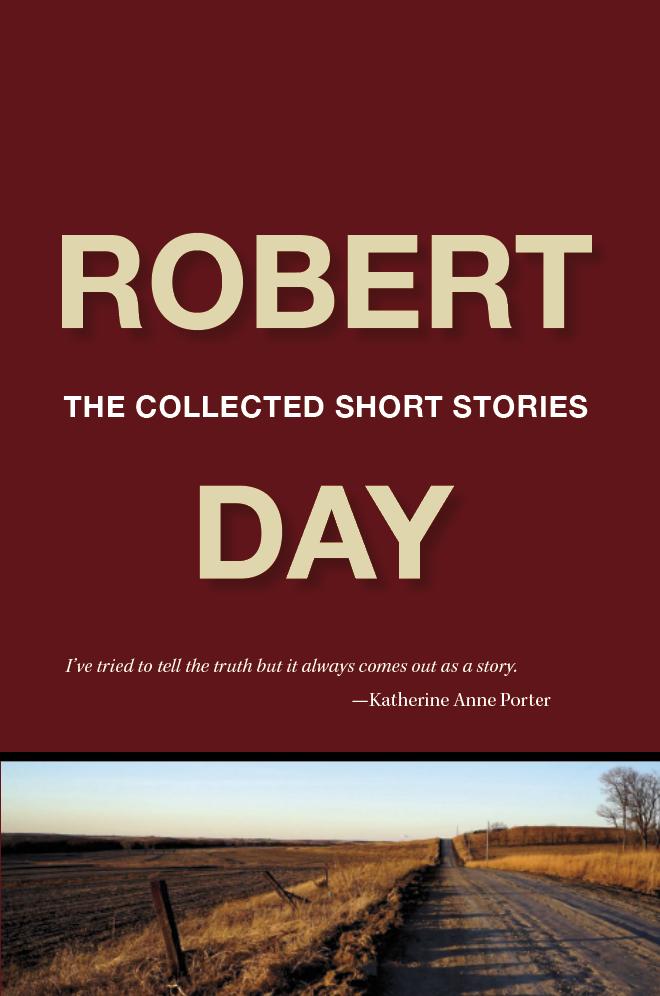
Robert Day’s second persona is his cowboy one. Once referred to as the “Cowboy of the Chesapeake,” Mr. Day hails from deep in the backcountry of western Kansas. Once upon a time, he played some serious baseball at the University of Kansas before turning to writing and penning his first successful novel, The Last Cattle Drive which was optioned for Hollywood movie rights, but alas, that tale ends with the word “optioned.” Undismayed, a few years later, Day drew upon those same Kansas roots to deliver a fine collection of stories, Speaking French in Kansas. Fortunately for his fans, that same laconic twang can be still heard in his latest work, For Not Finding You.
But before I get to that, there is the question of Mr. Day’s third persona: that of raconteur, boulevardier, un homme du monde à Paris (pronounced, as the French do, pa-RIS), to be exact. Monsieur Day has spent pas mal du temps in Paris as well as Kansas and somehow he’s managed to weave those two strands together in his newly released tale of love found, love unspoken, and ultimately (sadly) love lost in his latest literary offering, the aforementioned For Not Finding You.

One of the elements I like best about Day’s writing is his touch with dialogue. Scenes set in Kansas sound like Kansas: spare, authentic, wonderfully wry. Like “Patsy was no rose. Not even a shriveled flower at the stem’s end. Mostly thorns—especially if you crossed her.” Or “Talk is ventilation for the brain,” Buck said. “Just like you need to open the vents and damper on the Woodsman now and then to keep it from smoldering and getting creosote in the flue pipe. You don’t want smoke in your head.” When I read those words, I hear them plainly spoken and I see Patsy and Buck in all their Kansan glory. Robert Day is really good at that.

On the other hand, scenes set in Paris have that faint awkward touch that sounds like an American trying hard not to sound like an American. For all I know, Mr. Day may speak fluent French (he doesn’t, I’m told) but Leo Murdock, the narrator of FNFY, lives in the twilight of an expatriate American residing in Paris, one who is besotted with things Francophile but still observes the city and its scenes existentially, as though he’s looking at Paris through a slightly fogged lens. No matter; it all works, or as the French would say, “ça marche.”

But beyond dialogue, there’s knowledge. Of landscape; of heifers and cattle prices; of horse temperament, rattlesnakes, and snapping turtles; of fence building and windshield ranching and shelter belts and gardening and river quicksand. All the details of life on the prairie. This isn’t research; this is knowledge gained from the ground up; not book learning, but bootstrap Kansan stuff. It makes for fun reading and not a little disbelief—the good kind, not cynical but worthy of respect. “Good thinking,” as Buck likes to say.

Good as he is with dialogue and description, Day is at his best in developing his characters. And that they are: characters, real people, not just stuffed animals. As Buck says to Monique as he’s about to take her out for an evening ride, “I’m not harmless. But I’m not dangerous either.” But maybe that’s just Day looking in the mirror of his writing.

For Not Finding You is a good story for what it says, but it’s a better story for what it doesn’t say. There are words unspoken, conversations inferred. This is what distinguishes Day’s writing. He doesn’t spoon feed you, he lets you nibble and chew at your own pace and to reach your own conclusions. Questions hang in the air and Day lets you ponder their answer. A scene where Leo is thrown from his ornery horse stands as quirky metaphor for a near-miss in marriage. It also propels him years forward, still looking for—and not finding—the youthful love that got away. It’s touching; there’s a deep sense of bonjour, tristesse, a palpable, yearning kind of sadness that colors many of the story’s Parisian scenes and stands in stark contrast to the delightful humor of the Kansas plains.

Day is a wonderful writer and an even better storyteller. Maybe he’s the last of the “Prairie Populists,” not the “crazy old goat” who owns the Half Vast Ranch next door to Buck’s place. When I read one of Bob Day’s stories, I occasionally get thrown for a moment but I really don’t mind. I take a breath, dust myself off, and get back up in the saddle and ride off with him into the Kansas sunset. Or maybe even to Paris.

As a story, For Not Finding You is highly worth your reading while. Moreover, it proves that good writers really are like fine wine: they only improve with age. So pour yourself a glass of good French wine and settle in. At one point in the story, Leo muses that “small luxuries are better than big ones if you live in the country.” For Not Finding You is just that: a small luxury that, despite its country roots, looms much larger for its Kansas plainness and its Parisian sophistication. Its settings, characters, dialogue, and pace make for a lot of good thinking.

Jamie Kirkpatrick is a writer and photographer with homes in Chestertown and Bethesda. His work has appeared in the Washington Post, the Baltimore Sun, the Pittsburgh Post-Gazette, the Philadelphia Inquirer, the Washington College Alumni Magazine, and American Cowboy magazine. “A Place to Stand,” a book of photographs and essays about Landon School, was published by the Chester River Press in 2015.  A collection of his essays titled “Musing Right Along” was published in May 2017; a second volume of Musings entitled “I’ll Be Right Back” was released in June 2018.  Jamie’s website is www.musingjamie.com


The Spy Newspapers may periodically employ the assistance of artificial intelligence (AI) to enhance the clarity and accuracy of our content.

Filed Under: 3 Top Story, Arts Portal Lead

Tending the Garden by Jamie Kirkpatrick

November 10, 2020 by Jamie Kirkpatrick
Leave a Comment


In this highly complex world, there is still great beauty even in the simplest of things. Take daisies, for example—Oxeye, Shasta, English, Marguerite—almost any member of the Leucanthemum vulgare family. Just a central yellow flower surrounded by fifteen to forty white or roseate petals: nature’s simple way of saying “Good morning!” in Esperanto.

Daisies have recently caught the wee wife’s gardening eye and I have no doubt that come next summer, several varieties will be cropping up in our garden. That’s fine by me. Daisies are perennials that spread easily so you can bet that we’ll have plenty of blooms for the dining room table. That’s something to look forward to while we endure the cold, dark days of winter.

Speaking of winter, it’s coming. I realize we’ve been floating through a string of lovely Indian Summer days, but they’re only a prelude to the dreich days to come. Not to worry; we’ll get through it; we always do. The promise of better days to come…

Speaking of which, I wish our political garden were as simple as a bed of daisies, but it’s not. By the time all the ballots have been finally counted, more that 160 million votes will have been cast in the recent election. That’s nearly 67% of all eligible voters—a record-breaking turnout for both parties. Whether or not this historical high turnout is a harbinger of greater participation in the political process or just a blip on our democratic radar remains to be seen.

At the same time, the high turnout and the narrow margin of victory only serve to underscore the deep divide that exists among us. I’d like to think that a new administration can bring some much-needed healing to this nation, but, honestly, I’m worried. All the vitriol that fueled that record turnout won’t simply disappear in a month or two. While there may well be a lot of chaff swirling in the air now, the wheat of legitimate grievances will still need to be addressed before any measure of healing can begin. The pandemic is still rife; our economy is still ruptured; systemic racism still runs rampant; climate change is all-too-real. Grousing about the outcome of the election is just time lost, or worse, only throws gas on the fire. If we’re going to come out of this tunnel in one piece, we need to get to work.

So what does this all have to do with daisies? Just this: believe it or not, lovely as they are, daisies are weeds. Because they spread by rhizome fragments, daisies can pop up in unexpected or unwanted places: lawns, cow pastures, even cracks in the sidewalk. Sure; daisies make lovely ornamental plants in a garden bed or add a touch of grace to a table top, but left unattended in a pasture, they can turn a cow’s milk sour or even carry crop disease. In other words, daisies need tending.

Democracy needs tending, too. May we all be up to the enormity of the task that lies ahead.

I’ll be right back.

Jamie Kirkpatrick is a writer and photographer who lives in Chestertown. His work has appeared in the Washington Post, the Baltimore Sun, the Philadelphia Inquirer, the Pittsburgh Post-Gazette, the Washington College Alumni Magazine, and American Cowboy Magazine. Two collections of his essays (“Musing Right Along” and “I’ll Be Right Back”) are available on Amazon. Jamie’s website is www.musingjamie.com


The Spy Newspapers may periodically employ the assistance of artificial intelligence (AI) to enhance the clarity and accuracy of our content.

Filed Under: 3 Top Story, Jamie

Fault Lines by Jamie Kirkpatrick

November 3, 2020 by Jamie Kirkpatrick
Leave a Comment

Today—finally!—is Election Day. No matter which candidate or party you support, I think you would have to admit that the last four years have exposed the deep fault lines that run under and through our country. They are fault lines of ideology, of wealth, of race, of gender, of religion, of sexual orientation, even of something as seemingly benign as our changing climate. Like Hamlet, we’re constantly prompted to ponder our own existence: to mask or not to mask; to gather or not to gather; to appoint or not to appoint. These, and so many more, are the questions of our day.

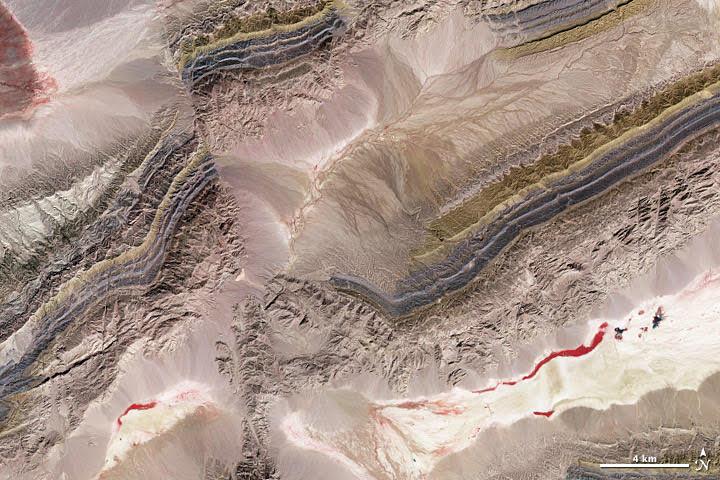
To a geologist, a fault line is simply a fracture or a fissure between two blocks of rocks that allow those blocks to move relative to each other. They may be as small as a few millimeters, or as large as continents, extending over thousands of miles. Our two most famous faults—maybe ‘infamous’ is a better descriptor—are the Hayward Fault and the San Andreas Fault that run under large parts of California, the tectonic boundaries between the Pacific Plate and the North American Plate. Separately and together, these two faults have already reached a stress level sufficient to trigger an earthquake of a magnitude greater than 7.0, or what erudite seismologists refer to as “the next Big One.”

Now I’m no geologist; I wouldn’t even dare to play one on tv. But I know this: to a political scientist or a cultural anthropologist, fault lines are the perfect metaphorical equivalent for cataclysmic social change. By tonight or tomorrow or whenever the last ballots have been counted, we’ll see exactly where the fault lines in our society are cracking. Will the next Big One come from suburban women or Floridians or Latino voters or African-Americans or senior citizens or some other subset of the population? We’ll know soon enough.

Fault lines are formed as a brittle response to stress. Geologically speaking, it’s the movement of tectonic plates far below the surface of the earth that produces enough stress to break the rocks on the ground upon which we stand. Culturally speaking, the stresses affecting us these days are just as profound as the movement of tectonic plates: a global pandemic, racial injustice, inequities of wealth, discrimination based on race, gender, or sexual orientation, even excessive carbon emissions. The litany of sins is sadly endless. Moreover, the dubious motives, methods, and morality of the current administration has emboldened the right and galvanized the left, widening all those fault lines that lie beneath the surface of our body politic. It would be nice to think that in time, our wounds can heal, but the truth is that fault lines don’t just go away. The best we can hope for is that they will remain inactive for thousands of years but that’s not the way of this world. Those underlying plates will continue to move and shift and eventually, the ground above them will shake and crack. What do we do then? That’s the question to ask Yorik, but alas, Hamlet’s jester is long-since dead.

Here’s the best response I can come up with: try. Try to forgive. Try to understand. Try to love your neighbor as yourself. At the very least, try to reduce just one of the stresses lying along one of our myriad fault lines, whichever one you can. That might not seem like much, but maybe—just maybe—your ounce of effort might be enough to stave off the next Big One.

I’ll be right back.

Jamie Kirkpatrick is a writer and photographer who lives in Chestertown. His work has appeared in the Washington Post, the Baltimore Sun, the Philadelphia Inquirer, the Pittsburgh Post-Gazette, the Washington College Alumni Magazine, and American Cowboy Magazine.
Two collections of his essays (“Musing Right Along” and “I’ll Be Right Back”) are available on Amazon. Jamie’s website is www.musingjamie.com

The Spy Newspapers may periodically employ the assistance of artificial intelligence (AI) to enhance the clarity and accuracy of our content.

Filed Under: 3 Top Story, Jamie

Simple Gifts by Jamie Kirkpatrick

October 20, 2020 by Jamie Kirkpatrick
Leave a Comment

It’s easy to feel jaded these days. There’s a lot wrong with the world: a pandemic, climate chaos, racial injustice, social upheaval, political chasms…I could go on, but why? I’d much rather think about what’s right with our planet and the easiest way to do that is to spend time with the grandkids. They see the little things we don’t. They remind us—me, at least—that sometimes there is great delight in simple things, like racing leaves down a country stream, or collecting eggs from the chicken coop, or roasting marshmallows over an evening fire, or just watching a stick bug crawl up your sleeve. I mean, when was the last time you did that?

I admit that these moments don’t come easy. We’re living through a time when it’s awfully hard to get away, to unplug, even to breathe fresh air. Counterintuitive as it sounds, these days you have to make a plan to have no plans. You can’t just stay home because if you do, routines have a way of raising their ugly little heads and suddenly, before you know it, you’re right back where you started and the dishes need washing, the clothes need laundering, there’s a zoom conference somewhere and somebody needs to walk the damn dog. Sigh.

So… A few weeks ago, the wee wife took things into her own capable hands and decamped three generations of us to Quicksburg, Virginia, a dot on the map in the history-rich Shenandoah Valley, to visit one of the famous caverns there. In some ways, the decision to go made itself: a friend whose family own the caverns (you heard that right) called out of the blue and offered us a lovely farmhouse on the property which was unbooked for the weekend. “It’s empty,” our friend said; “it’s yours if you want it.” Now that may seem like a no-brainer, but there’s some risk to moving two grandparents, two parents, and four children all under the age of seven three hours in the car to visit a cave. “What if it rains?” I said. “We’ll be in a cave!” the wee wife reminded me. “Well, what if someone gets sick or stung by a bee? What if we forget some essential piece of kid paraphernalia and have to improvise? What if there’s no wifi? Are you sure about this?” I said. That’s when she gave me the look; you know the one I mean.

Of course, I needn’t have worried. The weather was perfect and the farmhouse had a deep porch overlooking the peaceful hills and valleys of western Virginia. The chickens in the coop produced more than enough eggs for breakfast. The goats in their pen behaved the way goats are supposed to behave. The caverns were indeed wondrous—full of stalagmites and stalactites and pools of gin-clear water and crystals—but what the kids loved best was the picnic lunch that followed our tour and panning for gemstones and geodes in an old-fashioned mining sluice. We even managed to find our way to a nearby covered bridge—the oldest and longest in Virginia according to Google—but a bridge is just a bridge. What really captured the kids’ attention was skipping rocks and racing leaves in the river below the bridge.

I wonder what will be the memories that last? The cavern? Roasting marshmallows over a fire pit and playing tag under the stars? The chickens and the goats? A windmill and the stillness of an old place? Maybe. But for me, I have a feeling it will be the expression on little Annie’s face as she watched that stick bug crawl along her sleeve. No need for wifi after all.

I’ll be right back.

Jamie Kirkpatrick is a writer and photographer who lives in Chestertown. His work has appeared in the Washington Post, the Baltimore Sun, the Philadelphia Inquirer, the Pittsburgh Post-Gazette, the Washington College Alumni Magazine, and American Cowboy Magazine. Two collections of his essays (“Musing Right Along” and “I’ll Be Right Back”) are available on Amazon. Jamie’s website is www.musingjamie.com

The Spy Newspapers may periodically employ the assistance of artificial intelligence (AI) to enhance the clarity and accuracy of our content.

Filed Under: 3 Top Story, Jamie

  • « Previous Page
  • 1
  • …
  • 27
  • 28
  • 29

Copyright © 2026

Affiliated News

  • The Chestertown Spy
  • The Talbot Spy

Sections

  • Arts
  • Cambridge
  • Commerce
  • Ecosystem
  • Education
  • Food & Garden
  • Health
  • Local Life
  • News
  • Point of View
  • Senior Nation

Spy Community Media

  • Subscribe for Free
  • Contact Us
  • COVID-19: Resources and Data

© 2026 Spy Community Media. | Log in