
MENU

Sections

  • About Us
    • Editors and Writers
    • Sponsorship Terms & Conditions
    • Code of Ethics
    • Sign Up for Cambridge Spy Daily Email Blast
  • The Arts and Design
  • Culture and Local Life
  • Food & Garden
  • Public Affairs
    • Commerce
    • Health
    • Ecosystem
    • Education
    • Senior Nation
  • Point of View
  • Chestertown Spy
  • Talbot Spy

More

  • Support the Spy
  • About Spy Community Media
  • Advertising with the Spy
  • Subscribe
December 6, 2025

Cambridge Spy

Nonpartisan and Education-based News for Cambridge

  • About Us
    • Editors and Writers
    • Sponsorship Terms & Conditions
    • Code of Ethics
    • Sign Up for Cambridge Spy Daily Email Blast
  • The Arts and Design
  • Culture and Local Life
  • Food & Garden
  • Public Affairs
    • Commerce
    • Health
    • Ecosystem
    • Education
    • Senior Nation
  • Point of View
  • Chestertown Spy
  • Talbot Spy
00 Post to Chestertown Spy 3 Top Story Point of View Jamie

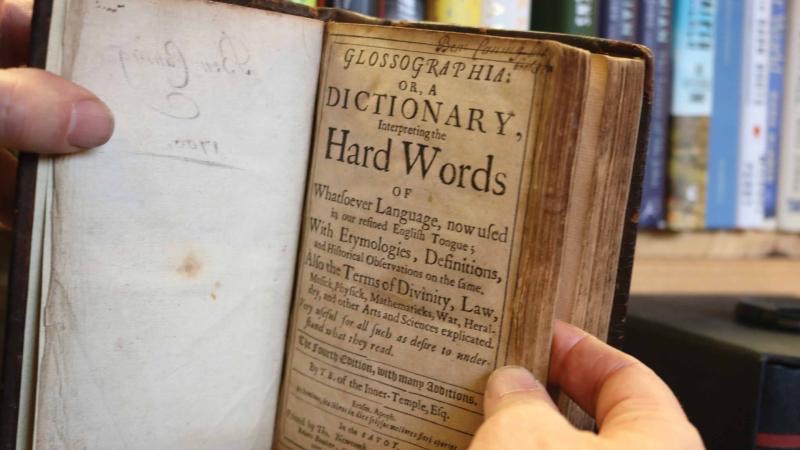
My Newest Word By Jamie Kirkpatrick

December 2, 2025 by Jamie Kirkpatrick
Leave a Comment

I love words! If I were King Midas, I would turn all the world’s words to gold. If I were a miser, I would horde every word in the dictionary. If I were an architect, I would build skyscrapers out of words. If I were Warren Buffett, I would invest in words and make millions. And if I were Johnny Appleseed, I would plant words and watch fragrant orchards grow. But I’m just a writer so I celebrate words; they are the precious coins of my realm.

I make it a point to do three or four crossword puzzles every day. My wife thinks I’m just fooling around, but I believe crossword puzzles keep my mind sharp, but every once in a while, I trip over a new word. When that happens, I feel like I’ve run a marathon—giddy, energized, sky-high on endorphins. OK, so I’m a word nerd and proud of it!

Case in point: yesterday, I discovered my newest word—“echt.” It essentially means “authentic.” Apparently, we have George Bernard Shaw to thank for bringing “echt” to America. He used the word in an article he wrote in 1916, and it has been around ever since. As the current saying goes, I appreciate you, GBS!

“Echt” has it etymologic roots in both German and Yiddish. That’s hardly surprising since both languages share the same Middle German source. In both languages, the word is spelled “ekht,” but it still means “true to form.” As German words go, “ekht” is a lot easier to say than “kraftfahrzeughaftpflichtversicherung” (motor vehicle liability insurance), “streichholzschachtel (box of matches), or even one of my personal favorite words, “eichhörnchen!” (Squirrel!). Infatuated as I am with words, I don’t plan on using any of those words anytime soon, but “echt” in English has staying power. It’s true-blue, the genuine article, the Real McCoy. Literally!

Once I’ve discovered a new word, I can’t wait to pop it into speech or incorporate it into my writing as soon as I can. A new word weighs in my pocket like a gold coin waiting to be spent and I don’t want to disappoint it. I look for opportunities to drop the word into conversation. For example, “My friend Allen hails from New Orleans and he sure knows how to make some echt gumbo!” Or this: “Trump doesn’t have an echt bone in his body—no true north, no underlying principles, no overarching philosophy. He’s just an erratic, impulsive brat.” That’s true enough, but “echt” just makes it so much more true. 

Now that we’ve entered the territory of December, I’ll be looking for more timely occasions to drop my new favorite word into the conversation. Please don’t judge me. It’s just that one of my missions in life is to up the English-speaking world’s vocabulary, and there’s no better time than the holidays to introduce friends and family to a new word or two. So, in that spirit, I hope you all had an echt Thanksgiving, and that the days ahead will be filled with all manner of echt cheer and joy.

I’ll be right back.


Jamie Kirkpatrick is a writer and photographer who lives on both sides of the Chesapeake Bay. His editorials and reviews have appeared in the Washington Post, the Baltimore Sun, the Philadelphia Inquirer, the Pittsburgh Post-Gazette, the Washington College Alumni Magazine, and American Cowboy Magazine. His most recent novel, “The Tales of Bismuth; Dispatches from Palestine, 1945-1948” explores the origins of the Arab-Israeli conflict. It is available on Amazon and in local bookstores. His newest novel, “The People Game,” hits the market in February, 2026. His website is musingjamie.net.

The Spy Newspapers may periodically employ the assistance of artificial intelligence (AI) to enhance the clarity and accuracy of our content.

Filed Under: 00 Post to Chestertown Spy, 3 Top Story, Jamie

Of. By. For. By Jamie Kirkpatrick

November 25, 2025 by Jamie Kirkpatrick
Leave a Comment

Eight score and two years ago—almost to the day—President Abraham Lincoln soothed America’s soul on a blood-soaked field near Gettysburg, Pennsylvania. His speech was only 272 words long, and many who were present that day didn’t even realize he was speaking. The President reminded those who were listening that the United States had once been “a new nation, conceived in Liberty and dedicated to the proposition that all men are created equal.” A few minutes later, he ended his speech with these words: “and that this nation—under God—shall have a new birth of freedom, and that government of the people, by the people, for the people, shall not perish from the earth.”

Words matter. They not only convey literal meaning, but they also have the power to lift our spirits and show us more clearly not just what is, but what could be. In that sense, they are timeless; they are our enduring legacy.

Fast forward:

Finger jabbing: “Quiet; quiet, piggy.” (3 words that matter)

Shoulders shrugging: “Things happen.” (2 words that matter)

Angry scowl: “You are a terrible reporter.” (5 words that matter)

Mr. Trump has once again defiled the Presidency and demeaned us a nation. He is incapable of any soaring rhetoric, refuses to create dialogue, never makes a responsible or empathetic connection. Just dissembling, ranting, and erratic behavior. Even Mr. Trump’s most ardent supporters must wonder what his words and actions mean. MBS is feted at the White House? Zohran Mamdani is now a “really great mayor” after being labeled a “100% Communist lunatic?” Listening to Mr. Trump, I bottom-out, or think I do, only to discover that he can go lower still. The world watches in disbelief: what has happened to America?

For the first three and a half score of my life, there were a million things I took for granted. Simple kinetic movements, like bending over or pulling on my socks or tying my shoes. In those years, I could still get up from the floor or rise from a chair without all the squawking sound effects that now come from my bones and joints. Back then, I could sleep soundly through the night and dream about America’s inherent goodness. But now, let’s just say that what was once easy is difficult, and what was once difficult is now almost impossible.

I took other things for granted, too: kindness; respect; empathy. All those lessons we were supposed to have learned in kindergarten, like playing nicely, speaking kindly, saying please and  thank you. Practicing common courtesies like giving up one’s seat on the bus, or allowing a pedestrian to use the crosswalk—all the small grace notes that make a big difference in the quality of our lives. But now all those norms are quivering. Pandora’s box is open and all the harpies it contained are loosed upon us.

I took these things for granted, too: belief in Democracy; in the Constitution; in the rule of law; in a free press and free speech. The separation of church and state. Civil rights. Working across the political aisle for the common good. All these things still matter, but they are fading fast, if they’re not already gone, all because of one man and the minions who enable him. How utterly sad.

In another two days, we will assemble— families, friends, and communities—to give thanks for what remains of the American dream. We will pray and hope that we still live under a government that is “of the people, by the people, and for the people, and that it shall not perish from the earth.” 

Of. By. For. These three little words still matter. Now more than ever.

I’ll be right back.


Jamie Kirkpatrick is a writer and photographer who lives on both sides of the Chesapeake Bay. His editorials and reviews have appeared in the Washington Post, the Baltimore Sun, the Philadelphia Inquirer, the Pittsburgh Post-Gazette, the Washington College Alumni Magazine, and American Cowboy Magazine. His most recent novel, “The Tales of Bismuth; Dispatches from Palestine, 1945-1948” explores the origins of the Arab-Israeli conflict. It is available on Amazon and in local bookstores. His newest novel, “The People Game,” hits the market in February, 2026. His website is musingjamie.net.

The Spy Newspapers may periodically employ the assistance of artificial intelligence (AI) to enhance the clarity and accuracy of our content.

Filed Under: 00 Post to Chestertown Spy, 3 Top Story, Jamie

The Labyrinth By Jamie Kirkpatrick

November 18, 2025 by Jamie Kirkpatrick
Leave a Comment

Don’t ask me why—I’m not sure even I know—but I’ve been musing about labyrinths lately. I’m sure you’re familiar with the concept: a labyrinth was a maze-like structure constructed of elaborate multi-branching paths and abrupt dead ends designed to confuse the foolish traveler or contain the monster within. The most famous labyrinth, of course, was the one built by Daedalus for King Minos of Crete to imprison the dreaded Minotaur. That labyrinth was so cunningly designed that even its architect could barely find his way back to daylight. More on that story anon…

Over time, labyrinths developed a less sinister, more spiritual character. In the Christian tradition, labyrinths offered medieval pilgrims or worshippers a meditative experience. The most famous medieval labyrinth, which had a great influence on later designs and practice, was created on the floor in Chartres Cathedral more than a thousand years ago. One could enter that labyrinth and wind his or her way slowly toward the center—presumably God—in an almost trance-like state. All the distractions of this world would slip away as the pilgrim moved ever-so-slowly forward, before eventually reaching the labyrinth’s divine center. 

These days—sigh—the labyrinth is often used in video games that challenge a player to move an avatar either into or away from some cartoon dilemma without getting blown to smithereens by a gruesome fiend bent on universal destruction. We’ve come a long way, baby…or not.

So now, here I am, walking my own labyrinth, wondering why I’m here and where I’m going. The best answer I can come up with is that the twenty-three thousand Epstein documents that were dumped on us last week have created something akin to a modern political labyrinth with truth at its center. I’m positive that even as I write this, journalists all over the world are sorting through this labyrinth of messages, trying to arrive at the kernel of truth that must lie at the center of this sordid, sorry tale. No doubt, many will get lost in byways of deceit or drawn into dead-ends of lies, but in the end, I believe the truth will out and we will navigate this awful labyrinth. Will the modern Minotaur in its center be slain? Time will tell, but I can’t help but dread the darkness that lies ahead.

The original labyrinth story begins when King Minos of Crete ordered the inventor Daedalus to build a labyrinth to imprison a hideous half-bull, half-man creature called the Minotaur. Minos had defeated the Athenians in battle and forced them to pay an annual tribute of seven boys and seven girls who would be left in the labyrinth to be consumed by the dreaded beast. (Ring a bell?) But one year, Theseus, the son of King Aegeus of Athens, came to Crete as part of this tribute, and with the help of King Minos’ daughter Ariadne, he killed the Minotaur and by following a ball of thread found his way out of the labyrinth. Theseus and Ariadne then escaped over the sea, but instead of marrying her as he had promised, Theseus left Ariadne as she slept on the island of Naxos. That might have been the end of the story, but no, not for the Greeks. When Theseus finally sailed within sight of Athens, he forgot to hoist the white sail that would signal to his father that he was returning safely. Alas! Seeing an ochre sail, King Aegeus threw himself into the sea and drowned. 

The Greeks sure knew how to tell a tale. I’m sorry this one did not have a happier ending. I wonder how our own journey out of this modern-day labyrinth will end.

I’ll be right back.


Jamie Kirkpatrick is a writer and photographer who lives on both sides of the Chesapeake Bay. His editorials and reviews have appeared in the Washington Post, the Baltimore Sun, the Philadelphia Inquirer, the Pittsburgh Post-Gazette, the Washington College Alumni Magazine, and American Cowboy Magazine. His most recent novel, “The Tales of Bismuth; Dispatches from Palestine, 1945-1948” explores the origins of the Arab-Israeli conflict. It is available on Amazon and in local bookstores. His newest novel, “The People Game,” hits the market in February 2026. His website is musingjamie.net.

The Spy Newspapers may periodically employ the assistance of artificial intelligence (AI) to enhance the clarity and accuracy of our content.

Filed Under: 00 Post to Chestertown Spy, 3 Top Story, Jamie

Times Two By Jamie Kirkpatrick

November 10, 2025 by Jamie Kirkpatrick
Leave a Comment


On the recommendation of a friend, I’ve been reading Timothy Egan’s “A Pilgrimage to Eternity.” It’s not my usual fare, but it’s a thoughtful, intriguing, and deep account of the author’s journey along the Via Francigena, an ancient route of pilgrimage that runs some 2,000 miles from Canterbury in England, through France, Switzerland, and Italy, before eventually arriving in Rome. Like all travelogues, it carries the reader—in this case, me—along with the traveler (Mr. Egan) on a journey that is at once both a physical and spiritual trek through the countryside of modern Europe on ancient roadways of earth, stone, and belief.

There is a lot to mull over on a 2,000 mile hike, as well as a lot of time for mulling. I’m too old now to undertake the physical journey, but still young enough in mind and heart to go along for the ride. Backpacks are heavy, feet get blistered, pants chafe, muscles cramp, and water is scarce. But ideas are light and conversations—even silent ones—are stimulating.

In the small French city of Besançon not far from the Swiss border, Mr. Egan—I guess we’ve been together long enough now that I can call him Tim—muses on two distinctly different concepts of time: what the Greeks referred to as Chronos and Kairos. Chronos is the sequential version of time measured by clocks: seconds, minutes, hours, days. Seasons and years. Kairos, on the other hand, is time measured not by duration, but by opportunity. It’s experiential in that it counts the treasured, memorable moments of our lives. Quantity and quality, if you will, or maybe science and art. Opposites that reflect each other. We exist within Chronos, but are indelibly marked by Kairos.

It’s a mesmerizing mental dialogue that hits close to home. In a couple of weeks, my wife and I will celebrate our tenth wedding anniversary (Chronos) and those ten years have been filled with many memorable moments of joy, and, yes, some sadness, too (Kairos). Both concepts are milestones that mark our separate and collective journeys so we track both measures of time: the specific calendar celebrations, as well as all those memorable moments that have made our lives together worth living.

So, where is this going? Just here: all of us are living through difficult, even dangerous, times. We look back to the last election or ahead to the next ones. We count the president’s days in office, and wonder what will happen three years hence. Last week’s (Chronos) results were perhaps a sign of positive change to come (Kairos). Time will tell—both versions of it.

There’s still a lot for Tim and me to talk about on our way to Rome, but we have plenty of both kinds of time. We log the miles (I suppose distance is a cousin of Chronos) while we observe the glory around us (Kairos). Here at home, my wife likes to walk and she believes in counting her steps; in fact, she’s mathematically inclined in general, a facility that makes her very good at Sudoku. I, on the other hand, am more of a crossword puzzle guy who tends to measure time in words having to do with inspiration, the qualitative, non-linear events that touch our lives: family, friendships, sunsets, love.

But as my wife’s brother David used to say, “It’s all good.” Chronos and Kairos go together. So do we.

I’ll be right back.


Jamie Kirkpatrick is a writer and photographer who lives on both sides of the Chesapeake Bay. His editorials and reviews have appeared in the Washington Post, the Baltimore Sun, the Philadelphia Inquirer, the Pittsburgh Post-Gazette, the Washington College Alumni Magazine, and American Cowboy Magazine. His most recent novel, “The Tales of Bismuth; Dispatches from Palestine, 1945-1948” explores the origins of the Arab-Israeli conflict. It is available on Amazon and in local bookstores. His newest novel, “The People Game,” hits the market in February, 2026. His website is musingjamie.net.

The Spy Newspapers may periodically employ the assistance of artificial intelligence (AI) to enhance the clarity and accuracy of our content.

Filed Under: 00 Post to Chestertown Spy, 3 Top Story, Jamie

Cake By Jamie Kirkpatrick

November 4, 2025 by Jamie Kirkpatrick
Leave a Comment

I always thought it was Marie Antionette who once said, “Let them eat cake!” Turns out I was wrong. Historians now agree that the probable speaker was, in fact, Princess Maria Theresa of Spain and wife of French King Louis XIV who, when told that the peasants were starving, replied, “If they have no bread, then let them eat cake.” Whomever the culprit, the sentiment is clear: cake has become the symbol of the oblivious and callous nature of the aristocracy towards the suffering of the poor. The poor? You know, the millions of Americans who rely on food aid to feed their families. Certainly not the people who attended the recent Roaring 20s rager at Mar-a-Lago. More about that anon…

Millions of our neighbors live below the poverty line: for a household of four, that equates to a gross monthly income of less than $3,483 a month. Once upon a time, people who needed help with groceries relied on Food Stamps, but these days, it’s the Supplemental Nutritional Assistance Program (SNAP) that provides access to food for about one-in-eight American families— a little more than 12% of our population. At least, it did until the Trump administration slammed the door on SNAP. To make matters worse, our do-nothing Congress then left town for an extended paid vacation, so don’t expect relief anytime soon. I ask you: is there a large-enough mirror anywhere in which these people can see themselves? They are a disgrace and, mind you, I’m pointing my finger at both sides of the aisle.

Governance is a responsibility, not a mandate to inflict pain and suffering on one’s presumed opponents. And it should never, ever be oblivious to the vital needs of hungry people who need its help the most. There; I’ve said it. Now, back to Mar-a-Lago.

But first, a bit of background: a few weeks ago, I decided to read The Great Gatsby again. I read it first probably in high school, and, like most things from way back then, I had forgotten much of the story. But it all came rushing back quickly, old sport: West Egg and East Egg, the twin pillars of the toney North Shore of Long Island; the Jazz Age with its boozy, hedonistic parties; the mysterious millionaire Jay Gatsby and his awkward attempts to reunite with the love of his life, the beautiful Daisy Buchanan, now married (alas!) to her wayward husband, Tom; and, of course, Nick Carraway, Daisy’s distant cousin and Gatsby’s innocent but well-intentioned neighbor who is both the narrator of, and a participant in, Gatsby’s tragic saga. 

Now, I don’t want to spoil anyone’s reading pleasure, but suffice it to say, The Great Gatsby doesn’t end well for its eponymous character. A few weeks after I finished rereading Fitzgerald’s masterpiece, along comes the news (with photographs, old sport!) of Mr. Trump’s Halloween extravaganza at Mar-a-Lago, and its uncanny resemblance to one of Gatsby’s lavish Long Island affairs. I couldn’t help but marvel at such a confluence of fiction and fact. Moreover, the timing of the Mar-a-Lago bash—on the eve of the elimination of SNAP’s vital food assistance for millions of Americans, as well as on the very day when millions of federal workers would miss their first full paychecks—seemed beyond tone-deaf. It seemed vicious and cruel. It seemed like…cake.

“So we beat on, boats against the current, borne back ceaselessly into the past.” 

I’ll be right back.


Jamie Kirkpatrick is a writer and photographer who lives on both sides of the Chesapeake Bay. His editorials and reviews have appeared in the Washington Post, the Baltimore Sun, the Philadelphia Inquirer, the Pittsburgh Post-Gazette, the Washington College Alumni Magazine, and American Cowboy Magazine. His most recent novel, “The Tales of Bismuth; Dispatches from Palestine, 1945-1948” explores the origins of the Arab-Israeli conflict. It is available on Amazon and in local bookstores. His newest novel, “The People Game,” hits the market in February, 2026. His website is musingjamie.net.

The Spy Newspapers may periodically employ the assistance of artificial intelligence (AI) to enhance the clarity and accuracy of our content.

Filed Under: 00 Post to Chestertown Spy, 3 Top Story, Jamie

Ballroom Dancing By Jamie Kirkpatrick

October 28, 2025 by Jamie Kirkpatrick
1 Comment

There is an attic at the top of the stairs of my mind. I don’t go there very often because it’s musty, full of cobwebs, odds and ends, boxes of faded photo albums, and trunks of old clothes that no longer fit. But all this chatter about a new ballroom for the White House sent me up into that attic to see what I could find. I rummaged among my memories and finally found what I was looking for: my old dance card from Mrs. Burgwin’s Dancing School…

I was in sixth grade when my mother signed me up for dancing school at the Twentieth Century Club in Pittsburgh with the legendary Mrs. Burgwin. I have no idea why she did that. My family wasn’t all that social, but maybe Mom figured a few lessons in manners and the social graces would be good for her baby. I was not at all enthusiastic, but since several of my school mates had also been press-ganged into Mrs. Burgwin’s service, I decided to make the best of it. 

Every other Friday night for several weeks, I was thrown into the back of the family car, face washed and hair combed, necktied, suited, and white gloved, and off I went to Dancing School. There were two instructors. Mrs. Stewart was the Assistant Instructor; she was young and pretty, and she looked like Mary Tyler Moore on the Dick Van Dyke Show. But it was Mrs. Burgwin who was the undisputed Mistress of Dancing School. In stark contrast to Mrs, Stuart, she looked like Dame Maggie Smith’s version of Granny on Downtown Abbey. She dressed like her, too, and she was adamant we should learn how to waltz, fox trot, and cha-cha. There certainly weren’t any lessons in the jitterbug, tango, or twist because Mrs. Burgwin thought those dances were the devil’s playground.

Each week, the boys and girls—or, as Mrs. Burgwin insisted on calling us, “young gentlemen” and “young ladies”—were assigned partners. Mrs Stewart (who once danced in the arms of Arthur Murray!) and her partner would then gracefully demonstrate the proper steps while Mrs. Burgwin watched from the sidelines, making sure there was no monkey business on the dance floor. Proper etiquette was the order of the day, and Mrs. Burgwin was there to enforce the appropriate rules of the road and to administer rebuke to anyone who dance-stepped out of line. She scared the bejesus out of us, but our parents were grateful to her for doing God’s work.

Anyway, that was my introduction to ballroom dancing. The thing is, I don’t think I ever put any of Mrs. Burgwin’s lessons into practice. A few years after Dancing School, there was the occasional Deb Party, but I don’t remember much dancing going on. Surreptitious swigging, certainly, but never a waltz, fox trot, or cha-cha. By the time I got to college, no one ever waltzed, fox trotted, or cha-cha’d anymore—we either danced like sweaty lunatics, or we clung to each other in dark corners—so I guess all those dance lessons went for nought. That was when I decided to store Mrs. Burgwin and her dance lessons up in my mental attic, but all these years later, when I saw that the East Wing of the White House was being demolished in order to make way for a gigantic gilded ballroom, I went back up into the rafters of my mind to find my white gloves and to dust off my old dancing shoes.

Not!

Friends: our government has been shuttered for nearly a month. People are losing their jobs, their access to health care, their livelihood. Free speech is no longer free. Funding for important research is disappearing like rain in the desert. Schools are closing. Innocent people are being rounded-up and sent away to unspeakable places. And now carrier groups and fighter squadrons are on their way to Venezuela. Anything to distract us from the larceny taking place right before our eyes. But don’t worry: soon, those among us deemed light enough on their feet will be invited to the Trump Ballroom to dance the night away while the Marine Band strikes up “Nearer My God To Thee.” 

Mrs. Burgwin—wherever you are— I hope you’ll forgive me if I don’t waltz, fox-trot, or cha-cha to this madman’s music.

I’ll be right back.


Jamie Kirkpatrick is a writer and photographer who lives on both sides of the Chesapeake Bay. His editorials and reviews have appeared in the Washington Post, the Baltimore Sun, the Philadelphia Inquirer, the Pittsburgh Post-Gazette, the Washington College Alumni Magazine, and American Cowboy Magazine. His most recent novel, “The Tales of Bismuth; Dispatches from Palestine, 1945-1948” explores the origins of the Arab-Israeli conflict. It is available on Amazon and in local bookstores. His newest novel, “The People Game,” hits the market in February, 2026. His website is musingjamie.net.

The Spy Newspapers may periodically employ the assistance of artificial intelligence (AI) to enhance the clarity and accuracy of our content.

Filed Under: 00 Post to Chestertown Spy from Cambridge, 3 Top Story, Jamie

Runny Eggs By Jamie Kirkpatrick

October 21, 2025 by Jamie Kirkpatrick
Leave a Comment

I once knew a man who hated runny eggs. He refused to eat them; in fact, he couldn’t even stand the sight of them. Maybe he was petrified they would chase him down the street before breakfast. I shouldn’t have cared, but I happen to like my breakfast eggs runny and with a dash (pun intended!) of Tabasco sauce on the side. And that’s life in an eggshell: different yolks for different folks.

I haven’t seen the man who hated runny eggs in several years, but the demise of our friendship—if that is what it was— had nothing to with his egg preferences. He simply moved away and we lost touch. But I admit that when I’m about to dig into my breakfast of bacon and (runny) eggs, I still think of him from time to time, wondering where he is and if he’s still an anti-runny eggs guy. Maybe he evolved. Probably not.

People can differ about their egg preferences, but in the grand scheme of things, that’s a relatively minor dispute. But when it comes to galloping fascism, that’s an entirely different story. Political and legal retribution against one’s perceived enemies, sending masked agents into cities deemed “too blue,” squashing dissent and free speech, none of those egregious actions fall into the category of runny versus hard eggs. In fact, those actions and their accompanying lies are brutal frontal assaults on our democracy and our cherished Constitution. If you can’t understand that, then we have a problem.

I began writing these weekly Musings nearly ten years ago. Almost from Day One, I decided not to make them about politics; there are many writers in The Spy stable more qualified than I to comment on what’s going on in Washington. So, I stayed on the sidelines, perfectly content to write about more mundane things: the weather, the change of seasons, the view from my front porch, even an occasional postcard from some far away place—any benign subject that might interest or amuse my readers but wouldn’t rile their feathers. But lately, you may have noticed a shift in the content of these Musings. I still feel that there are more qualified political pundits out there, but that doesn’t absolve me of the responsibility to raise my voice against the current tide. In doing so, I don’t mean to offend anyone; I simply cannot remain on the sidelines any longer. When all this is over—and someday it will be—I want to believe I did what I could.

So please bear with me. I’ll still write softly, but I intend to carry a bigger stick. Oh, I’m sure there will be Musedays when I fall back on old ways and write about more mundane topics like the price of eggs in China and whether there should be tariffs on them or not. Darn it! There I go again…

You can have your eggs any way you want them. But when it comes to endorsing policies that defy truth or logic, or suppressing basic human rights, we will fundamentally disagree. That doesn’t mean you and I have to think exactly alike; there is still plenty of room in the middle to civilly discuss our differences. If that’s the case, I’d be happy to meet you for breakfast. You know how I like my eggs.

I’ll be right back.


Jamie Kirkpatrick is a writer and photographer who lives on both sides of the Chesapeake Bay. His editorials and reviews have appeared in the Washington Post, the Baltimore Sun, the Philadelphia Inquirer, the Pittsburgh Post-Gazette, the Washington College Alumni Magazine, and American Cowboy Magazine. His most recent novel, “The Tales of Bismuth; Dispatches from Palestine, 1945-1948” explores the origins of the Arab-Israeli conflict. It is available on Amazon and in local bookstores. His newest novel, “The People Game,” hits the market in February, 2026. His website is musingjamie.net.

The Spy Newspapers may periodically employ the assistance of artificial intelligence (AI) to enhance the clarity and accuracy of our content.

Filed Under: 3 Top Story, Jamie

Meeting Tom By Jamie Kirkpatrick

October 14, 2025 by Jamie Kirkpatrick
Leave a Comment

I’ll try to keep this long story reasonably short: a few days ago, my wife and I found ourselves soaking in a pool of warm mineral water with ten other people we had never met before and will probably never see again. The day was chilly, but the water was deliciously warm (one degree above body temperature), and the lights were dim. Ahhh…finally some peas and carrots.

Now I don’t consider myself antisocial, but I’ll be the first to admit that I’m not very good at making small talk. My wife, however, wrote the book on small talk, so over the years, I’ve learned to let her steer the conversation while I ride along in the passenger seat. However, on this particular occasion, once we got in that soothing water, she was uncharacteristically quiet, so I closed my eyes and just let go. I think I might have and drifted off…

Wait; I need to back up. My wife and I have had an unusually peripatetic few weeks: in August, we visited friends on the Jersey shore. In September, we were off to Cape Cod to spend another few days with dear friends there. Now, it’s October, and here we were at The Homestead, a rambling, historic resort tucked into the Virginia slopes of the Allegheny Mountains. Why? Because my wife is a busy realtor, and busy realtors need an occasional recharge. This year, her company chose The Homestead as the site of its annual conference, so when my wife asked me if I wanted to join her, I decided to tag along. Good decision! 

We wound our way across the Blue Ridge Mountains and up into the Alleghenies. On the day we arrived at The Homestead, the foliage was just beginning to turn, the sky was azure blue, and that night, we had our first freeze warning of the season. I guess that was what put us in the mood for a good, warm soak in the resort’s historic mineral waters, but first things first: before my wife and I and all our other fellow-soakers could even put a toe in the soothing clear water, we were given a brief history lesson about the place. That’s when I learned that Thomas Jefferson used to come here often to “take the waters” because he felt bathing in them eased the aches and pains and inflammation in his joints, a medical condition that later became known as rheumatoid arthritis. Maybe that was the last image in my mind as I floated off in the steaming pool because when I opened my eyes a few minutes later, there he was staring straight at me—“Long Tom,” the Sage of Monticello himself.

We were alone; just Tom and me. I readily admit was I was a bit star-struck—wouldn’t you be?— and it seemed strange that suddenly, it was just the two of us in that pool. Where was my wife? Where was everyone else? Fortunately, I had enough sense to introduce myself. Tom was most gracious, but when I reached out to shake his hand, I found I couldn’t quite grasp it; it felt like nothing more than a wisp of smoke. Nevertheless, we chatted amiably for a few minutes about many things: the price of tobacco and cotton, about the amazing discoveries of Captains Lewis and Clark, about his ideas for a great public university, about Sally Hemings, and even about The Declaration of Independence. “That was quite an opening line,” I told him. 

Tom was forthcoming—charming, even— but I sensed he was curious, and that there was a question he wanted to ask me. I didn’t have long to wait. “Forgive me, Sir,” he said, “but I’m of the impression you are perhaps not from around here, nor, for that matter, from this time.”  

I nodded. “It’s now 2025.”

For an instant, he seemed startled, but he quickly became thoughtful. “So, tell me, friend: is America still a democracy?”

I hesitated, and in that moment, he seemed to understand everything I—we—are going through. He was silent for several minutes, and in the stillness, I became aware of thousands of tiny bubbles emanating up from a deep underground source, of the pungent smell of sulphur, and of an extraordinary mind that could make sense out of senselessness.

When Tom finally spoke, he said “Think on this, friend: when the people fear the government, there is tyranny, but when the government fears the people, there is liberty. It is all up to you…”

I felt a hand on my shoulder—my wife’s gentle touch. “It’s time to go,” she said.

I’ll be right back.

Jamie Kirkpatrick is a writer and photographer who lives on both sides of the Chesapeake Bay. His editorials and reviews have appeared in the Washington Post, the Baltimore Sun, the Philadelphia Inquirer, the Pittsburgh Post-Gazette, the Washington College Alumni Magazine, and American Cowboy Magazine. His most recent novel, “The Tales of Bismuth; Dispatches from Palestine, 1945-1948” explores the origins of the Arab-Israeli conflict. It is available on Amazon and in local bookstores. His newest novel, “The People Game,” hits the market in February, 2026. His website is musingjamie.net.


Jamie Kirkpatrick is a writer and photographer who lives on both sides of the Chesapeake Bay. His editorials and reviews have appeared in the Washington Post, the Baltimore Sun, the Philadelphia Inquirer, the Pittsburgh Post-Gazette, the Washington College Alumni Magazine, and American Cowboy Magazine. His most recent novel, “The Tales of Bismuth; Dispatches from Palestine, 1945-1948” explores the origins of the Arab-Israeli conflict. It is available on Amazon and in local bookstores. His newest novel, “The People Game,” hits the market in February, 2026. His website is musingjamie.net.

The Spy Newspapers may periodically employ the assistance of artificial intelligence (AI) to enhance the clarity and accuracy of our content.

Filed Under: 3 Top Story, Jamie

Both Sides Now By Jamie Kirkpatrick

October 7, 2025 by Jamie Kirkpatrick
Leave a Comment


One of my favorite folk anthems from back in the day was Judy Collins’ rendition of Joni Mitchell’s haunting song “Both Sides Now.” Remember it? The song and the singers looked at both sides of clouds, of love, and of life, seeing the duality—the yin and yang—of human existence. Back then, it was still possible to imagine that different—even opposite—perspectives could exist in nature simultaneously. Now, not so much. Sigh…

It’s hard to be in two places at once. My wife and I know this because we maintain homes on both sides of the Chesapeake Bay and we’re forever confusing what’s in the refrigerator of one home or the other. Or we’re transporting items—clothes, food, charging devices—back and forth until we forget something at Home A that we need at Home B. We’re not even sure which place to call “home.” I tend to favor the east side of the Bay; my wife’s roots run deep on the western shore. But we manage. Our situation is resolvable whether by the old-school tactics of negotiation and compromise. Try telling that to the powers that be up on Capitol Hill. 

As I write this, the government is still shut down. The President and the Constitution are still at odds with each other. The Supreme Court is as divided as a tennis court. We are so polarized that a conclave of generals and admirals sit in stoney silence while their Commander-in-Chief wanders off into impenetrable claptrap that makes absolutely no sense to anyone. If anyone in their right mind is considering invoking the 25th Amendment, no one says it out loud for fear of retribution. Even Mario Puzo couldn’t have imagined such a Godfather style of governance.

And yet, we have it. I may be old, but I know I wasn’t alive in the 1850s when this nation drifted ever closer to the shoals of civil war. Was the gulf between the states then like the chasm between the red and blue ones now? We know there were families split asunder, brothers turned into enemies, neither side seeing any way to bridge the gap by any means other than bloodshed. There was no possible way to consider opposing sides of an issue then, and there isn’t now. There is simply “my” side which is always the “right” side, or “your” side which is always wrong. There are no longer “both” sides.

I admit it: I fall into this very trap. It is inconceivable to me that one human being cannot choose to love another human being regardless of gender. Or that someone cannot arrive in this country and be made to feel unwelcome. Or that race and/or gender should matter in soldiering or in any other profession, for that matter. But I am fully aware that there are many people who would vehemently disagree with any of those statements. Not “both” sides, just “my” side.

If clouds, love, and life can have two sides, why can’t we? While the extremes may have become irreconcilable, I believe there is sufficient room in the middle, enough space to see both sides. Yes, there are times when traffic on the Bay Bridge is hopelessly snarled. Yes, it’s aggravating and frustrating, but we eventually make it across and arrive home, on one side or the other. Both are good.

I’ll be right back.


Jamie Kirkpatrick is a writer and photographer who lives on both sides of the Chesapeake Bay. His editorials and reviews have appeared in the Washington Post, the Baltimore Sun, the Philadelphia Inquirer, the Pittsburgh Post-Gazette, the Washington College Alumni Magazine, and American Cowboy Magazine. His most recent novel, “The Tales of Bismuth; Dispatches from Palestine, 1945-1948” explores the origins of the Arab-Israeli conflict. It is available on Amazon and in local bookstores. His newest novel, “The People Game,” hits the market in February, 2026. His website is musingjamie.net.

The Spy Newspapers may periodically employ the assistance of artificial intelligence (AI) to enhance the clarity and accuracy of our content.

Filed Under: 3 Top Story, Jamie

Falling Leaves By Jamie Kirkpatrick

September 30, 2025 by Jamie Kirkpatrick
Leave a Comment

A few days ago, I was sitting on the front porch, sipping my morning cup of coffee. It promised to be another lovely day—warm and dry, hardly a cloud in the sky. I was woolgathering, not thinking about anything in particular, when I happened to see a leaf drifting down from the tall sycamore tree that holds sway over our quiet little street. I followed its drift, then another, and another, one-by-one, when suddenly, a thought crashed into my mind: those leaves are like the human and civil rights enshrined in our Constitution, and one by one, they are falling. Pretty soon, that tree—the tree that protects our cherished home— will be bare.

Leaf fall is a natural phenomenon triggered by shorter days and cooler temperatures. That kind of autumnal weather induces hormonal changes in trees, causing them to prepare for winter dormancy. It’s all part of the cycle of life: the leaves detach and fall, and in their death, they provide some practical benefits: nutrients for the soil and habitat for wildlife. New life from death—what a concept!

We are living through a menacing period of our history. The leaves that are falling all around us don’t seem to promise much of anything except more and more chaos. Soon, the trees that have always protected our nation—our laws, our system of justice, even our cherished Constitution—will be bare. In the natural world, leaf fall makes biological sense, but in the political life of this nation, it’s an ominous situation that leaves us all adrift and unprotected. 

As much as I hate to write this, America is broken. Our freedoms and rights, respect, decency, even the most common of courtesies have detached from the limbs of our nation’s tree and fallen into the gutter; nothing good can come of their demise. Hope may spring eternal somewhere, but I’m finding it harder and harder to find a modicum of it anywhere in America these days. I suppose it’s possible that something good will grow out of this mess, but I fear we will have a lot of raking to do before anything can sprout again. If natural leaf fall symbolizes seasonal transformation and the cycle of life, let’s hope its political counterpart can lead to something just as enduring and productive. 

Civil war may be an oxymoron, but it’s an incredibly dangerous one. We should have learned that lesson 165 years ago, but apparently we didn’t. As incredible as it sounds, we’re on the brink of another civil war, and this time, there are no great statesmen to guide us through the darkness. Just the opposite, in fact. Today’s so-called leaders are the very ones stoking the fire, and they have neither the knowledge nor the will to extinguish its flames.

There is a school of thought that believes raking leaves is not sound environmental practice. So instead of raking this fall, I will get out my lawnmower and mulch all those fallen leaves, turning them into nitrogen and good organic matter that will protect root systems and preserve soil moisture. I wish the solution to the political counterpart of all those falling leaves were that simple, but sadly, it isn’t. However, I will not despair. For every leaf that falls from our collective national tree, I will keep on doing what needs to be done.

I’ll be right back.


Jamie Kirkpatrick is a writer and photographer who lives on both sides of the Chesapeake Bay. His editorials and reviews have appeared in the Washington Post, the Baltimore Sun, the Philadelphia Inquirer, the Pittsburgh Post-Gazette, the Washington College Alumni Magazine, and American Cowboy Magazine. His most recent novel, “The Tales of Bismuth; Dispatches from Palestine, 1945-1948” explores the origins of the Arab-Israeli conflict. It is available on Amazon and in local bookstores. His newest novel, “The People Game,” hits the market in February, 2026. His website is musingjamie.net.

The Spy Newspapers may periodically employ the assistance of artificial intelligence (AI) to enhance the clarity and accuracy of our content.

Filed Under: 3 Top Story, Jamie

  • 1
  • 2
  • 3
  • …
  • 28
  • Next Page »

Copyright © 2025

Affiliated News

  • The Chestertown Spy
  • The Talbot Spy

Sections

  • Arts
  • Cambridge
  • Commerce
  • Ecosystem
  • Education
  • Food & Garden
  • Health
  • Local Life
  • News
  • Point of View
  • Senior Nation

Spy Community Media

  • Subscribe for Free
  • Contact Us
  • COVID-19: Resources and Data

© 2025 Spy Community Media. | Log in