
MENU

Sections

  • About Us
    • Editors and Writers
    • Sponsorship Terms & Conditions
    • Code of Ethics
    • Sign Up for Cambridge Spy Daily Email Blast
  • The Arts and Design
  • Culture and Local Life
  • Food & Garden
  • Public Affairs
    • Commerce
    • Health
    • Ecosystem
    • Education
    • Senior Nation
  • Point of View
  • Chestertown Spy
  • Talbot Spy

More

  • Support the Spy
  • About Spy Community Media
  • Advertising with the Spy
  • Subscribe
December 6, 2025

Cambridge Spy

Nonpartisan and Education-based News for Cambridge

  • About Us
    • Editors and Writers
    • Sponsorship Terms & Conditions
    • Code of Ethics
    • Sign Up for Cambridge Spy Daily Email Blast
  • The Arts and Design
  • Culture and Local Life
  • Food & Garden
  • Public Affairs
    • Commerce
    • Health
    • Ecosystem
    • Education
    • Senior Nation
  • Point of View
  • Chestertown Spy
  • Talbot Spy
News Maryland News

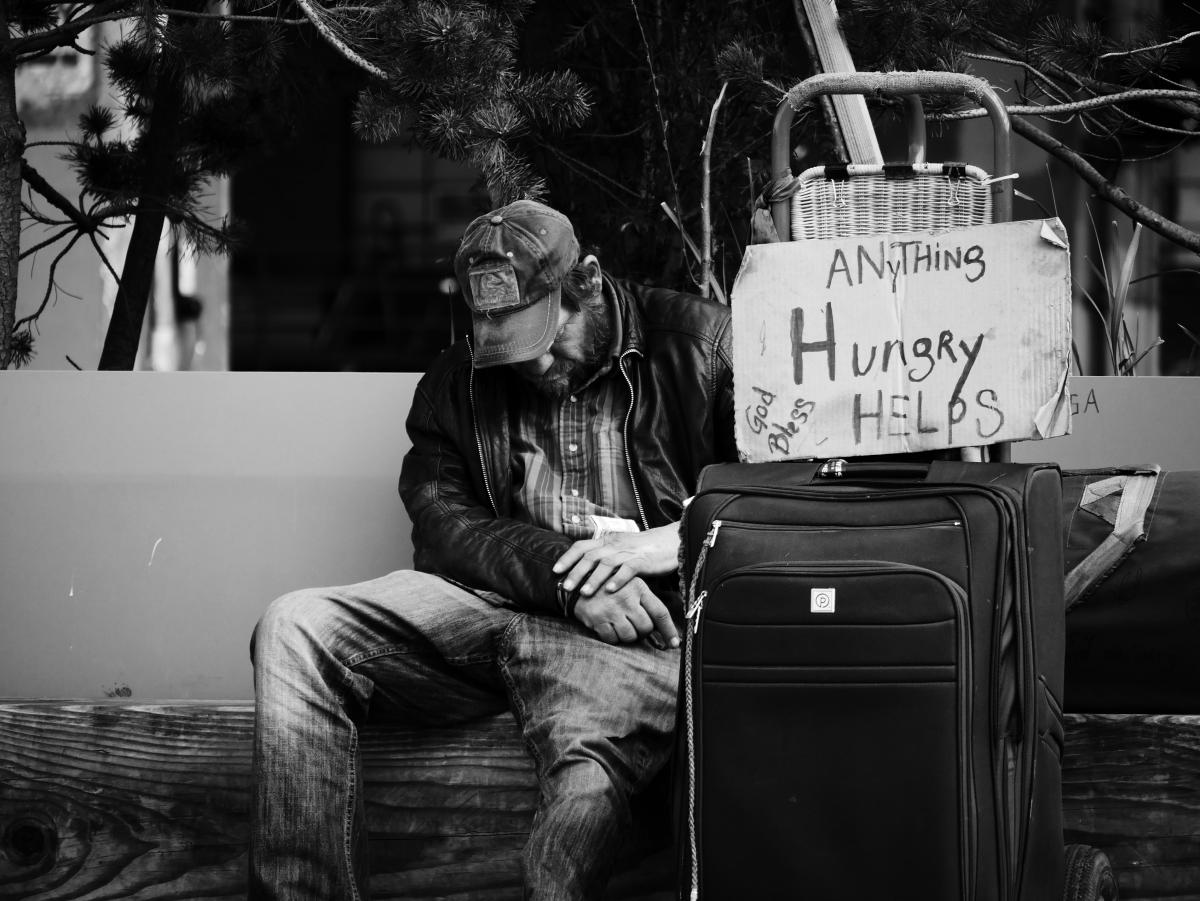
Homelessness in Maryland Worsens During COVID-19 Pandemic

November 19, 2020 by Capital News Service
Leave a Comment

The coronavirus pandemic has increased the strain on groups that work to prevent homelessness in Maryland, with experts saying single mothers and people of color are being hurt the most.

Multiple advocacy groups have expanded their programs to try to handle the surge in cases, as one agency said requests for help have nearly tripled from March to early October.

“It was already concerning last year because we had 239 clients total, all of 2019, and (as of Oct. 14), I have 600,” said Carol Ott, tenant advocacy director at the Fair Housing Action Center. “And the overwhelming majority of these people are Black, single women with children.”

Of all 2020 tenants through early October who needed financial assistance at the Fair Housing Action Center, 67% are women and 57% are Black.

“Sadly, those two numbers rarely change much. We always see a majority of Black women, most with children,” Ott said.

But the high numbers recently have been triggering a lot of alarm bells, she said.

In April, people rushed to file for unemployment once being laid off, but as of October, some were still waiting for their benefits to come through, Ott said.

Ott said some tenants who were evicted in January and February before the spike in cases are not covered under some COVID assistance programs. As the courts closed in March once the pandemic hit, it was more difficult to get their case in court and handled.

On top of the courts closing, their jobs would be lost from the layoffs due to the pandemic and they would have no means of making up the money to help themselves until their postponed court date.

With the lack of court access once the pandemic hit, the Fair Housing Action center reported increased incidences of tenant harassment and illegal evictions. Ott said she wishes that the Maryland Legislature had convened an emergency session to assess assistance.

The Maryland Joint Committee on Ending Homelessness — including members from both the state House of Delegates and the Senate — last month heard advocacy groups discuss what they needed in order to help those who are homeless and help their groups continue to support others.

Increased state funding for homelessness prevention, and direct financial assistance for people who lost their jobs because of the pandemic and had to wait several months for their unemployment payments were among the suggestions.

The Community Legal Services in Prince George’s County said that while the courts were pretty much closed from March to around August, their office therefore had to be closed, but they continued to work remotely. They assisted clients with brief advice through email.

Taylor Williams at Community Legal Services said the bulk of their clients are Hispanic, Latino, African American, and single mothers.

Single mothers with school-age children are facing new struggles with classes in session this fall.

“It’s really difficult to tell a woman you have to go find a job during a pandemic with two small children who are out of school,” said Ott. “Child care is a huge issue with a lot of our tenants. Most of them are people who are used to working … and they want to go back to work, but what are they supposed to do with their children?”

Executive Director Beth Benner at the Women’s Housing Coalition in Baltimore said having children makes it more complicated to get back on your feet. On top of the economic issues and mental health or physical issues, they also need to juggle keeping their kids in school while making them feel stabilized and loved.

While most of their clients are women and single mothers, 85-95% of their clients at any time are people of color, Benner said.

Benner said 39% of Marylanders are at or below that threshold of basically living paycheck to paycheck as of September, according to the United Way of Central Maryland.

Gov. Larry Hogan, R, issued an eviction prevention moratorium at the beginning of the pandemic that runs until Dec. 31.

This has meant an increase in illegal evictions and smaller landlords going around this moratorium by not renewing leases in which tenants have less protection in these cases in court, according to the Fair Housing Action Center.

The Women’s Housing Coalition reported that a second wave of the virus would bring more unemployment, with the cold weather curtailing businesses that moved outdoors, and will cause a dramatic increase in homelessness.

Gov. Larry Hogan, R, this week announced increased restrictions in the state for some businesses as the virus has spiked in recent days.

In 2019, the National Alliance to End Homelessness reported that 6,561 people were homeless on any given night in Maryland. Seventeen out of 10,000 people were homeless in one night in January of 2019 in the United States, according to the Aspen Institute.

The Aspen Institute estimated in August that 30 million to 40 million people could be at risk for eviction in the next few months.

It was estimated that at the beginning of the pandemic, 400,000 units would need to be created in the United States in order to safely socially distance, isolate, and protect the homeless against the virus in place of the crowded shelters that typically are used, according to the National Alliance to End Homelessness.

For those who need stable housing, the Women’s Housing Coalition reported that there are only three available units for every 10 families in Maryland who need them.

The Housing Coalition said there is a need for a low barrier to entry for all affordable housing through a more effective and efficient process for paperwork and inspections.

The Spy Newspapers may periodically employ the assistance of artificial intelligence (AI) to enhance the clarity and accuracy of our content.

Filed Under: Maryland News Tagged With: capital news service, coronavirus, Covid-19, evictions, homeless, homelessness, Maryland, pandemic, tenants, unemployment

In an Anxiety-Ridden Year, U.S. Voter Turnout Rate Highest Since 1900

November 9, 2020 by Capital News Service
Leave a Comment

More people voted in this year’s election than ever before, some motivated by fear, some by peer influence, some by the wide options available for voting, some by social media and still others by love or hate for President Donald Trump.

As of Thursday, an estimated 159 million people, accounting for 66.4% of the eligible voting population, cast ballots in this election, according to the University of Florida’s United States Elections Project. That exceeds the turnout percentages for the past 120 years, going back to the 1900 race, when 73.2% of the voting eligible population cast ballots, ultimately re-electing President William McKinley over Democratic challenger William Jennings Bryan.

“High turnout is a sign of a healthy democracy,” Michael McDonald, who runs the Elections Project, wrote in USA Today on Wednesday.

He also pointed to a pre-election Gallup Poll in which 77% of registered voters said the 2020 election mattered more to them than previous elections – the highest level since the polling firm started asking that question in 1996. Still, over one-third of voting eligible people did not cast a ballot in this election.

Experts say fear of the ongoing coronavirus pandemic and about the economy, strong feelings about Trump, the current social climate and peer influences, among other factors, spawned this historic turnout. And many states still are tabulating ballots.

Following an established pattern since at least 2000, turnout rates were especially high in key swing states. Over 75% of eligible voters cast ballots in Wisconsin, New Hampshire, and Iowa, while over 70% of eligible voters did so in Ohio, Michigan, North Carolina and Florida. Georgia received ballots from just under 70% of eligible voters.

“There’s a couple of things going on there,” said Michael Hanmer, research director of the University of Maryland’s Center for Democracy and Civil Engagement.

“The feeling that something more is at stake could be part of the internal motivator” for individual voters, Hanmer said, in states where, because of the Electoral College system, a vote for Trump wouldn’t have much impact in a state that voted Democratic, and a vote for Biden wouldn’t count for much in a state that voted Republican.

Voters in the battleground states don’t have that concern. Campaigns spend more energy and money in states that could go either way.

“It’s harder in those states to ignore what’s going on. It’s going to be on TV, it’s going to be on radio, it’s more likely to be on their social media, they’re more likely to get a door knock,” Hanmer said.

Non-swing states with especially high turnout rates, estimated by the Elections Project, were Maine, Minnesota, Colorado, Washington and Oregon – all saw three-quarters or more of their eligible voters cast ballots. Maryland ranked fifteenth in voter turnout, with just over 72% of eligible voters, according to the Elections Project estimates.

The availability of mail-in voting and early voting due to the coronavirus pandemic may have contributed to high turnout in some states. In Maryland, about half of the state’s voters mailed in their ballots.

Historically, states that regularly conduct elections by mail, such as Oregon, have greater voter turnout than those states that traditionally do not use the mails for balloting.

In Pennsylvania, where ballots still were being counted, Secretary of State Kathy Bookvar told reporters Thursday that she expected a very high turnout in the battleground state.

“Pennsylvanians have had more choices this year than in the history of the commonwealth,” she said.

Hanmer said that voting law changes to accommodate the pandemic likely generated some turnout, but added that since even many states that did not make these changes, like Texas, saw increased turnout, there were other factors at play as well.

“I really think that the turnout story for this election is more about general interest and mobilization,” Hanmer said.

The pandemic may have been responsible for some of this mobilization: “We’ve had our lives upended and we’re in this environment where our physical social circles have largely shrunk, and we’re really hard pressed to avoid coverage of what’s going on in the news,” Hanmer said.

David Paleologos, director of Suffolk University’s Political Research Center, said usually “what increases voter turnout is the quality of the candidates,” but this year is historic in that high voter turnout seemed to be primarily motivated by fear.

“it’s just ironic to me that Joe Biden … has the ability to get the most votes, ever, ever, and he’s not the person that people are excited about,” Paleologos said.

Memories of Hillary Clinton’s loss in 2016 may also have spurred additional turnout for Biden.

“People didn’t get out to vote because they assumed she was going to win,” Paleologos said, adding that there wasn’t “that element of surprise” this time around.

Hanmer also suspects social media and peer influence contributed to the high turnout.

“A lot of people were engaged this year in contacting other people, and I mean just regular people contacting their friends, not necessarily always part of some wider formal campaign activity,” Hanmer said. “That’s just been increasingly common as a tactic.”

Alexandra Palm, a 24-year-old nanny and pizza deliverer in Spokane, Washington, said she did not want to vote this year, but was shamed into casting a ballot for Biden.

“On social media is where I felt shamed a lot,” Palm said. She said that it wasn’t usually personally directed toward her, but “if I ever brought up that I was not voting, there was never a time when someone would just ever respect that decision, ever.”

Instead, she said people told her she couldn’t complain about election results if she didn’t vote, and that if she didn’t vote for Biden it counted as a vote for Trump. Her father and people on social media told her “you have to vote, you have to vote, you have to vote,” she said.

Ralph Watkins, a volunteer with the League of Women Voters, said “just the tone overall seemed to be far stronger than in many recent elections.”

“Democrats were very passionate about wanting to turn (Trump) out of office, and many Republicans were equally passionate about wanting to keep (Trump) in office,” Watkins said.

Watkins said the pandemic and the resulting economic downturn generated turnout along party lines: those who worried more about the economy tended to vote Republican, while those who worried more about the pandemic tended to vote Democrat.

Additionally, “concerns about racism are really critical, and turnout in African American areas was very high and very democratic,” Watkins said.

Marqus Shaw, 35, of Oklahoma City, voted for Biden — his first time voting. He said it was mainly to vote against Donald Trump.

“(Biden)’s better than Trump to me,” Shaw said. “Trump just says things that you shouldn’t say, he shows no compassion, and he’s a racist.”

In the past, Shaw said, he has felt like his vote wouldn’t matter, but this year he said he “just can’t take Trump anymore.”

Paleologos said turnout driven by fear “doesn’t bode well for the system at large” and may indicate a failure of the party system.

“If we’re going to have two parties, the key is for the party system to enable and support candidates who have broad appeal,” he said. “Right now we don’t have that. Right now the party system thrives on negativity.”

By Gracie Todd and Luciana Perez Uribe

The Spy Newspapers may periodically employ the assistance of artificial intelligence (AI) to enhance the clarity and accuracy of our content.

Filed Under: Maryland News Tagged With: 2020, ballots, Biden, Economy, election, pandemic, Trump, voter turnout

Biden Elected 46th President of the United States

November 7, 2020 by Capital News Service
Leave a Comment

After more than three days of uncertainty in a closely-contested race, former Vice President Joe Biden has defeated President Donald Trump to become the 46th president of the United States.

California Sen. Kamala Harris also made history, as she will become the first woman — and first woman of color — to hold the vice-presidency. She is of Jamaican and Indian descent.

“America, I’m honored that you have chosen me to lead our great country,” Biden tweeted just before noon Saturday. “The work ahead of us will be hard, but I promise you this: I will be a president for all Americans – whether you voted for me or not. I will keep the faith that you have placed in me.”

After four days of waiting, news organizations declared Biden the winner late Saturday morning after new returns from his native state of Pennsylvania made it clear he would take the battleground and its 20 Electoral College votes, giving him 3 votes more than needed to make him president.

The president-elect, who turns 78 on Nov. 20, began his political career with narrow victories in Delaware and election to the United States Senate in 1972 weeks before he turned 30. He twice previously ran unsuccessfully for the presidency – in 1988 (ended after just three and a half months in 1987) and again in 2008. He will finally make it to the White House with another close win.

He amassed more votes than any other presidential candidate in American history, breaking the record that President Barack Obama set in 2008.

Harris’s ascension to the vice presidency will be “really wonderful for the United States,” said William Spriggs, an economics professor at the Californian’s alma mater, Howard University, an historically black institution in Washington.

“I think this will start a legacy that Americans will finally get used to the idea of women in leadership, and accept her role as setting the mark and paving a path for other women to ascend to top leadership,” Spriggs told Capital News Service.

Harris, 56, is a challenger-turned-ally of Biden. A rising progressive star, she attacked him during the primary for his opposition to busing to desegregate schools. She also set herself apart from the political veteran by embracing the Green New Deal and Medicare-for-All, as well as calling for a ban on fracking.

Harris is expected to bring a more progressive perspective to the moderate president-elect’s agenda.

With the coronavirus pandemic raging across the nation, it appears unlikely that Biden and Harris would celebrate the start of their administration in the traditional manner that would call for an oath-taking ceremony Jan. 20 on the West Front of the United States Capitol, witnessed by massive crowds stretching for blocks on the National Mall.

The inauguration plans are to come, but Biden and Harris already have activated a website for the transition and are assembling a transition team. As a symbol of the coming change in power, the United States Secret Service earlier in the week dispatched additional agents to the Biden home in Wilmington, Delaware, and the Federal Aviation Administration designed the skies above that home as restricted airspace.

Despite the pandemic — or many experts believe because of the various voting methods it made necessary — the total turnout for this election is expected to break a 120-year-old record.

Michael Hanmer, research director for the University of Maryland’s Center for Democracy and Civil Engagement, said “motivational factors (to vote) were just more present” in this election, though voting law changes to accommodate the pandemic also played a part.

The small margin of victory, combined with the overwhelming use of mail-in ballots, appeared to infuriate the president, as he continued to falsely claim that he was cheated out of reelection. Some of his Republican allies made similar unfounded attacks, while others in the GOP – mainly those out of office – denounced Trump’s accusations as dangerous and irresponsible.

Trump had repeatedly questioned the legality of mail-in ballots and discouraged his supporters from voting by mail. As a result, mail-in ballots in many states with little history of using that voting method leaned very heavily to Biden.

Many states counted mail-in ballots after tabulating Election Day ballots cast in-person, initially generating the appearance of a Republican surge in some of the battleground states. But the counting of the mail-in ballots – a slow process – began producing a Democratic counter-wave that materialized as early as Wednesday.

Multiple networks — including ABC, NBC, MSNBC, and CBS — cut away almost at the start of a Trump speech in the White House Thursday night when the president leveled baseless and false claims about the vote counts.

“If you count the legal votes, I easily win. If you count the illegal votes, they can try to steal the election from us,” Trump claimed.

No credible evidence of fraud has been produced, according to the Associated Press.

The president’s claims of cheating were “especially disconcerting because the dangers of Trump’s rhetoric will outlive his time in the office,” Peter Ubertaccio, dean of arts and sciences at Stonehill College in Massachusetts, told CNS.

Millions of people believe Trump’s accusations of voter fraud despite no neutral observers stepping in to raise concerns about legitimacy, he said. This will, in turn, lead many citizens to believe that this election was stolen from Trump, Ubertaccio added.

“On the list of dangerous things Donald Trump has done, this ranks pretty highly — he has basically called American elections illegitimate because they didn’t go his way,” Ubertaccio said.

While counting of votes continued, the Trump campaign filed lawsuits to stop the counts in Michigan, Georgia — where federal judges rejected them — and Pennsylvania.

Caleb Jackson, a voting rights attorney at the nonpartisan Campaign Legal Center, called the lawsuits “absolutely frivolous and meritless” that “will not get them anywhere and not have an impact on the election.”

In states where mail-in ballots seemed to be benefitting Trump a bit more, such as Arizona, the president and his allies urged election officials to count every vote.

“Of course it’s contradictory,” Jackson said. “There’s nothing legally that bars them from making those arguments, but, you know, professionally and ethically…it goes against what you swear to do as an attorney.”

In states such as Pennsylvania and Georgia, automatic recounts will be generated if the margins are 0.5% or less. But recounts also can be requested by Trump’s team and were expected.

Georgia’s Secretary of State Brad Raffensperger, a Republican, has announced Friday that there will be a recount in his state.

But Biden’s victory, especially given the closeness of this race, does not indicate that it would necessarily open the way for significant policy changes, Ubertaccio said.

“We are a 50/50 country, and partisans on both sides have an active dislike of the folks on the other side,” said Ubertaccio. “Even landslide victories don’t by themselves indicate long-term changes to American politics.”

If Republicans retain control of the Senate, which is not yet clear, Biden would have a hard time getting legislation to pass without the acquiescence of Senate Majority Leader Mitch McConnell, R-Kentucky.

While it was Biden who often negotiated with McConnell during the Obama years over budget deals and other legislation – both drawing on their long relationship with each other – the new president would be dealing with very different political dynamics after a hard-fought, divisive election.

With Senate races waiting to be called, the current makeup is even with 48 members projected to be on each side of the aisle, and two runoff elections in Georgia in January present the Democrats with an opportunity to take control of the chamber.

Even so, it was the stark contrast between Biden’s progressive agenda and Trump administration policies that “helped drive turnout,” Hanmer said.

“Most people had a pretty good understanding of what they would get with Donald Trump if he were to win, and what they would get from Joe Biden if he were to win,” he added.

By Kaanita Iyer, Jacob Rousseau, Gracie Todd, Luciana Perez-Uribe, Aneurin Canham-Clyne, and Michelle Siegel

The Spy Newspapers may periodically employ the assistance of artificial intelligence (AI) to enhance the clarity and accuracy of our content.

Filed Under: 2 News Homepage Tagged With: ballots, Biden, election, president, Trump, vote

What Will We Know and When Will We Know it on Tuesday (Or Later)?

November 3, 2020 by Capital News Service
Leave a Comment

With record voter turnout, including a high volume of mail-in ballots, and mail delays expected, it is unclear whether we will know who the next president is on election night, experts say.

“I’ve been expecting the unexpected,” said Michael Hanmer, research director at the Center for American Politics and Citizenship, a nonpartisan research center at the University of Maryland, College Park. “I think that’s the best way to work through this because there’s so many different possibilities.”

However, Hanmer told Capital News Service it’s “pretty safe to say” that Democratic nominee Joe Biden is headed for a significant popular vote margin over President Donald Trump. But, similar to 2016, determining the next occupant of the Oval Office is going to come down to the Electoral College – and it’s possible this year that may not be settled until some days after Tuesday.

As of Friday morning, nearly 83.5 million early votes were already cast, of which nearly 54 million, or 64.6%, were mailed, according to the University of Florida’s United States Elections Project.

But in many states, including four of eight battleground states — Georgia, Michigan, Wisconsin and Pennsylvania — ballots are not allowed to be counted until Election Day.

Twenty-one states, plus the District of Columbia, accept ballots up to 17 days after Election Day. Of these, two are battleground states: Pennsylvania and North Carolina.

New York and Alaska, which accept mail-in ballots 7 and 10 days after Election Day, respectively, have said that they will not report “any mail votes on election night,” according to the New York Times.

In the battleground state of Michigan, Secretary of State Jocelyn Benson has estimated her count may be completed by Nov. 6, three days after Election Day. Pennsylvania, another battleground, may get the bulk of its votes tallied within a couple of days, according to Secretary of State Kathy Boockvar.

But the nation might not have to wait too long because “we’ll have a lot of information about a couple of really key states (on election night),” particularly Florida and Arizona, where mail-in ballots must be received by Election Day, Hanmer said.

“That might allow us to project forward what’s going to happen in a definitive way,” he said.

“I think really the only state that (Hilary) Clinton won (in 2016) that (Donald) Trump has a shot at is Nevada and it’s a relatively small number of electoral votes, so I don’t think Trump can win without Florida,” Hanmer he said.

While a Biden win in Florida would suggest that he’s going to win in both popular and electoral votes, turning Arizona blue would not make results as clear, according to Hanmer. If Biden gets Arizona, it can foreshadow a national victory by a huge margin or a close race determined by few electoral votes for either candidate, he said.

However, FiveThirtyEight’s presidential forecast predicts that if Biden wins Florida or Arizona, he has a 99% and 98% chance, respectively, for an Electoral College win.

Hanmer, who also is a government and politics professor at Maryland and an expert for MIT’s Election Data & Science Lab, expects that “we should know a good bit” about Georgia, which has an Election Day deadline for mail-in ballots, and North Carolina, as well.

While North Carolina accepts ballots after Election Day, the state has seen a high volume of early voting. FiveThirtyEight’s founder Nate Silver reported that “it’s expected that as much as 80% of the vote there can be announced shortly after polls close.”

If those go to Biden, Hanmer predicts that the country won’t “have to worry as much about what the count is going to be in some of the states that are processing late because I think that will largely solidify things in terms of us having a clear winner.”

If Biden wins Georgia, his chances for an electoral win is 99%, while grabbing North Carolina, pushes the probability over 99%, according to FiveThirtyEight’s presidential forecast.

In the case that Georgia and North Carolina do not go to Biden, Hanmer said “we might just have to wait until all the counting is done.” Then the results can “really hinge” on Pennsylvania, where “we’re just not going to have solid information on what the result is…for a while because they can’t count or process their ballots until very late,” he said.

Trump has repeatedly called for final results to be called on election night, in part due to his distrust in mail-in voting – even though he did it himself this year.

“Big problems and discrepancies with Mail In Ballots all over the USA. Must have final total on November 3rd,” he tweeted Monday night.

That kind of rhetoric is inappropriate, warned the National Council on Election Integrity, a bipartisan group of former elected officials.

“Our Constitution and our state election laws require us to count every vote, including legally cast absentee votes,” the council said in a statement Wednesday. “Because of an unprecedented number of absentee ballots this year, counting every vote is not likely to be concluded on election night. In some states, thorough vote counting can last weeks, even in the best of times.”

Almost half of returned mail ballots in 19 states that report party registration data, including Arizona, Florida, Pennsylvania and North Carolina, were from registered Democrats, according to the Elections Project. On the other hand, 60% of Trump supporters told the Pew Research Center in late summer that they would rather vote in person on Election Day.

On election night, this could mean that in states that report mail-in ballots first, initial results may favor Biden. In places that report in-person, day-of votes first, such as most parts of Virginia, Trump may seem to have the lead.

While this pattern in which ballots received post-election favor Democrats is well-established, Walter Shapiro, in an analysis for the Brennan Center for Justice, warns that the pandemic may disrupt this trend “since different demographic groups may be voting by mail.”

In key states, the Republican Party wants to prevent this “blue shift” while Democrats are relying on it. However, research reported by MIT News shows that historically, even “some of the biggest post-Election Day shifts” — the largest being 6.9% in 1968 towards George Wallace in Georgia — have not tipped the outcome of the election.

Yet both parties have fought over mail-in ballot deadlines in the Supreme Court, and such legal back-and-forth, which may continue after Election Day, could further delay results in critical states.

Last week, the Supreme Court denied the Pennsylvania Republican Party’s request to reject ballots if received after Election Day. In a 4-4 decision, the court ruled that the battleground state can accept ballots if received within three days after Election Day. After the party asked the court to reconsider the decision, the justices let their earlier ruling stand.

Also on Wednesday, the Supreme Court backed a lower-court ruling and similarly allowed North Carolina to accept mail-in ballots up to nine days after Election Day, extending the deadline to Nov. 12.

However, an attempt by Wisconsin Democrats to also extend the mail-in ballot deadline by three days to Nov. 6 was first accepted by a federal district court, but then blocked by an appeals court. The Supreme Court voted 5 to 3 on Monday to uphold the appeals court.

Another blow to Democrats came on Thursday when a federal appeals court struck down Minnesota’s plan to accept mail-in ballots up to seven days after election. The key state will now only be able to accept ballots received by 8 p.m. on Election Day.

While states can continue contesting mail-in ballot deadlines and bring them to the Supreme Court — which Hanmer told CNS wouldn’t be surprising — “the court sent a pretty strong signal that changing things now, given how deep we are into the process, is unlikely,” he said.

He predicts that legal challenges after the election are “more likely,” and so are anger, disbelief and protests from supporters on both sides.

“It seems very odd to say that about a presidential election in the United States, but there’s a lot of signals that suggests that large portions are not going to accept well the outcome either way,” Hanmer said.

“What people do about that, I think, is a big unknown,” he said. “But it’s something we have to prepare for.”

The National Council on Election Integrity counseled patience and trust: “Every ballot cast in accordance with applicable laws must be counted — that’s the American way. All Americans, including the presidential candidates themselves, have a patriotic duty to be patient as election officials count the votes. Both candidates have a responsibility to remind the country that November 3 is the last day for votes to be cast — not the last day for votes to be counted.”

By Kaanita Iyer

The Spy Newspapers may periodically employ the assistance of artificial intelligence (AI) to enhance the clarity and accuracy of our content.

Filed Under: Maryland News Tagged With: ballots, election, mail-in, results, turnout

Copyright © 2025

Affiliated News

  • The Chestertown Spy
  • The Talbot Spy

Sections

  • Arts
  • Cambridge
  • Commerce
  • Ecosystem
  • Education
  • Food & Garden
  • Health
  • Local Life
  • News
  • Point of View
  • Senior Nation

Spy Community Media

  • Subscribe for Free
  • Contact Us
  • COVID-19: Resources and Data

© 2025 Spy Community Media. | Log in