
MENU

Sections

  • About Us
    • Editors and Writers
    • Sponsorship Terms & Conditions
    • Code of Ethics
    • Sign Up for Cambridge Spy Daily Email Blast
  • The Arts and Design
  • Culture and Local Life
  • Food & Garden
  • Public Affairs
    • Commerce
    • Health
    • Ecosystem
    • Education
    • Senior Nation
  • Point of View
  • Chestertown Spy
  • Talbot Spy

More

  • Support the Spy
  • About Spy Community Media
  • Advertising with the Spy
  • Subscribe
December 6, 2025

Cambridge Spy

Nonpartisan and Education-based News for Cambridge

  • About Us
    • Editors and Writers
    • Sponsorship Terms & Conditions
    • Code of Ethics
    • Sign Up for Cambridge Spy Daily Email Blast
  • The Arts and Design
  • Culture and Local Life
  • Food & Garden
  • Public Affairs
    • Commerce
    • Health
    • Ecosystem
    • Education
    • Senior Nation
  • Point of View
  • Chestertown Spy
  • Talbot Spy
00 Post to Chestertown Spy 3 Top Story Point of View Al

Will Humans Become History’s Losers? By Al Sikes

December 3, 2025 by Al Sikes
Leave a Comment

Is intuition obsolete? What about our accumulated layers of information and feelings or what we might call seasoning? Including, of course, the lessons from failures and the information-laden seams of character? Or, the fruits of relationships—the improvisational values of collaboration?

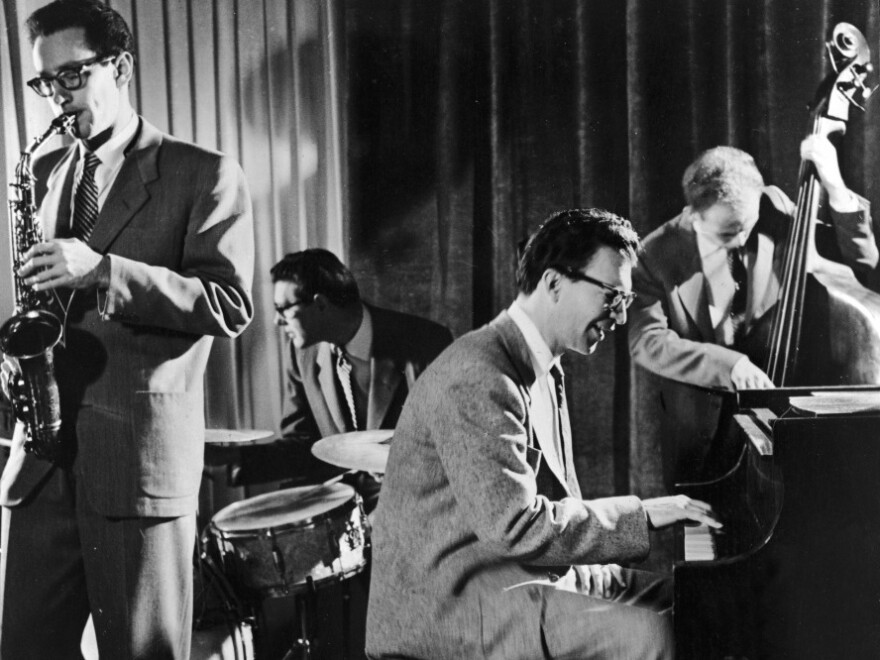
It was 1959. One of the greatest jazz pieces ever composed, “Take Five”, was performed by the Dave Brubeck Quartet. The melody was written by Paul Desmond, but the band collaborated on the final fusion of ideas and musical notes. Brubeck created the harmonic foundation and Joe Morello the famous drum pattern.

“Take Five” is both Desmond’s composition and a Brubeck Quartet creation. A collaboration for the ages.

Are the coders with their artificial intelligence (AI) tools going to upstage fertile minds? Minds shaped and reshaped by life? Can they turn the generative algorithms  into 21st-century creators without pirating previous works? Can AI models take humans out of the equation?

At the risk of mixing up input and outcomes, here are some recent experiences—the complex and simple kind. When I got my knees replaced, I offhandedly referred to the surgery as robotic chainsawing. Thank goodness for the strides in pain management. My research and subsequent experience suggest that doctors working with robotic tools are a generation or two more effective in the removal of the old and integrating the new.

But then how much do we want tools to get in the middle? For example, in a recent trip back from New York, I came face-to-face with both a person and a screen at the same service area on the New Jersey Turnpike. As required by New Jersey law, a human pumped gas and cleaned the car window while my wife had to figure out the tablet interface at a ShakeShack. Best in show: the gas attendant, not the interface,

Whether we are dealing with a medical breakthrough or ordering sandwiches, humans can be either crucial or welcome. I am afraid that when they are just welcome they will disappear. Too bad, variations on the default format go missing, and hospitality is nonexistent.

As one friend of mine often quips, “Here’s the thing.” I started with a slide rule, welcomed the electronic spreadsheet, and then the calculator, followed quickly by the computerization of most things.

Technology attracts investment. And, return on investment will require volume—a robust demand side. The capital investment in AI is without precedent and that will help to assure the ultimate flipped script. Will we flip from humanics to mechanics? If so what will be lost, a civilization?

A recent headline in the Wall Street Journal proclaimed “The College Students Who Can’t Do Elementary Math.” The underlying story verified that many students at the University of California, San Diego can’t round numbers or add fractions. If you cannot tally up numbers, trouble will follow.

Regardless, as momentum flips the script, the depth of human creativity will remain crucial to progress and humanity. But, if AI becomes a substitute for thinking, the incurious will need to muscle up.

Al Sikes is the former Chair of the Federal Communications Commission under George H.W. Bush. Al writes on themes from his book, Culture Leads Leaders Follow published by Koehler Books. 

The Spy Newspapers may periodically employ the assistance of artificial intelligence (AI) to enhance the clarity and accuracy of our content.

Filed Under: 00 Post to Chestertown Spy, 3 Top Story, Al

Thanksgiving: Our Choice By Al Sikes

November 26, 2025 by Al Sikes
Leave a Comment

Thanksgiving is one of those holidays that is quite understandable. We give thanks for many things in our lives and beyond. And it is universal; it doesn’t, for example, depend on a particular religious faith. But, I am going to get started with a religious allusion.

The bible said, in relationship to the crucification of Jesus Christ, that religious leaders at the crucification mocked him saying, “He saved others; let him save himself if he is the Messiah of God, his chosen one.” Luke: 23:35. The faithful say God’s plan resulted in him returning on the “third day.”

“Save himself”—how about our saving ourselves? I am in my eighth decade and have rarely seen America more fragmented. I have lived through wars and assassinations and can put today’s lack of a unifying thread in context. It’s worse. Do we need to be attacked to be more unified?

Thanksgiving, the word, invites for me a summing up. Have there been unwelcome moments in 2025? Most certainly. Topping the list would be the death of friends. More later. A close second would be our political distemper.

Most unfortunately: the person who leads one of our aspirations—united states— has chosen division. On the side of hope, I believe his stance will turn out to be a hinge moment—an increased appreciation for the hope that is the hinge of unity. If unity is ineffectual, we are left with what one writer called, “the Serengeti”, it’s prey/predator reality.  I hope that this Thanksgiving we will see the beginning of a revival.

The America we know evolved from an aspirational revolution. In a sense, one of hope. The immigrants that first came to America were looking for opportunity. Many  were fleeing division among classes. They didn’t want to be penalized because they were not “well bred” and ultimately their generational offspring fought a war and then composed the words: “all men are created equal”. They meant should have equal opportunity.

But, as we know, equal opportunity is not easy. Often political division results from a sense that American law and commerce is weighted toward favored groups who emerge and lock in their advantage. Elon Musk holds out for a trillion dollar pay package. Homes sell for tens of millions while many have to work overtime to afford to pay rent. Or, as inflation bites, the privileged pay thousands to buy white truffles by the pound.

I wonder, what if sitting around the Thanksgiving table somebody asked, “have we abandoned unifying principles and realities that held us together?”

To this question I would turn to a universal principle: “Do unto others as you would have them do unto you”—it is one of the most widely shared moral principles across human civilizations. It appears in some form in nearly every major religious and philosophical tradition. Right now it is a revolutionary principle and we need a revolution—a revolution that must be led outside the corridors of power.

Happy Thanksgiving.

Betsi Shays

Betsi Shays died recently. She and her husband Chris were good friends and my wife and I have shared the family’s grief. As I think about Thanksgiving, I want to share this column about Betsi from the Greenwich Sentinel. Chris had been a Member of Congress from Connecticut.

https://www.greenwichsentinel.com/2025/11/14/editorial-remembering-betsi-shays/

Al Sikes is the former Chair of the Federal Communications Commission under George H.W. Bush. Al writes on themes from his book, Culture Leads Leaders Follow published by Koehler Books. 

The Spy Newspapers may periodically employ the assistance of artificial intelligence (AI) to enhance the clarity and accuracy of our content.

Filed Under: 00 Post to Chestertown Spy, Al, Archives, Point of View

Low Visibility by Al Sikes

November 23, 2025 by Al Sikes
Leave a Comment

Many of us have been caught in a snow blizzard at least once. Mostly, not intentionally. Visibility—well, it closes in on nil. Cold—my few experiences were in high winds, and on one occasion, I got frostbite. No sympathy, please—I was in a duck blind and refused to call it a day.

Today, our nation’s finances are careening toward nil. We can’t see or understand a $38 trillion debt. We, the United States of America, owe other people that amount of money, and our debt obligations have been going up and up for several decades. Think Treasury Bills, Bonds, Notes, and more. The last time America balanced its books was in fiscal year 2001.

If we paid off our national debt over a generation, let’s say 25 years, and the interest rate on the debt was 5%, we would need to pay $2.7 trillion dollars a year in principal and interest. I should add, a credible debt retirement program would reduce the carrying cost. Indeed, a credible program would facilitate debt as a normal element of a dynamic economy.

But back to the payment plan: $2.7 trillion a year! Our defense budget in 2024 was $865 billion, 13% of the annual budget. We, of course, will not quit spending on defense. The annual cost of Medicare in 2023 was $1.03 trillion.

Enough, you get why I suggested our nation’s finances are a low visibility event. We can’t fathom that amount of money. We can’t fathom where we are going to get almost triple the amount paid out for Medicare to make the necessary annual payment to retire our debt eventually.

One might look at the policy platforms of each political party to see how they would retire our national debt, but guess what, they don’t say. Surprise! Cynicism follows.

The dominant political parties should not be allowed to get away with a national bankruptcy trajectory. If you are a Democrat, don’t try to tell me there is some Valhalla that awaits our nation if we just add costly new programs. And if you are a Republican, don’t tell me we will resolve our fiscal mess without any additional tax revenue. We will not grow ourselves out of our shame.

Maybe we need to come inside. Snow blizzards are not pleasant. And yet that is where we are in our national politics. Neither Party is serious. Both are too caught up in their childish games of blame. And neither are attracting blue-chip candidates for office. How do I know? Because in office, the vast majority do not treat money in and out with any seriousness. For at least a generation, promises of new spending pile up, and then each year, the political speeches call for more programs on top of programs that leave the body politic with an increasingly dark outlook.

President Trump is a fruit of cynicism—cause and effect. Trump recently floated the idea of $2,000 payments to low- and middle-income households, funded by revenue from his tariffs. Earlier he had suggested tariff income could be used to reduce the deficit. His polling numbers are down and now he is going to give away even more money than in the “big, beautiful bill” to get them up.

Thanksgiving thought. In an international ranking of gross domestic product (GDP) per capita, the United States is the top-ranked large country at $75,492. Yet our massive appetite has resulted in a $38 trillion dollar debt. Indisputably, we have much to be thankful for. Our unfunded appetite is not on that list.

I have no idea when this folly will stop, but it will. As the cost of borrowing goes up and up something will give and maybe somebody will step up. But if somebody steps up, will we be capable of recognizing him/her? Or will our inebriation continue?

Al Sikes is the former Chair of the Federal Communications Commission under George H.W. Bush. Al writes on themes from his book, Culture Leads Leaders Follow published by Koehler Books. 

The Spy Newspapers may periodically employ the assistance of artificial intelligence (AI) to enhance the clarity and accuracy of our content.

Filed Under: 00 Post to Chestertown Spy, 3 Top Story, Al

Emoluments by Al Sikes

November 16, 2025 by Al Sikes
Leave a Comment

Emoluments! Look it up. It is constitutionally important and has a long history, including even the title of America’s head of State. Before landing on the title President, John Adams recommended that our head of state be called: “His Highness, the President of the United States, and Protector of their Liberties.” This was said to be an attempt to imitate the titles of the British monarch. It was only six years earlier that George Washington had proclaimed the Cessation of Hostilities, after Britain and the U.S. agreed to stop fighting. America’s early leaders didn’t want a “Highness.”

Why do I bring this up? Well, titles were bought and sold and considered by many as a ticket to nobility and financial reward. As to titles and other rewards our Constitution writers explicitly said that the President could not: accept “any present, Emolument, Office, or Title, of any kind whatever, from any King, Prince, or foreign State” without the consent of Congress.” There is also a domestic preclusion.

While I am too late in life to consider investing in cryptocurrencies, I am nonetheless curious. After all, the President’s sons have huge investments. Maybe they know something I should know.

My back story. In 1986, I was reminded why those of us who work for the government are not supposed to take advantage of the job. I became the head of the National Telecommunications and Information Administration. It was shortened to NTIA so it could fit on a business card.

I won’t bore you with what NTIA did, but its actions did affect the allocation and use of government frequencies. I had been in a private frequency-based business: radio broadcasting.

Before accepting the government job, I sold a radio station and took back a note in partial payment. I was told by the White House ethics officer that I must sell the note back to the buyer because of a potential conflict of interest. Man, was that a long shot, but sell I did at a discounted rate.

Today worry about conflicts of interest seems to have evaporated as the waves created at the top of the government wash over the government as a whole.

One of the next likely targets of increased government regulation is the cryptocurrency industry. And the way the Trump White House uses the Executive Branch, it, not the Congress, is likely to set up the ground rules. After all, the executive branch includes the Department of the Treasury, the Federal Reserve, the Commodities Futures Trading Commission, the Federal Deposit Insurance Corporation, and the Securities and Exchange Commission.

If I understood the crypto industry better, I would detail what further actions the government might take that would be in the public interest. What I do know is that governments want to protect their currencies. In the case of the United States, our currency, the dollar, is one of the most important international assets we have.

A Reuters news report recalled President Trump’s comment about cryptocurrencies in 2021: Donald J. Trump, speaking to Fox Business, criticized cryptocurrencies as a threat to U.S. dollar supremacy and said bitcoin “seems like a scam.”

As Reuters reported three years later, Trump’s take on crypto had changed. Just weeks before the November 2024 presidential election, he kicked off sales of World Liberty tokens with a social media post: “This is YOUR chance to help shape the future of finance,”

As Reuter’s noted more recently: “As World Liberty Financial raised more than half a billion dollars, President Donald Trump’s family took control of the crypto venture and grabbed the lion’s share of those funds, aided by governance terms that industry experts say favor insiders.”

I am astounded by this unfolding story. The President and his family, by all telling, are quite wealthy. He should not want his fairness questioned as he deals with important issues affecting the dollar.

During my time in Washington, I attended several swearing-ins. A typical pledge required fidelity to the Constitution and rule of law and a pledge to avoid “divided loyalty and to provide honest and faithful service.” My, being forced to sell a Buyers-note, falls under this umbrella.

Now as I emerge from an hour long trip down a rabbit hole its pretty clear the President does not have to make a similar pledge because much of what he does affects society and the economy. However, he does take a pledge to not receive emoluments from either international or domestic sources. As noted, that strange word refers to things of value.

The kicker: the enforcement mechanism is impeachment. We’ve been down that hyper-partisan road. What I don’t understand is why a wealthy man holding the highest office in the land would seed a cloud cover in place over the White House by using his office for his family’s interests.

Along with what seems an ancient word, emoluments, recall an event in 62 BCE at a trial of Caesar’s wife, Pompeia. Plutarch reported that Caesar, while testifying on her fidelity, said he had no knowledge of a reputed affair between his wife and Clodius Pulcher, but that “Caesar’s wife must be above suspicion.”

My advice: ask your sons to divest their crypto holdings. Maybe they will miss a big payday, but you will gain a reputational boost. And, when you leave the White House, I imagine you will not want to be on the other end of dozens of subpoenas.

Al Sikes is the former Chair of the Federal Communications Commission under George H.W. Bush. Al writes on themes from his book, Culture Leads Leaders Follow published by Koehler Books. 

The Spy Newspapers may periodically employ the assistance of artificial intelligence (AI) to enhance the clarity and accuracy of our content.

Filed Under: 00 Post to Chestertown Spy, 3 Top Story, Al

The Duck Is Limping by Al Sikes

November 7, 2025 by Al Sikes
Leave a Comment

Tuesday’s election results were clear—the Democrats won, the Republicans lost. This was an across the board defeat. There were no shoots of Spring. The President’s most fervent supporters said the problem was that Trump was not on the ballot. I say, excuse me, Trump has chosen to put himself on everything but the granularity of household waste.

The voters, well a majority, share Trumps anger on many issues but are turned off by his angry approach and his often mercurial zigs and zags. Most don’t like meanness. Most don’t like unhinged. Most don’t like extravagant claims with little or no foundation. When the “best ever” becomes a throw-away line, claims of truth lose their plausibility.

Stuck is not a good thing for a leader. But today the nation is enmeshed in a debilitating tangle featuring true believers, an absence of cohesive leadership (the government is shutdown) Courts and a large class of voters called independents.

Independent voters find the lack of civility chilling. Most independent voters don’t have the passion of true believers with the attendant intolerance. They don’t have high expectations, but they do know courtesy and its absence. In short, the mess Democrats served up in the 2024 election cycle defeated them, not the grandiosity and ridicule offered up by the President.

I suspect a majority of voters respect the potential of an extension of the Abraham Accords across the Middle East. But political victories have very short shelf lives. This is particularly true of successes in places most would have trouble finding on a map.

And politicians who live on emotions have to be aware of overnight reckonings. When Trump’s marquee supporter, Elon Musk, was portrayed with a chainsaw in hand, slashing programs that had constituencies, there was trouble in River City (the Potomac).

Trump is now a lame duck, who turned the gun on himself. A majority expressed confidence in him over her (Kamala Harris) last November, but popularity is fragile—especially if in the telling everything revolves around one man. Independents, the deciding factor in all elections except those where hardcore supporters are densely clustered, are suffering indigestion. Americans have not been trained to take orders from an autocrat.

So now America has a White House occupant who has precious little time to effect a turnaround but who, I guess, is building a giant ballroom for various celebrations. A ballroom filled by sycophants will not transmit the right vibe.

Neither George Washington or Abraham Lincoln were modest men but they formed their visions from history, theology, philosophy and literature, not from the vagaries of the marketplace. And they governed for history, not X (formerly Twitter).

An aside. Flying too close to the sun is always perilous. Watch out Zohran Mamdani, reengineering New York City will not be a walk in Central Park.

And what about those red carpets on the just finished Asian swing? Understand, Mr. President, that Xi of China is not your friend. Nor Putin of Russia. Nor Kim Jung Un of North Korea.

Un doesn’t want anything you can plausibly give him so he deflected your barely disguised suggestion for a stop over. Xi will do business because it is in his best interests. And you will prevail in negotiations with Xi, if he perceives you to be strong back home.

Putin will welcome staged bilateral talks that make him look reasonable, but persist in his tyrannical ambitions until he is certain the West will exact unbearable costs.

America is rich. It has enormous military power. It has sound government institutions and these are only the headlines of its strengths. Persons who become President will, as long as our assets hold together, be offered a certain deference. But don’t confuse tactical deference with friendship. If you are using tariffs to penalize friends (Canada, for example), don’t imagine that the red carpet is for you; it is for America. America is made strong by its stable democracy, law-bound courts, free markets, and diverse leaders and ideas. And true friendships.

A final thought. We always need to adaptively build strength and measure our initiatives against our history. Too often, we have allowed hope and borrowing power to weaken us. A $37 trillion dollar debt is shameful. In the neighborhood of 30% of the debt is held by foreign holders.

My last political job was in President George HW Bush’s administration. He built an incomparable resume through good public service. The jobs he did, including as President Ronald Reagan’s Vice President, were done well, and he didn’t ever, as I recall, try to upstage those he worked for or with. When he was President, the “Captain of the Ship of State”, there was a lot of ballast. Today, not so much.

Al Sikes is the former Chair of the Federal Communications Commission under George H.W. Bush. Al writes on themes from his book, Culture Leads Leaders Follow published by Koehler Books. 

The Spy Newspapers may periodically employ the assistance of artificial intelligence (AI) to enhance the clarity and accuracy of our content.

Filed Under: 3 Top Story, Al

The Future of The Robert Morris Inn by Al Sikes

November 4, 2025 by Al Sikes
Leave a Comment

My wife and I, on many of our bike outings in and around Oxford, end up making a right turn onto the Strand with the Tred Avon River on our left. The images flit by: first, the Tred Avon Yacht Club, then the Oxford Ferry straight ahead, and sadly, on our right, a For Sale sign at the historic Robert Morris Inn (RMI).

I don’t pass the Inn without recalling wonderful evenings with good friends, especially in the winter with a fireplace at our back. Last winter the Inn was sporadically open and it seems unlikely that it will be open this winter. It is, of course, now for sale.

Markets for commercial real estate are dynamic. Business prospects, the cost of debt, and supply/demand factors frame pricing. I know the Inn’s sticker price, $3,600,000; beyond that, I remain uninformed about a variety of circumstances that will weigh on pricing, the availability of credit, and timing.

Without taking a deep dive into the market for similar commercial properties, I would offer up several considerations. First, I comment because the RMI is not just another hospitality business for sale. The Inn’s history helps define it; this is not a commodity property.  In more ways than one, it also helps define Oxford.

I know my wife and I, while not students of Robert Morris,  like to at least characterize his contributions to America’s success in the Revolutionary War. His friendship with George Washington. His financial acumen which earned him the title: “Financier of the Revolutionary War.” Inevitably we comment on the beginning of the Inn as Morris’ house in 1710. The Inn’s history transports a gathering into a special moment.

If the new owner of the Inn is to succeed, he/she will have to build back its reputation and more. This requires continuity and continuity requires some level of profit.

Unless it has a destination reputation, it will keep changing hands. The new owner will have to be given some flexibility with the underlying assets to remain in for the long term. One question: what would the “financier”, Robert Morris, require?

Profitability is not a nice to have; it is a need to have. The Inn At Little Washington is a flickering image of possibility. The RMI setting is more dramatic, but profitability requires more than eye candy.

I presume that due diligence by a prospective buyer will necessarily explore the town government’s attitude before any paperwork is finalized. In Oxford it is not unusual to see an “Applications Pending” sign. If I were a prospective buyer, I would want a streamlined approval process. When I was in the broadcasting business, the most fraught time was during a pending license transfer application period at the Federal Communications Commission (FCC). The FCC had to approve the purchase.

One other thought. Commercial and industrial development agencies in States, Counties, Cities and special districts often offer financial incentives to attract investment and good jobs. I hope Maryland, Talbot County and Oxford are similarly motivated. The Robert Morris Inn is not a crown jewel, but a colonial one well worth preserving.

Final note about the Inn’s namesake: Morris was very bullish on America’s prospects after the war. According to historians this led him to acquire a great deal of land, using debt. The assumptions of rapid growth didn’t materialize and his debt brought him to bankruptcy before bankruptcy laws. A sound business model built on sound assumptions is not optional if success is going to result.

Al Sikes is the former Chair of the Federal Communications Commission under George H.W. Bush. Al writes on themes from his book, Culture Leads Leaders Follow published by Koehler Books. 

Richard Marks contributed to this column.

The Spy Newspapers may periodically employ the assistance of artificial intelligence (AI) to enhance the clarity and accuracy of our content.

Filed Under: 3 Top Story

A Word about Jazz on the Stage in Oxford

November 2, 2025 by Al Sikes
Leave a Comment

Indulge me. Turning points are memorable, so I’d like to share a brief story from my life. 

I had, as a teenager, played in a band—we called it a dance band. It was in the very late 1950s. Later on, I had been out front in bringing the Dave Brubeck Quartet to Westminster College (the one in Missouri). It remains a vivid memory.

Fast forward a few decades, now the 21st century, I was asked to pair jazz with chamber music on the Eastern Shore. I turned to my friends. 

A close friend, a jazz pianist himself, introduced me to Monty Alexander, the joyous jazz pianist from New York by way of Jamaica. The introduction became the first step in the beginning of what became the Monty Alexander Jazz festival. 

Several weeks before the curtain went up for that first festival year, I got a call from Dominick Farinacci’s agent recommending we open the festival with Dominick paired with a fast-rising young pianist, Aaron Diehl.  

In 2002, Diehl, in Jazz at Lincoln Center’s Essentially Ellington competition, was awarded “Outstanding Soloist.” The following year, he toured Europe with Wynton Marsalis. Aaron, like his friend and musical collaborator Dominick Faranacci, met while in the first jazz class at Juilliard.

Farinacci, whose virtuosity is well known in the Eastern Shore neighborhood, has won the “International New Star Award”, Disney’s “New Star Award”, and topped the charts as one of Japan’s No. 1 jazz musicians. Recently he has become a musical playwright.

This brief story of a musical friendship and beyond is a run-up to a concert starring the two friends on The Stage at Oxford Community Center on December 5th.

Preferring to let others frame my expectations, let me turn to The New York Times music critics. A Times critic praised Diehl’s “melodic precision, harmonic erudition, and elegant restraint”. Having enjoyed Aaron Diehl in a recent concert, I would simply add he keeps improving on that description.

About Farinacci a New York Times critic rhapsodized, “…a trumpeter of abundant poise,” who “plays beautifully, with expressive control” and “brings true musicality.” 

Wrapping up, here is the opportunity: Dominick Farinacci and Aaron Diehl perform on Friday, December 5th, at 7:30 pm. To purchase tickets, go here.

Al Sikes is the former Chair of the Federal Communications Commission under George H.W. Bush. Al writes on themes from his book, Culture Leads Leaders Follow published by Koehler Books. 

The Spy Newspapers may periodically employ the assistance of artificial intelligence (AI) to enhance the clarity and accuracy of our content.

Filed Under: 00 Post to Chestertown Spy, 3 Top Story

Crystal Bridges by Al Sikes

October 24, 2025 by Al Sikes
Leave a Comment

Well, that was interesting. As I write, the plane is gathering altitude as my wife and I leave Northwest Arkansas on an American Airlines flight for Washington. In a sense, we are going from one museum to a home of museums—the ones funded by the federal government.

The most interesting moment was at Crystal Bridges, a museum in Bentonville, Arkansas, founded by Alice Walton. You might know Bentonville as the home of Walmart, founded by Alice’s father, Sam. Sam and his family and key associates made a lot of money.

Alice decided to use her considerable wealth and talent to create a museum in spring-fed ponds, with the artistic/architectural assistance of Moshe Safdie, an Israeli-Canadian-American architect. I suspect Sam Walton would be proud, as his daughter’s work is as singular as his. American ingenuity is amazing.

The Museum’s collection, American artists of a wide range of styles, is impressive, but the museum itself is even more so. Most major museums are surrounded by concrete in big cities. Crystal Bridges structures are imaginative and woods and water highlight its spaces.

I cannot imagine—all in—a more spectacular museum—yes, the most significant structural expression of art in the world. And it is in Northwest Arkansas. Some of my East Coast friends are confused. “Why would you create such a museum in Arkansas?”

Considerable commentary has been written about amassing wealth and how it is used. Some would suggest that quite large increments of profit should go to the government. Given the extraordinary debt load of the United States, it’s not a difficult argument.

Yet, Crystal Bridges is not an expression of a committee or of a government agency. And Sam Walton’s success was directly tied to offering products at low prices. It is impossible to know how much he saved shoppers with modest resources.

But let me close with the surroundings of Crystal Bridges. Aside from roadways to parking spaces, there are art trails with beautiful fusions—earth and art in harmony. One notable stop was at a James Turrell Skyspace. Turrell has, from time to time, lived on the Eastern Shore, Oxford to be specific.

So now a suggestion. Take a road trip or a plane and spend some time in Northwest Arkansas. Sure, the concrete meccas of New York, San Francisco, London, or Paris offer great museums, but they are, for many, a long trip away and surrounded by concrete and security apparatus. Crystal Bridges is free and in a world often characterized by intense security, almost carefree.

Al Sikes is the former Chair of the Federal Communications Commission under George H.W. Bush. Al writes on themes from his book, Culture Leads Leaders Follow published by Koehler Books. 

The Spy Newspapers may periodically employ the assistance of artificial intelligence (AI) to enhance the clarity and accuracy of our content.

Filed Under: 3 Top Story, Al

Nobel Peace Prize? By Al Sikes

October 19, 2025 by Al Sikes
Leave a Comment

Hamas had been decimated. Hezbollah as well. Syria? Well, Assad is living in Russia.

Israel, led by Prime Minister Benjamin Netanyahu and Mossad (Israel’s intelligence agency), dominates the Middle East militarily even though at the expense of international approval. As it often turns out, international approval doesn’t win wars.

President Trump saw an opening. He used a charm offensive on the Sheikdoms, government-to-government leverage on the Egyptians, and raw power on the Iranians, and it is said, threatening language with Netanyahu, to arrive at a moment of rare hope in the Middle East.

He sensed the time was right, and it was. Hamas’ hostages are now home, and it appears the Palestinian’s have an opening. An opening, resulting from Netanyahu’s use of raw power, which put Israel on a diplomatic back foot, international standing can make a difference.

Congratulations, President Trump. Understanding and using leverage is an inescapable leadership asset. How does this international success translate at home?

Tariffs are a centerpiece of the President’s domestic agenda and were always going to hurt agriculture. They are. And we are facing off with China, which has a dominant position in minerals that are crucial in some of the most advanced technologies.

In parallel, a variety of necessary (not discretionary) consumer costs are going up, and the polls say the President is having real problems with the unaffiliated voter. They care more about their pocketbook than peace in the Middle East.

Also people care more about their health than grocery prices. The President’s health care leader, Robert F Kennedy Jr (RFKJ) has sown conflict and confusion. Measles are on the rise. “What do I do?” people ask about the newest Covid vaccine, Etc. Plus, most of the doctors who deal directly with patients are not fans of RFKJ.

By the way, France is providing a sneak (or not so sneak) preview. Its balance sheet is “a big ugly mess”. Successive governments have failed. Demonstrators are having an influential moment. America still has time to turn the corner, but the big debt clock is saying we won’t. History will be harsh on the last generation that had a chance and failed. Mr. President, we need a believable fiscal sanity plan.

We have reached a point where the unaffiliated voter block is larger than that of either Party. This block will determine the 2026 election outcome— I call it the “lame duck election”. History says the Democrats will do well; it’s a cyclical thing. It will take a charming, not just belligerent, President to outflank history.

Congress could theoretically count again. Indeed, Congress is the most disappointing story of the last nine months.   In my view, if several Members of Congress on the Republican side would say “no” to the President, he would have a better chance of prevailing in 2026. Political expression in the United States was never intended to be either Yes or No. America is complicated. Leadership talents have to persuade, not dictate. The art of the deal in politics is not all leverage.

The win in the Middle East can embolden. The President, receiving compliments from the other side, can choose to be magnanimous. Unfortunately, he won’t.

He can be expansive and turn a number of independent voters. He can relish new support in the polls and become as influential in the US as he has been in the Middle East. But, trying to stay arms’ length from the government shutdown is not a deft move.

Finally, Mr. President, it is hard to win a Nobel Peace Prize if you are at war at home.

Al Sikes is the former Chair of the Federal Communications Commission under George H.W. Bush. Al writes on themes from his book, Culture Leads Leaders Follow published by Koehler Books. 

The Spy Newspapers may periodically employ the assistance of artificial intelligence (AI) to enhance the clarity and accuracy of our content.

Filed Under: 3 Top Story

Is There Room For The Long Game? By Al Sikes

October 5, 2025 by Al Sikes
Leave a Comment

Yes, day-by-day the minutes cancel the hours. The days the months and the months the years.

The setting might be a restaurant or a dog park or just walking. Or sitting around a table with friends as each check their phones every minute or so.

My introduction was in Helsinki, Finland, “back in the day” as it is said. The Finnish economy was dominated by their flagship company, Nokia. Nokia led the world at the time in production of the most advanced cell phones. Everywhere I looked, walking or taking the Metro or well everywhere, cell phones were at the ready. Now Finland has banned them in schools except for learning purposes.

America, often prizing itself as the first mover, was a follower. The cell phone had become God and before long America was also at the altar.

Politics, of course, lagged. Political thinking almost always follows. Did we learn anything from Finland or elsewhere that made us better followers?

The beginnings were defined by chit chat and games. Now politics with its unwelcome brew of bitterness has caught on. I try to block the politicians, but their techies have become quite good at workarounds.

Relatedly, it is widely noted that our President is transactional. Even his allies agree. Daily if not more frequently he begins a negotiation on Truth Social with a long post often vilifying someone or thing. Currently shutting down the government is the provocation. The other side: well they are portrayed as barely human.

But this is just the most current episode of a transactional script. And at times it seems that his enemies (as he portrays them) serve up softballs. For example, the President says he is going to use the military to fight crime in the cities and his opposition screams back that he is violating the Constitution. Most people welcome a reduction in crime no matter how extra-legal the maneuver. The daily episodes are part of a script called “Make America Great Again”. Its author has yet to say which America he is talking about.

Jonathan Haidt’s caution as we Americans vent on social media: “We are getting dumber while machines are getting smarter.” We are caught up in the episodic, time spans need to be short, the long game is boring. Tactics over strategy—win the day.

But then we are shaken. Weekly shootings include the name Charlie Kirk. The assassination of Charlie Kirk, leader of Turning Point, got everybody’s attention and the questions seemed to eclipse all the hourly episodes. After all, the President, Vice President and most of his cabinet flew to Phoenix for the Memorial Service in Glendale.

For tens of thousands in attendance at the service it was a cathartic experience. For several dozen the whole event was useful—a political tool.

There was, most dramatically, the divide between Charlie Kirk’s widow, Erika, and President Trump; both speaking from the podium. A divide that put a spotlight on us—yes each one of us.

There are all sorts of divides in organized religion. But, the principal divide, as we might define it today, collides with civilization. The divide: Love or Hate!

The bible, which provided the raw material for civilization, collides with civilization as it unfolds in the politics of the day. The bible is clear on the hierarchy: Love as a value is uncontested. Hate certainly makes frequent appearances, but foundational love is the answer.

Erika Kirk, fighting for emotional control only days after her soulmate was gunned down, was also clear. She forgave the shooter. She knew that God had some things to say about civilization and she chose her words from transcendent stories.

Trump too talked about civilization’s hierarchy. After acknowledging Erika and her husband’s love of enemies, Trump said, “That’s where I disagreed with Charlie. I hate my opponents and I don’t want the best for them.”

Pick your side of the divide. Don’t do it quickly, as your choice will inform the rest of your life, and our collective choice will define America. Love or hate? Friends or enemies?

Everyday life tends to work against thought—the weighing of alternatives, a measured response to the really important questions facing us. Us as more than players in a game. We as Americans living in what we call the “United States”. United!

Let me wrap up by going beyond transactions and episodes. Are we comfortable with perpetual contention? Are we comfortable with an assault on “united”? The answers should inform our role in the daily dramas. If we lose the basics, we will lose our country.

Al Sikes is the former Chair of the Federal Communications Commission under George H.W. Bush. Al writes on themes from his book, Culture Leads Leaders Follow published by Koehler Books. 

The Spy Newspapers may periodically employ the assistance of artificial intelligence (AI) to enhance the clarity and accuracy of our content.

Filed Under: 3 Top Story, Al

  • 1
  • 2
  • 3
  • …
  • 27
  • Next Page »

Copyright © 2025

Affiliated News

  • The Chestertown Spy
  • The Talbot Spy

Sections

  • Arts
  • Cambridge
  • Commerce
  • Ecosystem
  • Education
  • Food & Garden
  • Health
  • Local Life
  • News
  • Point of View
  • Senior Nation

Spy Community Media

  • Subscribe for Free
  • Contact Us
  • COVID-19: Resources and Data

© 2025 Spy Community Media. | Log in