
MENU

Sections

  • About Us
    • Editors and Writers
    • Sponsorship Terms & Conditions
    • Code of Ethics
    • Sign Up for Cambridge Spy Daily Email Blast
  • The Arts and Design
  • Culture and Local Life
  • Food & Garden
  • Public Affairs
    • Commerce
    • Health
    • Ecosystem
    • Education
    • Senior Nation
  • Point of View
  • Chestertown Spy
  • Talbot Spy

More

  • Support the Spy
  • About Spy Community Media
  • Advertising with the Spy
  • Subscribe
December 6, 2025

Cambridge Spy

Nonpartisan and Education-based News for Cambridge

  • About Us
    • Editors and Writers
    • Sponsorship Terms & Conditions
    • Code of Ethics
    • Sign Up for Cambridge Spy Daily Email Blast
  • The Arts and Design
  • Culture and Local Life
  • Food & Garden
  • Public Affairs
    • Commerce
    • Health
    • Ecosystem
    • Education
    • Senior Nation
  • Point of View
  • Chestertown Spy
  • Talbot Spy
00 Post to Chestertown Spy 1A Arts Lead

Spy Review: MSO’s Opera-Flavored ‘Holiday Joy’ by Steve Parks

December 5, 2025 by Steve Parks
Leave a Comment

The Mid-Atlantic Symphony Orchestra’s Grammy-winning music director, Michael Repper, nominated for two more Grammys to be awarded in 2026, led the first of three “Holiday Joy” concerts Thursday evening, starring guest soloists from the opera circuit, soprano Kresley Figueroa and baritone Jonathan Patton.
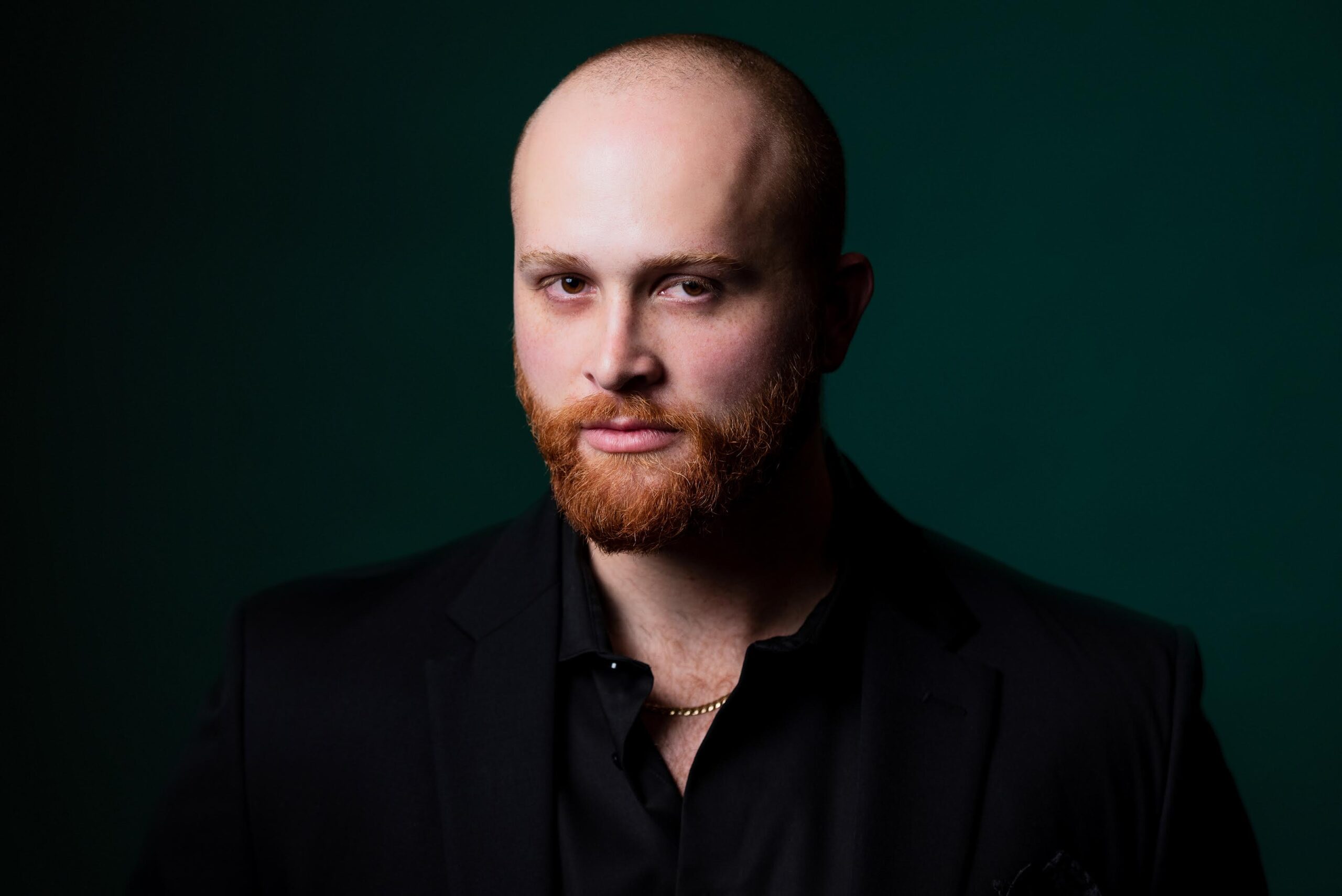
Jonathan Patton

Following an opening medley of seasonal favorites, including Rachael Yokers’ flute-solo mating call in “Let It Snow, Let It Snow” by Sammy Cahn and Jule Styne, Patton and Figueroa showcased their vocal and acting chops on arias from timeless operas that, nevertheless, span three centuries. 

 The accomplished young soloists – Figueroa performed in MSO’s 2024 New Year’s Eve concert and Patton is making his Mid-Atlantic Symphony debut – are paired in the Bei Mannern/Liebe Fuhlen aria from Mozart’s “The Magic Flute” with lyrics translating in English: “Men who feel the call of love/Do not lack a gentle heart” coupled with “To return that gentle feeling/Is a woman’s finest art.” Next, portraying Escamillo, Patton’s lyrical and dramatic range is delivered with the jaunty bravado of a bullfighter on “Votre Toast” (better known as “March of the Toreadors”) from Bizet’s Carmen.” 

Wrapping up the aria triple play, Figuero, perhaps autobiographically, sings the role of a budding soprano longing for opera superstardom in the polonaise from “The Barber of Seville” by Geronimo Gimenez. She makes her dream seem like a sure bet in this popular zarzuela – Spanish for comic opera.

   Hanukkah, which begins on Dec. 14, was rated an instrumental affirmation just before the Act I closing number, “Sleigh Ride,” conducted by the highest bidder of the pre-concert fund-raising dinner, vice chairman Philip Davis. He was assisted by staff consultant Mary Lou Tietz who supplied a whip to crack on the imaginary horses drawing the imaginary sleigh. (Despite the audible cracking sound, no actual horses were whipped.)

Kresley Figueroa

 After intermission, Figueroa returns to deliver a warmly felt Beverly Hills memory opener to “White Christmas,” before outdoing Bing Crosby on the greatest Yuletide hit ever written by a Jewish lyricist, Irving Berlin. (Personally, like Maestro Repper, I favor Mel Torme’s “The Christmas Song,” also making the “Holiday Joy” playlist, featuring a soulful horn solo by Beth Lunt in place of Nat King Cole’s tender reminiscence. Meanwhile, Christmas observers native to the Northern Hemisphere are reminded that Dec. 25th falls on the calendar, “In the Bleak Midwinter”: “Earth stood hard as iron, water like a stone” as written by Gustav Holst and soulfully sung by Patton. 

   On a lighter vein, “Little Bolero Boy” makes fun of what Repper calls two of the most monotonous tunes ever written – “Bolero” by Maurice Ravel and “Little Drummer Boy” by Katherine Kennicott Davis. Percussionist Dane Krich kept the beat going, and going, and going. 

    Figueroa and Patton cap the “Holiday Joy”  celebration with a stagecraft reading of “ ’Twas the Night Before Christmas” by Bill Holocombe, with full orchestral accompaniment directed by an effervescent Repper.
                                                  ***
If you missed Thursday’s performance and can’t make to the next two concerts on Saturday in Lewes and Sunday in Ocean City, you can catch the MSO Brass Quintet in the holiday spirit at 7 p.m. Friday, Dec. 19 at Community Church in Ocean Pines; 3 p.m. Saturday, Dec. 20 at Ellsworth United Methodist Church in Rehoboth Beach, and 4 p.m. Sunday, Dec. 21 at Christ Church in Easton. Also, at Christ Church, toast the arrival of 2026 with an early New Year’s Eve concert at 7 p.m., Dec. 31, of course, with the MSO and guest soprano Viviana Goodwin.

‘HOLIDAY JOY’ MSO CONCERT CELEBRATION

Thursday evening at Todd Performing Arts Center, Chesapeake College, Wye Mills. Upcoming performances; 7:30 p.m. Saturday, Cape Henlopen High School, Lewes, Delaware, and 3 p.m. Sunday, Ocean City Performing Arts Center. midatlanticsymphony.org

Steve Parks is a retired New York arts critic now living in Easton.



The Spy Newspapers may periodically employ the assistance of artificial intelligence (AI) to enhance the clarity and accuracy of our content.

Filed Under: 00 Post to Chestertown Spy, 1A Arts Lead

AI is Coming for the Music Industry

November 25, 2025 by Hugh Panero
Leave a Comment

The song “Walk My Walk,” by the band Breaking Rust, recently hit number one on the Billboard Country Digital Song Sales chart in November 2025. What was particularly interesting, and scary, was that it was entirely AI-generated, the first time an AI-generated song topped the US Billboard chart, generating millions of streams. As of November, 3-4 million on Spotify and 11 million streams on YouTube.

I heard the song a few weeks ago. I liked it along with other songs by the band (“Livin’ on Borrowed Time” and “Whiskey Don’t Talk Back”), which also generated big streaming numbers. They all have a distinctive country blues sound. I shared a link to the song “Walk My Walk” with family and friends for a listen using Spotify.  Hear it on YouTube. 

I wanted to know more about the band and the vocalist, but it was hard to find, which was odd given how much basic marketing music labels do to promote bands. I eventually discovered that the song was AI-generated by the creator Aubierre Rivaldo Taylor. AI music has been creeping onto the music charts recently, and what seemed only an existential threat to artists is now here and number 1 on the charts. 

According to the AI chat platform ChatGPT, the song was created by the AI music platform Suno. There are no human performers. Even the singer’s “gravely Southern drawl” in the song, made to sound like a human artist like Chris Stapleton, was AI-generated, as were the rugged cowboy still and video images that depicted the artist’s fictional persona. 

I listen to a lot of music, worked as a satellite music content distributor for a long time, and I couldn’t tell that it was AI-generated. When I learned it was, I thought of my favorite sci-fi film, Blade Runner, starring Harrison Ford as a futuristic detective tasked with hunting down dangerous synthetic humanoid robots called Replicants. 

In the movie, the only way to know whether someone was human or a replicant was to administer a test that measured involuntary physiological responses to emotionally provocative questions. The test assesses empathy by hypothesizing that a human’s empathetic response will differ from a replicant’s.  

The music industry is going to need a lot of Blade Runner AI detectives to determine whether a song was created by human artistry or AI, a distinction this AI song has blurred. Its popularity has reignited the heated debate about AI and the future of music creation by living and breathing artists. 

AI models like Suno are trained using vast amounts of copyrighted music from existing databases without the explicit consent or compensation of the original creators, unless side deals are made similar to those OpenAI has made with newspapers and other content providers. 

The use of this data to create new, commercially successful songs, without compensation, is seen by artists and music labels as theft, raising questions about intellectual property rights in the world of AI.

How much of “Walk My Walk” came out of digital fragments of works from artists, dead or alive, and how should they or their estates be compensated? Let the lawsuits begin. Several major entities, including music labels and organizations representing independent artists, have sued Suno, a venture-backed AI company, for copyright infringement. 

I am on the artist’s side. Our culture romanticizes the artistic process: the poor, struggling musician pouring out their emotions, scribbling notes and lyrics on scraps of paper, waiting for their big break. We lived through this right of passage for iconic artists like Bob Dylan, Joni Mitchell, and Bruce Springsteen, and it continues today.    

However, when cheaply produced AI-generated music competes for listener attention alongside human-created music, it can and will reduce the earnings potential for human artists, especially new artists struggling to make a living. The music industry’s royalty models and federal legislation are outdated and wildly ill-equipped to handle the rise of machine-generated content.

The music industry as a whole has not engendered much goodwill over the years. The industry culture is for labels to mimic successful artists to reduce risk. Pop music sounds wildly overproduced and less authentic. Music labels act like banks rather than creative shops as they used to be. Giant digital distributors like Spotify dominate the business, and monopolistic concert companies like Live Nation and ticket scalpers have driven up ticket prices to the point of being out of reach for many consumers due to rampant price gouging by bad actors.

The word ‘derivative’ in the music world has two meanings: one relating to copyright law and the other to critical and compositional discussions. In the latter, a work is described as “derivative” if it sounds unoriginal, heavily imitative, or lacks fresh solutions. 

Under U.S. copyright law, a “derivative work” is a new, original work that is based on or incorporates substantial copyrightable elements of one or more pre-existing works. This differs from a standard cover song (i.e, Harold Arlen’s “Over the Rainbow”), which is a straightforward interpretation of the original, with minimal changes to the core melody or lyrics.  

Legally, you must get explicit permission from the original copyright holder to create and distribute a derivative work. The original copyright holder reserves the exclusive right to authorize adaptations of their work. For example, remixes, mashups, and medleys; musical arrangements that significantly alter the original melody, harmony, or lyrics; song translations into a different language, and works that heavily sample an existing sound recording. 

Tech giants’ rapid innovation has allowed, even encouraged, widespread copyright infringement.  AI will obliterate the quaint definition of derivative work. Imagine every song ever copyrighted ingested into an AI platform like Suno, which analyzes a user’s text prompt describing the style, mood, or genre of a song they want to create, which might include specific instructions or phrases, as well as a request for a cool Santana-like guitar riff. And VIOLA! 

We have to support artists, and need a new regulatory framework to protect the integrity of the music industry, requiring at a minimum:

Mandatory AI Transparency: Clear labeling of AI-generated music to help listeners make informed choices.

Build Forensic AI Models: We need AI tools that can uncover the digital building blocks underlying AI-generated content, enabling us to determine artist compensation.

Create New Federal Regulations: Congress needs to update copyright laws to address the challenges posed by AI. Prioritizing artist consent and fair compensation. 

The live concert experience is safe from the AI monster, since it is impossible for an AI algorithm to replicate the feeling of seeing your favorite artists perform live.

I recently attended the Natalie Merchant concert at the Avalon in Easton, MD. I have followed her since her days with 10,000 Manics. At 62, performing an acoustic set with only a guitarist, her voice remains strong and authentic. She interacted with the crowd with warmth and humor, something an algorithm cannot do, at least for now – Thank God for that. 

Hugh Panero, a tech and media entrepreneur, was the founder and former CEO of XM Satellite Radio. He has worked with leading tech venture capital firms and was an adjunct media professor at George Washington University. He writes about Tech, Media, and other stuff for the Spy.


The Spy Newspapers may periodically employ the assistance of artificial intelligence (AI) to enhance the clarity and accuracy of our content.

Filed Under: 00 Post to Chestertown Spy, 1A Arts Lead, 3 Top Story, Archives, Cambridge, Hugh

Spy Review: Cinematic Classical Gas, by Steve Parks

November 24, 2025 by Steve Parks
Leave a Comment

From chamber music to movie scores, many high-brow composers could do it all. Chesapeake Music’s Sunday matinee “Interlude” performance – its final 2025 concert – featured five whose works, richly presented by the Catalyst Quartet, originally played in venues ranging from concert and opera halls to movie and TV screens.
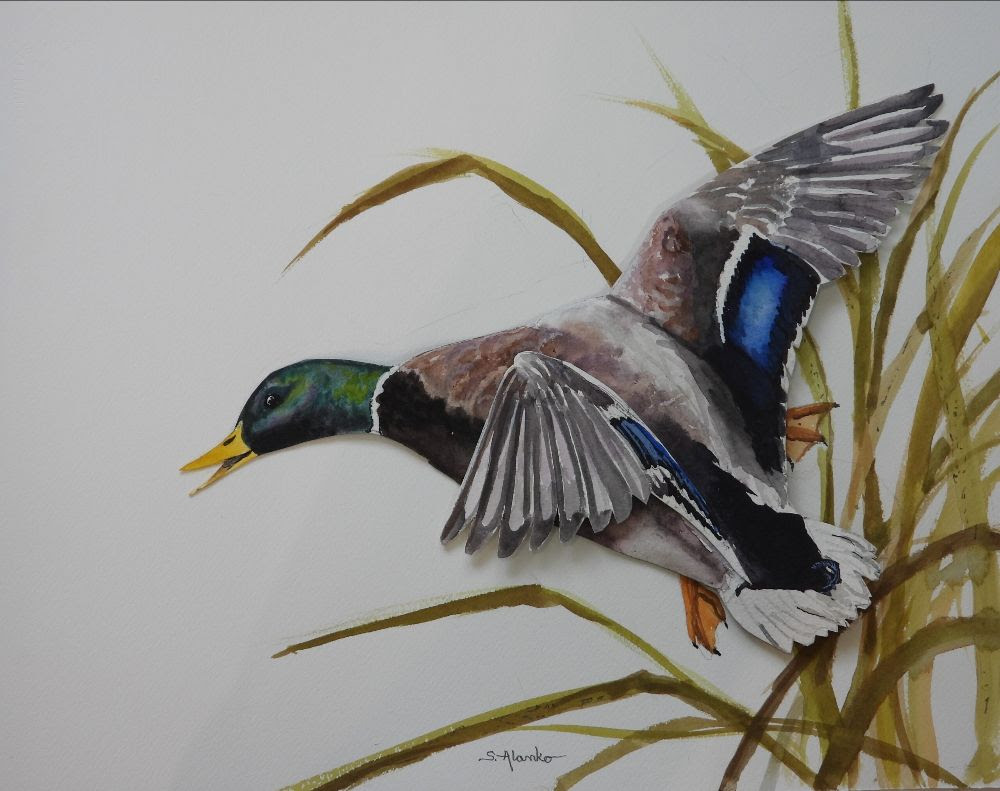
The program opened with John Adams’ “Fellow Traveler,” a short piece written as a birthday gift to his friend and collaborator Peter Sellars, with whom he wrote the 2005 opera “Doctor Atomic” about the life and career of Robert J. Oppenheimer – also the title character in “Oppenheimer,” winner of the 2024 best picture Oscar. The “father of the atomic bomb” was later investigated for communist sympathies, which made him a so-called “fellow traveler.” In his opening remarks, cellist Paul Rodriguez thanked Adams for his permission to play the piece, which is given only sparingly.

“Fellow Traveler” weaves together echoes of Adams’ “Son of Chamber Symphony” and his best-known opera, “Nixon in China,” also created with Sellars. His work is characterized by a minimalist style of repeating patterns mixed with the late Romantic influences of Mahler and others. Violinist Ali Fayette led much of the piece’s melodic theme, such as it is.

More minimalism followed with the next two selections by Max Richter and Baltimore native Philip Glass. Richter’s six-minute “On the Nature of Daylight” from his 2004 “The Blue Notebook” album may sound familiar to viewers of the popular streaming series “The Handmaid’s Tale” with its cycles of introspective harmonies, from a mournful all-stings opening to a brief violin solo deftly played by Karla Donehew Perez, introducing a new rhythmic theme.

Glass’ 18-minute String Quartet No. 3, written as a score for Paul Schrader’s 1985 film “Mishima: A Life in Four Chapters” about Japanese novelist Yoika Mishima, reflects each of the life chapters in six movements, building toward a finale of swelling bursts of energy climaxed by heaving sighs of relief – or is it regret? – led by the Catalyst violinists, including Fayette, who said Mishima was radicalized by Japan’s leanings to the West throughout decades of war in Afghanistan.

Two longer compositions comprised the second half of the concert, starting with Bernard Herrmann’s 20-minute “Echoes for a String Quartet.” In terms of music for the cinema, Herrmann’s award-winning career ranks among the greatest in the 20th century with credits spanning from Orson Welles’ “Citizen Kane” (1941) to Martin Scorcese’s “Taxi Driver” (1976). His string quartet figuratively echoes musical hallmarks from his illustrious career – short phrases repeated again and again while posing in varied dynamic tempos and dramatic situations which, as violinist Perez said, “makes you feel like you’re in a movie.” To that end, its emotional rollercoaster is tempered by thoughtful passages performed with delicate expression by cellist Rodriguez and violist Paul Laraia.

Of the five composers on the “Cinematic Refuge” program, Erich Wolfgang Korngold’s string quartet was the most classically “classic,” if you will. His 1933 quartet in four movements is considered the most “Viennese” in his body of work. It opens with an allegro of weeping and laughing sensibility followed by a larghetto of deeply felt melancholy followed by an intermezzo laced with his typically melodic charm and closing with a highly spirited and sweepingly danceable waltz. Quite Viennese, indeed, in violist Laraia’s words, “Romanticism as he colorfully created later in Hollywood.

But the stars of Sunday’s matinee were the four on-stage collaborators who so skillfully delivered precise, well-practiced and in-the-moment spontaneity

CATALYST QUARTET: ‘CINEMATIC REFUGE’

Chesapeake Music concert, Sunday, Nov. 23, Ebenezer Theater, Easton. chesapeakemusic.org

Steve Parks is a retired New York arts critic now living in Easton.

The Spy Newspapers may periodically employ the assistance of artificial intelligence (AI) to enhance the clarity and accuracy of our content.

Filed Under: 1A Arts Lead

A Waterfowl Weekend with Artist Sandy Alanko

November 13, 2025 by Val Cavalheri
Leave a Comment

“Flying Mallard” by Sandy Alanko

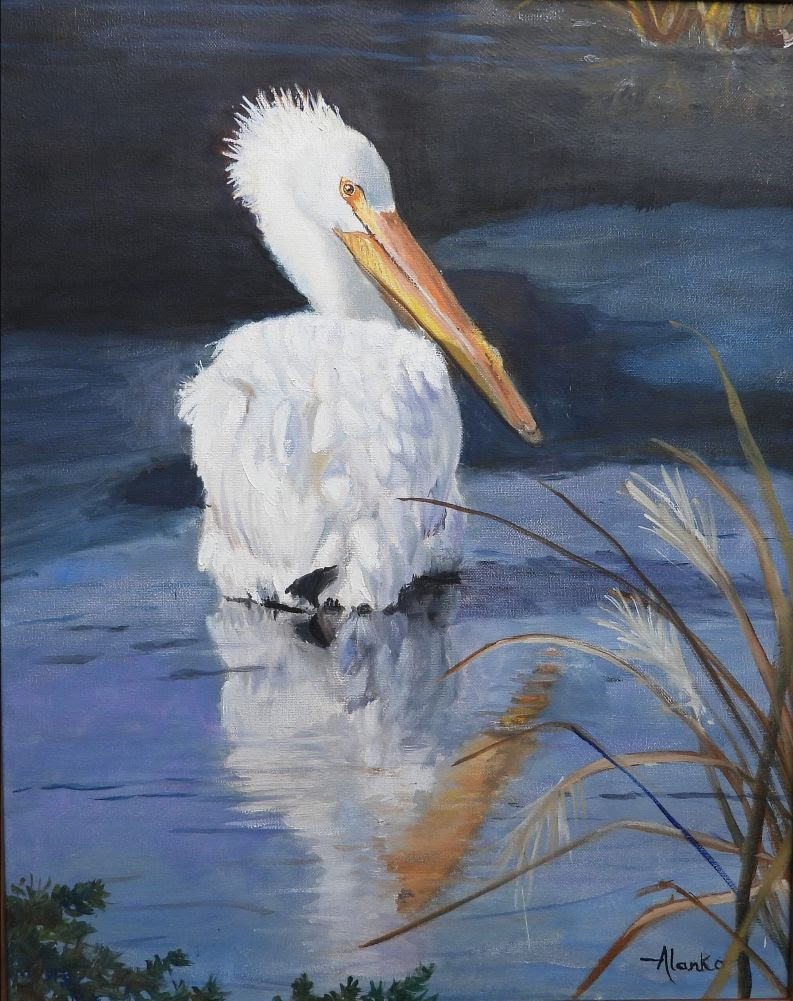
If it’s November in Easton, you can’t help but notice that the streets are busier, tents are appearing throughout town, and talk is all about the upcoming Waterfowl Festival. Inside Studio B Art Gallery, featured artist Sandy Alanko’s work fits the moment—paintings of water, marsh, and the wildlife that define the Shore. Watercolors that catch early light, wings over water, and the quiet places that define the festival.

“It’s my favorite show of the year,” Alanko said. “I’ve been coming for about eight years, and I love nature, conservation, and painting animals. It fits me so well. The fact that the proceeds go for conservation makes it even more meaningful.”

Her ties to that mission run deep. “I visit a lot of wildlife refuges, especially Blackwater,” she said. “They’ve benefited from Waterfowl Festival support over the years, and that makes me feel like we’re all part of the same circle—artists, collectors, and the environment we all care about.”

Her paintings grow from that connection.. One of her newest shows an osprey nest perched on Taylor’s Island. “You can see it from the back window of the little restaurant there,” she said. “It’s built on the pole that holds the fire siren. People wondered what would happen when the siren went off, but the ospreys just ignore it. For me, the painting was complex with all those twisted branches—but I loved it.”

“White Pelican on Ice” by Sandy Alanko

Her interest in the natural world began long before she called herself an artist. “When I was a little girl in Illinois, I made it my mission to learn the names of everything in the backyard—birds, insects, reptiles,” she said. “By fifth grade, I could identify all the local birds.”

That curiosity led her to spend several years working with the Smithsonian Museum of Natural History on a coral island off the coast of Belize, along with her husband. “We hosted scientists from all over the world,” she said. “Because of the research done there, the island and surrounding reef were declared a World Heritage Site. The biodiversity was extraordinary.”

It also changed how she looks at a subject. “I’ve always had a sensitivity for habitat restoration,” she said. “Painting is a way of paying attention—to light, to movement, to balance. It’s my way of showing respect.”

Alanko works in several media but sees herself primarily as a watercolorist. “It’s so transparent,” she said. “When it’s used right, light bounces between the pigment and the paper and gives the painting a glow. That’s what creates atmosphere. When I want a painting to feel airy and alive, watercolor is what I reach for.”

For landscapes, she paints on site when she can. Wildlife is different. “Animals don’t pose unless they’re asleep,” she said. “So I take photos and work from them. It’s still about watching and noticing.”

Her return to Studio B for Waterfowl Festival weekend brings her back into a familiar circle of artists and collectors. “I was honored when Betty Huang asked me to come back as a guest artist,” she said. “My work looks beautiful there. I can’t wait for people to stop in during the festival and talk about what they see. That’s what makes this weekend special.”

The feeling is mutual. Gallery owner Betty Huang is thrilled to have Alanko back. “Sandy, other than being a fabulous human being and a fabulous artist, does such beautiful work,” Huang said. “She brought paintings in oil, pastel, watercolor, and gouache, and they’re all amazing. She has always painted such beautiful waterfowl-related pieces, and that’s why I wanted to feature her again.”

Huang sees Alanko as part of the fabric of the gallery. “She’s a member of the Working Artists Forum, she’s local, and she’s so willing to share her techniques. It’s wonderful to be able to promote our own artists during an event that’s so much a part of Easton.”

She added that the Working Artists Forum, of which both she and Alanko are members, will also hold its annual Waterfowl Festival show at Christ Church. “It’s such a great partnership,” she said. “The Festival and Christ Church have supported the arts community for so long, and it gives people another chance to see what our local artists are doing.”

Even with artists from across the country represented, Studio B keeps a strong local focus. “I have award-winning artists from Maine, California, Texas, and Florida, but it’s important to highlight the incredible talent right here,” Huang said. “These artists aren’t only accomplished; they’re generous people. That’s just as important to me.”

That spirit carries through the town each November. The days leading up to the Waterfowl Festival are among Huang’s favorites. “Along with Plein Air Easton, Waterfowl is when the town really comes alive,” she said. “The streets are busy, the galleries are full, and everyone is talking about art. Easton is a charming, historic town, but it also has a cosmopolitan side. We really do have the best of both worlds.”

Alanko feels the same. “Easton is the hub of the Mid-Atlantic for art,” she said. She would know. Besides the Working Artists Forum, she’s part of the St. Michaels Art League and the Academy Art Museum community. “There are so many ways to grow and share your work,” she said. “It’s a very supportive place to be an artist.”

When she isn’t painting, she’s often on the water. “My husband and I belong to a kayaking group,” she said. “We go out every Wednesday to explore the tributaries that feed into the Chesapeake. I love reflections on the water and the vegetation along the shore.”

Sailing has been another lifelong thread. “We once took our boat to Bermuda and back,” she said. “So yes, I’m comfortable on the water.”

Her new work includes a series of large water birds that look ready to lift from the paper. “Watercolor is flat compared to oil,” she said. “So I started painting the bird on another sheet, then layering it—sometimes three layers deep—so a wing or a beak comes forward toward the viewer. It gives the impression that the bird is about to fly right out of the frame.”

She’s also discovered a way to display her watercolors without glass. “I found a spray that makes them UV-protected and waterproof,” she said. “It means people can see the work directly. There’s no reflection, no barrier.”

Her goal is simple. “I hope people see the beauty of the animal or the landscape,” she said. “And maybe it makes them want to preserve it.”

Huang believes that respect is what makes Alanko’s paintings stand out. “Her work reminds people what’s worth protecting,” she said. “You can see her love for nature in every piece. When people come into the gallery and see her paintings, they feel that.”

The Waterfowl weekend is an important time for Easton, and Studio B on Goldsborough Street is bringing Sandy Alanko’s world of water and wings into the heart of the festival.

Studio B Art Gallery is located at 7B Goldsborough Street in Easton.

The Spy Newspapers may periodically employ the assistance of artificial intelligence (AI) to enhance the clarity and accuracy of our content.

Filed Under: 1A Arts Lead

Spy Review: MSO Salutes 3 of the All-Time Greats by Steve Parks

November 7, 2025 by Steve Parks
Leave a Comment

It’s not unusual that a guest conductor will bring a different vibe in his choice of a classical repertoire to present to a one-time-only audience. But it is a bold step to promote the concert as “Echoes of Greatness.”

For much of his three seasons as music director of the Mid-Atlantic Symphony Orchestra, Michael Repper has mixed in works by lesser known composers – often discovered or rediscovered after decades and even a century of obscurity, underrecognized in their lifetimes as minority or female artists.

George Jackson, a native and resident of London whose Stateside contract as music director of the Amarillo (Texas) Symphony was extended in 2024 for three years, says his program “resonates with the legacy of three of history’s most extraordinary composers – Beethoven, Mozart and Mendelssohn – who represent the great orchestral voices of Vienna, Germany and London.” For his guest gig, Jackson conducted a full plate of music by this trio among the foremost long-dead European composers of all time. Together, their masterpieces comprise about as hearty a meat-and-potatoes menu as you can digest – but with a bit of a twist.

The concert opens with a Beethoven overture. He wrote a great many of them, presumably to keep himself solvent. His genius was not evident in some of those pieces. But the Coriolan Overture to the opera “Fidelia” is an exception. (Among his many attributes as a conductor, Jackson is noted for his fluency in operatic scores.) Beethoven sticks to “Fidelia’s” two dramatic themes: the title Roman Empire general’s quest for revenge against his usurpers and his mother’s plea for him to avoid an inevitably tragic end. Sudden bolts of C minor chords pulsate with Coriolan’s rage, featuring the bombast of timpani (Dane Krich) and brass, led by principals on trumpet (Guy McIntosh) and horn (Anne Nye). The tender E-flat major sonata theme of the mother’s fears for her son’s fate, conveyed by lower strings (viola and cello principals Yuri Tomenko and Katie McCarthy), brings to mind, in part, the immortal symphonies Beethoven wrote before and after the overture – Symphony No. 3 (“Eroica”), possibly inspired by Mozart’s Symphony 39, which follows Coriolon on the program, and the thunderous Fifth.

The opening of Mozart’s Symphony No. 39, written at a feverish pace with two other of his late symphonies, demonstrates how far ahead of his time Mozart was regarding clarinets. Barely accepted as an orchestral instrument in his time, the clarinet is prominently featured in what’s also known as his “Eb” symphony, led in this concert by Brian Tracey along with Eric Black. The melodically stated introduction morphs into a pastoral-themed, violin-led allegro echoed by the horns and oboe principal Dana Newcomb. A slower A-flat movement follows with elaborations of earlier themes, concluding with a lively minuetto with a clarinet solo liberally sprinkled with flute accompaniment led by Mindy Heinsohn.

The single-theme finale is considered the most Haydn-inspired movement Mozart ever wrote, perhaps as an ode to his friend and mentor, although its imaginative variations suggest the compositional dexterity of Beethoven, with its sudden silence preceding a final rush of violins plus woodwinds, including principal bassoonist Terry Ewell, toward a spirited finish.

By then, it’s high time for an intermission break for the players and the audience as well. It’s also time for the youngest of 19th-century greats to be heard. Felix Mendelssohn was only 15 when he completed his astonishingly mature First Symphony in 1824. A bold and stormy opening movement in C minor shows his youthful respect for elders with its near-deathbed elegy to Beethoven. The second movement minuetto sounds more like a scurrying scherzo than a courtly dance, setting the stage for a finale bursting with violin counterpoint paced by concertmaster Kimberly McCollum and associate Paula Sweterlitsch in a salute to Bach, who also inspired impressionable young Felix.

While Mendelssohn later downplayed his child-prodigy brilliance – even rewriting parts of his Symphony No. 1, the orchestral gem stands today as a bridge linking the stately Classical legacy to the new-age Romanticism.


‘ECHOES OF GREATNESS’
Mid-Atlantic Symphony Orchestra concert guest conducted by George Jackson of classical masterpieces by Beethoven, Mozart and Mendelssohn at Easton Church of God, Thursday night, Nov. 6. Final two concerts 7:30 p.m. Friday, Nov. 7, Ellsworth United Methodist Church, Rehoboth Beach, and 3 p.m. Saturday, Nov. 8, Community Church, Ocean Pines, MD. midatlanticsymphony.org

Steve Parks is a retired New York arts critic now living in Easton.

The Spy Newspapers may periodically employ the assistance of artificial intelligence (AI) to enhance the clarity and accuracy of our content.

Filed Under: 00 Post to Chestertown Spy, 1A Arts Lead

ESWA Launches First Holiday Book Festival at Cult Classic Brewery, Dec. 13

November 6, 2025 by James Dissette
Leave a Comment

The Eastern Shore Writers Association (ESWA) will host its first-ever Holiday Book Festival on Saturday, Dec. 13, from 11 a.m. to 4 p.m. at Cult Classic Brewery, 1169 Shopping Center Rd., just off U.S. 50. The event brings together more than 30 authors from across Delmarva for book sales, signings, readings, and giveaways—plus on-site gift-wrapping for holiday shoppers.

Now in its 40th year, ESWA is best known for its Bay to Ocean Writers Conference each March and the annual Bay to Ocean literary journal. “We wanted to add something new that serves writers and invites the public in,” said festival coordinator Brent Lewis. “Book festivals can feel stuffy; this one is meant to be fun.”

In addition to ESWA’s own Bay to Ocean Review, literary tables will include the Baltimore Review and Poetry X Hunger, a nonprofit poetry initiative that raises funds to combat food insecurity. The author lineup spans genres—poetry, children’s books, history, and fiction—reflecting the region’s wide-ranging literary community.

Lewis said the choice of venue was deliberate. Cult Classic is a brewery, restaurant, bar, and performance space known for concerts, comedy, and off-beat community events. It also hosts a regular author series, a popular book club, and a monthly writers’ group. “We leaned into a place that already supports the arts,” Lewis said. “Come for the hospitality—stay to meet writers you know and discover new ones.”

Headlining authors include Jim Duffy, whose Secrets of the Eastern Shore project and six regional history/travel books have a devoted following; David Healey of Chesapeake City, author of some 20 titles including Civil War and World War II thrillers and essays; and inspirational novelist Amy Schler. For several emerging writers, Lewis noted, the festival will mark their first chance to meet readers face-to-face.

With brick-and-mortar bookstores dwindling in many Shore towns, organizers see the festival as a practical boost. “Authors have fewer places to share their work,” Lewis said. “This creates a lively, local option—and books make great gifts.”

The ESWA Holiday Book Festival is open to the public. Attendees are encouraged to enjoy Cult Classic’s food and beverages while browsing signed titles from Delmarva writers.

For media inquiries or to schedule interviews, contact Brent Lewis at 410-310-8216 or [email protected].
More information: ESWA (easternshorewriters.org) and Cult Classic Brewery (cultclassicbrewing.com).

The Spy recently interviewed Brent Lewis about the Holiday Book Festival.

This video is approximately five minutes in length.

The Spy Newspapers may periodically employ the assistance of artificial intelligence (AI) to enhance the clarity and accuracy of our content.

Filed Under: 1A Arts Lead, 6 Arts Notes

“All That Glitters 2025” Returns to Main Street Gallery

October 31, 2025 by Zack Taylor
Leave a Comment

For the fourth consecutive year, Main Street Gallery is showcasing All That Glitters: A Metalsmith Collective, a holiday exhibition celebrating the creativity of local jewelry artists. The show opens October 31 at the gallery’s location at 518 Poplar Street and runs through December 28.

This year’s collective features seven jewelers who work primarily in silver, including returning guest artists Alexa Matthai, Chuck McMillin, and Wanda Jester. They are joined by Main Street Gallery member artists Cindy Ayd, Robin Morgan, Linda Starling, and Barbara Trower, who also incorporates glass into her designs.

“All of the work in All That Glitters is locally made,” said Starling, who specializes in beach glass and silver jewelry. “Each of us lives and creates in communities around the Bay, and our pieces reflect that connection—whether through sea glass found along the shoreline or designs inspired by the region’s plants and wildlife.”

Starling first conceived the idea for the show in early 2022, inviting several of her fellow Bay-area metalsmiths to collaborate on a holiday-themed exhibition. The event proved so popular that the group has returned each year since. “Now it’s 2025, and I’m thrilled to welcome back my talented jewelry friends for a fourth year,” she said. “Visitors will be hard pressed not to find something special for themselves or for someone they love.”

The exhibition will be accompanied by artwork from the gallery’s seven member artists. Two receptions will be held on Second Saturdays—November 8 and December 13—from 5 to 8 p.m. Each evening will include a brief artist talk, light refreshments, and an opportunity to meet the makers. Admission is free and open to the public.

Main Street Gallery is open Fridays through Sundays from 11 a.m. to 5 p.m. and offers online shopping at mainstgallery.net. The cooperative, located in Cambridge’s Arts and Entertainment District, has been artist-owned and operated for more than 14 years. The gallery is currently reviewing applications for new members and guest artists; those interested can inquire through the website or by calling 410-330-4659.

The Spy Newspapers may periodically employ the assistance of artificial intelligence (AI) to enhance the clarity and accuracy of our content.

Filed Under: 1A Arts Lead

Spy Review: Dracula’s Brides Seek Vengeance by Steve Parks

October 31, 2025 by Steve Parks
Leave a Comment


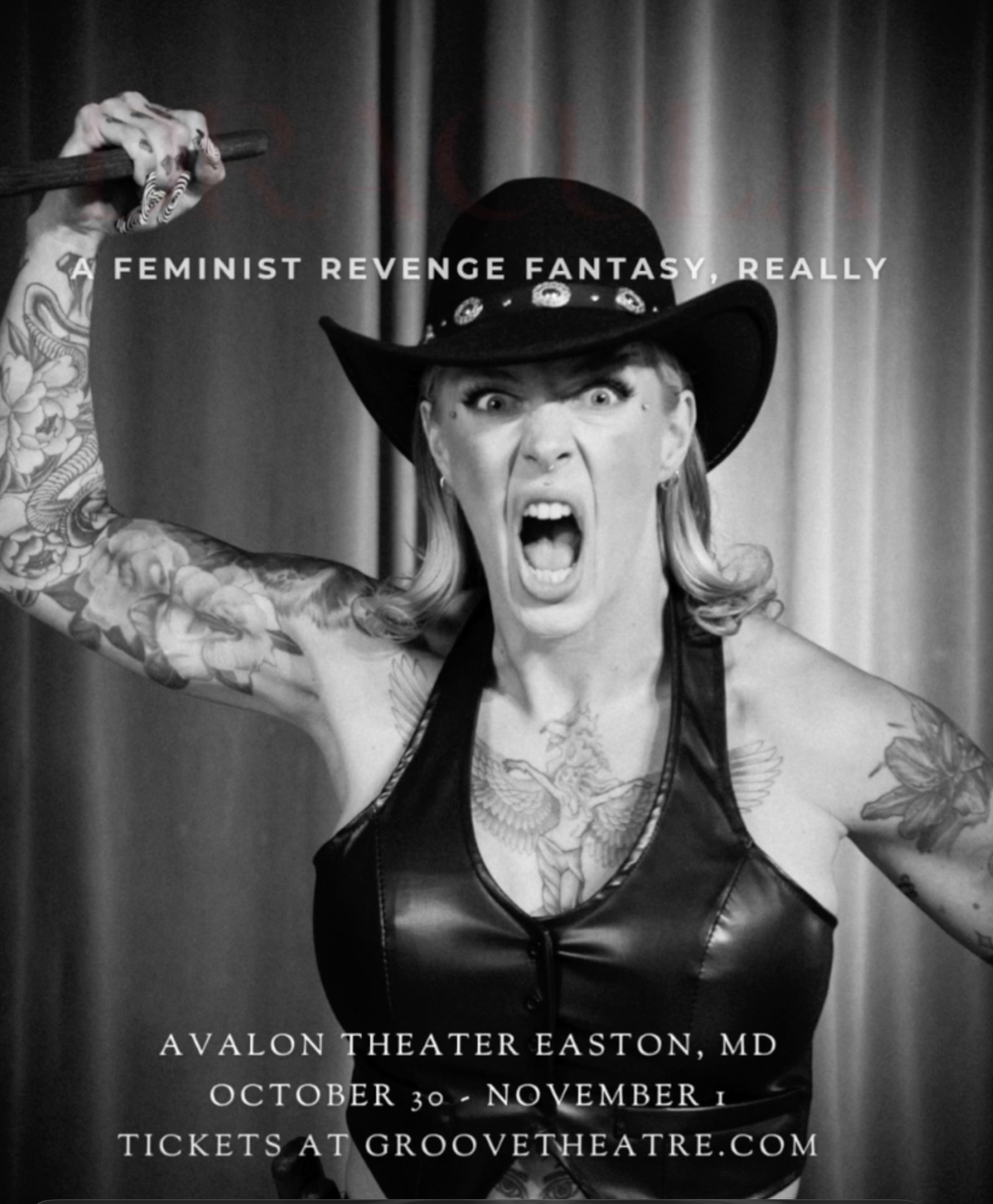
“Dracula: A Feminist Revenge Fantasy,” like many in Kate Hamill’s extensive body of work, is adapted from a classic novel – in this case Bram Stoker’s blood-thirsty saga. But, as the most-produced American playwright in the 2024-25 season, her portfolio is dominated by other familiar titles, ranging from Pride and Prejudice and Little Women to The Scarlet Letter and The Odyssey. More along the lines of her radical take on Dracula is Hamill’s much-in-demand regional hit, Ms. Holmes and Ms. Watson, her stage adaptation of a 2020 film of the same title.

In Dracula, feminist vengeance is first characterized by Liv Litteral as Mrs. Renfield, an asylum inmate who rambles so incoherently that no one but her doctor pays her any mind – until much later when she lucidly declares: “So long as men have power over us, they will use it.” Barely clad in what amounts to a loose-fitting hospital gown, she struggles to jot down in chalk (even before the play starts) warnings about, we suppose, deadly consequences of Count Dracula’s toxic, hard-bitten masculinity. Perhaps only in Mrs. Renfield’s lost mind, the action flashes back to Transylvania, where the Count, portrayed as a menacingly loud yet suave night owl by N.F. Thompson, sics his vampirical “brides” Megan Bradley and Katelyn Masden on a self-absorbed London barrister, an uptight wimp as played by Max Brennan (even though Brennan doubles as fight captain).

Back home in England, the lawyer’s wife Mina (Shae Reid), a vulnerably dependent pregnant woman who catches on quickly, is entertained by her once-confident close friend Lucy (Cavin Moore), unwillingly falling under the sway of her domineering fiancé, Dr. George Seward, who runs the asylum harboring Mrs. Renfield. Next, we’re introduced to the most colorfully imposing figure – rivaling even the Count – vampire hunter Dr. Van Helsing, played by Lily Sanford like a stylishly well-armed cowboy (female) who is sworn to preserve Englishmen and women medical access to blood of all types. (Costumes by Jeri Alexander.)

Directed with an antic sense of humor and mock horror by Iz Clemens (Factory Project’s 2024 production of A Streetcar Named Desire is among her previous credits), Dracula is embellished by eerie lighting and sound design by Joe Fox and Ray Nissen, respectively. There is next to no set design, other than a chalk-inscribed alternate version of the Lord’s Prayer on the front edge of the platform upon which most of the action takes place. Scenes shift back and forth from one end of Europe to the other – England and Transylvania – with no hint of locale. Just a series of boxes moved on and off the darkened stage with a pillow and sheet for a bed.

But aside from the play’s attention-grabbing relevance to current social issues, one of this farcical horror’s better Halloween lines is incisively delivered by a blustery Zack Schlag’s Dr. Seward: “You can say this phenomenon is caused by poltergeists or hobgoblins or tiny glowing worms from Planet Bellybutton . . .” Meanwhile, the feminist vengeance-seekers may or may not have achieved their #MeToo moment. Any such reveal would be a bloody spoiler, as British villains or heroines would likely put it.

‘DRACULA: A FEMINIST REVENGE FANTASY’ opened on Thursday night and continues at 7 on Halloween night, Friday, Oct. 31, and Saturday, Nov. 1, at the Avalon Theater, 40 E. Dover St., Easton. avalonfoundation.org

Steve Parks is a retired New York theater critic now living in Easton.

The Spy Newspapers may periodically employ the assistance of artificial intelligence (AI) to enhance the clarity and accuracy of our content.

Filed Under: 00 Post to Chestertown Spy, 1A Arts Lead

Dracula Reimagined: Cambridge’s Groove Theatre Returns with a Feminist Twist

October 30, 2025 by The Spy
Leave a Comment

The Spy sat down with director Lz Clemons and cast member Lily Sanford behind Dracula—a bold reimagining of Bram Stoker’s classic that brings a new kind of bite to the Avalon stage this Halloween weekend. The production, revived by Groove Theatre after a yearlong hiatus, flips the familiar tale by casting women in traditionally male roles and exploring what happens when the power dynamics shift.

Lz and Lily shared their thoughts about the play last week at the Spy Studio.

This video is approximately three minutes in length. For tickets, click here

The Groove Theatre Company Presents: Dracula

Avalon Theatre
Thursday, October 30 – Saturday, November 1
Doors: 6:30 PM | Show: 7:00 PM

Showtimes
Thu 10/30 – 7:00 PM
Fri 10/31 – 7:00 PM
Sat 11/1 – 7:00 PM

The Spy Newspapers may periodically employ the assistance of artificial intelligence (AI) to enhance the clarity and accuracy of our content.

Filed Under: 00 Post to Chestertown Spy, 1A Arts Lead

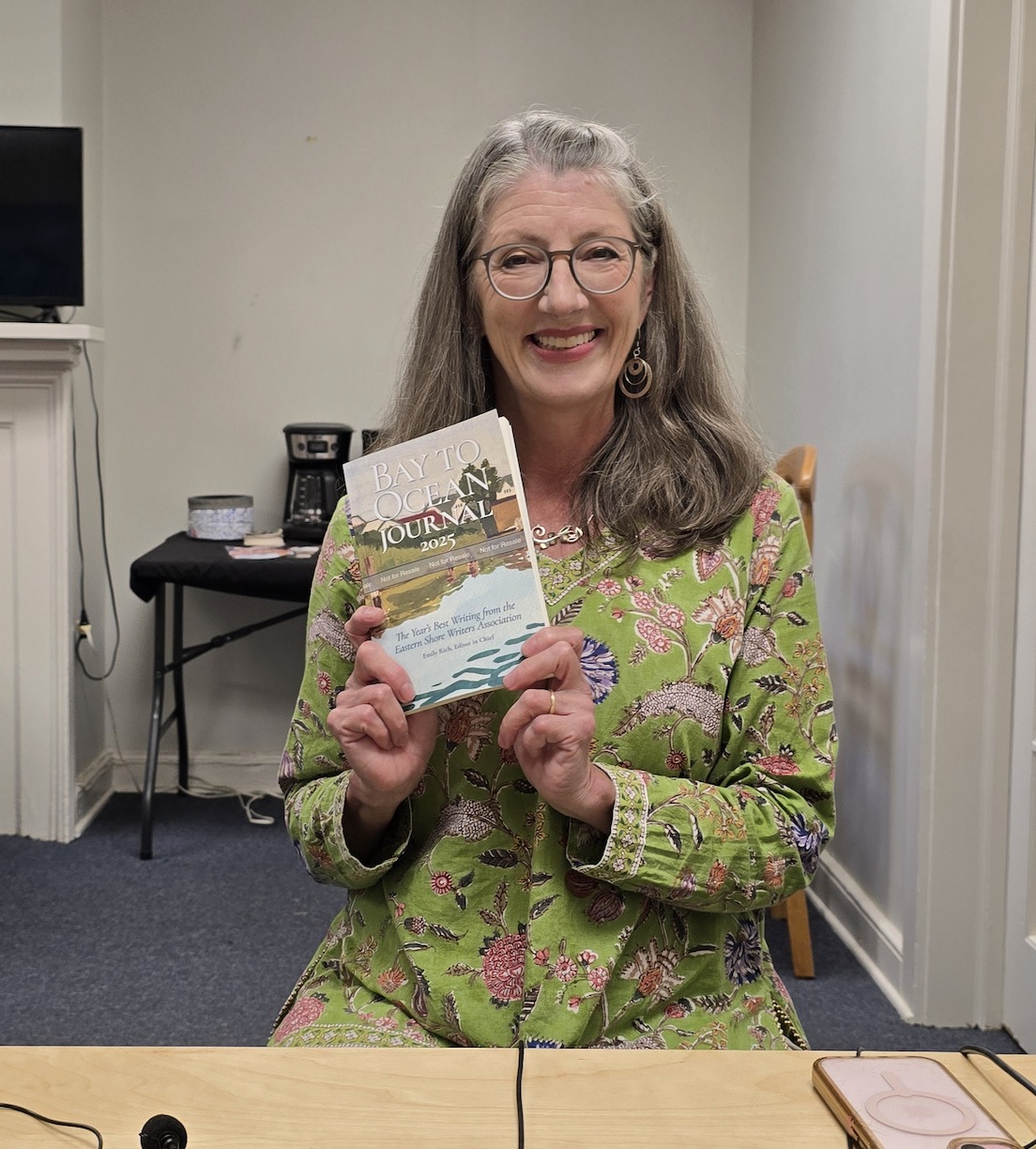
The Bay to Ocean Journal 2025: A Mirror to the Shore’s Creative Heart

October 18, 2025 by Val Cavalheri
Leave a Comment

Emily Rich still gets a thrill when the newest Bay to Ocean Journal lands in her hands.

“It’s always exciting to see the finished book,” she said. “You see all that work, all those voices, come together. It feels like a community in print.”

Now in its seventh year, the annual literary collection from the Eastern Shore Writers Association (ESWA) brings together poets, essayists, and fiction writers from across Maryland and beyond. This year’s edition once again captures the range of creativity connected to the Shore—work that is personal, place-based, and deeply human.

Like any good story, the journal’s own beginnings are part of what makes it special.

Sc

The journal was first published in 2018 under then-ESWA President Ron Sauder, who wanted to give local writers a dedicated outlet for their work. “Ron started the Bay to Ocean Journal, and I took it over the following year,” Rich said. “I’d already spent many years editing literary magazines like *Little Patuxent Review* and *Delmarva Review*, so I was excited by this new challenge.”

For Rich, who now serves as both editor and president of ESWA, the journal is about far more than publication. “We felt local writers really needed a space where they could all get together,” she said. “And it’s more than just being able to be published. It’s the community that forms by all being part of this journal.”

That sense of connection runs through the 2025 edition, which—without anyone planning it—ended up circling around the idea of time. “With each edition, a theme seems to rise,” Rich said. “They’re not chosen in advance.This year, a lot of people wrote about the concept of time and the way it blurs—when you lose someone, when you reconnect with someone, a lost child, or an elderly parent. Some people discovered secrets about their own heritage. Both the poems and the prose touched on that. It’s really interesting how, for whatever reason, themes will emerge. It wasn’t like the judges were looking for those pieces,” she said. “That’s just what we got.”

And what they got, she said, was strong. “Since we started the journal, the quality of submissions every year has gone up. That makes me feel really good,” Rich said. “When you have to look at pieces several times to decide if they make the cut—that’s a good feeling. It means the journal is really succeeding.”

Each year, she and a small team of volunteer editors read through dozens of submissions, looking for what she calls *the spark. “I hate to be a literary editor stereotype,” she said, “but it really is just something that strikes you. It’s got an emotional spark, a good story arc.”

To keep things fair, the editorial process is blind. “Everything comes to me, but when I send it to my staff, it’s all blind,” she said. “That really helps because we’re a small community. My poetry editor has even said, ‘I know who this is—they’re in my writing group.’ So reading blind helps you focus only on the work.”

Among this year’s standouts is the opening poem, On a Path Austere and Certain, by Diana Fusting.“She talks about how, in the process of going from a child to an adult, she’s learned to quantify everything—from her weight to her GPA—and how she’s longing to get back to that spark of not having to worry about those things,” said Rich. “It really set the theme.”

The poem is followed by a short story about “a man at the end of his life who’s lost his daughter and wife,” she said. “Instead of focusing on the loneliness of that, he finds a place of peace where he feels their presence. It’s really very heartwarming.”

Though the journal welcomes submissions from across the Mid-Atlantic, its roots stay close to home. “There’s no requirement that your piece be about the Shore,” Rich said. “But people love this place, so often their work reflects that love of place. You do have to be a member of the Eastern Shore Writers Association to submit, so everyone has some connection with the community.”

Even the cover stays true to that mission. This year’s artwork by Naomi Clark Turner depicts a view of Oxford. “We always look for local artists,” Rich said. “Naomi lives outside of Oxford, and it just felt right.”

Inside, readers will find everything from poignant essays to pure fun. “There’s one really sweet love story,” she said. “And one hilarious story that starts with a woman describing being on an academic quiz show. She grew up outside Cambridge and tells this story about how she and her teammates tried to get away with saying crazy things on air—like claiming she was a snake handler. It was just so funny to see that side of someone I know as a serious professional.”

For Rich, those discoveries are the best part. “Writing is such a vulnerable endeavor,” she said. “You’re putting yourself out there to be read and judged. That willingness to open up and be part of something—it binds you. It’s a common experience every writer has to go through.”

That shared vulnerability is what fuels the broader ESWA community, including the annual Bay to Ocean Writers Conference, held each March at Chesapeake College. Many contributors discover the journal through the conference and later return to submit their own work.

For those hesitant to take that leap, Rich keeps it simple. “You’re never going to find out unless you do,” she said. “Being a writer without getting rejections is like being a boxer and not wanting to get hit. That’s just part of the game.”

Of course, the writing has to be polished. Her advice to anyone thinking of submitting: “Always have someone else read it—someone who’s going to be honest with you.”

Editing, she admits, has changed her own writing. “The one thing I’ve learned is that you can always cut,” she said. “People think, ‘I can’t get rid of this,’ but you can. You don’t need all the backstory. Just jump right in and get people hooked. You can always fill things in later.”

Outside of the journal, Rich continues to write and teach. Lately, she’s been digging into her family’s history. “My great-grandfather was a gold miner in the 1870s,” she said. “He traveled all over the West—from Virginia City to Helena to Mazatlán. I found his grave—it’s just a metal plaque in the Masons’ cemetery, and he’s there by himself. So I’m trying to piece together that story.”

She also teaches memoir workshops. “Everybody has a story, and that’s what I love about it,” she said. “For memoir, you’re supposed to keep it real, but you can bring in dreams, musings, conjecture. There’s room to play with memory.”

If there’s a thread connecting all of it—editing, teaching, writing—it’s her belief that storytelling builds community. “This is really a labor of love for me,” she said. “It was important to me to work on something that gives space to local writers. I’d really like to encourage those writers out there—join ESWA and submit.”

This year’s Bay to Ocean Journal will officially launch with a book party in Berlin this December, followed by sales at the Bay to Ocean Writers Conference at Chesapeake College next spring. Copies are also available on Amazon and at ESWA events throughout the Shore.

Submissions for the 2026 edition will open in March 2026.

“When you see it all come together,” she said, “it feels like holding up a mirror to our community. You see the heart, the humor, the grief, the love—all of it. That’s what writing is for.”

For additional information, go to: https://www.easternshorewriters.org/


The Spy Newspapers may periodically employ the assistance of artificial intelligence (AI) to enhance the clarity and accuracy of our content.

Filed Under: 1A Arts Lead

  • 1
  • 2
  • 3
  • …
  • 28
  • Next Page »

Copyright © 2025

Affiliated News

  • The Chestertown Spy
  • The Talbot Spy

Sections

  • Arts
  • Cambridge
  • Commerce
  • Ecosystem
  • Education
  • Food & Garden
  • Health
  • Local Life
  • News
  • Point of View
  • Senior Nation

Spy Community Media

  • Subscribe for Free
  • Contact Us
  • COVID-19: Resources and Data

© 2025 Spy Community Media. | Log in