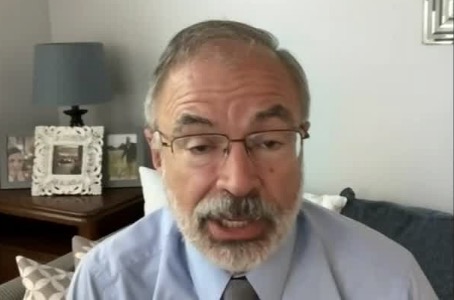


In a lengthy Zoom meeting between the Eastern Shore delegation to Annapolis, chaired by Del. Christopher Adams, local legislators pressed U.S. Rep. Andy Harris on issues that affect everyday life on the Shore: the cost of electricity, the future of farming and the poultry industry, local waterways and fisheries, and how state and federal budget decisions land on rural communities.
The Jan. 23 discussion ranged from seafood markets to solar farms, from dredging projects to redistricting, with Harris and Shore lawmakers repeatedly framing their concerns around affordability, local control, and the region’s economic drivers.
Markets, not oysters, are the problem
Del. Jay Jacobs told colleagues that Maryland just experienced one of the “worst oyster markets” he has ever seen, even though oyster populations themselves are strong. The numbers, he said, reflect poor prices and oversupply from other states, not a collapse of Maryland’s oyster resource.
Jacobs said aquaculture growth from New England through the Gulf of [Mexico] has flooded the market, eroding Maryland’s historic dominance. He warned that environmental groups could misinterpret the numbers as a biological decline.
Jacobs and Sen. Mary Beth Carozza are sponsoring legislation to reopen four long-closed oyster sanctuary sites for rotational harvest. Closed 16 years ago as part of what was originally a five-year study, the areas have since silted over and lost productivity. The goal, Jacobs said, is to allow watermen to restore and work a productive bottom rather than leave it idle.
Harris said he is pushing federally funded oyster restoration to focus less on unproductive sanctuaries and more on public fisheries, calling the current balance “out of whack.”
On blue catfish, Harris highlighted federal funding to expand processing capacity, saying it remains the most realistic way to control the invasive species as long as U.S. Department of Agriculture inspection requirements remain unchanged. He added that USDA has agreed to include wild-caught catfish in federal food programs, helping create a stable end market.
Dredging: keeping waterways open for work and safety
Lawmakers thanked Harris for securing funding for dredging projects on the Northeast River, the Wicomico River, Slaughter Creek, and the Ocean City Inlet, as well as for Ocean City beach replenishment. Harris said dredging is critical to commerce, flood protection, and navigation in a low-lying coastal district.
One of the most tangible announcements: $40 million in federal funding for a new dredge vessel for the Army Corps of Engineers. Harris said aging equipment has slowed emergency and maintenance dredging along the Atlantic coast.
“That’s going to make a significant impact along the entire Atlantic coast, including Maryland,” he said.
Energy bills and solar farms: cost and land use concerns
Several delegates criticized Maryland’s energy policies for driving up rates. Harris echoed those concerns, arguing that offshore wind and other utility-scale renewables are significantly more expensive than natural gas once construction and transmission costs are included, recalling a small business owner who recently told him his monthly electric bill rose from $900 to $2,700 in three years.
Energy funds collected from ratepayers also drew sharp criticism. Harris warned that using those funds to plug budget gaps rather than reduce bills undermines public trust, saying such practices would trigger serious consequences in the private sector.
Delegation members repeatedly raised concerns about large solar farms on productive agricultural land. Harris said the federal government’s “only lever” is USDA’s agreement to withhold certain loans and subsidies for solar projects on prime farmland.
Lawmakers also warned that some solar installations strip topsoil and render farmland permanently unsuitable for production, leaving families with unusable land at the end of 20-year contracts. Harris agreed that once solar panels are installed on farmland, it is “gone forever,” and urged stronger state and local safeguards.
Poultry: permits, regulation, and a cornerstone industry
Sen. Carozza said a lapse in Maryland environmental permitting for animal feeding operations last year contributed to an estimated $30 million in lost business affecting poultry growers, builders, and related industries. She asked Harris how federal agencies could help accelerate the state’s resolution.
Harris said one of his top priorities is defending the poultry “tournament system,” which he credits with keeping the industry competitive. He also said federal agencies can apply pressure when state regulators act as federal partners but fail to keep systems functioning, saying the “greatest hazard” to the industry sits in Annapolis, not Washington, DC.
Local governments: budgets, mandates, and property taxes
Representatives from the Maryland Municipal League and Maryland Association of Counties warned Shore legislators that state budget decisions are increasingly shifting costs downward to counties and towns. They described rising pressure from unfunded mandates, flat or reduced aid, and a growing reliance on property taxes to pay for basic services such as roads, police, water systems, and emergency response.
Both groups urged Shore lawmakers to help protect highway user revenues, oppose raids on dedicated funds, such as emergency response funds, and resist policies that limit local authority over land-use and housing decisions. Housing policy also loomed large, with county leaders warning that state mandates designed for urban areas could overwhelm rural infrastructure and sewer capacity on the Shore.
Redistricting and rural representation
The meeting closed with concerns over congressional redistricting and the future of rural representation.
Adams said proposals that would split or dilute the Eastern Shore’s congressional district ignore the region’s shared economic and cultural identity. Harris agreed, arguing that rural communities are often treated as interchangeable despite having distinct needs.
The Shore, Adams said, depends on having a representative whose district is anchored in agriculture, fisheries, and rural economies, which will protect livelihoods and affordability, and ensure that decisions made in Annapolis and Washington reflect the realities of Eastern Shore life.
Write a Letter to the Editor on this Article
We encourage readers to offer their point of view on this article by submitting the following form. Editing is sometimes necessary and is done at the discretion of the editorial staff.