MENU

Sections

  • About Us
    • Editors and Writers
    • Sponsorship Terms & Conditions
    • Code of Ethics
    • Sign Up for Cambridge Spy Daily Email Blast
  • The Arts and Design
  • Culture and Local Life
  • Food & Garden
  • Public Affairs
    • Commerce
    • Health
    • Ecosystem
    • Education
    • Senior Nation
  • Point of View
  • Chestertown Spy
  • Talbot Spy

More

  • Support the Spy
  • About Spy Community Media
  • Advertising with the Spy
  • Subscribe
December 9, 2025

Cambridge Spy

Nonpartisan and Education-based News for Cambridge

  • About Us
    • Editors and Writers
    • Sponsorship Terms & Conditions
    • Code of Ethics
    • Sign Up for Cambridge Spy Daily Email Blast
  • The Arts and Design
  • Culture and Local Life
  • Food & Garden
  • Public Affairs
    • Commerce
    • Health
    • Ecosystem
    • Education
    • Senior Nation
  • Point of View
  • Chestertown Spy
  • Talbot Spy
9 Brevities

Move Over Horny Goat Weed, Here Comes Pollen

April 18, 2024 by Dennis Forney
Leave a Comment

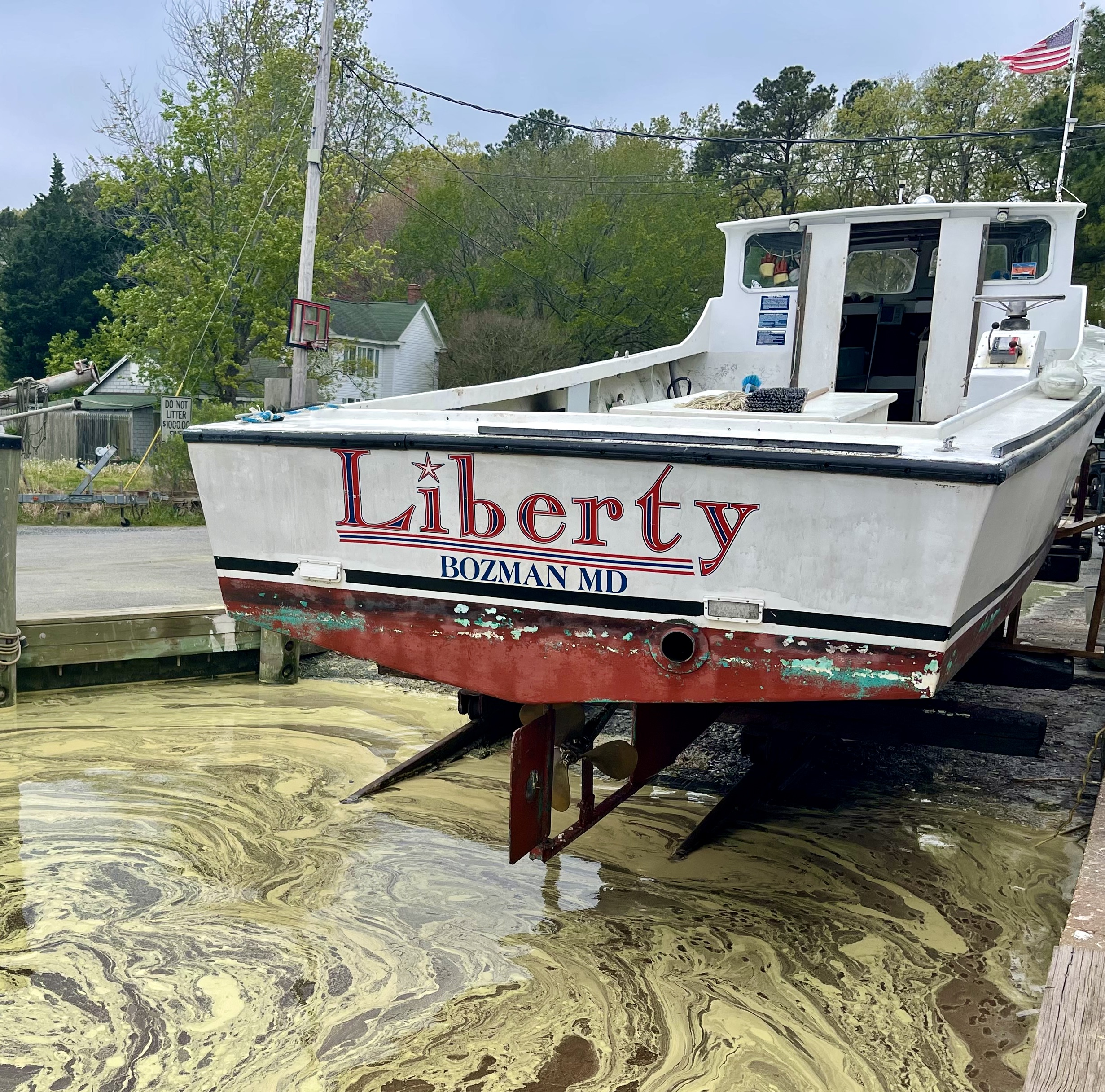
With liberty and pollen for all. Photos by Dennis Forney

GRACE CREEK ALMANAC – So, this week’s hot news involves the unique, annual, and sublimely quiet spring storm sifting everywhere around us.

No, not Stormy Daniels and the Trumpster. That situation’s neither sublime nor quiet. Rather, as you’ve probably guessed from the pictures, I’m writing about the pine pollen storm now in full fettle.

The man sitting at the C-Street bar in St. Michaels, between bites of his egg and sausage breakfast sandwich, chased with the Lord’s Liquor (H2O), didn’t waste any words in his opinion of nature’s version of Dr. Suess’s oobleck. “I see absolutely no redeeming value in pine pollen.”

I was allowing how there must be some nutritional value of pollen, maybe as a fertilizer or something like that to give it a smidgen of positive patina.

Didn’t want to be disputatious, being in the morning and all. Not good for the digestion. But, it stirred my curiosity, like the swirl of pine pollen on puddles and other local waters.

Pine candles ready to burst.

Turns out that pine pollen is even available commercially for treating a whole host of physical issues. Green stuff can be made with that green stuff.

Given that pollen is the male fertilizing component for pine and other plant reproduction, it’s not surprising to find “boosting testosterone” nestled in the list of potential health purposes of pine pollen discussed at healthline.com.

Here’s just a smattering straight from the site:

“Pine pollen has long been used for a variety of health-related purposes, such as supplementing the diet or adding to foods, slowing aging, reducing fatigue, boosting testosterone, and treating a variety of conditions, including colds, constipation, and prostate disease.

“Some of the proposed health benefits of pine pollen are anecdotal. This means they’re derived from personal testimony rather than research studies. “However, scientists have been actively investigating the potential benefits of pine pollen. … Pine pollen has the following nutrients: protein, fatty acids, carbohydrates, minerals, such as calcium and magnesium, and vitamins, such as B vitamins and vitamin E.”

Given all that, is it too far-fetched to think that ingesting a couple of teaspoons of pine pollen could, after all, be an aid to digestion or even a COVID-19 deterrent?

If nothing else, the subtle green of pine pollen could be pretty, sprinkled atop a cup of creamed coffee like some of those fancy baristas do. Think spin art or a Rorschach test.

And, you have to admit, there’s something poetically romantic about the thought of a few dashes of pine pollen spread, perhaps in a chevron design, across a succulent set of shad roe. Spring and rebirth.  Isn’t it grand?

Go outside now and breathe deeply. Ahhh – feel that lift?

Seek and ye shall find.
Dennis Forney has been a publisher, journalist and columnist on the Delmarva Peninsula since 1972.  He writes from his home on Grace Creek in Bozman.

—

The Spy Newspapers may periodically employ the assistance of artificial intelligence (AI) to enhance the clarity and accuracy of our content.

Filed Under: 9 Brevities

March Rains Way Above Normal; April Likely Bringing More

April 5, 2024 by Dennis Forney
1 Comment

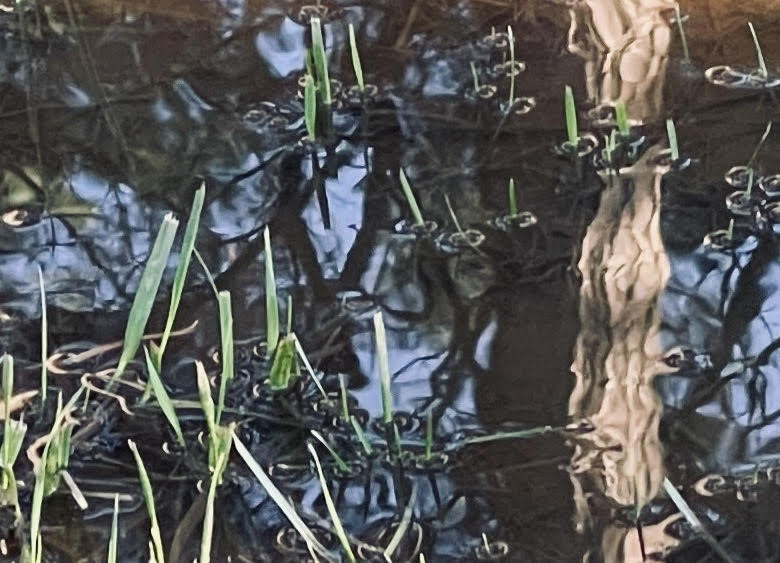
A saturated ditch reflects the trunk and tops of loblolly pines. Dennis Forney photo

“Whan that Aprille with his shoures soote,
The droghte of March hath perced to the roote …”

GRACE CREEK ALMANAC – Even Geoffrey Chaucer, 600 years ago in the prologue to his Canterbury Tales, was writing about the rain.

With another three inches this week, counting Tuesday’s and Wednesday’s downpours, soggy ground has grown even more saturated. These rains, however, certainly aren’t addressing any droughty March.

National Weather Service Meteorologist Sarah Johnson of the Mt. Holly, New Jersey office says the pattern we’ve seen since about mid-December has brought a steady number of really wet systems with little time between. “Not much time for the ground to dry out,” she said.

December brought us 7.7 inches, and January pounded us with another 6.4 inches – both well above average. February brought a short reprieve with only 1.5 inches before the water machine cranked back up again.

March’s rainfall for the mid-Delmarva Peninsula averaged as much as four to five inches above normal, she said, and the long-range forecast for April suggests the month will also likely bring above-normal amounts of rain.

This week brought the year’s first official warnings for severe thunderstorms and possible tornadoes. Wednesday’s rumblings confirmed those warnings though tornadoes stayed mercifully away.  The last thing we need is high winds testing sodden roots and toppling tall loblollies ringing this low-country section of Talbot County.

Keep the chainsaws fueled up, powered up and handy.

The trench I have dug in our heavy clay soil for new grape vines is filled with water. No sense in planting them yet.  They would just float away.

I won’t have to worry about watering them, or the blackberry and raspberry plants also awaiting planting.

Johnson said a relatively strong El Niño system in the Pacific, which typically drives rainier weather across the US, is starting to ease.  The steady series of storms that have been coming across the south and then chugging off to the northeast are part of that scenario.  “It’s notable that these storms tracking near or just west of the ocean also tend to have a lot of moisture,” she said.

Those storms have also brought us a lot of easterly winds driving high-tide events along the coast, here in Grace Creek, and elsewhere along the Chesapeake.

The weakening El Niño, she said, should ease us into more of a neutral situation by late spring and early summer.

My landscaper friend Tom said farmers he knows are tearing their hair out, waiting impatiently to get into their fields. “But as wet as it is, at least we’re not in a drought,” he said with customary optimism. “There’s nothing more debilitating than a drought.”

With the possibility of a La Niña scenario in the Pacific next winter, Johnson said, we could see an opposite pattern with drier conditions and fewer of this winter’s back-to-back rain and wind events.

In the meantime, April may continue piercing our soils to the root.

PS: As a man of faith, I went ahead and planted the berry plants anyway. If Noah gets the call, I’m confident that along with the animals, he’ll also snag my berry plants and drag them aboard for the next post-alluvial era.

Dennis Forney has been a publisher, journalist and columnist on the Delmarva Peninsula since 1972.  He writes from his home on Grace Creek in Bozman.

The Spy Newspapers may periodically employ the assistance of artificial intelligence (AI) to enhance the clarity and accuracy of our content.

Filed Under: 3 Top Story

Grace Creek Almanac: Bradford Scourge, Orion, Musk’s Starlink and Frost

March 21, 2024 by Dennis Forney
Leave a Comment

Blossoming Bradford pears, now considered an invasive species, threaten to crowd out other native species, such as redbud, as well as the bike and pedestrian path that edges along St. Michaels. Dennis Forney photo

Springtime, as this week clearly illustrates, is a dynamic time on the Eastern Shore.

With temperatures fluctuating between the mid-70s and mid-30s, it makes me worry about the tender green sprouts of the Amish Snap Peas coming up in my garden.  I count on the afternoon sun to keep warming the soil and encouraging the peas.

Throughout the Eastern Shore landscape, Bradford pears are brightening hedgerows and roadsides, and residential yards. with their audacious white blossoms.  One of the first springtime bloomers in Maryland, they’re doing their best to outshine the more elegant and colorful redbuds also decorating the landscape.

Just about the time of the bicentennial of the American Revolution in 1976, Bradford Pears were a darling of landscape architects and urban planners. Many towns and cities used them to reinvigorate their downtown streets with plantings along sidewalks.  Now, however, like blue catfish, Bradford pears are strenuously labeled an invasive species, a rapidly growing and quickly spreading scourge.

They are infamous for their weak crotches – hardly a flattering characteristic – which can lead to branches splitting and falling on unwary pedestrians enjoying their shade.

The US Fish and Wildlife Service advises: “New hybrids produce viable seeds through cross-pollination with the Bradford cultivar. The descendants are aggressively invading natural and disturbed open areas, displacing native plant communities and disrupting natural succession.”

University of Maryland’s Cooperative Extension Service suggests the following natives as better choices for flowering spring trees:  “Eastern redbud (Cercis canadensis), Fringetree (Chionanthus virginicus), Serviceberry (Amelanchier sp.), and Flowering dogwood (Cornus florida).

In the meantime, these species are being crowded out by the bully Bradfords.

HERE ON THE CREEK, flocks of bluebill ducks, also known as scaup and blackheads, and a smattering of canvasbacks have been joining the perennial Canada geese in recent weeks.  They come and go with no particular pattern. I don’t expect them to stay around for long.

Loons, with their mournful swoonings have also been stopping by, sharing the soundscape with early ospreys checking out nesting sites and passing through in spring migration.

Above us, the warrior constellation Orion is swinging further around to the southwest and west before he  makes his warmer weather disappearance.

I hope Elon Musk’s train of Starlink satellites makes its appearance, going in the opposite direction, as the days keep lengthening.

Seeing them rings a sense of possibility into his goal of enabling humans to one day become a multi-planetary species. The Cristopher Columbus of our day.

I’m reading Walter Isaacson’s excellent biography of Musk and his dizzying and transformational character. (Thanks for the recommendation Eric.) It’s great background material to be reading as so many world events of which he is playing a pivotal role unfold around us on a daily basis.

ON THE WATERFRONT, oystermen are closing out the wild commercial season which ends this year March 29. They’re switching out their dredging and tonging gear for the trotlining and potting rigs used for crabbing.  That seasons April 1

IN THE MEAN TIME, I’ll keep my eyes leveled mostly toward our own planet, greening more each day in our hemisphere. Dynamic spring offers such a feast for the eyes.

Robert Frost writes in his poem Swinger of Birches, perhaps presaging Musk’s restlessness:

“I’d like to get away from earth awhile,
And then come back to it and begin over.
May no fate willfully misunderstand me
And half grant what I wish and snatch me away
Not to return.  Earth’s the right place for love:
I don’t know where it’s likely to go better.”

Dennis Forney has been a publisher, journalist, and columnist on the Delmarva Peninsula since 1972.  He writes from his home on Grace Creek in Bozman.

The Spy Newspapers may periodically employ the assistance of artificial intelligence (AI) to enhance the clarity and accuracy of our content.

Filed Under: 3 Top Story

Sanctuary Changes Inching Amidst Astounding Oyster Efforts

March 12, 2024 by Dennis Forney
Leave a Comment

My recent article about pressure to change oyster sanctuary boundaries In Maryland quickly grew into a torrent of criticism, dialogue, and additional official comments, corrections, and clarification of issues discussed.

I will present some of that information here while also thanking those who took the time to help me further understand the complexity of issues swirling around an organism as humble as an oyster.

The magnitude of the effort to continue revitalizing the Chesapeake Bay oyster population involves thousands of people, hundreds of public and private organizations, and the expenditure over the past several years of millions and millions of public and private dollars. It is both mind boggling and inspiring.

See the chart and map below to get a feel for some of that effort, especially the list of participating organizations.

Sanctuary Boundaries

Changes may be coming to sanctuary boundaries as requested, but it won’t be happening quickly.

At a public hearing last week in Annapolis, Department of Natural Resources (DNR) officials said part of legislation sponsored by Sen. Johnny Mautz and Delegate Chris Adams giving the state sole authority to change sanctuary boundaries is no longer necessary.  That’s based on an updated Oyster Management Plan announced recently.

Watermen organizations sought the change with an eye toward being able to work some of the thousands of acres of oyster sanctuaries now off limits.

Gregg Bortz, DNR media relations manager, sent an email to explain:

“Based on the updated Oyster Management Plan going into effect, DNR can move boundaries of unrestored oyster sanctuaries, but right now we do not have specific plans or a timetable on identifying any changes. We need to engage in the full public process and apply the best available science to determine what we may do with those unrestored sanctuaries that are not producing oysters. These are areas that were acknowledged to be poor for oysters, with little to no habitat when they were created; they need some sort of investment to become productive, which could include large-scale restoration, aquaculture, or some plan for wild harvest. Going forward, the Oyster Advisory Commission would need to discuss any proposals for changes. DNR would listen to recommendations before taking any action.”

Regarding a request in the Mautz/Adams legislation to open certain public grounds in Eastern Bay for commercial power dredging, no action has been taken.

“The department is opposed,” said Bortz. “The area does not receive sufficient spat set to support the use of power dredge. We have studies that show power dredging is not sustainable in areas where there is limited oyster recruitment, and it would also remove valuable spawning age oysters.”

On Tuesday this week, Mautz said the overall legislation giving DNR sole authority to make boundary changes without a requirement for agreement from several other non-governmental agencies is being amended. “Eastern Bay power dredging is likely to be removed, DNR will also remove its opposition, and it will move forward.”

Restored vs. unrestored sanctuaries

Regarding productivity found in samplings taken from 51 sanctuaries, last week’s article did not distinguish between restored sanctuaries and unrestored sanctuaries as it should have. Restored sanctuaries include those in Harris Creek, and Tred Avon and Little Choptank rivers, and several others down the Bay.

Those being restored, with infusion of shells, little oysters and other bottom improvements for spat attachment, have received the bulk of the millions spent for improving oyster populations.

Surveys of those sanctuaries show success, with sampling showing productivity meeting or exceeding goals. The restored sanctuaries mentioned have received large infusions of federal dollars and as such are permanently off limits for harvesting.

The intent is for them to become productive and self-sustaining beds which will spin-off lots of larvae and small oysters for the benefit of other commercial wild and cultivated beds in surrounding waters.  That would be good for the economy and the ecology of the Chesapeake since oysters are such significant filters for the Bay.

Unrestored sanctuary beds showing little or no productivity in recent years would likely be candidates for boundary changes allowing watermen to work them with possible restoration efforts that could lead to future commercial harvesting.

Restoration work is carried out by the Chesapeake Bay Program’s Maryland Oyster Restoration Interagency Workgroup, a partnership between the National Oceanic and Atmospheric Administration, the U.S. Army Corps of Engineers Baltimore District, the Oyster Recovery Partnership and the Maryland DNR.

Siltation without cultivation

Bortz provided this rejoinder from DNR Senior Shellfish Biologist Mitch Tarnowski regarding the oft-stated concern that uncultivated oyster beds lead to smothering and death of oysters from accumulating silt:

“Oysters evolved over the millennia to live in silty estuarine environments. They have coping mechanisms such as building elevated reefs to stay above the muddy floor of the sea bottom, avoiding smothering. Sanctuaries, by prohibiting harvesting, are attempting to rebuild this natural relief. Opening sanctuaries to rotational harvests would (a.) knock down any elevation so far attained on these reefs and (b.) negate these areas as sanctuaries since the point is protect these reefs from oystering activity.

“Surveys have found no evidence of smothering in these sanctuaries, which are over ten years old. The notion that siltation from the Susquehanna River via the Conowingo dam impacts oysters in the Choptank tributaries, or St. Marys River, or Tangier Sound and its tributaries is simply incorrect. If there is a storm event producing a large sediment load, the plume is usually confined to the upper bay; even if it sneaks below the Bay Bridge the plume doesn’t stray outside of the mainstem of the Bay. Beyond the siltation issue, the shell habitat is generally better in these sanctuaries, while shell habitat in some of the heaviest worked areas has been thinned out through mechanical harvesting.”

Reaching 10 billion oyster target

Chesapeake Bay Foundation recently announced that its Chesapeake Oyster Alliance (COA) has recorded a new total of 6 billion oysters directly added to the Bay since 2017.

The announcement notes that “COA’s count aims to include all oysters directly added to the Bay and its tributaries through restoration and aquaculture. These efforts have now surpassed the halfway mark to the group’s goal to promote adding 10 billion new oysters to the Bay by 2025.

“The majority of contributions toward the 10 billion oyster goal come from major restoration initiatives in Maryland and Virginia targeted towards 11 Bay tributaries, which are on track to be completed by 2025.

“We’re seeing an exciting oyster renaissance on the Bay, from massive tributary scale efforts down to widespread citizen involvement and public awareness.  At least six billion oysters have been added to the Chesapeake in recent years thanks to heroic work by Maryland and Virginia, federal partners, and COA aquaculture and restoration partners,” said Tanner Council, COA Senior Manager for the Chesapeake Bay Foundation.”

“Chesapeake Bay Foundation (CBF) founded the Chesapeake Oyster Alliance in 2018 to spark momentum and innovation to bring back oysters from historically low levels. COA has grown to include more than 110 nonprofits, academic institutions, businesses, and aquaculture operations. Together, these partners advocate for accelerating oyster restoration, science-based fisheries management and expanding the oyster aquaculture industry throughout the Bay.”

Economy and ecology

State officials testifying at last week’s House hearing, and in comments following last week’s article about sanctuary changes, were careful to emphasize that DNR employees serve as “stewards of this public trust resource.”

Referring to increasing oyster populations, they noted that they have an obligation to not only protect the economic interests of the state’s watermen but also the ecological interests of the six million residents of the Chesapeake Bay region who will benefit from an increasingly healthy Bay system.

Jim Mullin, executive of the Maryland Oystermen Association, told legislators at last week’s hearing that the failing, unrestored sanctuaries present an opportunity: “We need to take shells up from other parts of the Bay and seed these failing sanctuaries,” he said.  “Funds should be moved to pilot projects where we could use our own equipment and personnel. We want to be part of the solution.”

Dennis Forney has been a publisher, journalist, and columnist on the Delmarva Peninsula since 1972.  He writes from his home on Grace Creek in Bozman.

The Spy Newspapers may periodically employ the assistance of artificial intelligence (AI) to enhance the clarity and accuracy of our content.

Filed Under: Spy Highlights

Pressure Mounting for Oyster Sanctuary Changes

March 5, 2024 by Dennis Forney
Leave a Comment

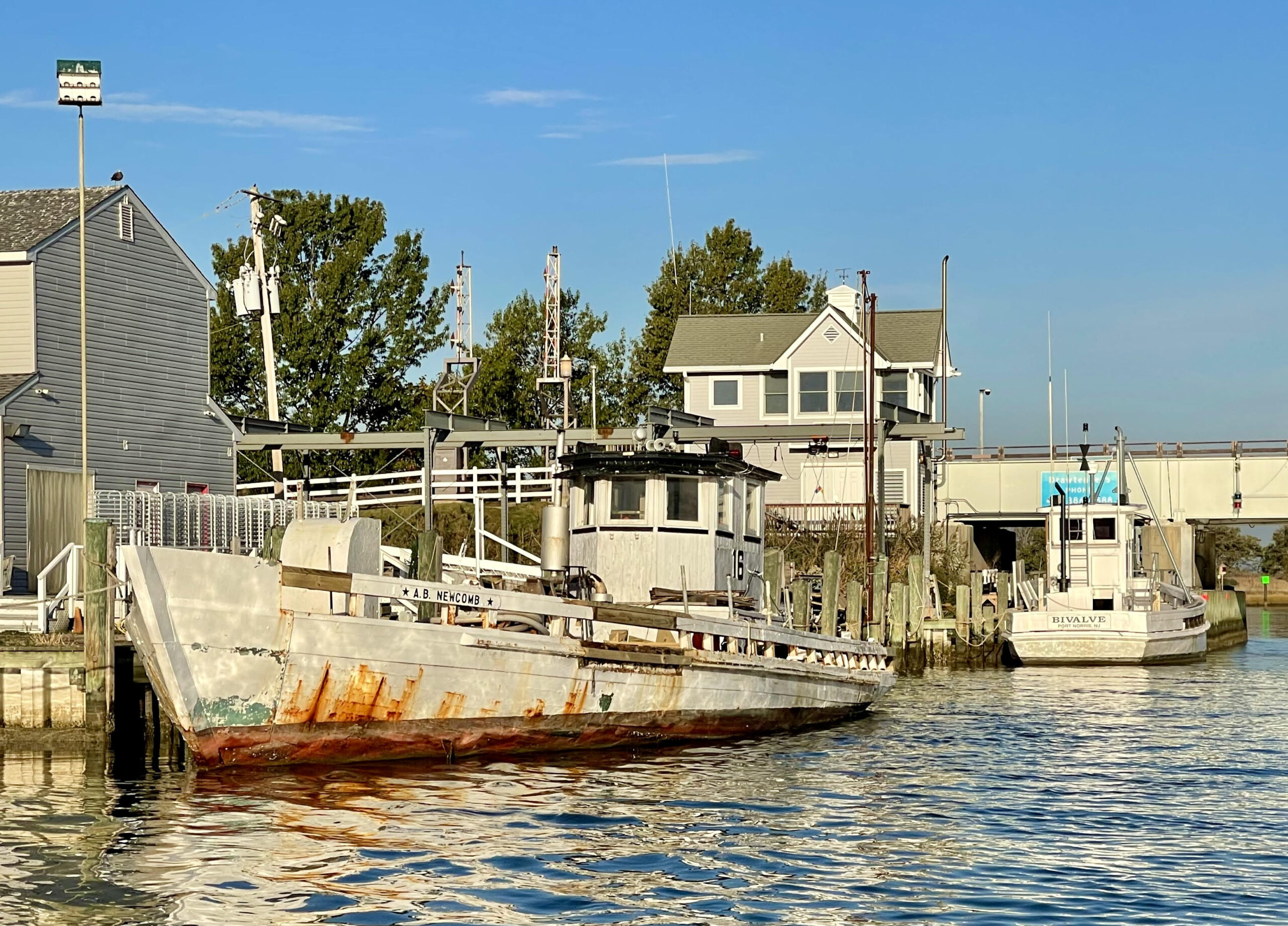
Maryland has contracted historic oyster buy boats such as these docked in Knapps Narrows in recent years to spread oyster shells and spat on sanctuary grounds in Chesapeake Bay. Dennis Forney Photo

Maryland’s watermen – many of them – want to get back to cultivating some of the 250,000 acres of productive oyster beds off limits to them since the institution of the 2010 sanctuary program.

The state’s aggressive oyster sanctuary program, aimed at restoring historic populations in Chesapeake Bay, has received considerable attention during the current session of the state’s General Assembly.

In a recently circulated summary of a Department of Natural Resources (DNR) review of oyster management between 2016 and 2020, the Talbot Watermen Association cites statistics showing that more than half of the state’s 51 oyster sanctuaries are not showing signs of helping to repopulate the Bay. Many of the others have shown either inconclusive or mixed results. That, despite the expenditure of millions of dollars spent on “planting fresh and dredged shell, transplanting natural, wild seed, and planting hatchery-reared spat in hopes of increasing oyster populations,” according to the state report.

Now a push is on to force the state to revisit the sanctuary program with an eye to changing some of the boundaries, permitting watermen to work in those previously off limits areas. Sen. Johnny Mautz, who represents constituents in Caroline, Dorchester, Talbot, and Wicomico counties, filed legislation in mid-February that would give the state the authority to change some of those sanctuary boundaries without first receiving the blessing of a number of nongovernmental scientific agencies such as the University of Maryland Center for Environmental Science. As it is now, those organizations have to be part of developing fisheries management plans for oysters, with 75 percent agreement among them on what those plans should include. The numbers of sanctuaries in Maryland’s portion of Chesapeake Bay and how they are managed are addressed in those plans.

“My goal with this legislation is to force DNR to update its management plans and take accountability for oyster management,” said Mautz recently. “They were supposed to have an updated plan over a year ago. It’s interesting that on the date of a recent Senate committee hearing on this legislation, they announced they now have an updated plan.”

Details of that updated plan were not available as of the writing of this article.  Mautz said he wants to continue running the bill despite word of a new plan that may address some of the issues.

“The way the law is now, the onus is on the other organizations to come to some agreement. They never have done that and on top of that, the 75 percent agreement provision – that’s ridiculous. I want to put accountability on the DNR.”

Oysters dying on sanctuary beds due to lack of cultivation is a constant theme among disgruntled watermen. They say oyster shells, with and without spat, placed on sanctuary areas eventually get silted over without harvesting or other activity.  That, they say, leads to the death of little oysters. Tonging and dredging, culling and putting empty shells and little oysters back on the bars, they say, cleans up the oysters and keeps them growing.

“Look at this example,” said Mautz.  “If you take a crab pot and throw it off the dock in the spring, and then come back and pull it out in August, you’ll find it covered with growth.  That’s what happens with oysters. They need to be worked.”

Proponents of the sanctuary program point to results of the 2023 fall oyster survey, showing a four decade-high spat set of oysters throughout much of Maryland’s portion of the Bay, as proof the sanctuary program is working. When announcing those survey results, state Shellfish Division Director Chris Judy said salinity levels favoring the natural productivity of the Bay’s oyster grounds in 2023 drove the historic spat counts.  They were not, he said, simply the counting of hundreds of millions of spat – baby oysters – placed on sanctuary grounds via the Oyster Recovery Program.

Watermen don’t discount the value of spreading spat on oyster grounds and allowing them to grow into larger oysters.  But, they say, allowing them to simply silt over and die because they aren’t cultivated in the years after placement amounts to a waste of millions in taxpayer dollars.

Mautz’s legislation, SB922, would also authorize watermen to use power dredges in Eastern Bay. “My goal with that provision is to get DNR to focus on power dredging a little. When Gov. Ehrlich authorized power dredging in parts of the Chesapeake a few decades ago, it was the best thing that ever happened for the oyster industry. Down the Bay, in Fishing Bay [in Dorchester County] and in parts of Broad Creek [in Talbot County], ever since power dredging has been permitted the oyster ecology is robust.”

While opponents often cite destruction of the bottom by power dredging, others – like Mautz and many of his constituents – say dredging keeps the smaller oysters cleaner, turned over and healthier.

Another hearing before the House Environment and Transportation Committee on the companion legislation to Mautz’s bill – HB1231 – is scheduled for 1 p.m. on Wednesday, March 6.  That hearing will be in the House office building at 6 Bladen Street in Annapolis, room 251.

Delegate Chris Adams sponsors the House bill.  He also represents constituents in Caroline, Dorchester, Talbot, and Wicomico counties.

Synopsis of the bill, the same as the Senate version, reads: “Repealing a provision of law prohibiting the Department of Natural Resources from taking any action to reduce or alter the boundaries of certain oyster sanctuaries until the Department has developed a certain updated fishery management plan for oysters; and authorizing a person to dredge by power boat in the public oyster fishery area in Eastern Bay in Queen Anne’s and Talbot counties.”

Maryland’s current sanctuary program came into effect during the O’Malley administration in 2010, with an eye toward “materially repopulating the Bay with oyster larvae.”

DNR’s current report (2016-2020), according to the Talbot Watermen document, characterizes the Bay’s oyster bottom in Maryland as 7,953 acres of aquaculture; 253,007 acres in sanctuaries; 175,836 acres of public fishery areas; and 121,761 acres of historic but currently unproductive oyster bottom.

The overarching Oyster Recovery Program, with approximately $40 million in federal and state money, has provided funding for the planting and seeding of oyster shells and spat – in varying degrees – on the 51 Maryland sanctuaries for the replenishment and restoration efforts now being questioned.

The Spy Newspapers may periodically employ the assistance of artificial intelligence (AI) to enhance the clarity and accuracy of our content.

Filed Under: 2 News Homepage

Maryland’s Oyster Industry Sees Record Harvest

January 26, 2024 by Dennis Forney
Leave a Comment

Hand tongers aboard Jeff Anthony’s workboat head out Grace Creek toward the oyster bars of Broad Creek during the recent snow storm. Photos by Dennis Forney.

On the strength of cooperating salinity levels driving “astounding, historic, phenomenal and miraculous” sets of oyster spat across wide swaths of Maryland’s Chesapeake Bay waters, the state’s recovering oyster industry continues in a positive trend.

Watermen harvested a 36-year record 722,850 bushels of oysters in the 2022-2023 wild harvest season with a dockside value of more than $25 million. That season ended last March 31.

Those 722,850 bushels were up 24 percent from the previous year’s 548,558 bushels. There were 1,354 oyster license holders in Maryland during the 2022-2023 season with an estimated 85 percent of them actually harvesting. That was the highest number of license holders in 29 years.

Due to harsher weather and other market conditions hampering demand, the 2023-2024 harvest at this midpoint in the season may fall slightly short of last season.

“The decline we expect in harvest this year is market driven – not because watermen are pummeling the oysters,” said Maryland Shellfish Director Christopher Judy this week. “The good news is that the oysters being left behind will be there for next season. We have an active fishery, a robust fishery with our oysters. And in the presence of all of this activity, we’re still not seeing a decline in the population, we’re seeing a major increase.”

He said the strong sets of oyster spat – baby oysters that attach themselves to oyster shells and other hard bottom structure to grow – bode well for the overall future population of oysters in the Bay.
Judy spoke at the Jan. 9 meeting of the Maryland Oyster Advisory Commission where he presented findings from the fall 2023 survey. Conducted between Oct. 3 and Nov. 15, surveyors dredged 354 samples from 281 bars throughout Maryland’s portion of the Chesapeake and its tributaries. The higher levels of salinity in the system in the summer of 2023, helped produce the fifth highest volume of spat on shells recorded in the 39 years of annual testing.

“Salinity is the main driver for oyster production in the Chesapeake,” said Judy. “It factors into feeding, reproduction, growth, disease and mortality. 2023 was a dry year, with high salinity and low freshwater flow. That led to greater instances of MSX and Dermo disease than we’ve seen in several years. That in turn led to higher than usual mortality. Not disastrous levels at all like the four dry years between 1999 and 2002, but still trending upward. The wet and cold weather we’re having this winter is encouraging. It’s lowering salinity and helping tamp down diseases for next spring and summer. That should help survival of these great spat sets.”

Judy explained further: “The spat set was enhanced by the high salinity through the summer. The recent salinity decline had no effect on the spat set event since it occurred after the set. The ‘perfect’ scenario for oysters is a dry summer to generate a spat set, then rain to enhance survival due to the lower salinity (which deters disease).”

Most notable, however, said Judy, is the wide-spread distribution of strong oyster spat sets found in the fall. “Dramatic improvement,” he said. “We found strong sets on the Eastern Shore – Choptank River, Broad Creek and a once-in-a-generation set in the Tred Avon River – and even stronger sets in the lower Eastern Shore areas like Tangier Sound. Those are areas where we wouldn’t be surprised by strong spat sets. But all across Maryland’s lower Bay waters – both sides – and up the Potomac and Patuxent rivers, our crews found oysters in areas that were actually phenomenal. Decades and decades have gone by and we haven’t seen anything like this.”

Judy said the fall survey found the Bay’s overall biomass of oysters – which considers size and numbers of oysters – increasing steadily since 2017. The 2023 numbers were the third highest in 19 years for smalls and the second highest for market size in that same time period. Smalls are oysters under the three-inch legal size for market oysters.

“The market oysters being taken this year will be back-filled next year with this year’s smalls, and the great spat sets of the last several years will begin growing into the smalls.”

Shellfish managers kept harvest limits for this season in place from last year while letting the industry know they would re-evaluate those limits after seeing results from the fall survey. Judy said with positive trends in spat sets and biomass, it was decided to keep current limits in place for the rest of the season which ends March 31.

Even with the law allowing harvesting from Oct. 1 through March – Mondays through Fridays – tongers and dredgers have nonetheless found harvesting limited by foul weather, and low demand evidenced by No Market signs posted on certain days of the week.

Responding to questions about where spat originate, Judy said when oysters spawn, larvae disperse and mix with the currents.

“The Bay becomes a large bowl of larvae soup. It is unknown and unknowable where the larvae came from (a sanctuary or a harvest area….or a lease that has brood oysters on it) or where they ended up as spat. The most one can say is that all the broodstock have value – given that the salinity is right – and it happens that the majority of the brood oysters occur in both sanctuary areas and harvest areas. In other words, where the prevailing thought might be that certain sanctuaries are the only place where broodstock exist, in fact the major harvest areas also have an abundance of broodstock. It’s not a competition – it’s nature providing a massive boon to the oyster population.

“Bottom line,” said Judy, “is that a recovering Bay with healthy salinities, strong brood stocks – biomass – and good spat sets is all leading to lots of oysters. The spat counted on the annual survey aren’t hatchery spat that have been planted in numerous large scale projects but are all natural spat; the result of oysters reproducing in the summer of 2023. These are not from hatcheries – this is a natural event.”

In a follow-up email for this article, Judy wrote:

“What occurred is accurately characterized as astounding, amazing and historic. The 2023 spat set positions the oyster population for a very strong near term future. I say near term because further down the line things could change if there is a hurricane or a tropical rain deluge, or a multiyear drought and serious disease outbreak. ….That’s been seen before….”

Chesapeake Bay Foundation’s Maryland Executive Director Allison Colden issued the following statement in response to the stock assessment update from mid-year 2023:

“The dramatic increase in oyster harvests during the past two years comes as no surprise after several record years of oyster reproduction. We’ve seen this pattern before – without adequate controls on fishing effort, increases in the oyster population are quickly followed by increases in harvest and then declines in years where environmental conditions are less conducive for oyster productivity. Unfortunately, these boom-and-bust cycles undermine the long-term recovery of the species, by wiping out years of good productivity with increased harvest.

“However, fishing effort has not increased uniformly across the Bay. Of concern is a significant increase in fishing effort on Maryland’s most productive public oyster grounds, including Tangier Sound. In this region, the assessment indicated overfishing occurring for more than three years.

“Our best available science indicates that fishing rates like those seen in Tangier Sound, St. Mary’s, and the lower Patuxent River, are not sustainable. We are encouraged that DNR has proposed a more responsive approach to oyster management, based on the fall dredge survey, and urge them to consider further regulations that aim to end overfishing in the regions where it is occurring.

“It is critical,” said Colden, “to protect the oyster population gains made from strong spat sets during the past three years if we are to reverse the long-term trajectory of oyster decline. Oysters are a vital component of the Bay ecosystem that filter water and provide habitat and nursery grounds for fish and crabs. Despite the recent increases in oyster abundance, the current population remains far below levels needed to deliver these critical ecosystem functions.

Dennis Forney has been a publisher, journalist and columnist on the Delmarva Peninsula since 1972.  He writes from his home on Grace Creek in Bozman.

The Spy Newspapers may periodically employ the assistance of artificial intelligence (AI) to enhance the clarity and accuracy of our content.

Filed Under: 2 News Homepage

Unique Talbot Farm Could Help Restore State’s Wild Quail Numbers

December 27, 2023 by Dennis Forney
Leave a Comment

A unique neck of Talbot County land with an interesting history could become a key to restoring wild bobwhite quail populations in Maryland and beyond.

In the process, the nearly 1,000-acre Point Pleasant Farm could also become a haven for other bird, insect and wildlife species important to a healthy natural environment.

University of Maryland and the Point Pleasant Foundation recently signed a five-year memorandum of understanding that will enable researchers in the University’s Department of Agriculture and Natural Resources to create a natural habitat on the farm ideal for propagating and sustaining wild quail populations.  If successful, some of the birds from those populations could be captured and relocated to other areas in Maryland where compatible habitat is available to help reverse declining numbers.

Pen-raised quail are sometimes thought of as a solution to repopulating an area, but accustomed to gathering their food out of a trough, they lack the skills that nature and nurture instill for survival in the wild.

Dr. Luke Macaulay is a wildlife management specialist who works as a faculty member within the University’s extension service. That service aims to use research and education to assist private and public land owners with beneficial management of their land.

“Bobwhite quail are a struggling species,” said Macaulay in a recent interview. “More predators and less habitat are taking their toll.  Our goal with this project is to manage the land at Point Pleasant to give quail the best chance we possibly can to allow for a self-sustaining population.”

That management could include converting farmland to the kind of successional grasslands that provide food and cover needed for quail success.

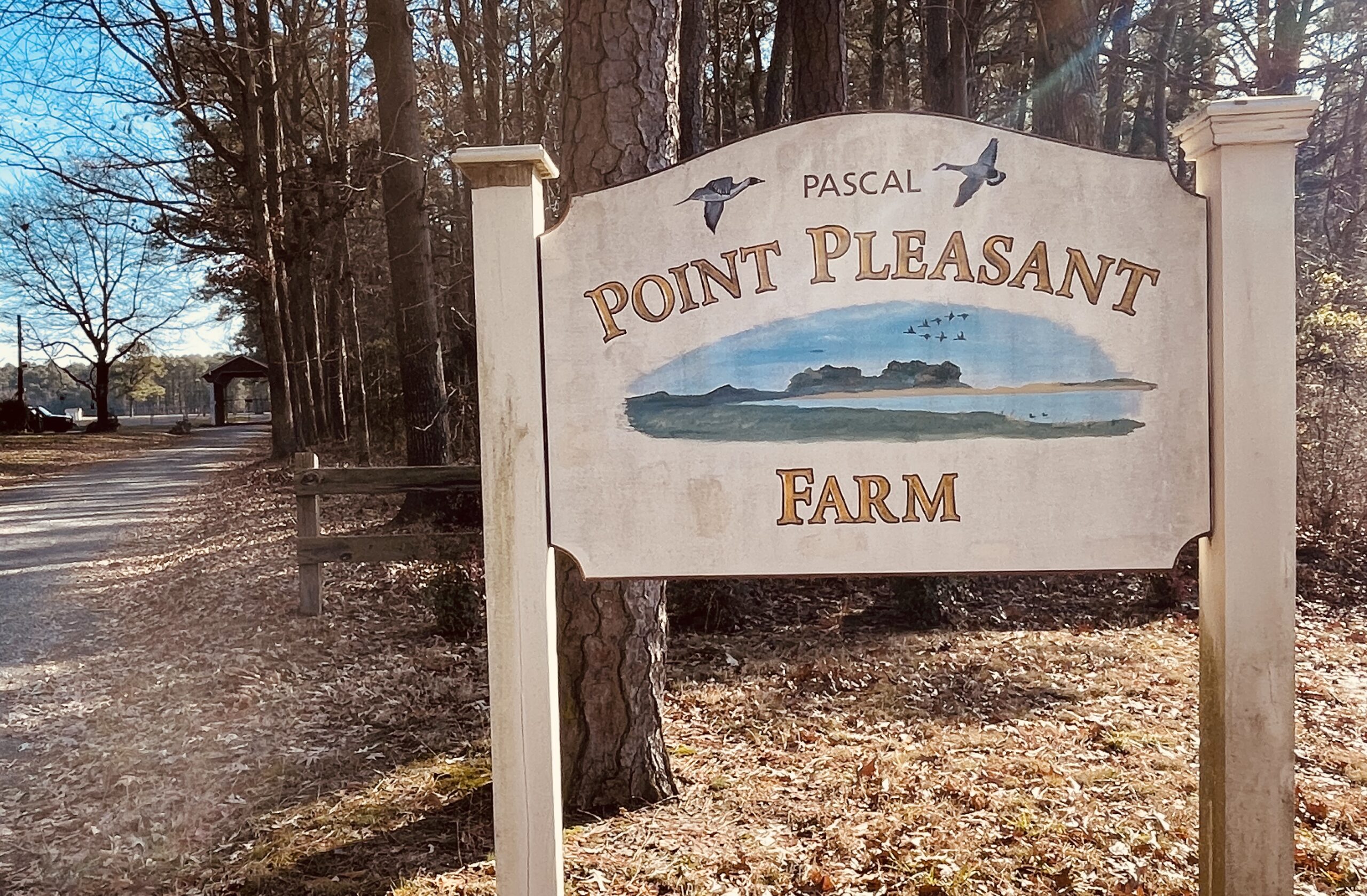
Point Pleasant Farm, with several hundred acres of tilled land, forests, wetlands, and hedgerows, and a unique history, offers a special opportunity.

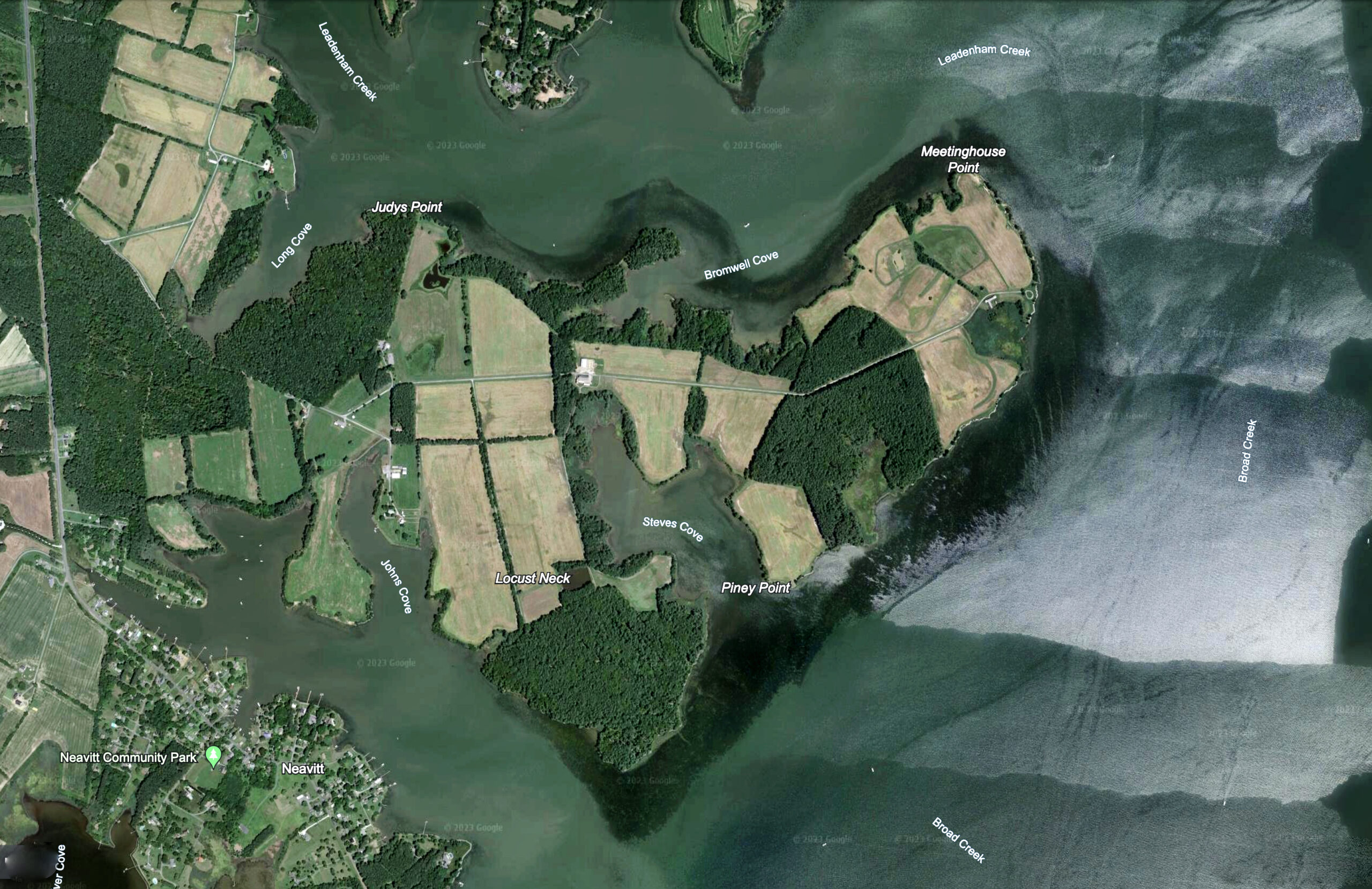
This Google Earth image shows the boundaries of Point Pleasant Farm between Leadenham Creek to the north, Broad Creek to the east, Balls Creek to the south and the Bozman-Neavitt road to the west. With an estimated eight miles of shoreline, the farm includes extensive agricultural fields, forests and wetlands.

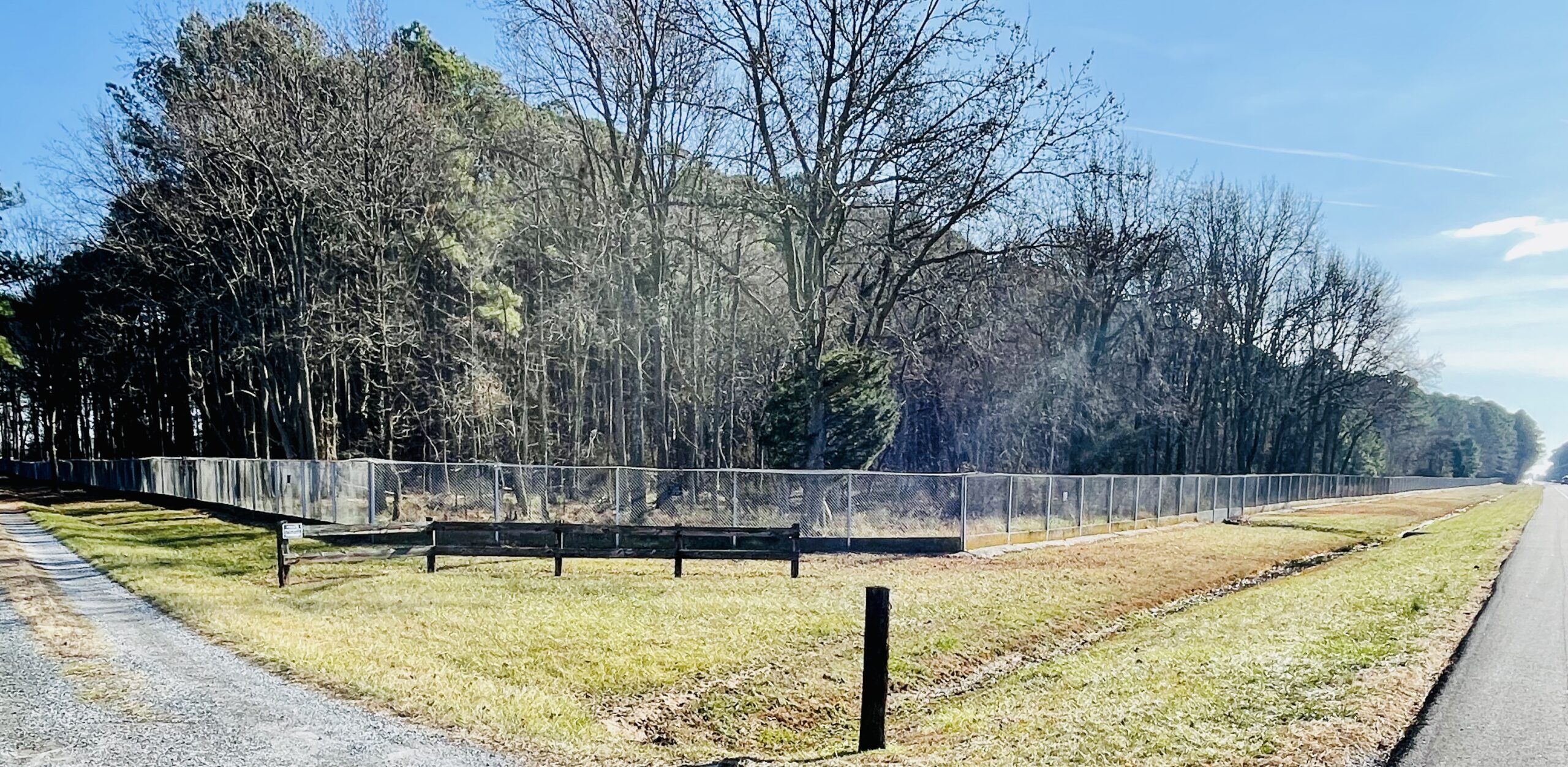
Surrounded by Leadenham, Balls and Broad creeks, between Bozman and Neavitt west of St. Michaels, Point Pleasant Farm, over the past several decades, has been owned and managed by a series of conservation- and preservation-minded individuals and organizations.  Members of Delaware’s duPont family once owned the property and managed it for fox and waterfowl hunting and other outdoor activities. Its unique geographical features allowed erection of a substantial and effective concrete and chain-link fence across a narrow isthmus between Leadenham Creek and Balls Creek.  Along the land’s western boundary, the fence was erected to keep foxes in and other predators out.

When interest in fox-hunting waned, but not its interest in conservation, the family donated the property to the national Audubon Society. That national organization has long dedicated itself to the welfare of birds.

According to Harry Shapiro, president of the Point Pleasant Foundation which now owns the property, the Audubon Society did little more than retain ownership through the years.  In addition to fields, forests and wetlands, the property also includes a number of houses, barns and other structures long associated with what had once been a number of smaller farms, before consolidation.

“Those structures,” Shapiro said, “had basically been let go to rot, if you will, until Bob Pascal negotiated with Audubon to buy the property.”

Pascal, according to a Wikipedia article, was an American Republican politician, collegiate football player, professional Canadian football player and a propane entrepreneur who served as County Executive of Anne Arundel County, Maryland from 1975 to 1982. A Baltimore lawyer, Shapiro enjoyed a 50-year relationship with Pascal as his attorney and friend.

“Bob invested at least $800,000 in riprapping the extensive shoreline of the property as well as rebuilding barns and other structures – some for rental, others for his own use,” said Shapiro.  “He basically brought the property back to what it had been during the duPont days and put it in a posture to attract waterfowl.” The Point Pleasant Farm has an estimated eight miles of shoreline.

A substantial concrete base and chain-link fence, installed by members of Delaware’s duPont family, runs along the western edge of the farm. DENNIS FORNEY PHOTOS

Pascal, in 2011, donated a conservation easement for the entire property, in return for a tax deduction, to Maryland’s Department of Natural Resources. That easement allowed Pascal, and eventually the Point Pleasant Foundation he created, to retain ownership of the property. The easement stipulates, however, that the property will be used for nothing more than what it was being used for at the time of the easement approval.

“The easement allows for renovation and replacement of existing buildings but no more,” said Shapiro. “That’s in perpetuity.  Forever. The whole purpose is to restrict development and have the property remain as pristine as it has been.  The buildings can be improved and rented but no new homes or anything like that can be built.  Nothing can be done that is inconsistent with conservation purposes.”

Shapiro added that Pascal, on his death in 2021, bequeathed the stock of the corporation that had owned the property, along with $2.5 million for upkeep and maintenance, to the foundation.

The only other thing the easement allows for is use of the property for education and research. That’s where the University of Maryland comes into the picture.

Several months following Pascal’s death, Shapiro contacted University of Maryland officials to gauge interest in use of the property.. “After circulating the offer and details of the easement through a number of departments, they initially told me there was no interest. I was crushed. But then a few weeks later I was told that two professors had finally come forward with interest. That’s where this journey began. I started talking with Luke and his colleagues. They were so enthusiastic. That’s what I wanted from the start.”

Shapiro said he thought Pascal would applaud the new ideas around managing the farm for wild quail propagation. “I think he would be excited by this, providing habitat for quail. He hunted quail. But I think he would be excited not just for restoring appropriate habitat, but also by the idea of eventually exporting wild birds to other parts of the state or even the country for restoration.”

Dan Small coordinates Washington College’s Natural Lands Project, focusing on developing and instituting management plans in cooperation with farmers and other landowners to create beneficial habitat for wild quail and other species. He has been collaborating with Macaulay and others at University of Maryland on a management plan for Point Pleasant Farm. He further discussed the need and opportunity.

“Land managers in the south have been having success with expanding quail populations by increasing grasslands habitat.  But they’re reluctant to give up their birds for relocation to areas like ours where we’re also interested in rebuilding populations. Transporting the wild birds with long airline flights and long drives also has its problems. So,” said Small, “if we can get a wild bird program going at Point Pleasant through proper management, that would be all the better.”

Macaulay noted that areas in St. Mary’s County in southern Maryland and on natural lands on Greensbury Point in Anne Arundel County, as well as the upper Eastern Shore, have some of the last remaining pockets of wild quail populations. That could be built on with more land management and introduction of relocated wild birds.

Ten months after Shapiro and the university people started talking, they signed the memorandum of understanding.

“What we are doing is consistent with Mr. Pascal’s wishes,” said Shapiro. “We’re just putting our toe in the water now instead of jumping in head first. The memorandum can be renewed beyond five years if we all agree. Whether we go with a state proposal to remove all or some of the land that is being farmed and place it into grasslands, and how we might also want to manage the forests there to benefit wildlife, as well as the economic considerations of doing that – that’s all part of the ongoing discussions.”

Shapiro noted that the conservation easement is not dependent on the public having access to the property. “Independently though, we plan to have some public access, such as for workshops like one we had in November when about 110 people gathered at the farm to hear about some of the plans being considered. There were excellent speakers and people really enjoyed it.

“The educational component of the easement will involve people coming in,” said Shapiro.  “As we made decisions about the easement, we always envisioned people coming in, but not just letting it be wide open.  We want people to be able to see the best practices and benefits that can develop out of research that can be done on properties like this.  But the habitat is very sensitive.  We have to control who comes on the property and what they do. Otherwise it could be overrun, destroyed and injured, and I don’t think anyone wants that.”

Dennis Forney has been a publisher, journalist and columnist on the Delmarva Peninsula since 1972.  He writes from his home on Grace Creek in Bozman.

The Spy Newspapers may periodically employ the assistance of artificial intelligence (AI) to enhance the clarity and accuracy of our content.

Filed Under: 3 Top Story

As Winter Solstice 2023 Passes, an Oyster Idyll

December 22, 2023 by Dennis Forney
Leave a Comment

Ralph Fletcher Seymour etched this scene of Joe’s Oyster Bar in Chicago in the mid-20th century.

Watermen – dredgers and tongers – are bringing in their day’s catch of oysters as I write.  It’s mid-morning on the eve of the 2023 winter solstice.

They motored out Grace Creek just after 6 this morning, diesels thrumming.  Law says they can begin oystering at 7.  In three or four hours, most of them have their daily limit.  Tongers with two men aboard can harvest 24 bushels. That’s 12 bushels per license holder. Dredgers – they can bring in 10 bushels per license.

This marks just about the midpoint of the 2023-24 wild-caught oyster season. Started October 1 for tongers, Nov. 1 for dredgers. Ends March 31.

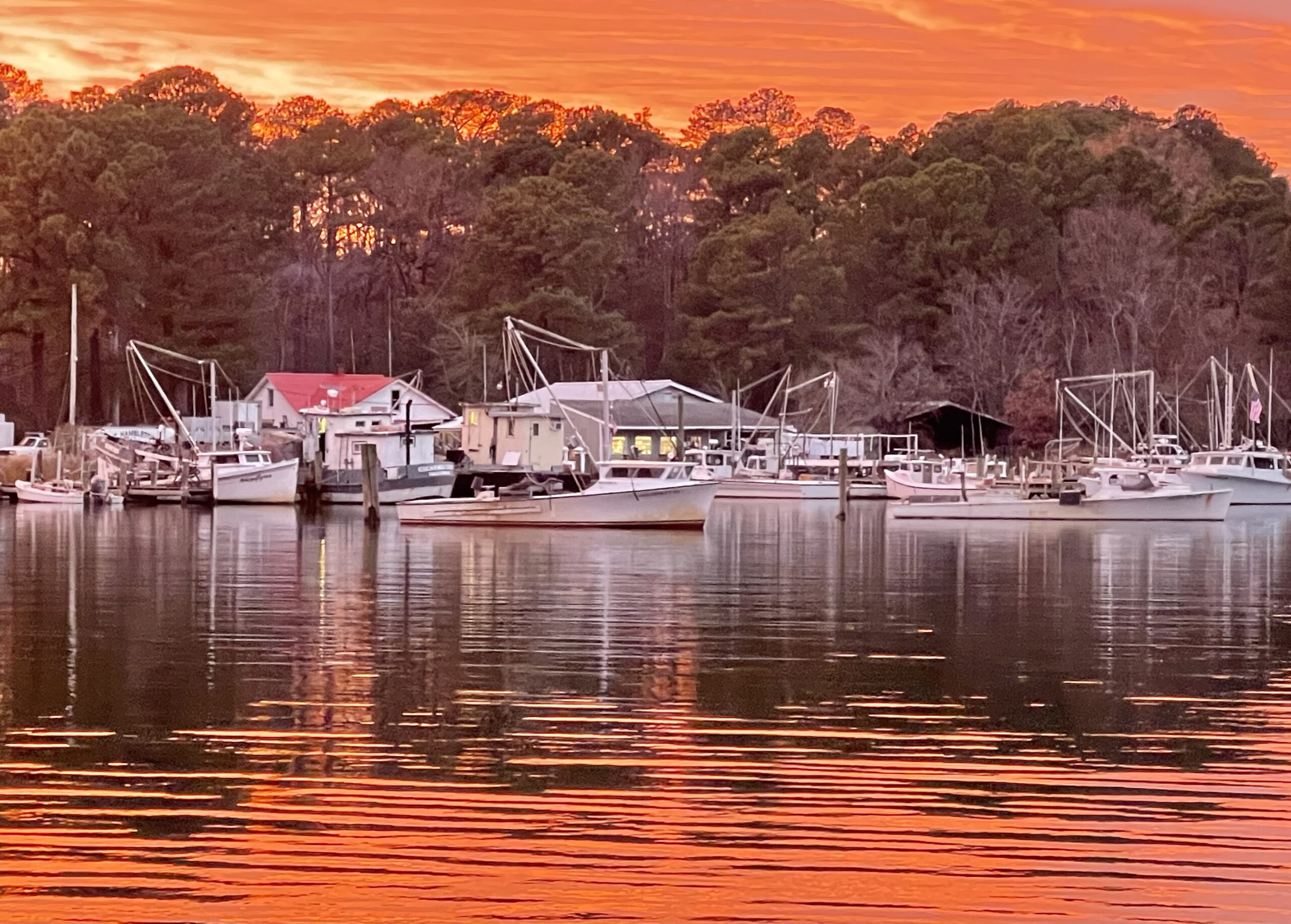
An early winter sunset over the oyster fleet at PT Hambleton’s complex on Grace Creek. Dennis Forney photo.

The beds here in Broad Creek and the Choptank, by most accounts, are in good shape. The oysters are pretty – as pretty as oysters can be. Classic oval and round shells, singles, knobby and ridged and solid on the outside. Sleek mother of pearl on the inside provides a smooth and comfortable surface for meats fattening and yellowing as water temperatures continue to fall.

From what I hear, the market has been fickle, not as strong in this Christmas week as what would typically be expected. Demand is off.  Inflation maybe. Not as many people going out to eat.  Prices holding them back somewhat.

The bushel price paid to watermen at the docks has been holding steady up and down the Chesapeake at right around $35. The law says watermen can tong and dredge five days a week – weekends off – but many weeks there has been at least one day when there has been no market. The boats stay tied up on those days.

Once the Christman season passes, the price of  bushels to the harvesters is expected to drop.  $28 is the figure I hear.

PT Hambleton told me there’s only two things a waterman has to worry about.  “January and February.”

Wednesday night this week I shucked and fried a couple dozen oysters.  Frank gave me the recipe.  Drain the oysters and dip them individually in a beaten egg; dredge and coat them in cracker meal; fry them over medium high heat in just enough oil to coat the bottom of a pan. They’ll golden up quickly.

Flip them over to make sure they’re golden brown on both sides and then set them on paper towels to soak up excess oil and cool a little. Then dip them in some cocktail sauce – horseradish and ketchup – pop them in your mouth, and you have yourself a nice Eastern Shore meal.  If you have a crab cake left over from the summer and some green beans or limas from the garden, even better.

The oysters were delicious.  My old man – some called him G. Robert – put the cracker meal along with salt and pepper in a paper bag and dropped the oysters in and shook them up to get evenly coated. His oysters were always good so I did the same.  Worked beautifully and keeps your fingers from getting all sticky with raw egg and meal.  Now that they’re banning plastic bags that litter the countryside, there’s more paper bags for coating oysters. A six-pack bag works just about perfect.

Already looking forward to more fried oysters.  So easy.

I’m glad the solstice is here.  Days start lengthening. The watermen, heading out in more of the sunrise as each day passes, must be appreciative too.

Dennis Forney has been a publisher, journalist and columnist on the Delmarva Peninsula since 1972.  He writes from his home on Grace Creek in Bozman.

The Spy Newspapers may periodically employ the assistance of artificial intelligence (AI) to enhance the clarity and accuracy of our content.

Filed Under: 3 Top Story

Washington College’s Natural Lands Project Creating More Wildlife Habitat

December 14, 2023 by Dennis Forney
Leave a Comment

Dan Small, coordinator of Washington College’s Natural Lands Project, uses prescribed burning as one of the tools available to help maintain early successional grasslands on Maryland’s Eastern Shore

“The long-term efforts managing early successional habitat at our model farm, the River and Field Campus, have shown us that when you make a dedicated effort to set aside marginal cropland and install early successional habitat, birds will thrive.” – From Washington College’s Natural Lands Project website

Proof of that opening statement? Over the course of the last couple of years, at least 32 distinct coveys of Bobwhite Quail have been identified on and around Washington College’s River and Field Campus on the Queen Anne’s County side of the upper Chester River.

Summer surveys have recorded as many as 35 males singing their distinctive bobwhite calls. That’s according to Dan Small, coordinator of the college’s Natural Lands Project, under the umbrella of the Environment and Society department. Go big or go home!

Last week I wrote wistfully about a bygone era when evening summer rides through the Eastern Shore countryside would often be accompanied by the distinctive songs of Bobwhite Quail males. That soundtrack, due to lots of factors, eventually faded away.

This week though I write, more optimistically, about the success of the college’s efforts to return those sounds to the Eastern Shore landscape.

Since 2011, Small has been researching grassland birds such as quail. That research evolved into habitat management and conservation which led in part to creation of the Natural Lands Project in 2015.

The Chestertown college’s River and Field Campus of approximately 5,000 acres is known locally as Chino Farms. Dr. Henry Sears gathered several farms to create Chino in the latter half of the 20th century. Now known as the River and Field Campus, the diverse complex is owned jointly by Sears and the college. The total property includes 2,600 acres of farmland, 1,800 acres of forested woodlots, along with other wetlands and meadows.

“Dr. Sears,” said Small, “set aside 200 acres of that land in 1999 for experimental grasslands where he hosted classes and labs.  The specific goal was to create a successful habitat of early successional grasslands attractive to quail.  Now a thriving population occupies that area along with several other species that have been in decline including lots of different birds. On a summer’s day, it’s not unusual to hear 15 male quail calling in that area.”

Partnering with Maryland’s parks, and other state open space programs, as well as conservation-minded private landowners, the Natural Lands Project aims to replicate that success up and down Maryland’s Eastern Shore. “We advise and provide funds to assist landowners in the process,” said Small.

He noted that in cooperation and assistance with the program, public and private owners have converted more than 1,200 acres of mostly marginal farmland into early successional habitat.  Those are habitats that emerge after clearing events such as cultivation, burning or mowing take place.

If those areas were left undisturbed and unmanaged for several decades, they would eventually evolve into forests.  But management such as prescribed burnings hold them in that early successional grassland phase so preferred by quail and other species, including a number of sparrows.

”A lot of people are interested in helping,” said Small. “On eight of the properties we have converted in recent years, quail have shown up. For two years in a row we have seen successful breeding. We would like to create a corridor of habitat spanning several connecting farms. With proper management, we can have quail in the modern agricultural landscape.”

Small said the Natural Lands Project also contributes to efforts to improve water quality in the Chesapeake watershed by creating natural buffers that keep sediments and fertilizer run-off from entering waterways.

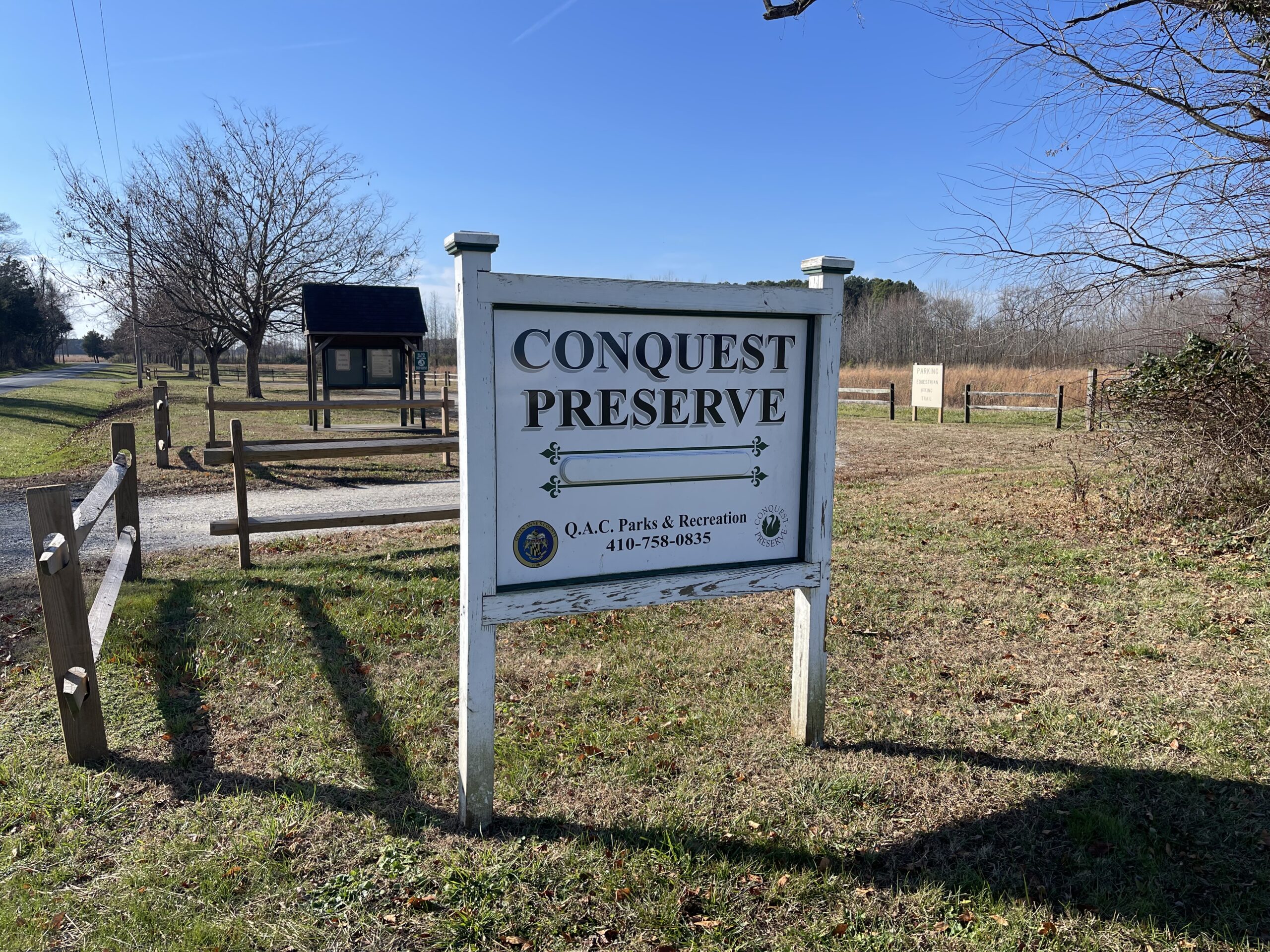
Partnering with Queen Anne’s County, the Natural Lands Project has helped convert 200 acres of farmland into grasslands between the Chester and Corsica Rivers. A parking area at the Conquest Preserve near Centreville invites visitors to walk trails winding through meadows and forests along the Chester. The meadows and five different managed wetlands attract birds, reptiles and mammals, and groups of people who like to watch nature in action. Members of the Talbot bird club, for instance, flocked there recently to add LeConte’s sparrows to their lifetime lists.

Conquest Preserve also includes an edible food forest with a variety of trees and shrubs designed to provide wild fruits for critters up and down the food chain.

“Momentum is growing,” said Small. “Farming operations are passing down to a new generation that is more conservation minded.  They realize the benefits of not farming marginal land and saving on the cost of inputs, as well as the importance of providing habitat for birds and animals.”

Dennis Forney has been a publisher, journalist and columnist on the Delmarva Peninsula since 1972.  He writes from his home on Grace Creek in Bozman.


The Spy Newspapers may periodically employ the assistance of artificial intelligence (AI) to enhance the clarity and accuracy of our content.

Filed Under: Eco Lead, Eco Portal Lead

Quail, Milkweed, and Monarch Butterflies All Rely on Us

December 2, 2023 by Dennis Forney
Leave a Comment

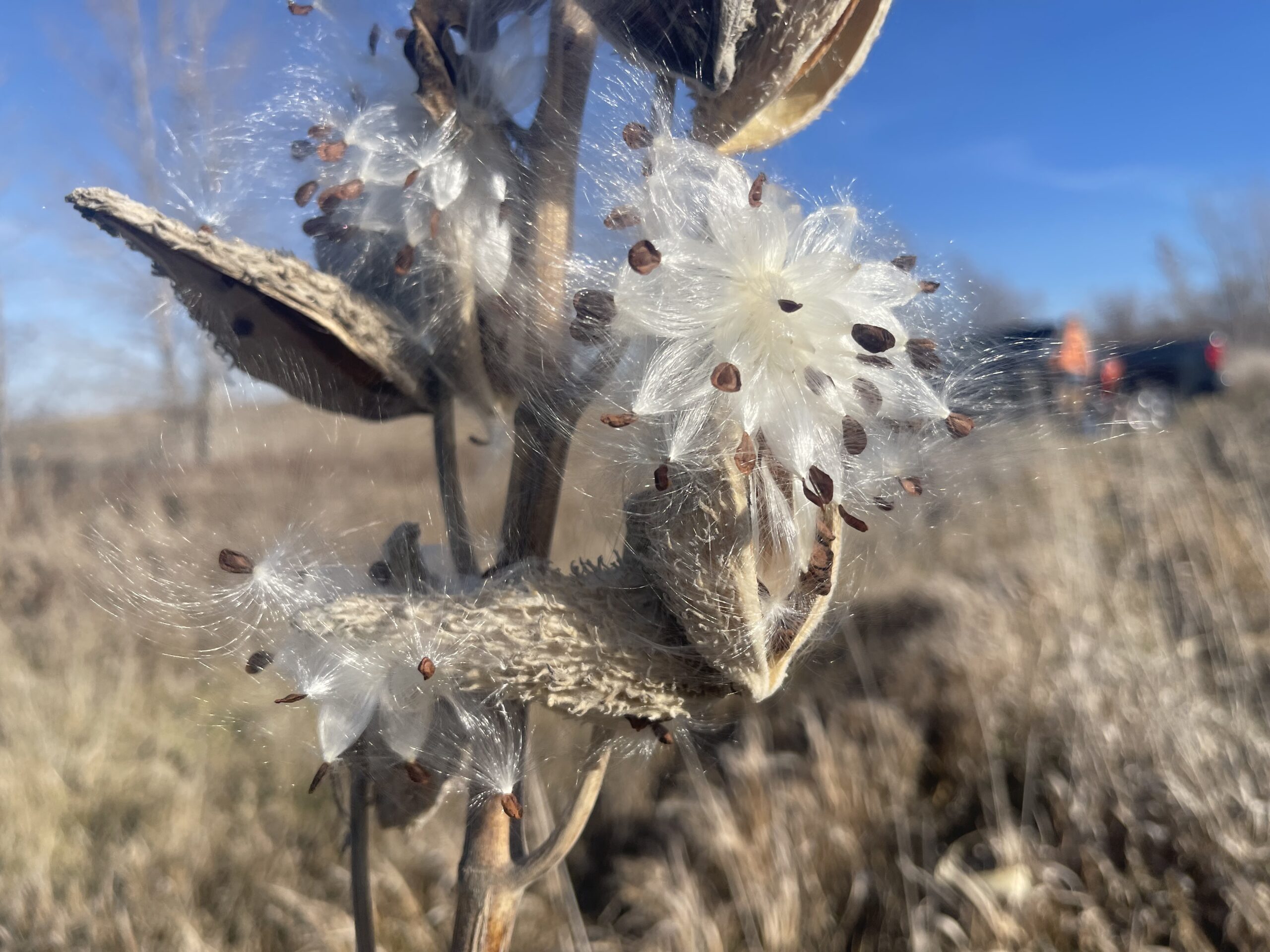
Mature milkweed pods in a patch of conserved wild lands in Iowa. Photos by Dennis Forney

As kids, we drove through the farm fields of Kent County with our old man, heading out to Remington Farms to look at geese and ducks on ponds, watching deer coming out at dusk, stopping along Brice’s Mill Road when we saw a red fox loping across a rise in the landscape.

With the engine cut off on the side of the road, windows rolled down, ears focused, we would listen and hear the distinctive whistles of bobwhite quail gathering in their coveys.  Butts in and faces out, they would circle up in tight ground roosts for their night’s rest, shoulder to shoulder, conserving heat.  The next day, the only evidence of their roost would be the remaining small white pile of guano deposited at the very center of their tightly choreographed survival routine.

Those bobwhite calls were an accepted element of the rural Eastern Shore soundscape.  Were, because now, finding a covey of wild-bred bobwhites on the Delmarva Peninsula is a nearly impossible rarity.

Chalk it up to loss of habitat resulting from development, removal of hedgerows due to conglomeration of farms and more intensive agricultural practices, and predation for eggs and meat by foxes, possums, raccoons and snakes.

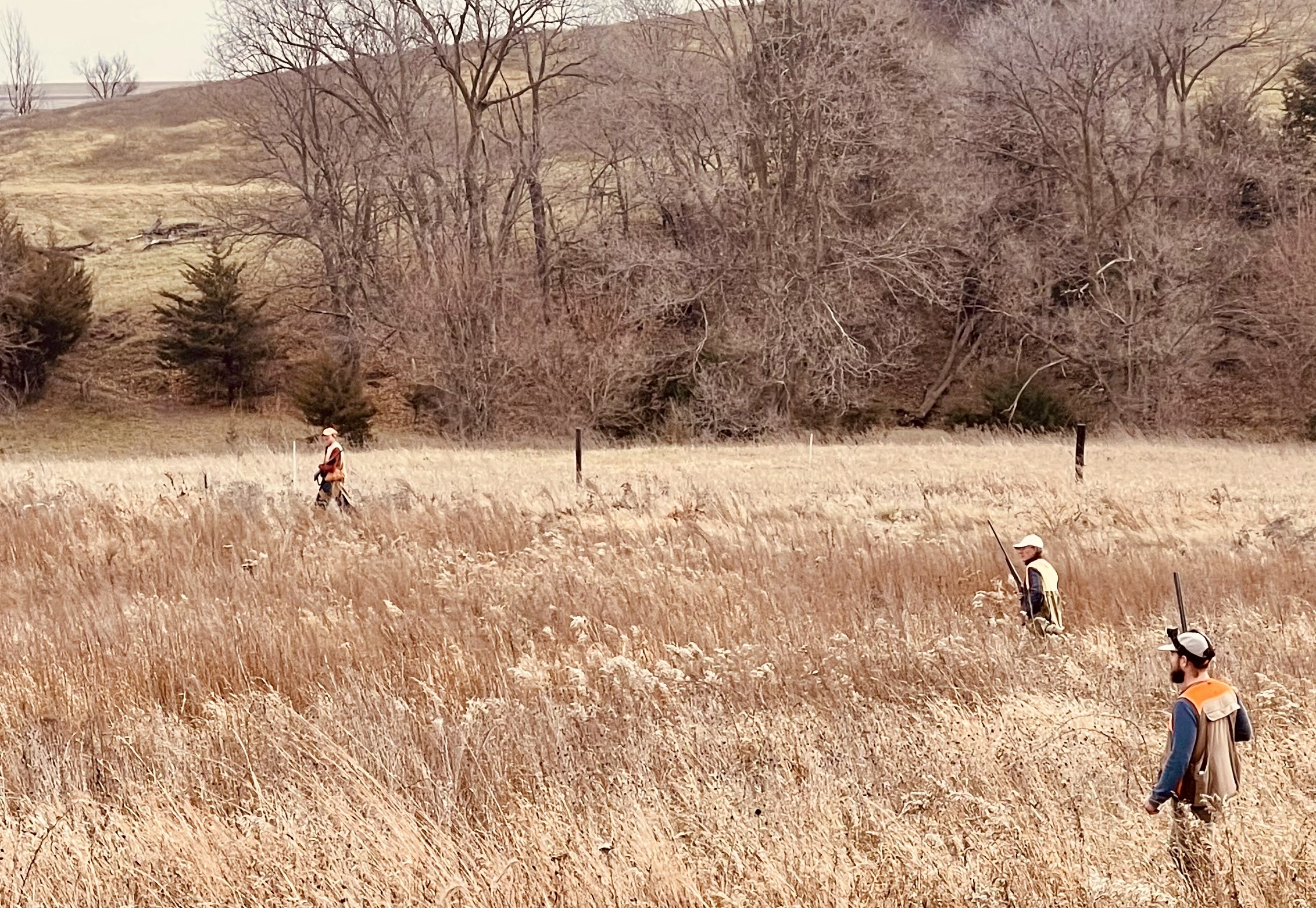
Hunting wild pheasants and quail on conserved Iowa grasslands.

Hunters were among the predators at one time.  That was decades ago when there were enough birds to hunt. For sustainability, most hunters were careful to take only four or five birds out of a covey of 15 or 20 quail. Even getting those four or five quail is no easy task. When flushed from dense cover, coveys explode into the air and fly like the wind in all directions. Only well-practiced shots bag more than a few quail.

Because of conservation-minded individuals and organizations, there are glimmers of hope that the tide leading to loss of sustainable habitat for bobwhite quail may be turning.

More on that, but first let’s shift geographical gears.

A few weeks back, a small group of us drove 18-hours westward, out of the tidewater Chesapeake region, over the quietly majestic Appalachians, across the mighty Mississippi, and onto the vast plains of the midwest – generally – and into central Iowa specifically.

The goal: hunt pheasants and quail over trained bird dogs: setters and pointers. There, terracing for conservation as well as natural draws and little creeks that drain the rolling land provide plenty of tall-grassed and scrub-treed habitat for those game birds. Corn and soybean fields adjacent to the draws provide an irresistible combination of food and cover for successful quail and pheasant propagation.

Delmarva, by the way, has never sustained populations of pheasants.  The lack of limestone on this big sandy spit of ours appears to be the missing ingredient.

Not so there in Iowa.  We found plenty of quail and pheasant to keep the dogs and us busy.

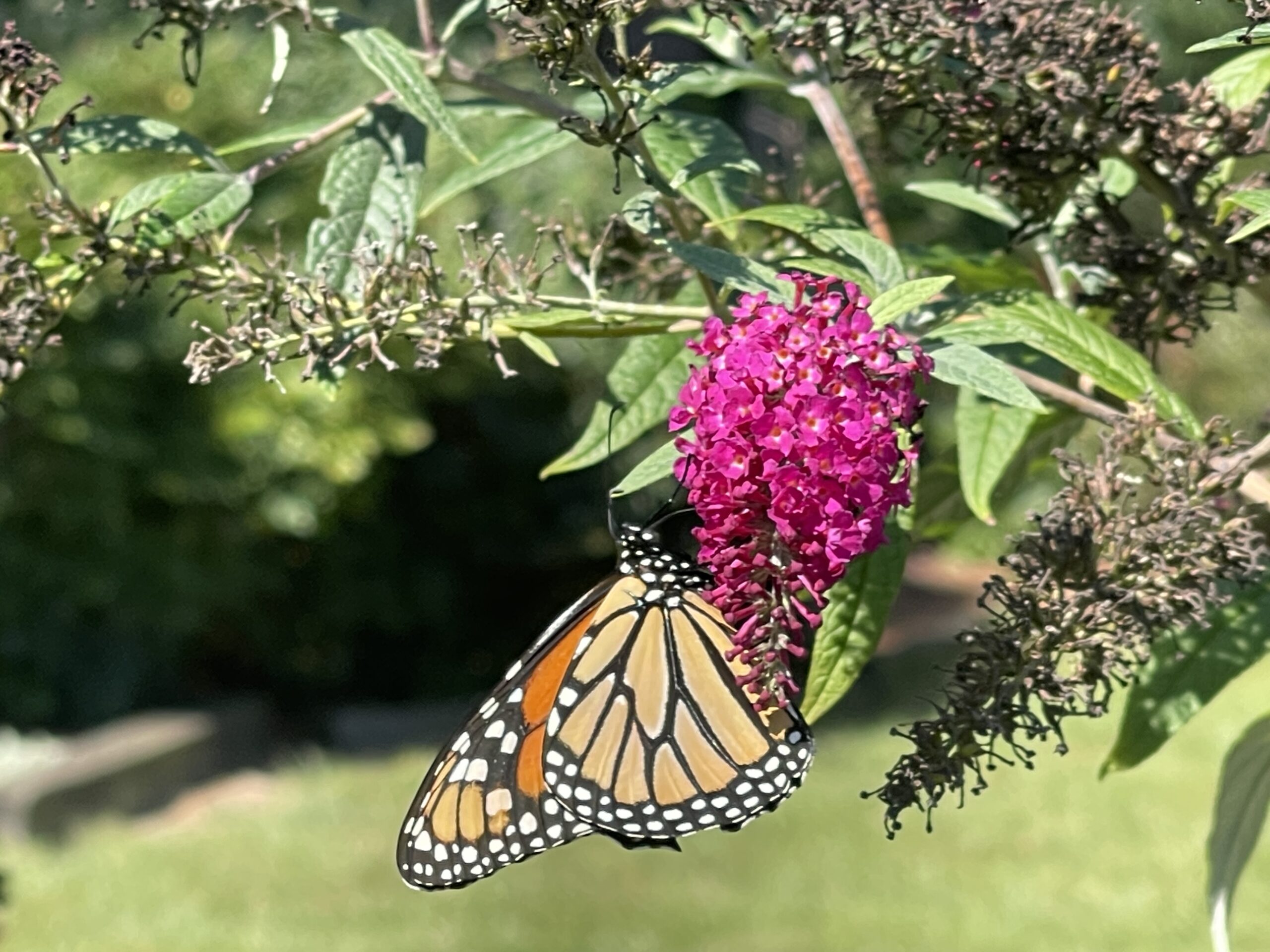
Monarch butterfly on a Delmarva Buddleia blossom.

At the end of one hunt, I found myself in the middle of a large patch of milkweed. The cracked and dried pods revealed shiny and silky white filaments. Caught by wind and breezes, those filaments spread the little brown seeds attached to them.  Nature’s way of cultivating more and more stands of milkweed.

The farmer who directed us to good hunting spots said the milkweed stands were part of a government-sponsored conservation program designed to provide more habitat for monarch butterflies.  Their caterpillar stage feeds only on milkweed leaves.

It’s nice to keep the monarchs alive by cultivating patches throughout the United States to sustain them on their long flights back and forth to their Mecca in Mexico. But in addition to the monarchs providing natural beauty to our lives, they also are among the many pollinators so critical to plant life. Spreads of milkweed and neighboring grasses also provide habitat for many other pollinators and larger creatures on up the food chain.

Whether the Delmarva Peninsula will ever see a return of sustainable populations of wild, bobwhite quail like those we saw in Iowa depends in large part on the efforts of conservation groups working to preserve open space, and programs like the Natural Lands initiative being promoted by Washington College in Chestertown. That program encourages farmers and other landowners to adopt land management practices aimed at reversing the loss of habitat.

On thousands of acres along the Queen Anne’s County side of the upper Chester River, the college and its students have followed the lead of a private landowner in creation of meadowy habitats specifically designed to encourage the return of quail populations.  At the same time, associated benefits include providing natural habitat for butterflies and bees and other pollinators.

It’s all connected and part of the responsibility we all share as stewards of this incredibly bountiful and beautiful global garden entrusted to us by nature.

Dennis Forney has been a publisher, journalist and columnist on the Delmarva Peninsula since 1972.  He writes from his home on Grace Creek in Bozman.

The Spy Newspapers may periodically employ the assistance of artificial intelligence (AI) to enhance the clarity and accuracy of our content.

Filed Under: Spy Highlights

  • « Previous Page
  • 1
  • 2
  • 3
  • 4
  • 5
  • …
  • 10
  • Next Page »

Copyright © 2025

Affiliated News

  • The Chestertown Spy
  • The Talbot Spy

Sections

  • Arts
  • Cambridge
  • Commerce
  • Ecosystem
  • Education
  • Food & Garden
  • Health
  • Local Life
  • News
  • Point of View
  • Senior Nation

Spy Community Media

  • Subscribe for Free
  • Contact Us
  • COVID-19: Resources and Data

© 2025 Spy Community Media. | Log in